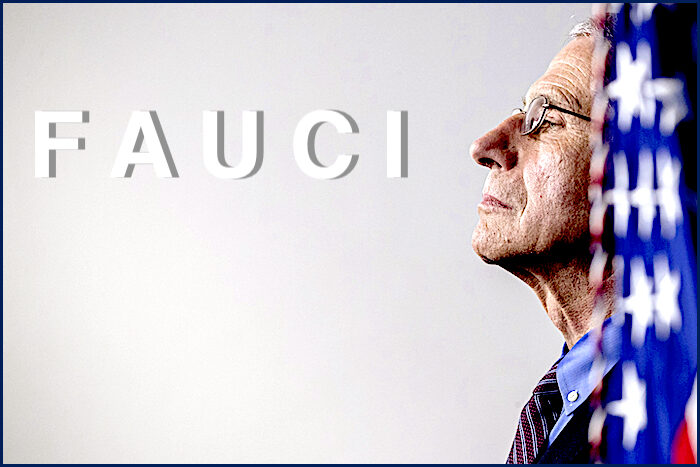
© AP/KJN
On Jan. 19,
joint reporting from The Intercept and
The Nation made public a collection of newly unredacted emails between Anthony Fauci, recently retired National Institutes of Health director Francis Collins, and a select few virologists, in which the group discusses the possibility that SARS-CoV-2 originated in a lab - specifically, the Wuhan Institute of Virology in China.
The hook in the reporting by investigative journalist Jimmy Tobias, beyond its illuminating document cache, is his observation that
three of those virologists went on to publish a March 21, 2020, paper in Nature Medicine entitled "The proximal origins of SARS-CoV-2," in which the authors asserted
"We do not believe that any laboratory-based scenario is plausible." The emails unearthed by Tobias, however, show a far more conflicted view behind the scenes, with one of the paper's primary authors writing in an email to the group on Feb. 8, 2020:
"I believe that publishing something that is open-ended could backfire at this stage."
Nonetheless, the paper enjoyed a cushy institutional reception a month later. Fauci endorsed it in
an April press conference; Collins wrote a
blog post promoting it; ABC News ran a
story using the study's conclusions to dismiss lab-origin conjectures as conspiracy theories. It is now
one of the most-read scientific papers in history and has been cited over 2,700 times.
Whether a product of cynicism or mere panic,
this episode serves as a reminder - at a moment in which we seem cautiously
willing to reappraise our pandemic response -
of just how much power a small number of scientists had over the direction of our early COVID conversations. In this way, it echoes the story of
Stanford's Dr. Jay Bhattacharya, who has just written two essays for
Tablet and the
National Post urging that we not forget some of our gravest pandemic missteps.


















Comment: USA: They are what they do. Russia: They do what they are. A world of difference.