Science & TechnologyS


Magnify

Researchers develop new method for studying "mental time travel"

brain, memories
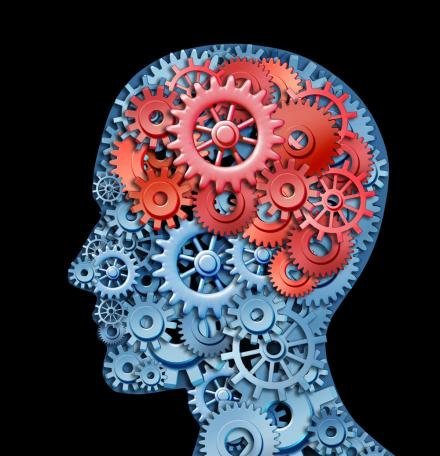
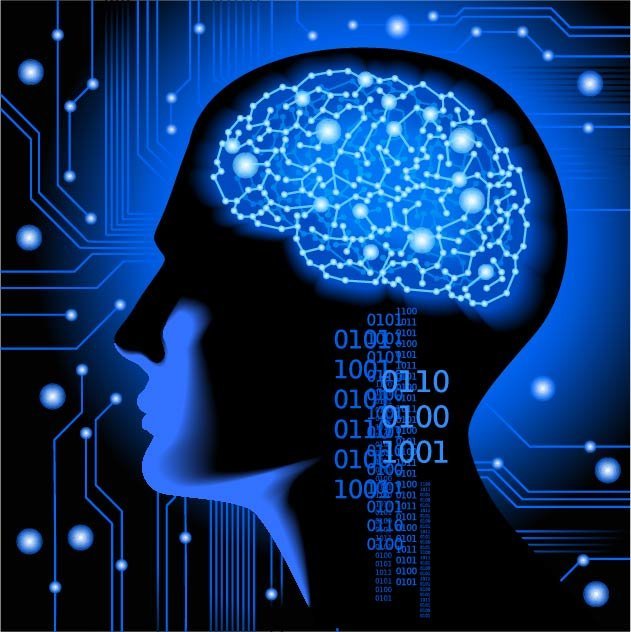
Neuroscientists at Princeton University have developed a new way of tracking people's mental state as they think back to previous events -- a process that has been described as "mental time travel."

The findings, detailed in the Dec. 23 issue of Science, will aid efforts to learn more about how people mine the recesses of memory and could have a wide-ranging impact in the field of neuroscience, including studies of brain disorders such as Alzheimer's disease.

The researchers showed nine participants a series of pictures and then asked them to recall what they had seen. By applying a computerized pattern-recognition program to brain scanning data, the researchers were able to show that the participants' brain state gradually aligned with their brain state from when they first studied the pictures. This supports the theory that memory retrieval is a form of mental time travel.

In addition, by measuring second-by-second changes in how well participants were recapturing their previous brain state, the researchers were able to predict what kind of item the subjects would recall next, several seconds before they actually remembered that item.

Bizarro Earth

New theory to explain the San Adreas fault - zipper fault

San Andreas Fault
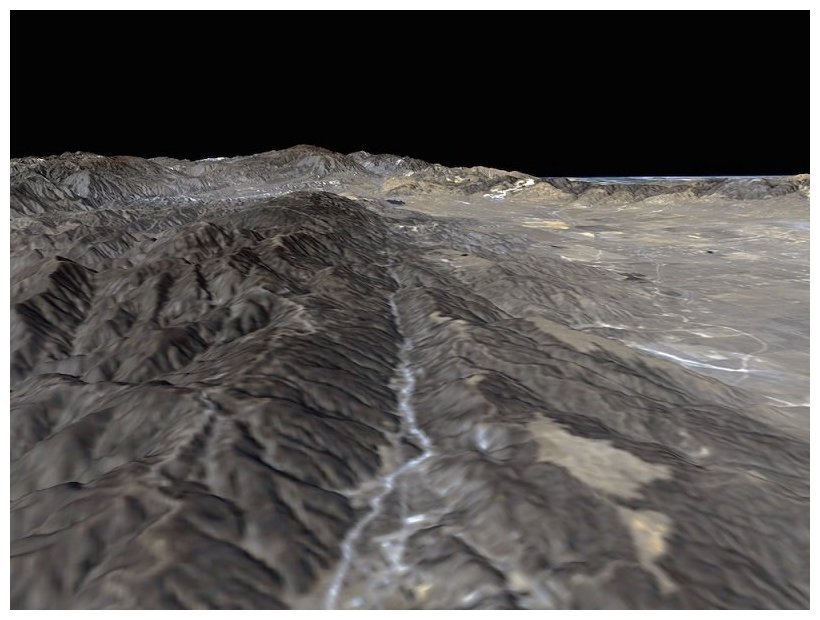
© NASA/JPL/NIMAThis segment of the San Andreas Fault, in Palmdale, California, lies about 60 miles (100 km) northwest of Los Angeles. The image was captured from the Space Shuttle Endeavor on Feb. 11, 2000.
San Francisco — A new explanation for colliding faults could help explain mysterious fault lines that have mystified geologists for decades. The new explanation could explain everything from the quake-prone faults of Southern California to dynamic crust beneath the snow-capped peak of K2 in the Himalayas.

The theory is deceptively simple: When two faults collide, instead of one breaking past another, they may just merge, like a zipper zipping up, said John Platt, a geologist at the University of Southern California in Los Angeles, here at the annual meeting of the American Geophysical Union. [Photo Journal: The Gorgeous San Andreas Fault]

"It may solve some long-standing and intractable problems concerning the timing and displacement on faults," Platt said in the presentation.

Battery

"Hydricity" combining solar technologies for improved electric power generation

Redstone Solar Thermal Power Plant
Solar Thermal Power Plant
Solar heat could help generate both electricity and hydrogen fuel at the same time in a system that scientists in Switzerland and the United States call "hydricity." Such a system could supply electricity round-the-clock with an overall efficiency better than many photovoltaic cells, researchers add.

There are two ways solar energy is used to generate electricity. Photovoltaic cells directly convert sunlight to electricity, while solar thermal power plants—also known as concentrating solar power systems—focus sunlight with mirrors, heating water and producing high-pressure steam that drives turbines.

Photovoltaic cells only absorb a portion of the solar spectrum, but they can generate electricity from both direct and diffuse sunlight. Solar thermal power plants can use more wavelengths of the solar spectrum, but they can only operate in direct sunlight, limiting them to sun-rich areas. Moreover, the highest conversion efficiencies reported yet for solar thermal power plants are significantly less than those for photovoltaic cells.

Scientists now suggest that coupling solar thermal power plants with hydrogen fuel production facilities could result in "hydricity" systems competitive with photovoltaic designs.

Comment: Also see:
  • Generating supercritical steam using solar power [link]
  • Creating hydrogen from sunlight [link]
  • Photosynthesis creating hydrogen and oxygen [link]
  • Rare metal stores heat from sun [link]
  • Solar Thermal Power impacts wildlife [link]


Magnify

Eyes turn into skin: How inflammation can change the fate of cells

Eye 1
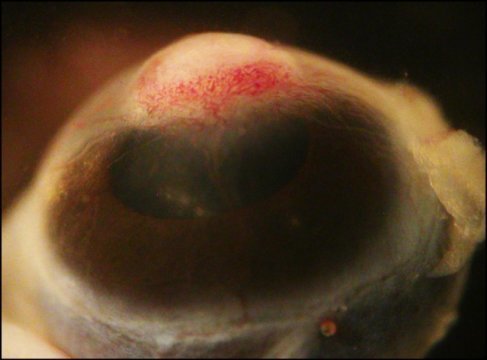
© Freddy Radtke / EPFLMacroscopic image showing skin forming in the cornea of a mouse following chronic inflammation.
EPFL scientists have found that chronic inflammation can cause regenerating cells to grow into new, aberrant types; this is called metaplasia, and is a disorder linked to prolonged inflammation. The study highlights a new concept of chronic inflammation and could lead to better treatments.

Chronic inflammation turns the immune system on for prolonged periods of time. As a result, it underlies many disorders that are associated with chronic inflammation, including cancer and abnormal wound healing. EPFL scientists have now discovered an additional component: chronic inflammation can cause cells to actually change type -- here, eye cells turned into skin. The study is published in Nature Cell Biology.

Many tissues contain a reserve of stem cells that help them heal and self-renew after injury or inflammation. Wanting to understand what happens under chronic inflammation conditions, a team of researchers led by Freddy Radtke at EPFL's Swiss Institute for Experimental Cancer Research (ISREC) studied stem cells in the corneas of mice. To do this, they used methods that simulate chronic inflammation, and analyzed the data with techniques that light up specific cells with fluorescent stains.

The scientists found that in the cornea, the environment of stem cells changed -- specifically, it became stiffer. The reason for this is both the presence of immune cells but also an increase in a substance that helps cells stick to each other and form structures and organs.

Magnify

Surface physics: How water learns to dance

dance of the atoms
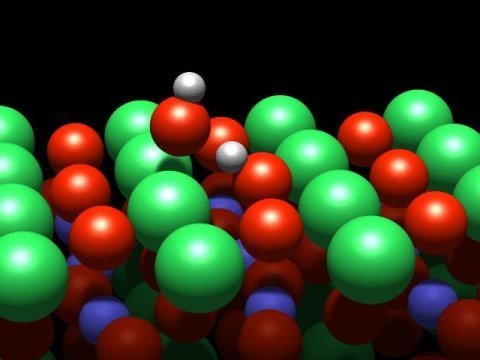
© TU WienThis is a visualization of the dance of the atoms on a crystal surface.
Perovskites are materials used in batteries, fuel cells, and electronic components, and occur in nature as minerals. Despite their important role in technology, little is known about the reactivity of their surfaces. Professor Ulrike Diebold's team at TU Wien (Vienna) has answered a long-standing question using scanning tunnelling microscopes and computer simulations: How do water molecules behave when they attach to a perovskite surface?

Normally only the outermost atoms at the surface influence this behaviour, but on perovskites the deeper layers are important, too. The results have been published in the journal Nature Materials.

Magnify

Circadian rhythm of genes in brain changes with aging, research shows

Ticking brain
© Creative Commons
Examination of thousands of genes from nearly 150 human brains shows the circadian rhythm of gene activity changes with aging, according to a first-of-its-kind study conducted by researchers at the University of Pittsburgh School of Medicine. The findings, published online in the Proceedings of the National Academy of Sciences, suggest also that a novel biological clock begins ticking only in the older brain.

A 24-hour circadian rhythm controls nearly all brain and body processes, such as the sleep/wake cycle, metabolism, alertness and cognition, said senior investigator Colleen McClung, Ph.D., associate professor of psychiatry, Pitt School of Medicine. These daily activity patterns are regulated by certain genes that are found in almost all cells, but have rarely been studied in the human brain.

"Studies have reported that older adults tend to perform complex cognitive tasks better in the morning and get worse through the day," Dr. McClung said. "We know also that the circadian rhythm changes with aging, leading to awakening earlier in the morning, fewer hours of sleep and less robust body temperature rhythms."

Magnify

How the brain wakes you up

EEG brain recordings
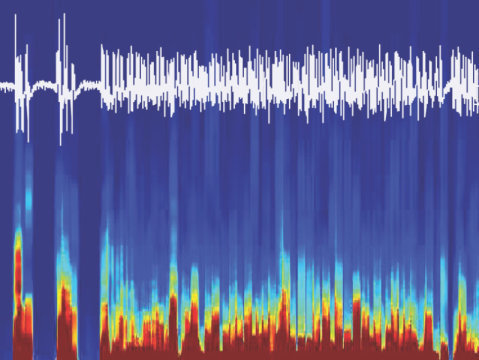
© Department of Clinical Research, University of BernArousal power of the discovered circuit: Illustration of an emergence from anesthesia shown on the EEG recordings from the mouse brain controlled with optogenetics.
Scientists from Bern have discovered a mechanism which is responsible for the rapid arousal from sleep and anesthesia in the brain. The results of their study suggest new strategies for the medical treatment of sleep disorders and recovery of consciousness in vegetative states.

Chronic sleep perturbances affect 10-20% of the population of Switzerland and almost everyone experiences sleep problems at least once in a lifetime. Beside the quantity of sleep that is often affected in insomnia, clinical and experimental studies emphasize that the quality of sleep (e.g., depth of your sleep) is equally important for a good night's sleep and a complete recovery of "body and mind" functions. "The consequences of sleep perturbations on life quality go far beyond daytime sleepiness and mood alteration. Cognitive impairment, hormonal imbalance and high susceptibility to cardiac or metabolic disorders are amongst some of the negative impacts frequently associated with subtle chronic sleep problems," says Prof. Antoine Adamantidis from the Department of Clinical Research of the University of Bern and Department of Neurology at the Bern University Hospital.

The quantity and the quality of sleep are now considered as an early marker of many neurological disorders including Alzheimer's disease, Parkinson's disease, and schizophrenia. Unfortunately, pharmaceutical strategies combined with improved life hygiene have limited effect. "Personalized medicine" strategies for the treatment of either insufficient sleep quality or quantity are missing.

Magnify

'Virtual fossil' sheds new light on our last common ancestor

virtual fossil skull
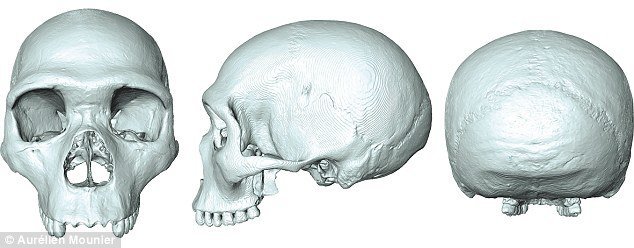
Researchers have used new digital techniques to recreate the skull of the last common ancestor of Homo sapiens and Neanderthals for the first time. It reveals how we split the human-Neanderthal lineage split about 300,000 years earlier than thought.
We share a common ancestor with Neanderthals, but this ancient population remains largely a mystery.

Now, researchers have used new digital techniques to recreate the skull of the last common ancestor of Homo sapiens and Neanderthals for the first time.

It reveals how we split the human-Neanderthal lineage split about 300,000 years earlier than thought.

The skull also shows how our ancient forefathers had human cheekbones, but a Neanderthal-like bulge at the back of the skulls.

The 'virtual fossil' has been simulated by plotting a total of 797 'landmarks' on fossilized skulls stretching over almost two million years of Homo history.

Telescope

Black holes could grow as large as 50 billion suns before their food crumbles into stars, research shows

supermassive black hole
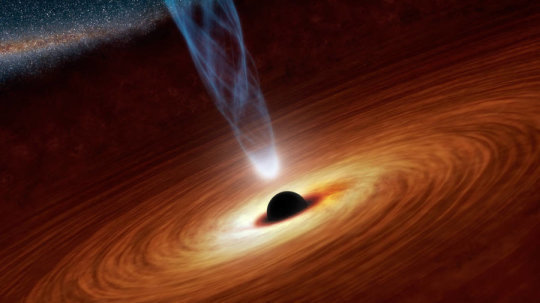
© NASA/JPL-CaltechThis artist's concept illustrates a supermassive black hole with millions to billions times the mass of our sun.
Black holes at the heart of galaxies could swell to 50 billion times the mass of the sun before losing the discs of gas they rely on to sustain themselves, according to research at the University of Leicester.

In a study titled 'How Big Can a Black Hole Grow?', Professor Andrew King from the University of Leicester's Department of Physics and Astronomy explores supermassive black holes at the centre of galaxies, around which are regions of space where gas settles into an orbiting disc.

This gas can lose energy and fall inwards, feeding the black hole. But these discs are known to be unstable and prone to crumbling into stars.

Professor King calculated how big a black hole would have to be for its outer edge to keep a disc from forming, coming up with the figure of 50 billion solar masses.

Map

Brain's GPS system works differently in virtual reality than in real-world environments

brain gps
UCLA researchers have found that space-mapping neurons -- the GPS system in the brain -- have a strong dependence on what is being looked at when triangulating location, a finding that resolves a neurological mystery that has vexed scientists for more than four decades.

This also expands on an earlier finding that neurons responsible for creating spatial maps react differently in virtual reality than they do in the real-world environments. Researchers again used rats in a virtual reality environment to test the long-debated theory of whether landmarks are necessary or whether that region of the brain is also counting steps or directional movement to determine location, said Mayank Mehta, a UCLA professor of neurology, physics and astronomy, and neurobiology in the UCLA College and the study's senior author.

The study, which appears today in the peer-reviewed journal Cell, showed that many neurons were firing selectively only when rats were looking at certain landmarks on screens, either in the real or in the virtual reality environment.

Comment: