Science & TechnologyS


People 2

'Most people are in the middle': Scientists shatter the myth of male and female brains

male female brains
© collective evolutionA recent study proves that "all male" and "all female" brains are rare and that most people are in the middle.

Awareness about gender fluidity has been increasing in recent years as sexuality and identity are being questioned and the current wave of feminism challenges traditional gender roles and the supposed abilities of each sex.

A recent study published in the Proceedings of the National Academy of Sciences further challenged the assumed differences between the sexes by studying the brains of 1,400 males and females to determine if there really are distinct differences.

In a nutshell, the study:
"provides biological support for something that we've known for some time—that gender isn't binary."

Comment: No such thing as a 'male brain' or 'female brain' - Your brain is a mosaic of male and female


Galaxy

Scientists recreate night sky to date 2,500 yr-old Greek poem

Pleides star system
© NASA / European Space AgencyThe Pleiades, an open cluster consisting of approximately 3,000 stars at a distance of 400 light-years (120 parsecs) from Earth in the constellation of Taurus. It is also known as "The Seven Sisters", or the astronomical designations NGC 1432/35 and M45.
If you wonder what the night sky over Ancient Greece looked like, scientists from a Texas university may satisfy your curiosity as they have recreated it using the most advanced planetarium software, to work out the exact date of an ancient lyric poem.

The experiment described in the Journal of Astronomical History and Heritage used software called Starry Night version 7.3 and Digistar 5. It served as a sort of time machine transporting physicists and astronomers from the University of Texas to Ancient Greece. They were able to study the night sky over the Greek island of Lesbos, which inspired Sappho to compose her Midnight Poem hundreds of centuries ago.

Apart from enjoying the undoubtedly stunning view, during "time travel" the group of scientists from Arlington also managed to identify accurately when Sappho's piece was written.

Though quite laconic, the five stanzas provide quite a vivid description of the firmament, leading the experts to establish the poem dates back to 570 B.C.

Galaxy

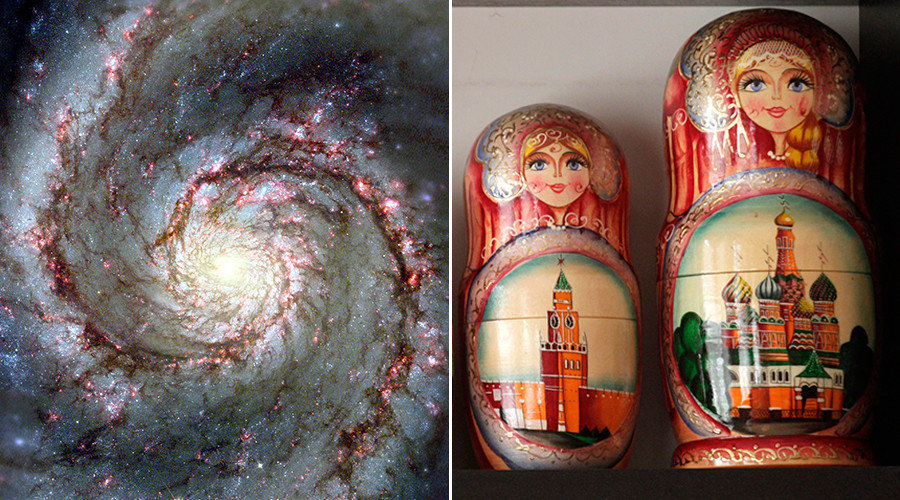
Russian nesting doll model gives scientists clues on the expansion of the universe

galaxy and russian doll cluster
© NASA / Reuters
If NASA's Chandra X-ray Observatory, the European Space Agency's Planck and a slew of optical telescopes' findings are too much to comprehend, the "Russian doll cluster" model may help to explain dark energy, dark matter and the expansion of the universe.

X-ray emissions from more than 300 galaxy clusters were studied by researchers from the University of Alabama in Huntsville to figure out how dark matter and dark energy operate, or the rate at which the universe is expanding.

Because galaxy clusters' X-ray emissions are similar in structure and size, their relationship to one another is akin to that of Russian dolls. By using the clusters as a point of reference, scientists are able to determine the rate at which they expanded.

Beaker

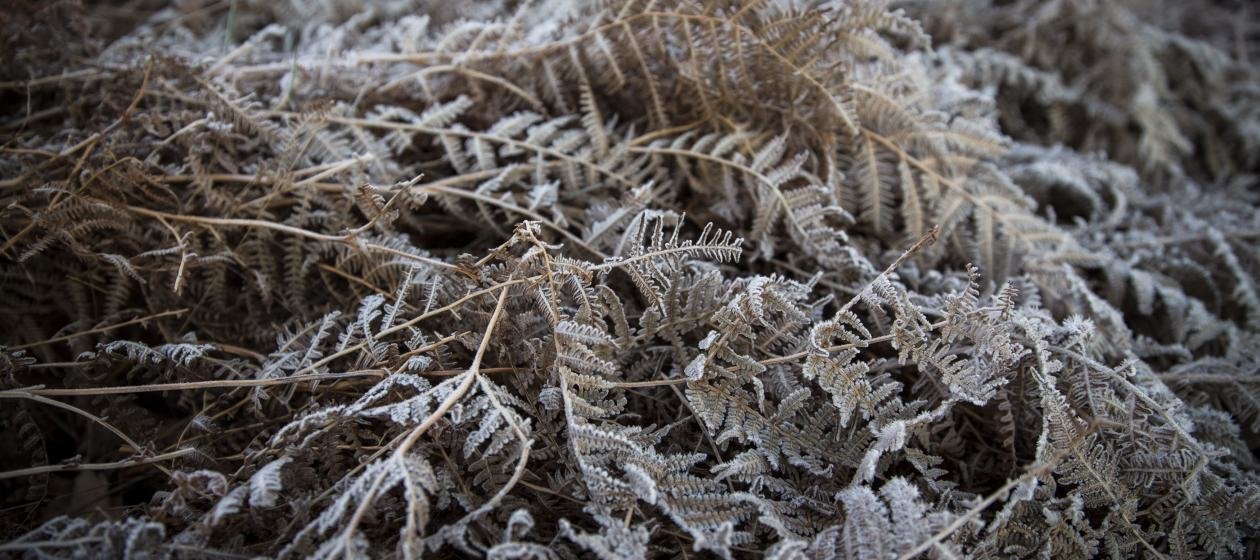
Harnessing the ice-making powers of bacteria - scientists crack mechanism

ice-making bacteria
© Rob Stothard/Getty Images
The first major debate over genetically modified organisms, in the late 1980s, was not over tomatoes, salmon, or corn, but instead a type of bacteria that can raise the freezing point of water. Opponents feared that the modified version, able to instead lower the freezing point of water, would spread into the wild and wreak havoc, possibly even altering the global climate system.

Thanks to the public uproar, we'll never know whether the "ice-minus" bacteria would've have wrought catastrophe or simply protected strawberries from frost, as its creators intended. But scientists remained interested in harnessing the ability to manipulate ice. Recently, a group of researchers uncovered what they believe is the secret to its special talent, which they hope will enable them to create nanotechnologies that mimic it — ice-minus, minus the supposed risk.

Pseudomonas syringae and other species of bacteria that induce ice to form around them (thus "ice-nucleating" bacteria) are found all over the world, and cause significant crop damage. Impurities in water usually prevent it from freezing until about 25 degrees Fahrenheit, but the bacteria can push the freezing point back toward 32 degrees Fahrenheit (zero degrees Celsius). The ice crystals that form in turn burst plant cell walls, letting the bacteria feed on nutrients from inside the cells. Wind carries the bacteria into the atmosphere, spreading it to new sources of food.

Beaker

Scientists discover mitochondria-free, eukaryotic cells

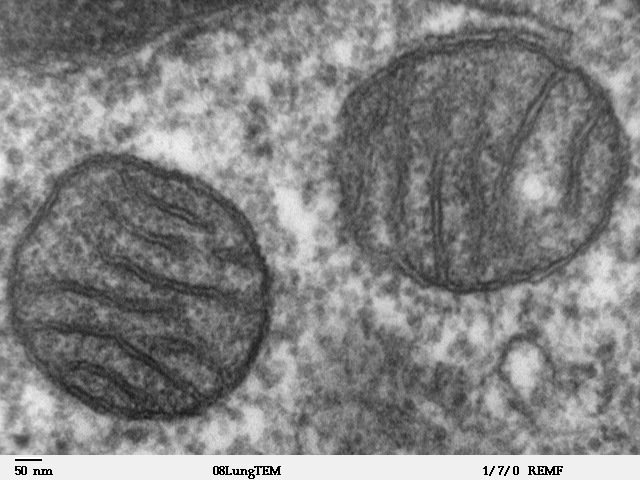
mitochondria
© Louisa Howard/Public DomainTwo mitochondria.
On Thursday, scientists made a surprise announcement. From a gut microbe in a chinchilla owned by one of the scientists, they had discovered some extraordinarily unique cells, according to NPR. Specifically, eukaryotic cells that have no mitochondria, but live on anyway.

A type of organelle, mitochondria were long thought to be essential to the life of eukaryotic cells in humans, animals, plants, and most other living things.

Fish

Researchers find evidence that cooperation, not struggle and competition is the driving force of evolution

fish diverging two species
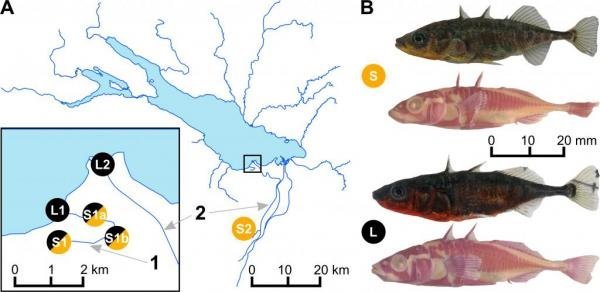
© Marques, et al./PLOS ONEThough they live and breed in the same area researchers witnessed a species of stickleback fish diverging into two separate species in Lake Constance which suggests species coexistence is possible only if there is an avoidance of competition and genetic cooperation.
New empirical evidence supports theoretical research that suggests cooperation -- not competition -- is the main driver of speciation and evolution.

The theory was developed by Roberto Cazzolla Gatti, an associate professor of ecology and biodiversity at Tomsk State University in Russia. It was inspired by the failure of Gause's principle of competitive exclusion to explain what was actually happening in ecosystems.

The principle -- which has come under attack in recent years -- states that two species competing for the same resources can't coexist in the long run, all other ecological factors being equal.

Gatti was able to show that if such a principle were true, speciation would never happen.

"In fact, if interspecific competition and the principle of competitive exclusion between different meta-populations (and then, species) were to take place, probably the coexistence of different species would never realize," Gatti explained. "We would see rather the survival of the most efficient one (which accumulates enough mutation to adapt and not to differentiate) and the extinction of the ancestor or those species belonging to other phyletic lines."

In its place, Gatti developed a new theory that suggests species coexistence and speciation is possible only if there is an avoidance of competition and genetic cooperation.

Pills

Study finds acetaminophen use induces empathy loss - makes you care less about other people's pain

tylenol acetaminophen big pharma
© Scott Olson / Agence France-PresseTylenol tablets, which contain acetaminophen.
Drugs that feature acetaminophen, such as Tylenol, may be quite good at helping people get through aches and pains, but they might also make them less sensitive to the pain or suffering of others.

In a new study, researchers from Ohio State University found that individuals who took painkillers featuring acetaminophen - an ingredient found in popular over-the-counter drugs such as Tylenol, Sudafed, Vicks and hundreds of others - were less likely to empathize with other people's pain than those who did not take the drug.

"These findings suggest other people's pain doesn't seem as big of a deal to you when you've taken acetaminophen," Dominik Mischkowski of the National Institutes of Health, a co-author of the study, said in a statement. "Acetaminophen can reduce empathy as well as serve as a painkiller."

Researchers said they don't currently know why exactly acetaminophen acts this way on people, but that the results have important implications for everyday life that can be concerning. Roughly 52 million adults in the US use some kind of medicine featuring this ingredient every week.

Ice Cube

Study suggests climate shift to extreme cold may have killed off Neanderthals

neanderthal reconstruction
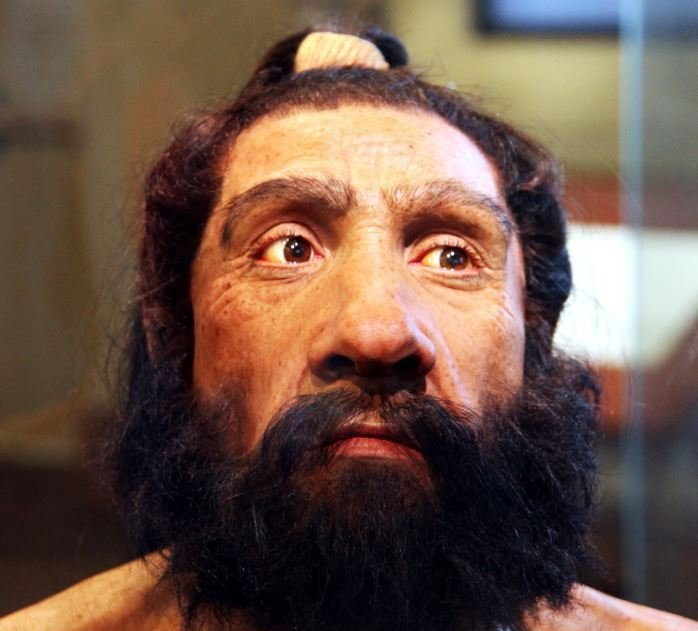
© John Gurche 2010Reconstruction of the head of the Shanidar 1 fossil, a Neanderthal male who lived c. 70,000 years ago.
New research suggests climate change may have contributed to extinction of Neanderthals

A researcher at the University of Colorado Denver has found that Neanderthals in Europe showed signs of nutritional stress during periods of extreme cold, suggesting climate change may have contributed to their demise around 40,000 years ago.

Jamie Hodgkins, a zooarchaeologist and assistant professor in the Department of Anthropology at CU Denver, analyzed the remains of prey animals and found that Neanderthals worked especially hard to extract every calorie from the meat and bones during colder time periods. Her results were published in the Journal of Human Evolution last week.

Info

Early Earth had thinner atmosphere

Early Earth's Atmosphere
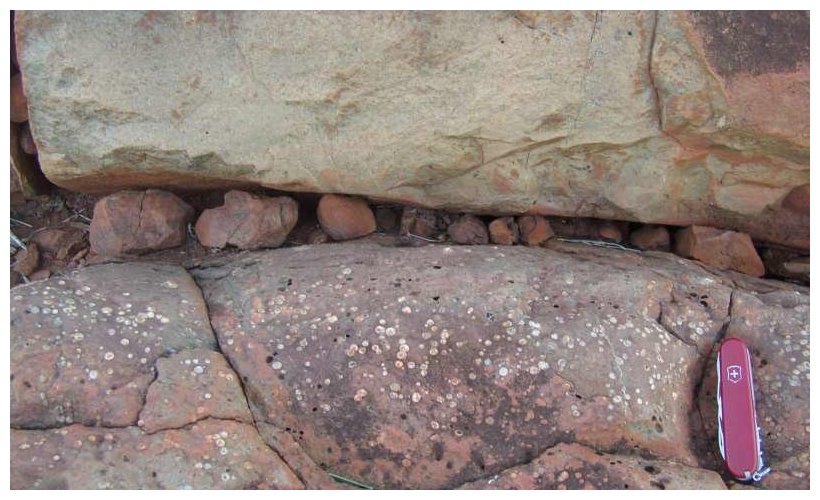
© Sanjoy Som/University of Washington One of the lava flows analyzed in the study, from the shore of Australia's Beasley River. Gas bubbles that formed as the lava cooled, 2.7 billion years ago, have since filled with calcite and other minerals. The bubbles now look like white spots. Researchers compared bubble sizes from the top and bottom of the lava flows to measure the ancient air pressure.
The idea that the young Earth had a thicker atmosphere turns out to be wrong. New research from the University of Washington uses bubbles trapped in 2.7 billion-year-old rocks to show that air at that time exerted at most half the pressure of today's atmosphere.

The results, published online May 9 in Nature Geoscience, reverse the commonly accepted idea that the early Earth had a thicker atmosphere to compensate for weaker sunlight. The finding also has implications for which gases were in that atmosphere, and how biology and climate worked on the early planet.

"For the longest time, people have been thinking the atmospheric pressure might have been higher back then, because the sun was fainter," said lead author Sanjoy Som, who did the work as part of his UW doctorate in Earth and space sciences. "Our result is the opposite of what we were expecting."

The idea of using bubbles trapped in cooling lava as a "paleobarometer" to determine the weight of air in our planet's youth occurred decades ago to co-author Roger Buick, a UW professor of Earth and space sciences. Others had used the technique to measure the elevation of lavas a few million years old. To flip the idea and measure air pressure farther back in time, researchers needed a site where truly ancient lava had undisputedly formed at sea level.

Their field site in Western Australia was discovered by co-author Tim Blake of the University of Western Australia. There, the Beasley River has exposed 2.7 billion-year-old basalt lava. The lowest lava flow has "lava toes" that burrow into glassy shards, proving that molten lava plunged into seawater. The team drilled into the overlying lava flows to examine the size of the bubbles.

Network

Siri creators unveil Viv, a 'dynamic program generation' bot to run your life

Viv advertisement
© viv.ai
Apple's virtual assistant, known as Siri, is on the verge of becoming obsolete. Wowing users with conversation and instant knowledge is one thing, but Viv, the latest artificial intelligence bot from Siri's creators, can do much more.

For as long as Siri has been around, four years, creators Dag Kittlaus and Adam Cheyer have been developing Viv, and on Monday, the public got its first look at what she ... er, it can do.

Whereas Siri could pass along questions to search engines, "where the magic comes in" with Viv is in its "dynamic program generation," a yet-to-be patented technology that Kittlaus described as "software writing itself" during a 20-minute demo at TechCrunch Disrupt NYC.

"Will it be warmer than 70 degrees near the Golden Gate bridge after 5:00pm the day after tomorrow?" Kittlaus asked Viv, and within 10 milliseconds, Viv had run a 44-step program to give the correct answer: "No, it won't be that warm Wednesday after 5:00pm."