Science & TechnologyS


Blue Planet

Real-time 3D map of every object in Earth's orbit shows shocking amount of debris

Map of space debris around Earth
© stuffin.space
A real-time, interactive, 3D, world map that shows all of the satellites and (a slightly worrying amount of) orbital rubbish around Earth is every space nerd's dream.

'Stuff in Space' is an online map that uses data from a US Department of Defense website, Space Track, to monitor every item over 10 cm in orbit around Earth, except for top-secret military satellites, naturally.

Better Earth

NASA claims to have found more than 1,200 new planets that can support life

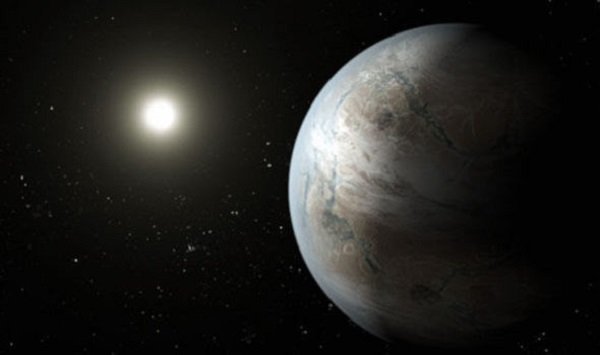
Kepler 452b
© NASAA NASA CGI of Kepler 452b, an Earth-like planet discovered last July.
The US space agency has just announced the discovery of the new "exoplanets" which are considered as similar to Earth due to their distance from the star they orbit.

Timothy Morton, associate research scholar at Princeton University in New Jersey, said: "We have discovered 1,284 new planets - the most explanets ever announced at one time."

It more than doubles the previous amount of exoplanets found by the Kepler Telescope, taking the total number to 2,325.

It comes after NASA said they now also believe every star in space has at least one planet orbiting it, further increasing the chance of life evolving somewhere.

Paul Hertz, Astrophysics Division director at NASA Headquarters in Washington, said: "The Kepler specialist telescope is the first capable of detecting call rocky planets in the habitable zone of their parent star.

Bizarro Earth

North American tectonic plate peeling off

Earth's Mantle
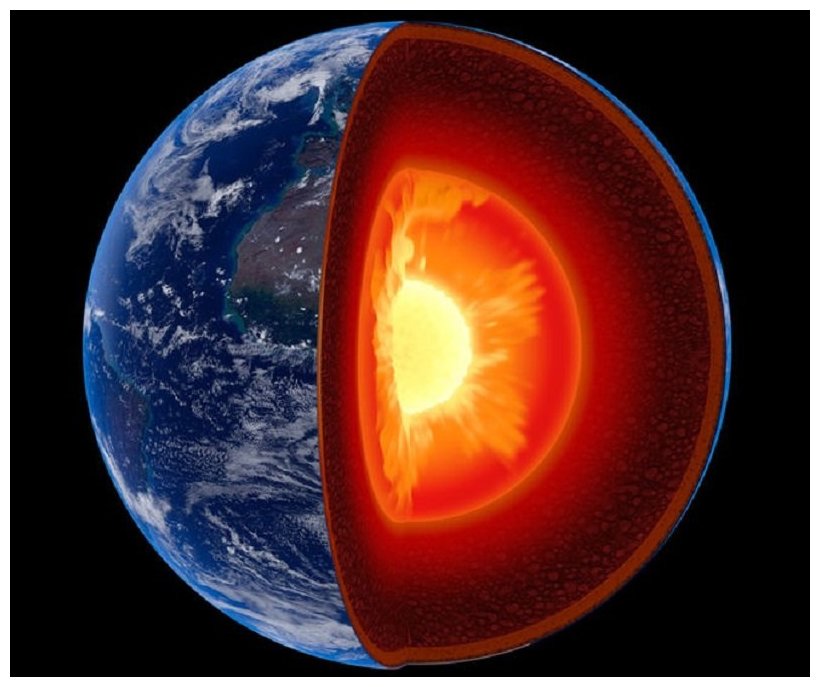
© Johan Swanepoel/ShutterstockScientists suspect that chunks from the bottom of the North American tectonic plate, which is the upper portion of the mantle, are peeling off and sinking. Replacing the resulting void is gooey material from the asthenosphere.
An odd phenomenon may explain why the Southeastern United States has experienced recent earthquakes, even though the region sits snugly in the middle of a tectonic plate and not at the edges, where all the ground-shaking action usually happens.

This seismicity — or relatively frequent earthquakes — may be the result of areas along the bottom of the North American tectonic plate peeling off, the researchers said. And this peeling motion is likely to continue, leading to more earthquakes in the future, like the 2011 magnitude-5.8 temblor that shook the nation's capital.

To figure out the cause of these earthquakes, Berk Biryol, a seismologist at UNC Chapel Hill, and colleagues created 3D images of the uppermost part of Earth's mantle, which is just below the crust and comprises the bottom of a tectonic plate. These tectonic plates scoot around atop a layer of warm, viscous fluid called the asthenosphere.

The resulting X-ray images revealed that the plate's thickness in the southeast United States was uneven, with thick regions of dense, old rock combined with thinner areas composed of younger rocks that were also less dense.

Mars

NASA detects atomic oxygen in Martian atmosphere for first time in four decades

mars oxygen spectrum
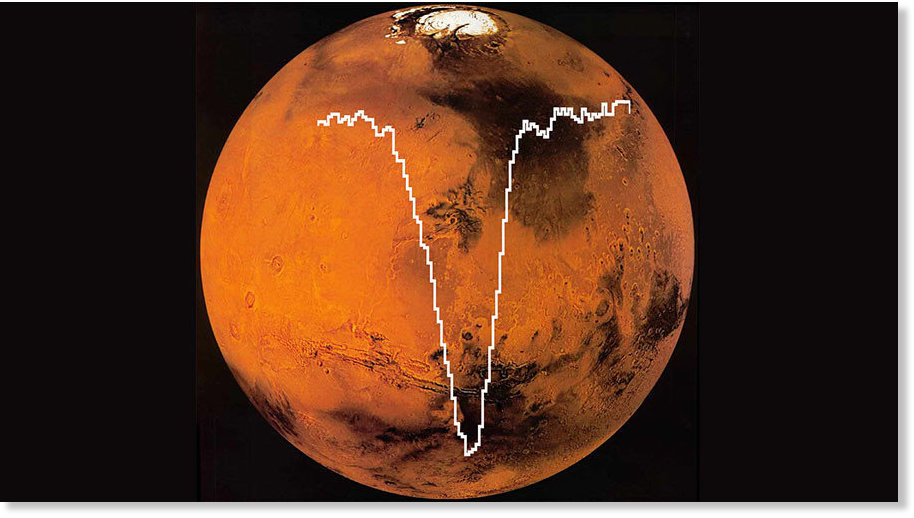
© NASASOFIA/GREAT spectrum of oxygen [O I] superimposed on an image of Mars from the MAVEN mission. The amount of atomic oxygen computed from this SOFIA data is about half the amount expected
NASA researchers have detected atomic oxygen in the Martian atmosphere for the first time in four decades. The discovery is extremely important for the space agency, which aims to send humans to the Red Planet in the 2030s.

The oxygen atoms were found in the upper atmosphere of Mars, known as the mesosphere. It marks the first time that oxygen has been observed in the Martian atmosphere since the Viking and Mariner missions of the 1970s.

"Atomic oxygen in the Martian atmosphere is notoriously difficult to measure," Stratospheric Observatory for Infrared Astronomy (SOFIA) project scientist Pamela Marcum said in a statement.

Blue Planet

Unsolved: Russian scientists reveal Earth's magnetism is more mysterious than ever

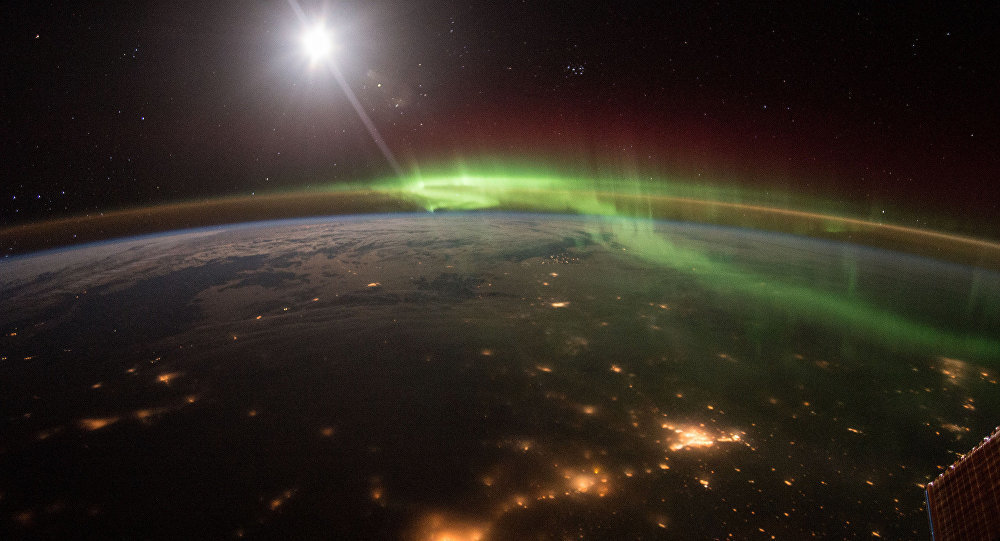
Aurora from space
© Flickr/ Scott Kelly / NASA
An international team of scientists led by Russian Professor Igor Abrikosov have disproved a popular theory about the formation of the Earth's magnetic field.

A group of scientists from Linköping University (Sweden), Jožef Stefan Institute (Slovenia), Russia's National University of Science and Technology MISiS and France's École Polytechnique have helped to disprove a widely-held theory about the Earth's magnetic field, RIA Novosti reported on Tuesday.

Along with the Earth's atmosphere, the magnetic field provides a defense for the Earth from the charged particles in cosmic rays. By deflecting the particles away from Earth, many are preventing from even hitting the atmosphere directly, ensuring that the planet's life-forms are protected.

Magnify

Irreducibly complex: Microorganisms help scientists build a strong case for intelligent design

human evolution
© AMNH/R. Mickens
We're approaching the twenty-year anniversary of the publication of Darwin's Black Box (it appeared on August 2, 1996, to be precise). Michael Behe's book inspired a generation of Darwin discontents and showed that intelligent design was (and still is) firmly based on cutting-edge science. Among other highlights, he showcased two cellular organelles to illustrate his concept of irreducible complexity: the cilium and the flagellum.

These organelles, protruding from the cell into the environment, could not be built by a Darwinian mechanism, he argued, because they are composed of multiple, independent parts required for function. Like a mousetrap, they could not work unless all the parts were present together at the same time.

All true, but in the intervening years molecular biologists have learned a great deal more about cilia and flagella. The revelations keep coming, like down to the day before yesterday.

Life Preserver

Rats can smell tuberculosis, dogs can smell cancer and now they're being trained to save our lives

cancer detection dog
In a small, hot room in a compound located in Tanzania's lush southern highlands are three white-clad technicians, a glass-and-metal chamber and a large brown rat named Charles.

After being gently dropped into the chamber, Charles aims his long snout towards the first of a series of ten sliding metal plates in the chamber's base. A technician swiftly opens it, revealing a small hole. Charles sniffs at it... and moves on. The hole is re-closed, and there's a clink of metal as the next plate is yanked back. This time, Charles is gripped. He sniffs hard, scratching at the metal, the five claws on each paw splayed with the pressure. The technician calls out "Two!"

Over by the window, her colleague is holding a chart, which he keeps raised so the others cannot see it. He inserts a tick. I glance over. The chart is a grid of small boxes, ten across by ten down, each marked with an alphanumeric code. Two of the boxes in each line are shaded grey. The tick has been placed in one that is white. It's highly possible that Charles has just saved someone's life.

Charles is an African giant pouched rat, a species endemic to sub-Saharan Africa. He's also a pioneer, one of 30 of his species that live and work here in Morogoro, a few hundred kilometres west of Tanzania's largest city, Dar es Salaam, on a programme to sniff out tuberculosis (TB).

TB is a disease that can destroy the lungs. About 9 million new cases are diagnosed worldwide every year, one-quarter of them in Africa. Africa also has the highest TB death rate per head of population. Antibiotics can cure TB, but it's fatal if untreated, and many patients are never diagnosed. This is partly because the 125-year-old microscope-based test used across Tanzania (and in many other cash-strapped countries) picks up only about 60 per cent of cases, a figure that drops as low as 20 per cent for people also infected with HIV.

This is where Charles the rat comes in. Charles and his rat colleagues sniff cough-and-spit samples provided by suspected TB patients. The rats aren't infallible, but they do detect about 70 per cent of cases, and it doesn't matter to them if a patient has HIV - which matters a great deal in Tanzania, where about four in every ten people with TB are HIV positive.

This particular morning Charles has sniffed 100 samples, missing one that has been identified as positive by the public clinic - shaded grey on the chart - but identifying 12 new suspected cases, which will now go for secondary checking.

Igloo

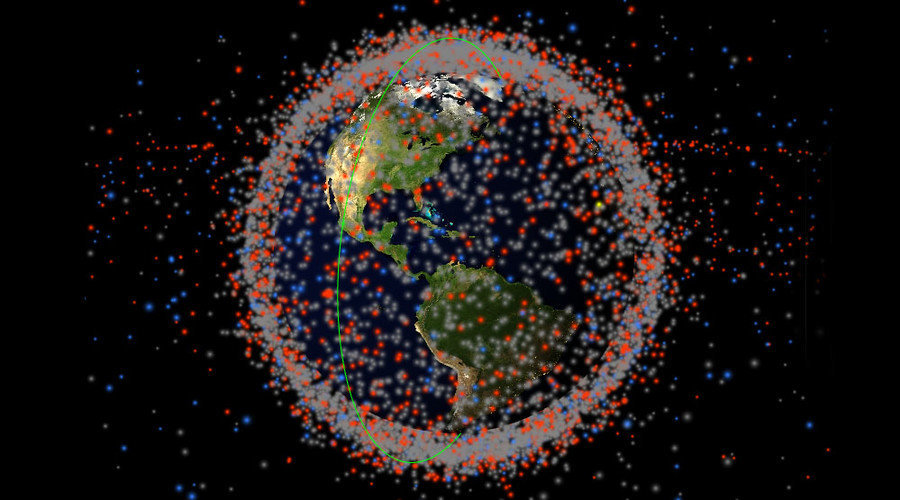
Global cooling skyscraper proposed to save the planet

Global Cooling Skyscraper
© Paolo Venturella ArchitectureGlobal Cooling Skyscraper.
Italian architect Paolo Venturella has proposed a gigantic megastructure to prevent global warming, though building it may present a few practical difficulties.
Our planet is going through the irreversible process of global warming, and even if various strategies have been planned to solve the problem, none of them provided a solution.

This is causing natural disasters all over the planet. The temperature all around the planet is increasing making the ice in the pole melt.

Only a "global strategy" can be adopted.

To cool down the temperature a huge greenhouse is placed in between the sun and us.

This works according the same principle of the "solar tower". Thanks to the accumulation of heat in the glazed structure, air flows naturally from hot to cold generating rapid and strong flows. These flows bring hot air far from the Earth cooling down the temperature of the whole globe.

The air flows restore better climate conditions and moreover generate renewable energies by wind turbines placed inside the structures.
Read the rest of Paolo's article here.

Magnet

NOAA: Strong unexpected geomagnetic storms in progress

Geomagnetic storm
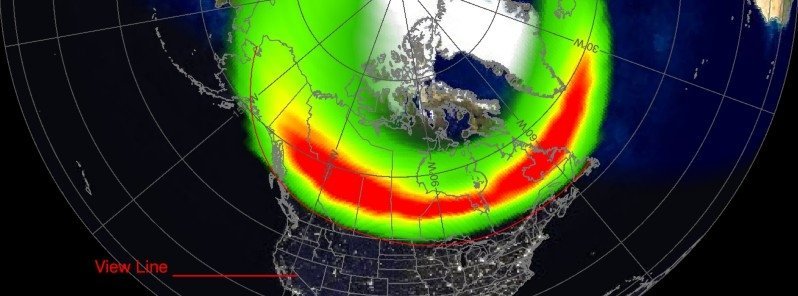
© NOAA/SWPCProbability of visible aurora at 08:05 UTC on May 8, 2016.
A G3 - Strong geomagnetic storm conditions were observed beginning 05:59 UTC on May 8, 2016. G2 - Moderate to G3 - Strong geomagnetic storm conditions are expected through the rest of the day and possibly into May 9 and 10. This activity is caused by a recurrent, equatorial, negative polarity coronal hole high speedstream.

Geomagnetic K-index of 5 (G1 - Minor geomagnetic storm) threshold was first reached at 02:25 UTC on May 8. K-index of 6 (G2 - Moderate) threshold was reached just 30 minutes after, at 02:59 UTC. Over the next three hours, conditions further deteriorated and by 05:59 a G3 - Strong geomagnetic storm (K-index of 7) was in progress.

Under G3 - Strong geomagnetic storms, the area of impact is primarily poleward of 50 degrees Geomagnetic Latitude. Power system voltage irregularities are possible, false alarms may be triggered on some protection devices. Spacecraft systems may experience surface charging; increased drag on low Earth-orbit satellites and orientation problems may occur. Intermittent satellite navigation (GPS) problems, including loss-of-lock and increased range error may occur. Radio - HF (high frequency) radio may be intermittent. Aurora may be seen as low as Pennsylvania to Iowa to Oregon

G3 - Strong geomagnetic storm lasted for about 1 hour, until 06:55, when G1 - Minor storm conditions were observed again. This weakening, however, didn't last long.

At 08:07 UTC, observed K-index reached 6 again (G2 - Moderate).

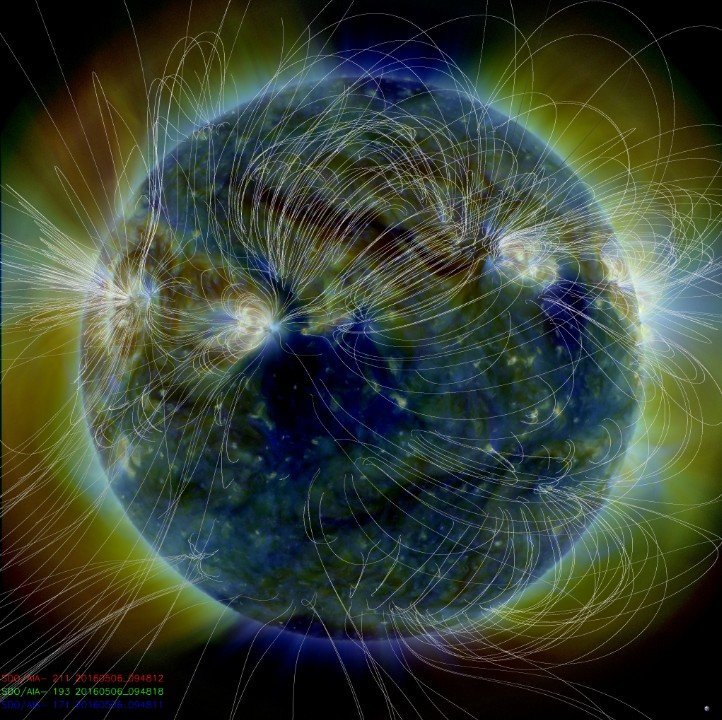
Coronal hole as observed by NASA's SDO (AIA 211/193/171) on May 6, 2016.
Coronal hole
© NASACoronal hole as observed by NASA's SDO (AIA 211/193/171) on May 6, 2016.
It is worth noting that G2 and 3 geomagnetic storms were not expected.

Magnify

New technology enables researchers to 'see' protein aberrations that cause neurological diseases

genetic laboratory
© Manuel Balce Ceneta / Reuters
The fundamental rule of molecular biology is "DNA makes RNA makes protein," but up until now biochemists haven't "seen" it in action, as Albert Einstein College scientists did by adding codes of fluorescent proteins into live cells and neurons.

Albert Einstein College scientists were trying to overcome two challenges - finding a way to visualize single molecules of messenger RNA, or mRNA, as well as single molecules of protein translated from mRNA. Proteins perform most cellular functions and are the reason we are all alive.

"Translation is the fundamental biological process for converting mRNA's information into proteins," said the paper's co-author, Dr. Robert Singer, who is co-chair of anatomy and structural biology and co-director of the Gruss Lipper Biophotonics Center at Einstein.