Science & TechnologyS


Hiliter

God's red pencil? CRISPR and the myths of precise genome editing

crispr gene editing
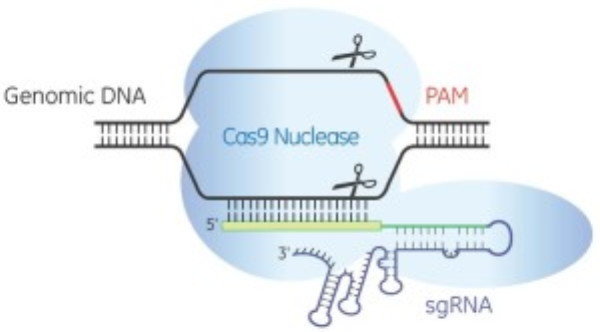
For the benefit of those parts of the world where public acceptance of biotechnology is incomplete, a public relations blitz is at full tilt. It concerns an emerging set of methods for altering the DNA of living organisms. "Easy DNA Editing Will Remake the World. Buckle Up"; "We Have the Technology to Destroy All Zika Mosquitoes"; and "CRISPR: gene editing is just the beginning." (CRISPR is short for CRISPR/cas9, which is short for Clustered Regularly-Interspaced Short Palindromic Repeats/CRISPR associated protein 9; Jinek et al., 2012. It is a combination of a guide RNA and a protein that can cut DNA.)

The hubris is alarming; but the more subtle element of the propaganda campaign is the biggest and most dangerous improbability of them all: that CRISPR and related technologies are "genome editing" (Fichtner et al., 2014). That is, they are capable of creating precise, accurate and specific alterations to DNA.

Even the "serious" media is in on it. Nature magazine in July 2015 published "Super-muscly pigs created by small genetic tweak." Two value judgments in a seven word headline: "small" and "tweak," neither supported by the content of the article. Still enthralled, if not wholly original, just last week the NY Times opinion section offered: "Tweaking genes to save species."

Mars

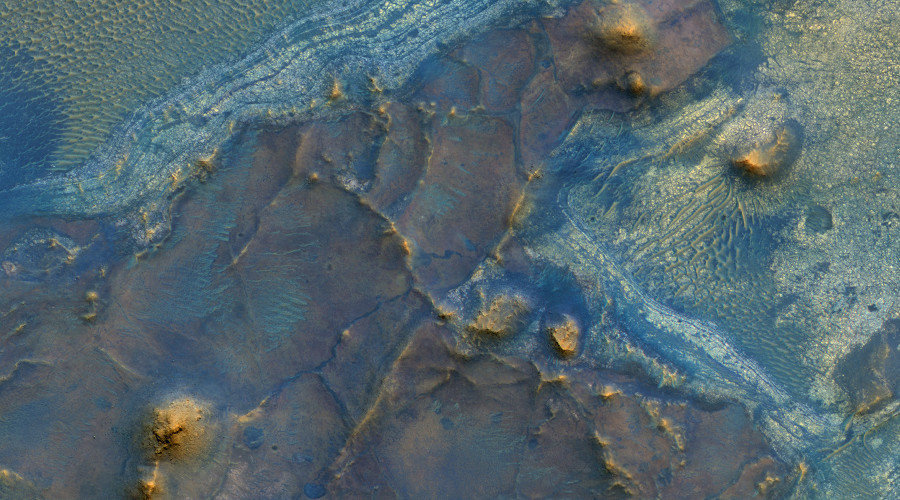
Red is not its only color: NASA captures Mars' most colorful spots

Color of Mars
© NASA/JPL-Caltech/Univ. of Arizona
Vibrant pictures taken by NASA's Mars Reconnaissance Orbiter reveal Nili Fossae, Mars' northwest region, as one of the most colorful spots on the Red Planet. Check it out for yourself.

The mesmerizing image was captured by the High Resolution Imaging Science Experiment (HiRISE) camera installed on the Mars Orbiter.

Many Martian regions appear smoothed by dust and regolith, but in this stunning pic we see the Nili Fossae bedrock very well exposed, except for spots where there are sand dunes.

People

Neanderthal Y chromosome may have caused genetic incompatibility with modern humans keeping the species separate

y chromosome missing neanderthals
© Will Oliver/PAThe Y chromosome is a hindrance
Modern humans diverged from Neanderthals some 600,000 years ago - and a new study shows the Y chromosome might be what kept the two species separate.

It seems we were genetically incompatible with our ancient relatives - and male fetuses conceived through sex with Neanderthal males would have miscarried. We knew that some cross-breeding between us and Neanderthals happened more recently - around 100,000 to 60,000 years ago.

Neanderthal genes have been found in our genomes, on X chromosomes, and have been linked to traits such as skin colour, fertility and even depression and addiction. Now, an analysis of a Y chromosome from a 49,000-year-old male Neanderthal found in El Sidrón, Spain, suggests the chromosome has gone extinct seemingly without leaving any trace in modern humans.

This could simply be because it drifted out of the human gene pool or, as the new study suggests, it could be because genetic differences meant that hybrid offspring who had this chromosome were infertile - a genetic dead end.

Blue Planet

Deep-sea expedition in Hawaii recovers samples and images of previously unseen life and landforms

sea cucumber hawaii
© NOAA Office of Ocean Exploration and Research, 2016 Hohonu MoanaSea cucumber spotted swimming
Eight dives into the deep waters of the Papahanaumokuakea Marine National Monument of north-west Hawaii have resulted in thousands of samples and images of never-before-seen life and landforms.

In general, the deeper you go in the ocean, the fewer living organisms you find. But during a 4000-metre-deep dive this month, shipboard scientists came across a large aggregation of corals and sponges.

"It was surprising to see a lot of life that deep. It was almost twice as deep as any other high density community in the region," says Dan Wagner, the biology science lead for this year's NOAA expedition, part of a three-year project to look at this region that began in 2015. This was the final dive of the expedition, and is only the third below 4000 metres in the region, he says.

Surprises have come with every dive, including the discovery of a previously unknown deep-sea octopus (see video, below). "Because this is the last unexplored place in the world in a way, it's so common that the creatures we see are new to science," says expedition coordinator Brian Kennedy.

The 225,000 square kilometre marine monument is one of the most geologically active areas on the planet. This year's expedition mapped the topography of an unnamed 1400-metre-tall seamount that had never been surveyed.

Cell Phone

Phone network hackers could steal your messages

OMG!
© Pathdoc / ShutterStock
When known security issues regarding the global telephone network were resuscitated by the American television program 60 Minutes last month, we reassured people that end-to-end-encrypted, Internet-based services such as WhatsApp would stay safe. We may have been wrong.

Fireball

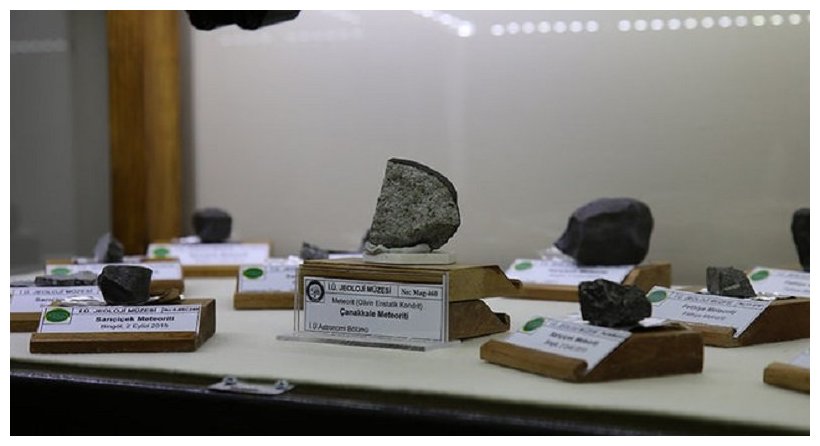
Amino acids detected inside meteorite in Turkey

Meteorite on display at Istanbul
© Anadolu Agency PhotoA part of the meteorite on display at Istanbul University's Geology Museum.
A research team from National Aeronautics and Space Administration (NASA) and Istanbul University detected amino acids — important organic compounds that form the human body — in a meteorite that hit the western Turkey 52 years ago.

The meteorite weighing four kilograms landed in western Çanakkale province's Bayramiç district in 1964. Following initial research on its mineral structure, the meteorite was sent to NASA in 2012 for further examination. Following a four-year research, scientists found that the meteorite contained 19 different types of amino acids, including glycine, alanine, valine, serine, glutamic acid and aspartic acid.

Such a finding is considered important as it is the first time that amino acids have ever been detected in a meteorite that fell in Turkey.

Speaking to the state-run Anadolu Agency (AA), Yavuz Örnek, an associate professor at Istanbul University's Institute of Marine Sciences and Management, reportedly said that approximately 500 meteorites land on earth each year, but only around 10 percent of these could be retrieved while the rest fall in lakes, oceans, deserts and polar regions.

Bulb

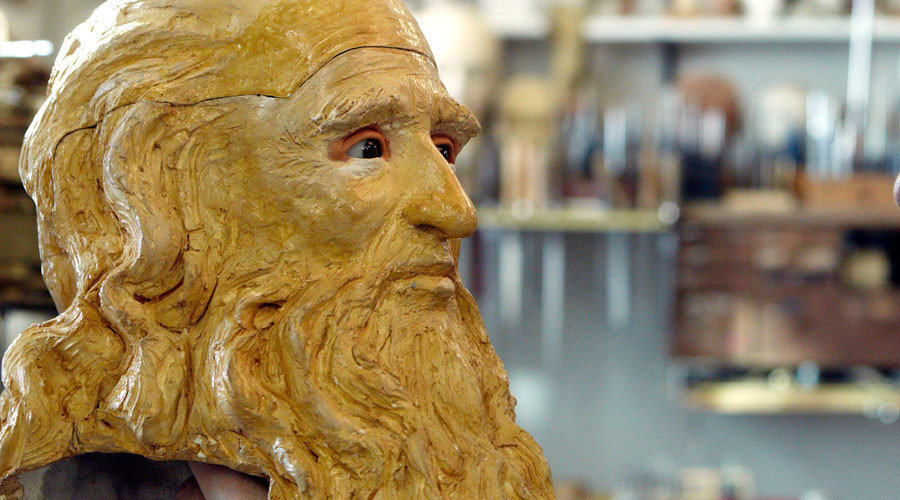
Scientists to restore da Vinci's face with genetic material recovered from his drawings

da vinci dna
© Denis Balibouse / Reuters
A group of international scientists have announced their plans to trace the DNA of Leonardo da Vinci in an attempt to reconstruct the face of the world famous Renaissance's artist and unveil a number of mysteries still surrounding him.

The ambitious "Leonardo Project," involving all kinds of scientists from geneticists to art historians and prominent personalities such as Bill Gates and the Britain's Queen Elizabeth II, who possess some of his sketches, aims at getting a closer, more scientific-based look at the Italian genius's lifestyle, diet and, most importantly, his face - by using the genetic material retrieved from his paintings and notebooks.

"This is a fabulous, interdisciplinary project," said Rhonda Roby, geneticist at the Craig Venter Institute in California, taking part in the endeavor, which is hoped to take three years and end right in time for the 500th anniversary of Leonardo's death.

The study outlined in the Human Evolution journal will also try to shed light on genetic predispositions (if there were any) that made Leonardo so special that he predicted helicopters and tanks some 500 years before they were developed.

Cloud Grey

NASA: Expanding tropics driving high altitude clouds toward poles

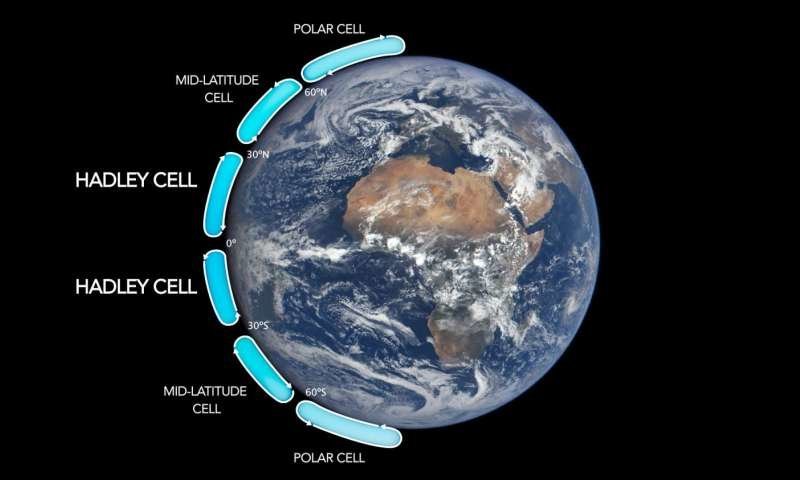
Hadley cells
© NASAThe Hadley cells describe how air moves through the tropics on either side of the equator. They are two of six major air circulation cells on Earth.
A new NASA analysis of 30-years of satellite data suggests that a previously observed trend of high altitude clouds in the mid-latitudes shifting toward the poles is caused primarily by the expansion of the tropics.

Clouds are among the most important mediators of heat reaching Earth's surface. Where clouds are absent, darker surfaces like the ocean or vegetated land absorb heat, but where clouds occur their white tops reflect incoming sunlight away, which can cause a cooling effect on Earth's surface. Where and how the distribution of cloud patterns change strongly affects Earth's climate. Understanding the underlying causes of cloud migration will allow researchers to better predict how they may affect Earth's climate in the future.

George Tselioudis, a climate scientist at NASA's Goddard Institute for Space Studies and Columbia University in New York City, was interested in which air currents were shifting clouds at high altitude - between about three and a half and six miles high - toward the poles.

The previous suggested reason was that climate change was shifting storms and the powerful air currents known as the jet streams - including the one that traverses the United States - toward the poles, which in turn were driving the movement of the clouds.

To see if that was the case, Tselioudis and his colleagues analyzed the International Satellite Cloud Climatology Project data set, which combines cloud data from operational weather satellites, including those run by the National Oceanic and Atmospheric Administration, to provide a 30-year record of detailed cloud observations. They combined the cloud data with a computer re-creation of Earth's air currents for the same period driven by multiple surface observations and satellite data sets.

What they discovered was that the poleward shift of the clouds, which occurs in both the Northern and Southern Hemispheres, connected more strongly with the expansion of the tropics, defined by the general circulation Hadley cell, than with the movement of the jets.

Music

iTunes stole my music. No, seriously.

headphones
The scene of the crime
"The software is functioning as intended," said Amber.
"Wait," I asked, "so it's supposed to delete my personal files from my internal hard drive without asking my permission?"
"Yes," she replied.

I had just explained to Amber that 122 GB of music files were missing from my laptop. I'd already visited the online forum, I said, and they were no help. Although several people had described problems similar to mine, they were all dismissed by condescending "gurus" who simply said that we had mislocated our files (I had the free drive space to prove that wasn't the case) or that we must have accidentally deleted the files ourselves (we hadn't). Amber explained that I should blow off these dismissive "solutions" offered online because Apple employees don't officially use the forums—evidently, that honor is reserved for lost, frustrated people like me, and (at least in this case) know-it-alls who would rather believe we were incompetent, or lying, than face the ugly truth that Apple has vastly overstepped its boundaries.

What Amber explained was exactly what I'd feared: through the Apple Music subscription, which I had, Apple now deletes files from its users' computers. When I signed up for Apple Music, iTunes evaluated my massive collection of Mp3s and WAV files, scanned Apple's database for what it considered matches, then removed the original files from my internal hard drive. REMOVED them. Deleted. If Apple Music saw a file it didn't recognize—which came up often, since I'm a freelance composer and have many music files that I created myself—it would then download it to Apple's database, delete it from my hard drive, and serve it back to me when I wanted to listen, just like it would with my other music files it had deleted.

2 + 2 = 4

Your skin's microbial inhabitants might stick around, even if you wash

This tiny ecosystem is surprisingly stable from months to years, study reveals

handwashing
© Sasiistock / iStockWashing your hands will make them clean, but it may not get rid of the microbes that live there.
Everyone has cooties—a minute menagerie of bacteria, viruses and fungi that lurk in the microscopic cracks and crevices of your skin.

But before you go running to the sink, know that many of these microbes are beneficial. And, according to new research, this tiny ecosystem, known as the skin microbiome, remains surprisingly stable over time despite regular washing.

Comment: