Science & TechnologyS


Galaxy

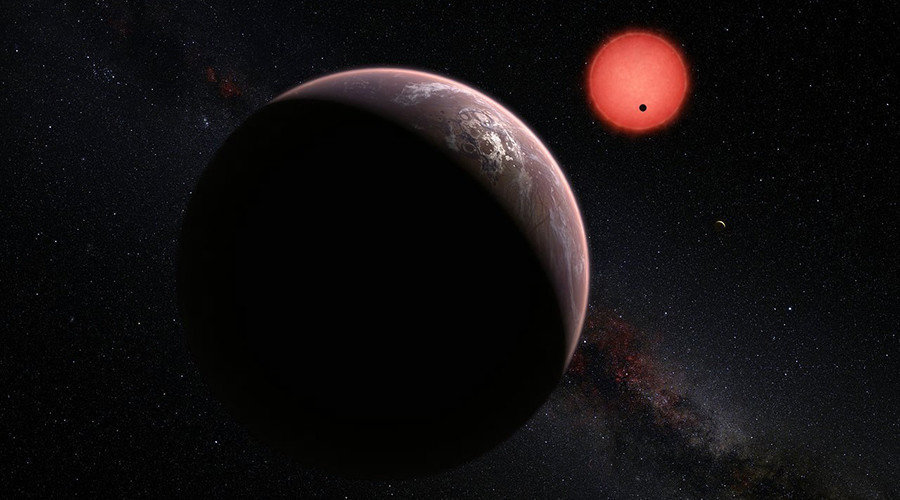
Three new Earth-sized exoplanets offer best chance of finding life beyond Solar System

Artist impression of exoplanets
© ESO Astronomy facebook.com
A team of astronomers have discovered three new "exoplanets" orbiting around a nearby ultracool dwarf star some 40 light years from earth.

Details of the planets were outlined in research published in the journal Nature, and show how Earth-sized planets were detected by a Belgian robotic telescope based in Chile.

Also known as "TRAPPIST-1", the dwarf star is considered to be part of the "Earth's neighborhood" and is believed to be 500 million years old with a cooler temperature than the sun.

Michael Gillon, one of the authors of the study, said dwarf stars such as TRAPPIST-1 are common in the Milky Way, but this is the first time planets have been tracked in the vicinity of one of them.

Cardboard Box

Gestating on U.S. research farms: Human-animal chimeras

chimera
A radical new approach to generating human organs is to grow them inside pigs or sheep.

Braving a funding ban put in place by America's top health agency, some U.S. research centers are moving ahead with attempts to grow human tissue inside pigs and sheep with the goal of creating hearts, livers, or other organs needed for transplants.

The effort to incubate organs in farm animals is ethically charged because it involves adding human cells to animal embryos in ways that could blur the line between species.

Last September, in a reversal of earlier policy, the National Institutes of Health announced it would not support studies involving such "human-animal chimeras" until it had reviewed the scientific and social implications more closely.

The agency, in a statement, said it was worried about the chance that animals' "cognitive state" could be altered if they ended up with human brain cells.

Bulb

Neuroscientists create 'atlas' showing how our vocabulary is mapped in the brain

brain map vocabulary
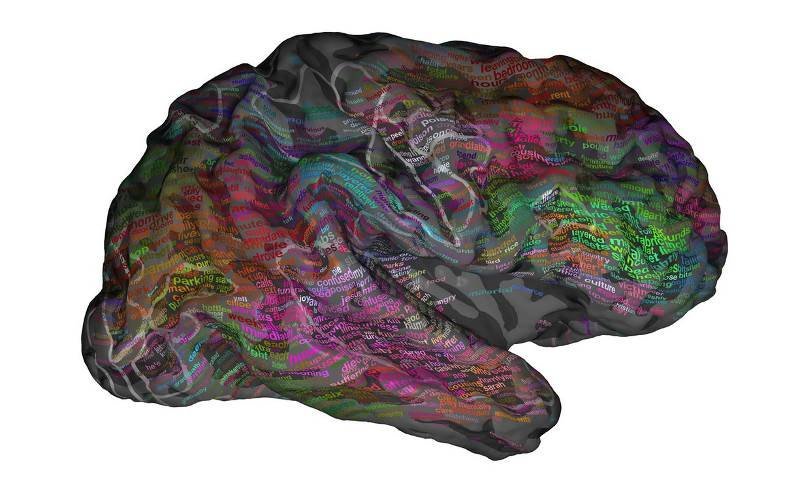
© Alexander Huth / The Regents of the University of CaliforniaOne person’s right cerebral hemisphere. The overlaid words, when heard in context, are predicted to evoke strong responses near the corresponding location. Green words are mostly visual and tactile, red words are mostly social.
Using brain imaging, scientists have built a map displaying how words and their meanings are represented across different regions of the brain

Scientists have created an "atlas of the brain" that reveals how the meanings of words are arranged across different regions of the organ.Like a colourful quilt laid over the cortex, the atlas displays in rainbow hues how individual words and the concepts they convey can be grouped together in clumps of white matter.

"Our goal was to build a giant atlas that shows how one specific aspect of language is represented in the brain, in this case semantics, or the meanings of words," said Jack Gallant, a neuroscientist at the University of California, Berkeley.

No single brain region holds one word or concept. A single brain spot is associated with a number of related words. And each single word lights up many different brain spots. Together they make up networks that represent the meanings of each word we use: life and love; death and taxes; clouds, Florida and bra. All light up their own networks.

Galaxy

Big Bang made matter; black holes get rid of it

black hole
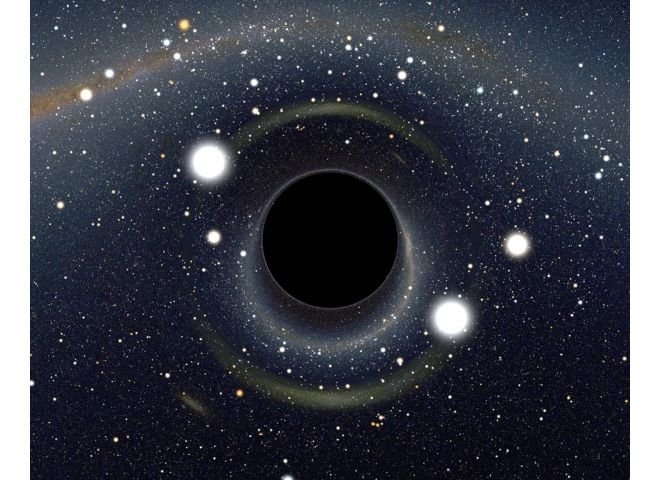
© NASABlack holes suck in matter, which adds to their mass, and they convert that mass into low-intensity radiation -- essentially turning matter into nothingness. This is a computer-generated image of a black hole.
People often ask me where all of the matter came from in the Big Bang. You could just as easily ask: Where does all of the matter go after such a long time?

One place that matter ends up is in a black hole. Think of a black hole as nature's landfill — any mass that comes close enough gets sucked in and becomes part of the slightly bigger black hole.

What happens to all of that mass? It never reappears because even the tiniest electron gets stuck inside forever. What happens in a black hole stays in a black hole.

In a famous paper, Stephen Hawking showed that black holes evaporate over time. It's now well established that black holes glow slightly by emitting long wavelength light, but the intensity of this radiation is so low that it can't be detected from far away.

Moon

NASA scientists gain new insight on mysterious 'lunar swirls'

lunar swirls moon
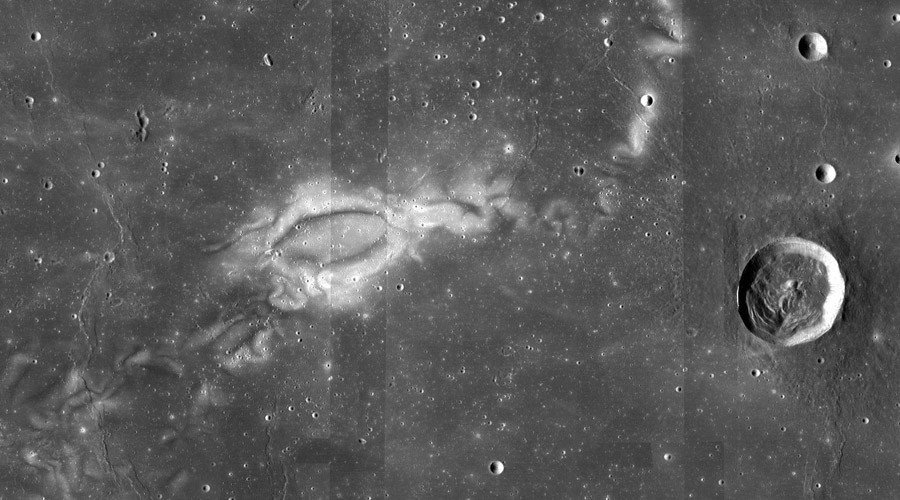
© NASALunar swirls
New research and lunar observations from NASA have provided new insight into how the moon got its mysterious 'tattoos' - swirling patterns of light and dark across the satellite's surface.

The patterns, referred to as 'lunar swirls', are unique to the moon and have been found at over 100 locations on its surface.

John Keller, project scientist for NASA's Lunar Reconnaissance Orbiter (LRO) mission describes the swirls as looking "almost painted on the surface of the moon" and says their origin has been a mystery since their discovery.

The swirls appear alone as well as in groups and can span tens of miles across the moon's surface.

Comment: Another theory:

Mystery moon swirls caused by blasts of comet gas?


Attention

EPA lists two pesticides that are detrimental to the environment while ignoring glyphosate

endangered species
(Environmental Protection Agency) has announced that two harmful pesticides must be acknowledged for their being a detriment to the environment, malathion and chlorpyrifos.

According to The Guardian, "Almost all of the 1,700 most endangered plants and animals in the U.S. are likely to be harmed by [ these two pesticides]... Malathion, an insecticide registered for use in the U.S. since 1956, is likely to cause harm to 97 percent of the 1,772 mammals, birds, fish, reptiles, and plants listed under the Endangered Species Act."

The pesticide is often used on fruit, vegetables, plants, and on pets to remove ticks. The second pesticide of chlorpyrifos, commonly used to exterminate termites, roundworms, and mosquitoes, was found to have an equally detrimental effect on America's flora and fauna. Of the hundreds of species listed, the few that were deemed not at risk are primarily the ones that have already been classified as extinct.


Comment: Chlorpyrifos on your food: Why is the EPA stalling?

Scientists have identified chlorpyrifos as one of a dozen industrial chemicals fueling what they called a "pandemic of developmental neurotoxicity." Once ingested, it is metabolized into a form that is more toxic than the insecticide. Chlorpyrifos is classified as a neurotoxin because it disrupts neurotransmission, essentially how brain cells communicate and has been linked with mental development delays, attention problems, ADHD, and pervasive developmental problems in children.


EPA officials also mentioned a third pesticide, diazinon, that has a slightly lesser impact, clocking in at harmful to about 79 percent of the endangered species. In addition, the World Health Organization announced in March of last year that malathion and diazinon are "probably carcinogenic to humans."

Perhaps most frightening about this announcement is that the EPA is the first agency of its kind to examine in depth the effects these chemicals have on wildlife. Even then, their results are lacking: they fail to mention other high-profile pesticides like glyphosate that could potentially have an equally harmful effect on the environment.

Comment: The EPA has quite a cozy relationship with Monsanto and relies on studies conducted or funded by the pesticide industry to distort evidence of the harm caused by glyphosate.


Comment:


Comet 2

Comets & Asteroids - Summary for April 2016

During the month of April 2016, 2 new comets were discovered and cometary activity was detected for 1 previously discovered object (earlier designated as an asteroid). NASA's Hubble Space Telescope spotted a small, dark moon orbiting Makemake, the second brightest icy dwarf planet — after Pluto — in the Kuiper Belt. Pioneer comet observer Elizabeth (Pat) Roemer died on April 09.

Moreover the discovery of the binary nature of asteroid (5674) Wolff and the images of a new satellite of asteroid (130) Elektra have been reported (see below for more about these news).

"Current comet magnitudes" & "Daily updated asteroid flybys" pages are available at the top of this blog (or just click on the underline text here).

The dates below refer to the date of issuance of CBET (Central Bureau Electronic Telegram) which reported the official news & designations.

Comet Discoveries

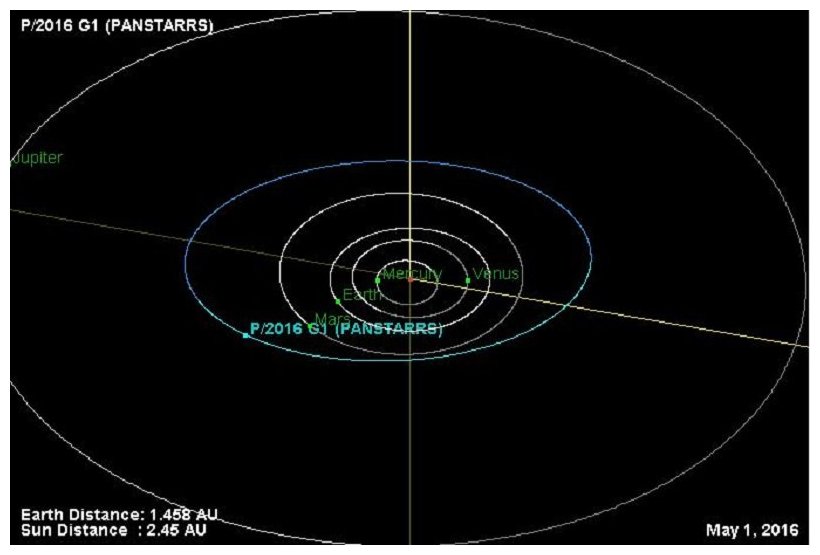
Apr 05 Discovery of P/2016 G1 (PANSTARRS)
Apr 08 Discovery of P/2015 HG_16 (PANSTARRS)*

*G. V. Williams, Minor Planet Center, noted that the 2016 April 3 observations of this comet appeared to belong to a supposedly asteroidal object found a year ago by Pan-STARRS1 on 2015 Apr. 20, 21, and 24 (and then given the minor-planet designation 2015 HG_16 on MPS 603395 and 603396)
Comet P/2016 G1 PanSTARRS
© JPL NASA
Cometary activity detected

Apr 24 Cometary activity detected in 2015 WZ = C/2015 WZ (PANSTARRS)

2 + 2 = 4

Genes that influence dizygotic twinning and fertility

Twinning consortium reports genetic variants that influence human dizygotic twinning and provide insight into female fertility and reproduction

Twinning research
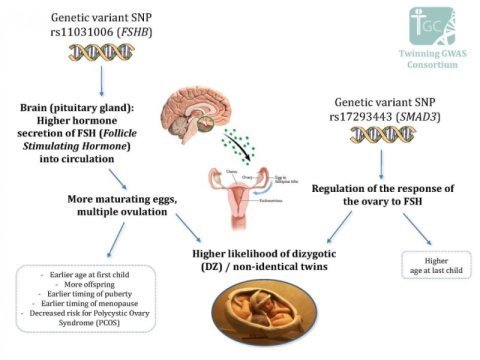
© Twinning GWAS ConsortiumThis is a genetic variant SNPrs11031006 (FSHB).
Twinning has fascinated human beings over the centuries. Twins are relatively common and occur more than 1 time per 100 maternities. Roughly two-thirds of all twin pairs are dizygotic or non-identical and are genetically as alike as other siblings. It has been firmly established that dizygotic twinning has a maternal genetic component, but no one so far has succeeded in identifying the genes for spontaneous DZ twinning after decades of investigations.

An international collaboration* on the genetics of dizygotic twinning led by Dr Hamdi Mbarek and Prof. Dorret Boomsma from the Vrije Universiteit Amsterdam has obtained a breakthrough in identifying genes that increase the chance for mothers to have dizygotic twins. One of these genes also has significant effects on fertility measures, including the age of a girl's first menstruation, age at menopause, number of children, and age at first (and last) child, but also on polycystic ovary syndrome, which is a major cause of infertility in women.

Comet 2

First-ever 'tailless' comet discovered: too rocky to produce water vapors

comet  C/2014 S3, also-called
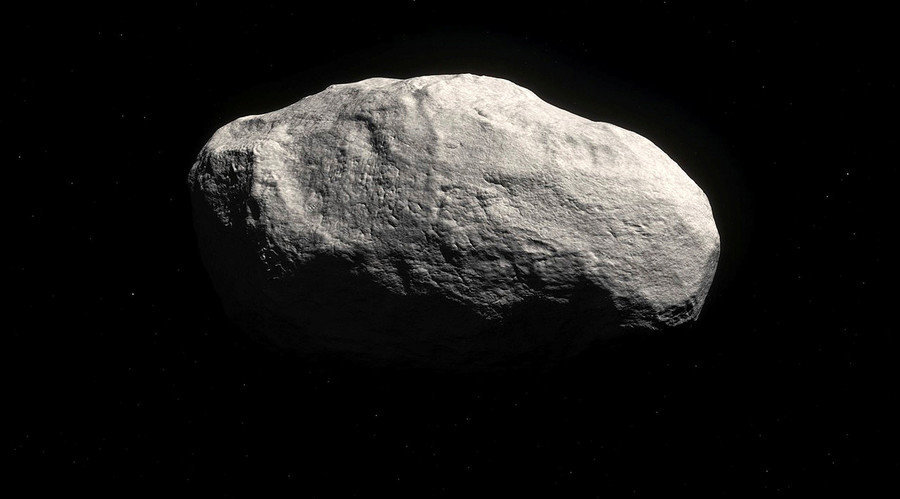
© M. Kornmesser / ESO / ReutersThe new comet, known as C/2014 S3, also-called "Manx" comet is shown in this artist rendering released on April 29, 2016.
A first-of-its-kind "nearly tailless" comet has been spotted by scientists, who say the object has been preserved for billions of years, as it appeared pristine. The discovery could shed light on how our solar system was formed.

The newly found celestial object was named after a tailless breed of cats - the "Manx" comet.

The reason it lacked a tail lies in its composition, the researchers believe. Most comets are usually made of ice and frozen compounds, and when they approach the sun water vaporizes and produces a tail that glows in reflected sunlight. In the case of the "Manx" comet it's not possible because it's made of rocky materials.

The discovery of such a "strange" comet has left researchers wondering whether there are more.

"Depending how many we find, we will know whether the giant planets danced across the solar system when they were young, or if they grew up quietly without moving much," study co-author Olivier Hainaut, an astronomer with the European Southern Observatory in Germany, said.

Telescope

Hubble Space Telescope spots tiny, previously unseen dark moon orbiting Pluto-like dwarf planet

pluto moon
© NASA
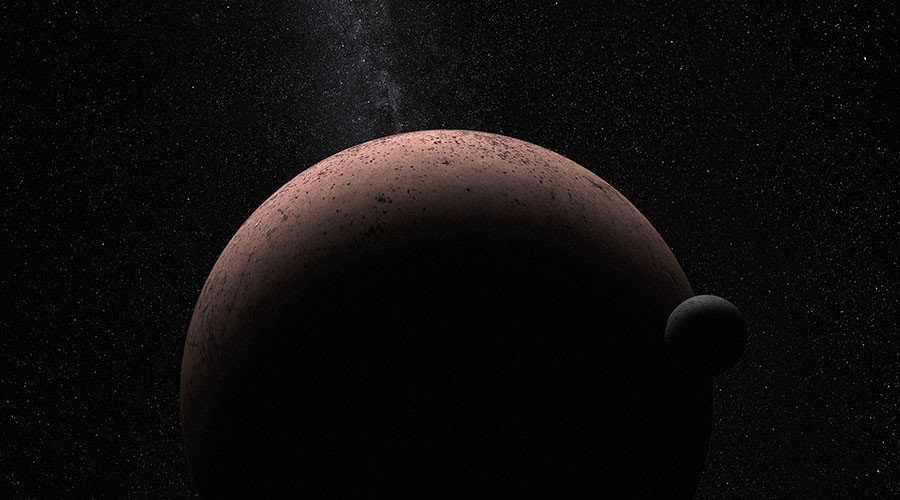
The Hubble Space Telescope's "eagle eye" has spotted a tiny, previously unseen dark moon orbiting Makemake, a dwarf planet friend of Pluto's. Makemake's bright light had obscured the moon, which now may reveal more about the recently-discovered planet.

A team of researchers who found Makemake back in 2005 also happened upon its petite moon, nicknamed MK 2. Estimated to be 100 miles across in diameter, MK 2 is circling the dwarf planet at an approximate distance of 13,000 miles.

Makemake, a relatively recent discovery itself, is located in the Kuiper Belt, home to several dwarf planets. Measuring just 870 miles in diameter, it is one of five dwarf planets recognized as such by the International Astronomical Union.