Science & TechnologyS


Info

Planet with 3 suns discovered

HD 131399
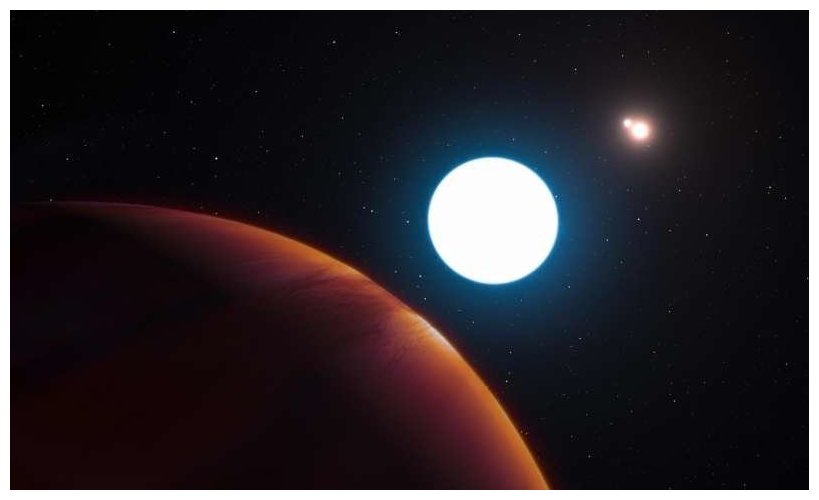
© ESO/L. Calçada This artist's impression shows a view of the triple star system HD 131399 from close to the giant planet orbiting in the system. The planet is known as HD 131399Ab and appears at the lower-left of the picture.Located about 340 light years from Earth in the constellation of Centaurus (The Centaur), HD 131399Ab is about 16 million years old, making it also one of the youngest exoplanets discovered to date, and one of very few directly imaged planets. With a temperature of around 580 degrees Celsius and having an estimated mass of four Jupiter masses, it is also one of the coldest and least massive directly imaged exoplanets.
If you thought Luke Skywalker's home planet, Tatooine, was a strange world with its two suns in the sky, imagine this: a planet where you'd either experience constant daylight or enjoy triple sunrises and sunsets each day, depending on the seasons, which happen to last longer than human lifetimes.

Such a world has been discovered by a team of astronomers led by the University of Arizona in Tucson, Arizona, using direct imaging. The planet, HD 131399Ab, is unlike any other known world - on by far the widest known orbit within a multi-star system. The discovery will be published online by the journal Science on Thursday, 7 July, 2016.

Located about 340 light years from Earth in the constellation Centaurus, HD 131399Ab is believed to be about 16 million years old, making it one of the youngest exoplanets discovered to date, and one of very few directly imaged planets. With a temperature of 850 Kelvin (about 1,070 degrees Fahrenheit or 580 degrees Celsius) and weighing in at an estimated four Jupiter masses, it is also one of the coldest and least massive directly imaged exoplanets.

"HD 131399Ab is one of the few exoplanets that have been directly imaged, and it's the first one in such an interesting dynamical configuration," said Daniel Apai, an assistant professor of Astronomy and Planetary Sciences who leads a research group dedicated to finding and observing exoplanets at the UA.

Telescope

Lost Japanese spacecraft shares groundbreaking view of Perseus galaxy group

perseus galaxy cluster
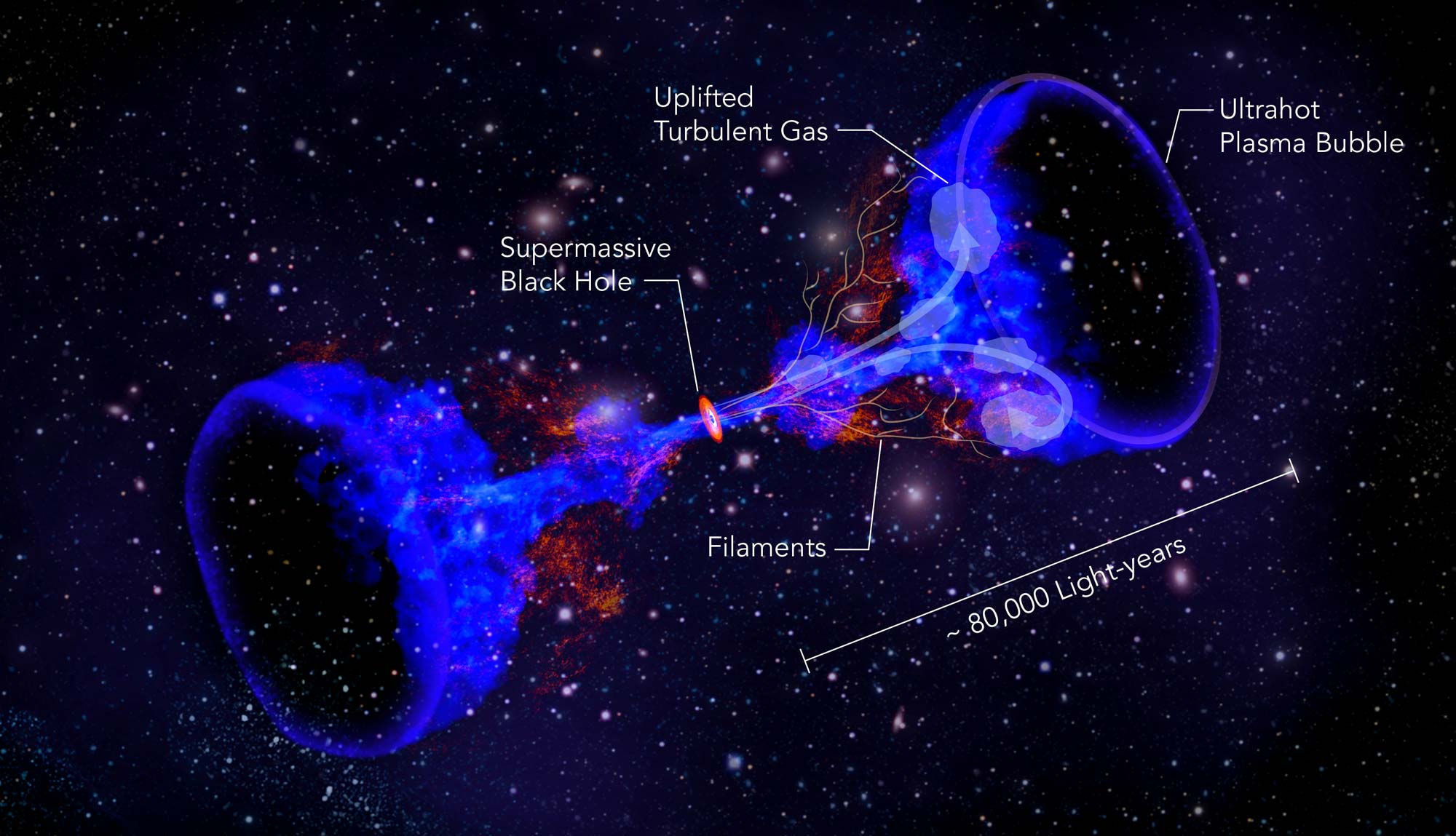
© SLAC National Accelerator LaboratoryThis image illustrates how supermassive black holes at the center of galaxy clusters could heat intergalactic gas, preventing it from cooling and forming stars. The black hole inflates bubbles (dark areas) of ultrahot, ionized gas, called plasma. The bubbles, which reach tens of thousands of light-years into space, drag gas (blue clouds) from the cluster center, which explains the long streaks of gas, or filaments, seen in optical images. In the outer regions, the bubbles cause turbulence, which heats the gas. The hot gas emits bright X-rays detected by X-ray satellites.
Like a confectioner trying to reach the right consistency in a sweet concoction, a supermassive black hole is vigorously stirring the gas within a collection of galaxies to keep star formation at a minimum. The new finding, revealed by the doomed spacecraft Hitomi, may help solve the question of why so few stars form within collections of hundreds or thousands of galaxies.

Hitomi measured the motion of gas in the center of the Perseus galaxy cluster with unprecedented precision, as much as 50 times better than previous instruments, said Andrew Fabian, a professor of astronomy at the University of Cambridge in England. The black hole, by stirring the gas, keeps the material from cooling down and forming new stars.

Without that mixing activity from the black hole, "the central galaxy would be much brighter and have a much higher stellar mass," Fabian told Space.com by email. Fabian is chairperson of part of Hitomi's science working group, an international collaboration headed by the Japan Aerospace Exploration Agency (JAXA). That group published the results of the only science completed by the HItomi spacecraft before it disintegrated in orbit last April.

Comment: Further reading:


Camcorder

New high-speed camera is so fast it can see neurons firing

Neurons firing
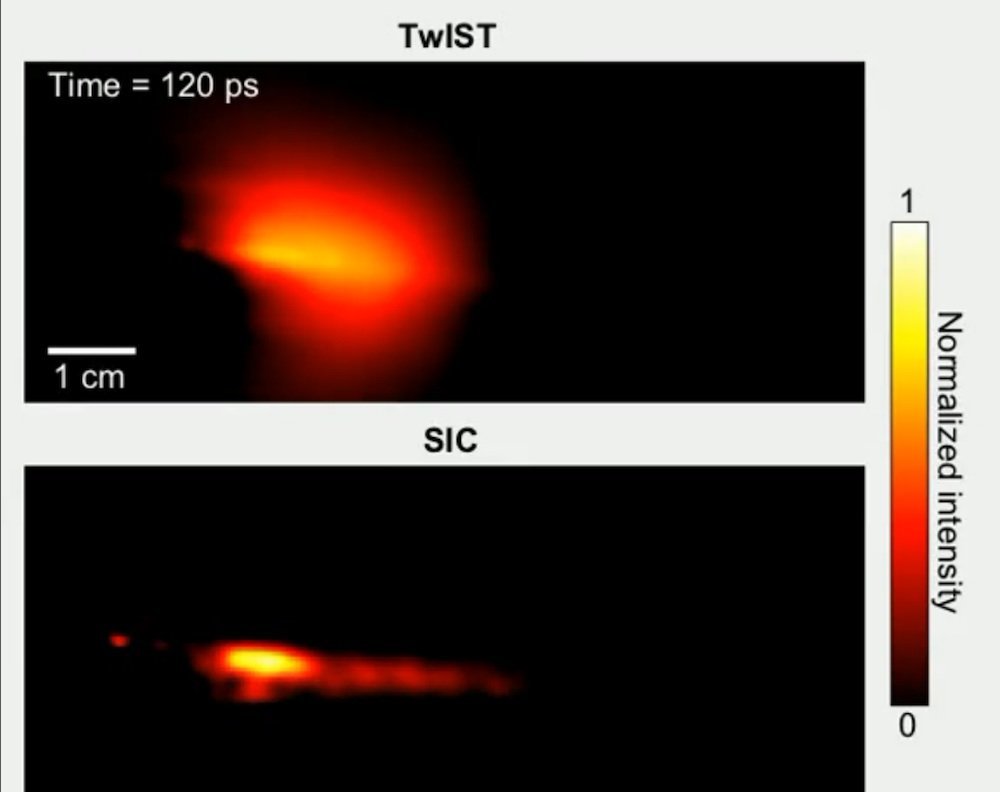
© Liren Zhu, Jinyang Liang and Lihong V. Wang, Washington University in St. LouisA new type of ultrafast photography, called single-shot compressed ultrafast photography (CUP), can capture a picosecond laser pulse traveling through the air. The researchers recently upgraded their CUP camera to achieve an improved image quality (bottom image). The top image shows the image quality they could achieve previously.
One of the fastest cameras in the world can now take better pictures than ever, even capturing neurons as they fire, according to a new study.

This upgrade could help researchers learn more about how the brain works and how to improve combustion-engine fuel efficiency, the scientists said.

The researchers previously developed a "streak camera" that could image at speeds of 100 billion frames per second in a single exposure — quick enough to capture pulses of light zipping through space. This device was the fastest receive-only camera in the world, meaning it needed only available light for imaging, as opposed to additional illumination from a source such as a laser.

Comment: Further reading:


Laptop

New way of stealing cars: Thieves are using computers to hack into car's electronics

car theft
© CrimeStopHouston / YouTube
Insurers and police across the country are raising awareness of a new trend in car theft, as thieves have been using laptop computers or other devices to hack a car's electronics.

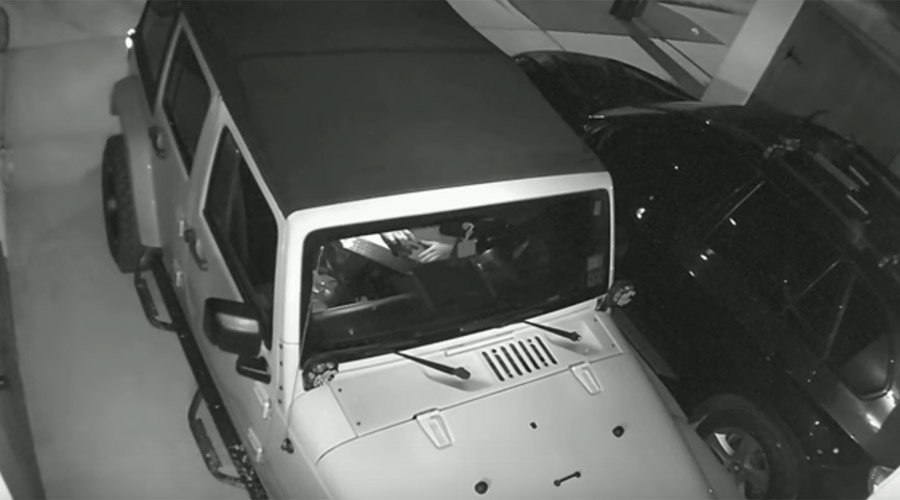
For the Houston Police Department, the discovery came after watching surveillance camera footage in which a pair of thieves used a laptop computer to start a 2010 Jeep Wrangler before stealing it from the owner's driveway. Police said the same method was used in four other thefts of late-model Wranglers and Cherokees.

One theory put forward by law enforcement and car insurers is that the thief hacks into a car's computer, forcing it to recognize a signal sent from the thief's own electronic key used to switch on the ignition.

"We think it is becoming the new way of stealing cars," said National Insurance Crime Bureau Vice President Roger Morris, according to the Wall Street Journal. "The public, law enforcement and the manufacturers need to be aware."

Comment: Planes, guns and automobiles: 5 scariest hacking targets


Fish

Incredibly rare 'ghost fish' recorded alive for first time, 2km down in depths of Pacific Ocean

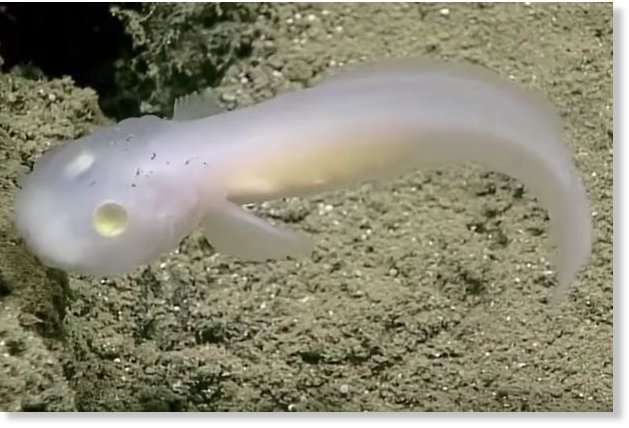
The 'ghost fish' has never been seen alive before
An incredibly rare 'ghost fish' has been seen alive for the first time ever.

The ethereal deep ocean dweller, measuring just 10cm long, has never before been spotted by researchers, let alone caught on camera.

It lives in the murky depths of the sea - 2km below the surface.

The odd-looking fish is pale, with almost translucent skin and bulbous, glowing eyes.

It is thought to belong to the Aphyonidae family.

Some think the scaly creatures looks like Falcor, the dragon from the cult 1984 movie, 'The NeverEnding Story'.


Fireball 3

Evidence of huge asteroid impact event found in Australia

Asteroid impact spherules
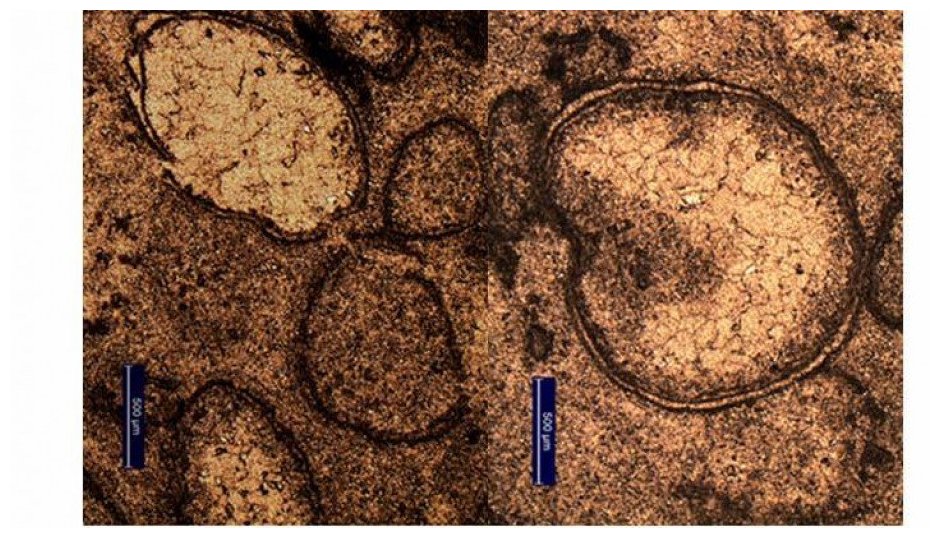
© A GliksonImpact spherules.
Scientists have found evidence of a huge asteroid that struck the Earth early in its life with an impact larger than anything humans have experienced.

Tiny glass beads called spherules, found in north-western Australia were formed from vaporised material from the asteroid impact, said Dr Andrew Glikson from The Australian National University (ANU).

"The impact would have triggered earthquakes orders of magnitude greater than terrestrial earthquakes, it would have caused huge tsunamis and would have made cliffs crumble," said Dr Glikson, from the ANU Planetary Institute.

"Material from the impact would have spread worldwide. These spherules were found in sea floor sediments that date from 3.46 billion years ago."

The asteroid is the second oldest known to have hit the Earth and one of the largest.

Dr Glikson said the asteroid would have been 20 to 30 kilometres across and would have created a crater hundreds of kilometres wide.

About 3.8 to 3.9 billion years ago the moon was struck by numerous asteroids, which formed the craters, called mare, that are still visible from Earth

"Exactly where this asteroid struck the earth remains a mystery," Dr Glikson said.

Attention

Smartwatches and fitness trackers could give away your ATM pin number

smartwatch
© CC0
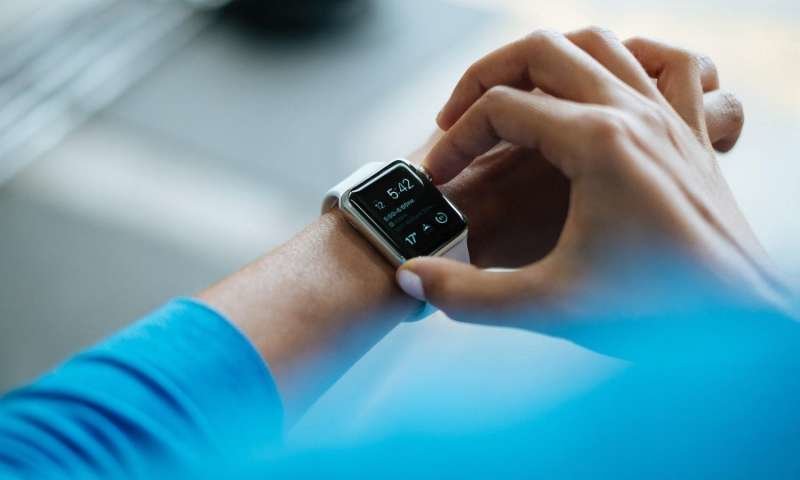
Wearable devices can give away your passwords, according to new research.

In the paper "Friend or Foe?: Your Wearable Devices Reveal Your Personal PIN" scientists from Binghamton University and the Stevens Institute of Technology combined data from embedded sensors in wearable technologies, such as smartwatches and fitness trackers, along with a computer algorithm to crack private PINs and passwords with 80-percent accuracy on the first try and more than 90-percent accuracy after three tries.

Yan Wang, assistant professor of computer science within the Thomas J. Watson School of Engineering and Applied Science at Binghamton University is a co-author of the study along with Chen Wang, Xiaonan Guo, Bo Liu and lead researcher Yingying Chen from the Stevens Institute of Technology. The group is collaborating on this and other mobile device-related security and privacy projects.

"Wearable devices can be exploited," said Wang. "Attackers can reproduce the trajectories of the user's hand then recover secret key entries to ATM cash machines, electronic door locks and keypad-controlled enterprise servers."

Researchers conducted 5,000 key-entry tests on three key-based security systems, including an ATM, with 20 adults wearing a variety of technologies over 11 months. The team was able to record millimeter-level information of fine-grained hand movements from accelerometers, gyroscopes and magnetometers inside the wearable technologies regardless of a hand's pose. Those measurements lead to distance and direction estimations between consecutive keystrokes, which the team's "Backward PIN-sequence Inference Algorithm" used to break codes with alarming accuracy without context clues about the keypad.

2 + 2 = 4

Illusion makes people 'feel' force field around their body

illusion art
© plainpicture/Dirk FellenbergThere’s something in the air.
Our brains are aware not just of our bodies but also the immediate space around us. Now, a twist on the classic rubber hand illusion can make people "feel" this space - a sensation they liken to perceiving a "force field".

Neuroscientists have known for decades that our brains contain representations of the area surrounding us, known as peripersonal space. This allows us to grasp objects within our reach and helps to protect us.

Bulb

Scientific Pac-Man: Micro-organisms unleashed into videogame-style maze

Videogame style maze
© Høgskolen i Sørøst-Norge/YouTube
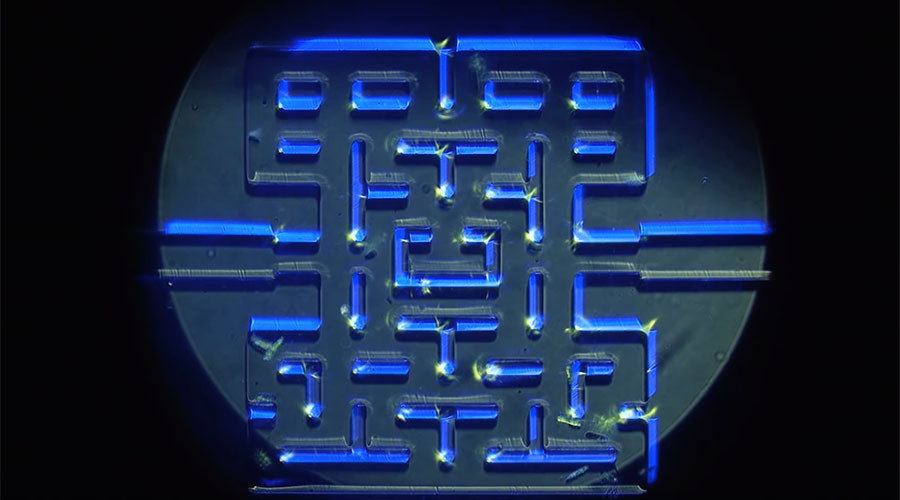
A group of Norwegian scientists have taken inspiration from '80s cult videogame Pac-Man to create an epic real life version of the computerized maze, involving predatory microorganisms hunting its weaker counterparts.

The team from the University College of Southeast Norway made an awesome simulation of the Japanese arcade classic to understand the dynamics between predator and prey microorganisms.

Single celled euglena and ciliates (the prey) were released into the nutrient laden fluid maze, which had a diameter of less than a millimeter, alongside the multi-celled rotifers (the predators) to analyze their interaction. The unicellular organisms took on the role of Pac-Man while the rotifers acted as "Ghosts" who prey on Pac-Man.

The aim of the interactive research was to figure out how the single celled organisms respond when being hunted by the rotifers in a small three dimensional area.


Attention

Learned misperception: Scientists are able to plant false experiences in people's minds

induced memories
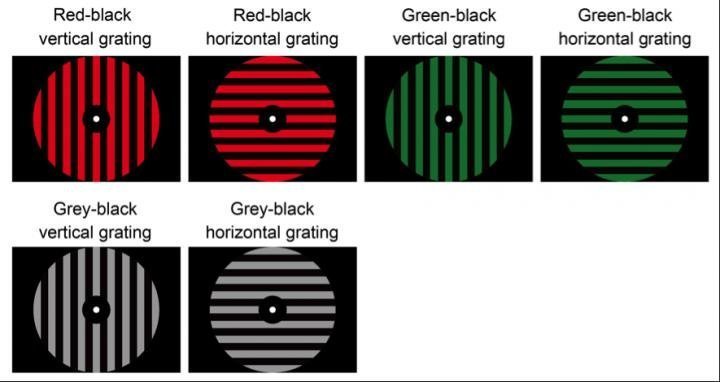
© Watanabe et. alParticipants in a set of experiments were unknowingly trained to associate red with vertical stripes, even when the background was gray or green.
Researchers have made two new scientific points with a set of experiments in which they induced people to perceive colors that weren't really there -- one concerning how the brain works and the other concerning how to work the brain.

Working with colleagues in Japan, the scientists at Brown University used a novel technique to surreptitiously train a small group of volunteers to associate vertical stripes with the color red and -- to a lesser extent as a consequence -- horizontal stripes with the color green.

The first point made by the researchers was that the association was induced by specifically targeting the early visual areas of the brain. Those "V1" and "V2" areas are the first parts of the cortex to process basic visual information coming from the eyes, but scientists had not previously seen associative learning occurring there.

"This is the first clear study that shows that V1 and V2 are capable of creating associative learning," said Takeo Watanabe, the Fred M. Seed Professor of Cognitive and Linguistic Sciences at Brown and co-corresponding author of the paper in the journal Current Biology.

The second point is that the association was learned strongly enough that subjects came to perceive the background colors paired with vertical bars as red even when the background was gray or sometimes a bit greenish. That learned misperception was evident in tests as much as five months later.

The demonstration raises the possibility that the training method could be used to induce other enduring associations in the brain, Watanabe said.