Science & TechnologyS


Rocket

US Air Force announces SpaceX to launch mysterious X-37B 'spaceplane'

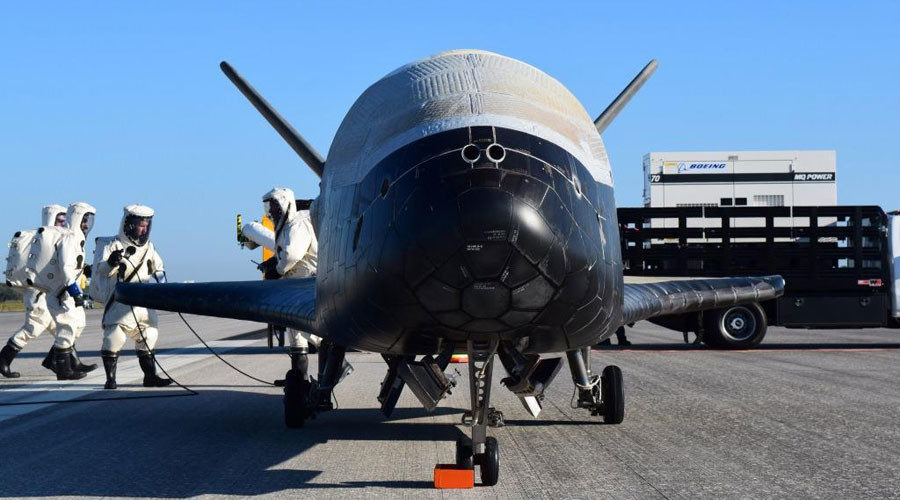
X-37B Orbital Test Vehicle mission 4
© AFPX-37B Orbital Test Vehicle mission 4.
SpaceX will take over the launch of the US Air Force's secretive X-37B 'spaceplane' - a first for Elon Musk's aerospace company.

All four previous X-37B missions were overseen by United Launch Alliance, a joint venture between Boeing Co. and Lockheed Martin who launched the ship from atop one of its Atlas V rockets.

Director of the Air Force Rapid Capabilities Office Randy Walden said of the announcement:
"We are excited about this new partnership on creating flexible and responsive launch options and are confident in SpaceX's ability to provide safe and assured access to space for the X-37B program."
The X-37B is boosted into space by a launch vehicle. It then re-enters the Earth's atmosphere and lands as a spaceplane.

Moon

China reveals moon mission landing site in quest to retrieve first soil samples since 1976

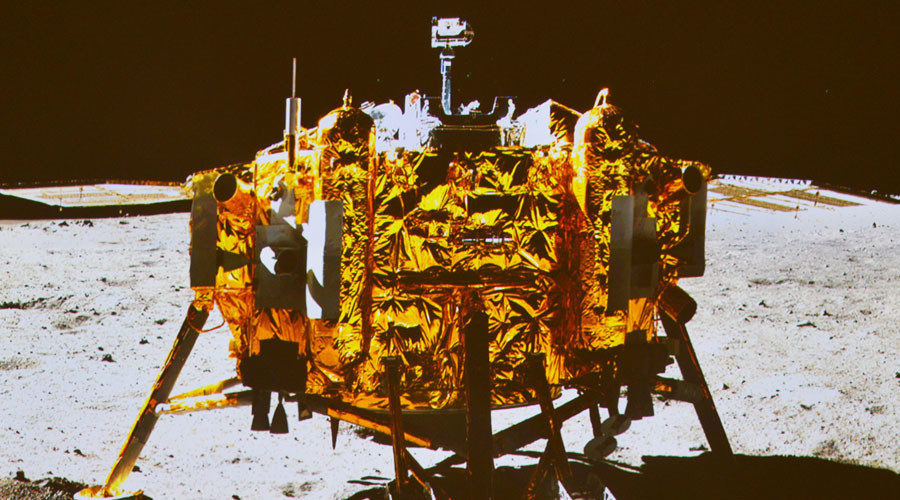
Lunar lander
© Reuters
Chinese space officials have revealed details about the country's ambitious lunar mission, which would be the first to return soil samples to Earth since the Soviet Luna 24 expedition in 1976. Beijing is also planning to have a fully-functioning space station by 2022.

The China National Space Administration (CNSA) has chosen the Mons Rumker region of the moon as the landing site for the upcoming Chang'e 5 mission, Liu Jizhong, director of the Chinese agency's lunar exploration program, told an international conference.

The site, which was named in honor of German astronomer Karl Rumker, is a volcanic formation in the northwest part of the visible side of the satellite.

Meteor

New study: Threat of asteroid collision on Earth higher than previously thought

asteroids
© Academy of Sciences of the Czech Republic
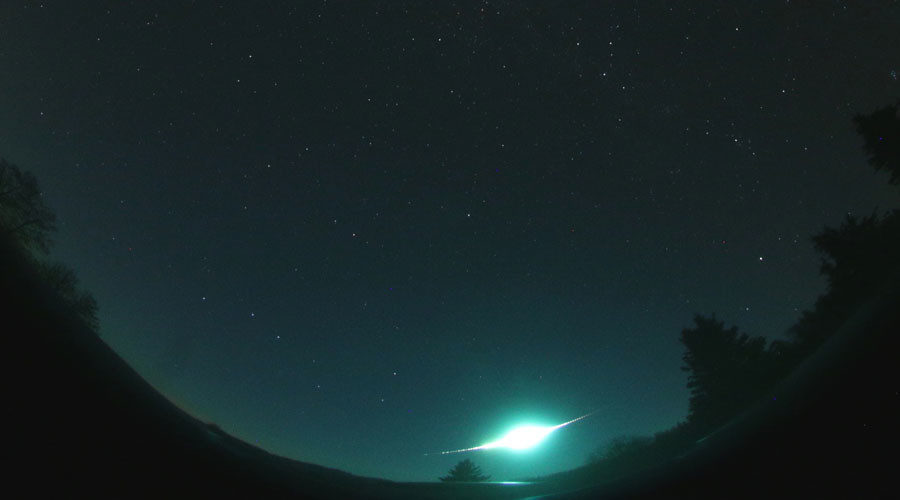
The likelihood of an asteroid smashing into Earth is increasing, according to new research from a team of Czech scientists which discovered new asteroids traveling around our planet.

The team studied 144 large meteors from the Taurids, a meteor stream which appears in our skies twice a year. The group discovered a new branch of the phenomenon containing at least two asteroids measuring a whopping 200-300 meters (220-330 yards) in diameter.

This branch likely includes even larger undiscovered asteroids, according to a statement from the Academy of Sciences of the Czech Republic.

Comment:


Pills

Russian scientists conclude bears eat wood as vitamin supplement

The research revealed that the wood contains various anti-oxidants and probiotics

bear
© Yuri Smetyuk/TASS
Vladivostok-based researchers unveiled ground-breaking discoveries about the composition of wood tissue, which bears inhabiting the Primorsky Region and the island of Sakhalin like to eat, the press office of Far Eastern Federal University (FEFU) said. It turns out that the wood studied contains various anti-oxidants and probiotics, which the researchers believe is a nutritional supplement essential for carnivores which help sustain healthy gut bacteria (microflora).

In the future, such research might help contribute to creating new natural medications.

Jupiter

Two new moons discovered around Jupiter, bring total to 69

Jupiter's 69 known moons
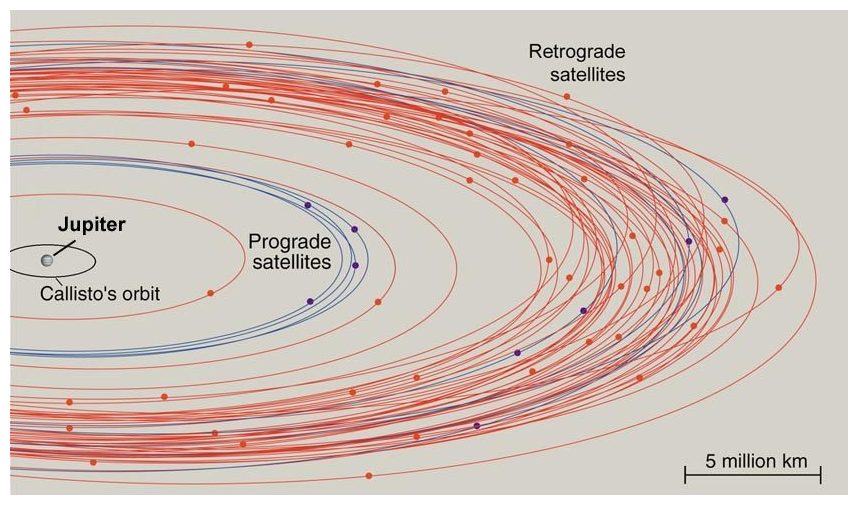
© Scott SheppardThe great majority of Jupiter's 69 known moons travel in retrograde orbits, meaning they travel in the direction opposite the planet's spin.
The advent of monster telescopes equipped with super-sensitive, wide-field detectors has been a boon for astronomical discoveries, among them a bevy of tiny moonlets around the outer planets. For example, observations made from 2000 to 2003 yielded 46 moons around Jupiter — more than two-thirds of the planet's total!

Now astronomer Scott Sheppard (Carnegie Institution for Science) has added two more to the planet's extended family, bringing the total of known moons to 69. The announcements for S/2016 J 1 and S/2017 J 1 ("S" for satellite, "J" for Jupiter) came via Minor Planet Electronic Circulars issued on June 2nd and June 5th, respectively.

As Sheppard explains, "We were continuing our survey looking for very distant objects in the outer solar system, which includes looking for Planet X, and Jupiter just happened to be in the area we were looking in 2016 and 2017." So they took a minor detour to image some fields that were very close to Jupiter.

Brain

Company hopes to re-animate the brain dead with stem cells, peptides and lasers

IV patient
The first attempts to bring people back from the dead are slated to start this year.

Bioquark, a Philadelphia-based company, announced in late 2016 that they believe brain death is not 'irreversible'.

And now, CEO Ira Pastor has revealed they will soon be testing an unprecedented stem cell method on patients in an unidentified country in Latin America, confirming the details in the next few months.

To be declared officially dead in the majority of countries, you have to experience complete and irreversible loss of brain function, or 'brain death'.

According to Pastor, Bioquark has developed a series of injections that can reboot the brain - and they plan to try it out on humans this year.

They have no plans to test on animals first.

Brain

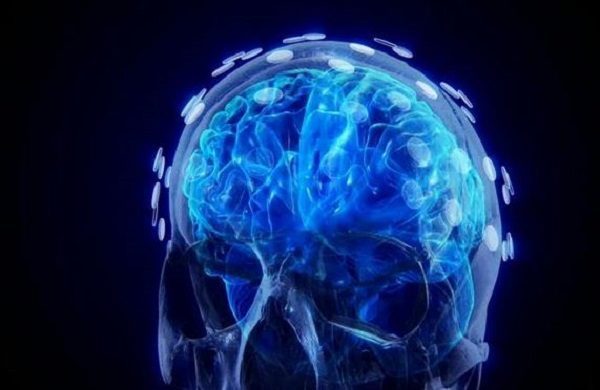
Scientists and engineers are working on a hardware update for the human brain

brain computer chips
Emily Borghard has a computer inside her skull, but you wouldn't know it to look at her. A small bump behind her left ear, the only external evidence of her implant, is partially covered by a tuft of hair that's still growing in from the last time she had the batteries changed.

Before Borghard received a brain implant, she was having as many as 400 "spikes" of seizure-like activity a day, along with multiple seizures. This unrelenting storm of abnormal neural activity turned her teenage years into a semiconscious nightmare. She couldn't drive a car, attend classes or be left alone for more than half an hour. "People were finding me on the floor, finding me walking around the small college town we were living in, confused and not knowing what was going on," she says.

The implant uses a pair of long, hair-thin electrodes to listen for irregular neural activity, which it regulates with a series of pulses. Every two days, Borghard holds a small electronic device over her implant, which transmits data to a laptop and then on to Neuropace, the Mountain View, Calif., company behind the "responsive neurostimulation system," or RNS, in her head. Borghard's doctor reviews the data to continually assess and adjust her treatment.

Mars

NASA's astronomers perplexed over mysterious deep hole on Mars

Mars crater
© NASA/JPL-Caltech/Univ. of Arizona
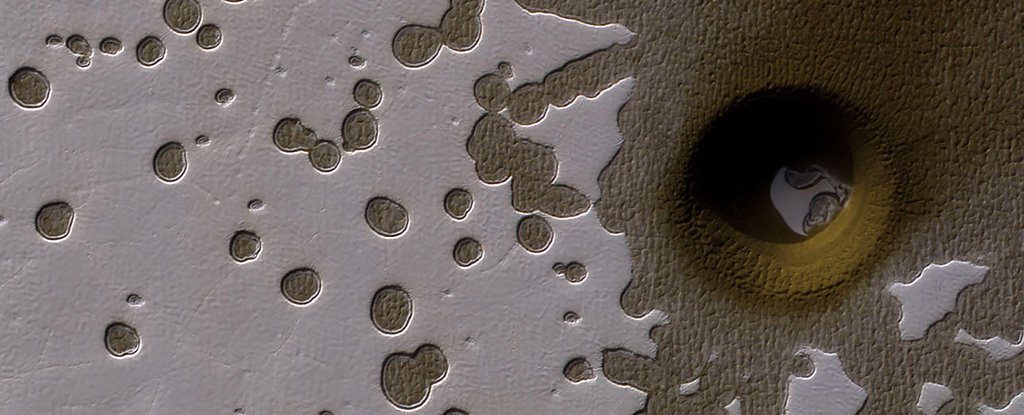
You'd think NASA's Mars Reconnaissance Orbiter (MRO) has seen everything there is to see on the Martian surface in the 11 years it's orbited our nearest neighbour, but a snapshot taken over the planet's South Pole has revealed something we can't explain.

While the planet's entire surface is pocked with various depressions and craters, a vast pit spotted among the "Swiss cheese terrain" of melting frozen carbon dioxide appears to be a bit deeper than your average hole, leaving astronomers to try and figure out what made it.

A lot of things can make holes in Mars' rocky terrain: more than half a million meteorite impacts have left craters; collapsing lava tubes have created deep pits; ancient floods have gouged out giant chasms; and volcanic activity has melted ice to leave funnels.

Occasionally the MRO will come across an odd feature that poses a fun mystery to solve, such as this shallow, circular depression seen earlier this year.

Meteor

Earth is impacted by meteors often

Meteors
© Creative Outlet, Getty Images/iStockphoto
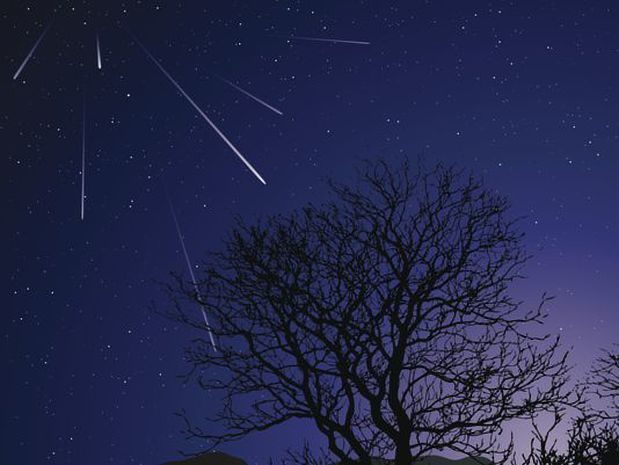
The Earth is also impacted by meteors all the time. At any given time, tiny meteors in the upper atmosphere provide a reflective path for radio waves to bounce around the Earth to contact distant stations. Just watch for a while and you're like to see a visible meteor streak across the sky.

Larger impacts are much rarer, because there are far fewer large bodies out there. But just last February, a fireball with the explosive power of the Hiroshima atomic bomb struck over the Atlantic Ocean hundreds of miles from Brazil. According to NASA, it was the largest since the Chelyabinsk meteor over Russia in 2013, but no one really noticed it because it was far out to sea.

To learn more about the potential havoc that a truly large impact can wreak, check out the new show Firefall at Astronaut Memorial Planetarium.

Since July 1994, when 21 fragments of Comet Shoemaker-Levy 9 (SL9) crashed into Jupiter in succession, leaving a trail of "black eyes" in their wake, observers have been keen to see other objects impacting the giant planet.

The keen view of the Hubble Space Telescope clearly showed dark spots swirling around Jupiter in its cloud bands. Jupiter has no solid surface, so these impacts were just Earth-sized pocks in Jupiter's atmosphere. Nevertheless, scars from the impacts could be seen on Jupiter for many months, visible in amateur equipment.

Alarm Clock

One clock to rule them all: Researchers find evidence of a circadian rhythm master

eye clock
© Ryan Jorgensen
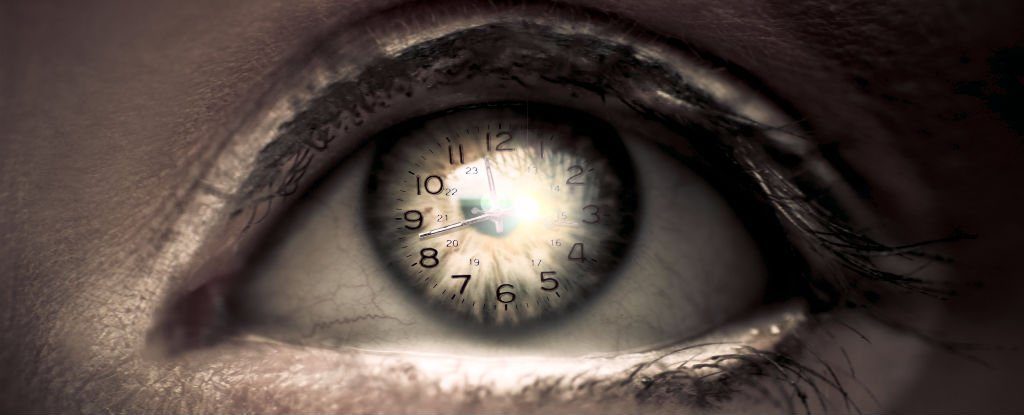
Scientists studying the pattern of circadian rhythms have found that one central body clock could be controlling several others at the same time.

By examining fruit flies - which, like humans, have several circadian clocks affecting the rhythm their daily biological processes - researchers have found evidence of a single 'master' clock that leads all other internal clocks related to sleeping and eating patterns, and various organ functions.

The team says this finally gives experimental proof for the so-called coupled-oscillator model moderating the daily rhythms of our physiology and behaviour.

"This is the first comprehensive experimental description of a pathway that links circadian clocks, and it shows that the coupled-oscillator model is actually true in certain cases," says one of the researchers, Christian Wegener from the University of Würzburg in Germany.

The team focussed on a neuronal pathway (the hyperthetical master clock) that linked the circadian clock in the brain of the fruit fly with a peripheral clock in its prothoracic gland, which is responsible for producing steroid hormones.