
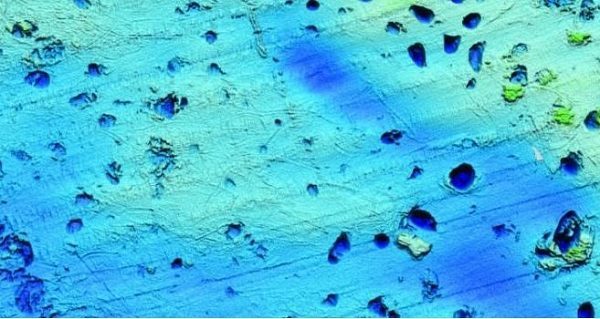
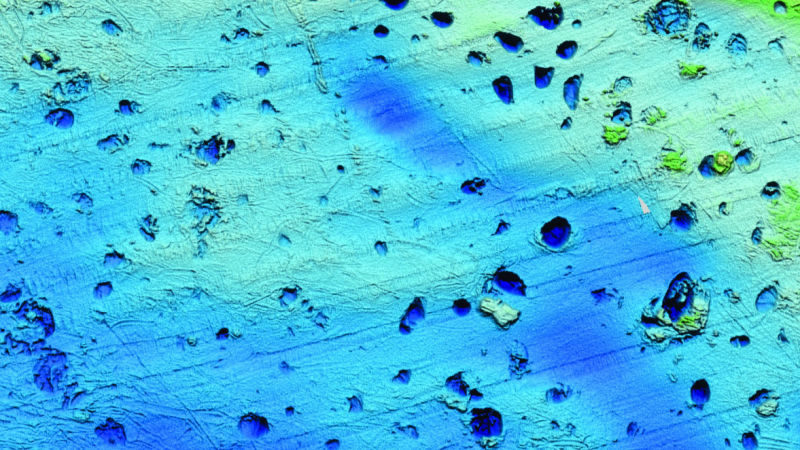
© Karin AndreassenSeveral hundred craters were documented in the area, of which around one hundred were up to one kilometer wide.
It has been about 11,600 years since the last one of the huge mounds exploded, releasing its methane gas, and there are literally hundreds of the craters to be seen on the floor of the Barents Sea, according to a study published in the journal, Science on June 1, 2017.
The cold and shallow body of water just a little north of Norway meets Russia and is home to oil and gas fields. Methane, the primary component of natural gas naturally seeps out of the seafloor in this region. Karin Andreassen, the lead author of the study is a marine geologist and geophysicist at the Centre for Arctic Gas Hydrate, Environment, and Climate in Tromsø, Norway.
She knew the research team would find some craters on the seafloor when they began the study in the Barents Sea, however, she didn't realize just how many craters the team would find or how massive many of them turned out to be.











Comment: All of this methane leaking into the atmosphere cannot be a good thing: