Science & TechnologyS


Cell Phone

Text messaging turns 25 years old today

cell phones
© Kacper Pempel/Illustration/File Photo
The humble text message has reached its 25th birthday, and it sure has come a long way. The first ever SMS (Short Message Service) was sent by British engineer Neil Papworth on 3 December, 1992. He wrote "Merry Christmas" to his colleague Richard Jarvis.

Jarvis was at a Christmas party at the time, and Papworth didn't even send the message on a phone as handsets were only able to receive them at that point. Instead, he typed it up on his computer, little realising that he had taken the first step down a road that would completely change our relationship with phones.

Info

Real-time DNA-authentication a reality

Sophie Zaaijer
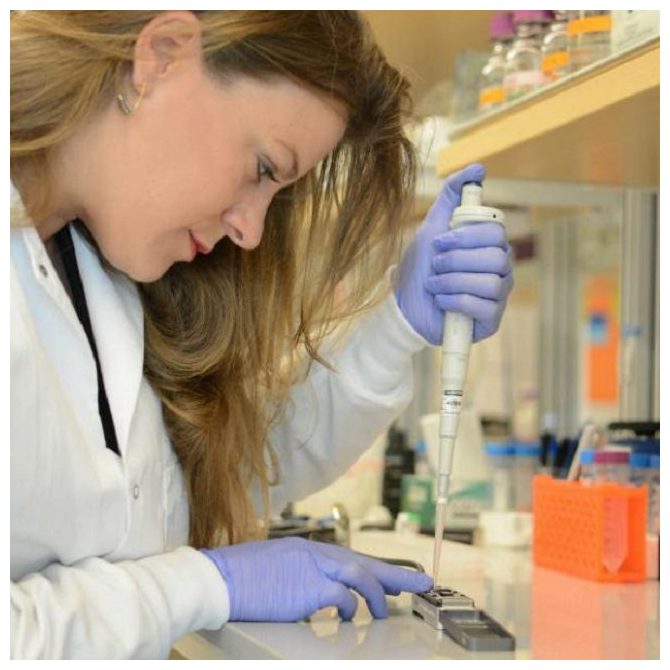
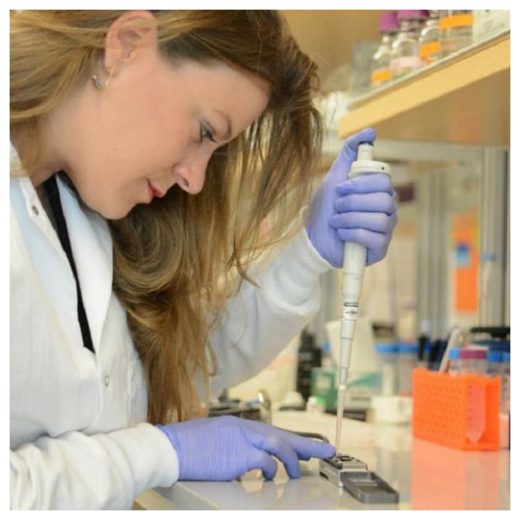
© New York Genome CenterResearcher Sophie Zaaijer uses the MinION, a portable DNA sequencer, to get a quick genetic readout of a sample of cells.
In the science-fiction movie Gattaca, visitors only clear security if a blood test and readout of their genetic profile matches the sample on file. Now, cheap DNA sequencers and custom software could make real-time DNA-authentication a reality.

Researchers at Columbia University and the New York Genome Center have developed a method to quickly and accurately identify people and cell lines from their DNA. The technology could have multiple applications, from identifying victims in a mass disaster to analyzing crime scenes. But its most immediate use could be to flag mislabeled or contaminated cell lines in cancer experiments, a major reason that studies are later invalidated. The discovery is described in the latest issue of the journal eLife.

"Our method opens up new ways to use off-the-shelf technology to benefit society," said the study's senior author Yaniv Erlich, a computer science professor at Columbia Engineering, an adjunct core member at NYGC, and a member of Columbia's Data Science Institute. "We're especially excited about the potential to improve cell-authentication in cancer research and potentially speed up the discovery of new treatments."

The software is designed to run on the MinION, an instrument the size of a credit card that pulls in strands of DNA through its microscopic pores and reads out sequences of nucleotides, or the DNA letters A, T, C, G.

The device has made it possible for researchers to study bacteria and viruses in the field, but its high error-rate and large sequencing gaps have, until now, limited its use on human cells with their billions of nucleotides.

In an innovative two-step process, the researchers outline a new way to use the $1,000 MinION and the abundance of human genetic data now online to validate the identity of people and cells by their DNA with near-perfect accuracy. First, they use the MinION to sequence random strings of DNA, from which they select individual variants, which are nucleotides that vary from person to person and make them unique. Then, they use a Bayesian algorithm to randomly compare this mix of variants with corresponding variants in other genetic profiles on file. With each cross-check, the algorithm updates the likelihood of finding a match, rapidly narrowing the search.

Gear

Teen brains find it challenging to properly recognise and react to the importance of tasks

The Breakfast Club
© The Kobal Collection/IMDB
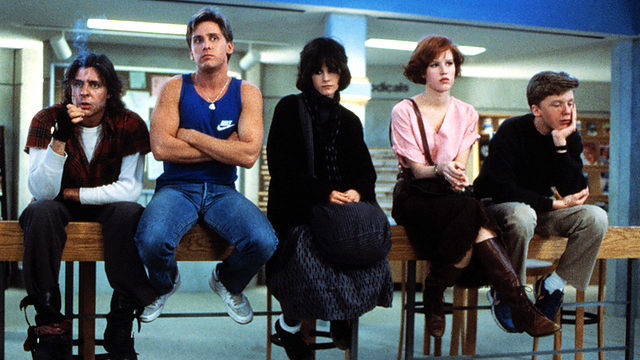
Even when we're teenagers, our brains still have a lot of developing to do. New research suggests that teenage brains haven't matured enough to be able to properly recognise and react to the importance of tasks - maybe one excuse to be late with homework.

In a study involving a simple reaction game, older participants proved to be better than younger ones at changing their approach and applying more time and effort as the stakes got higher.

Brain

6 common cognitive biases user interface designers should know

cognitive biases word cloud
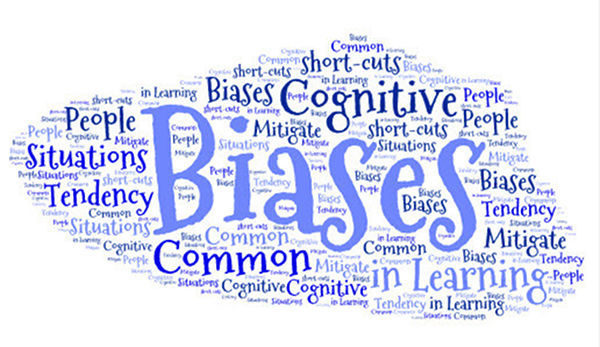
When conducting user research and testings, are you aware that cognitive biases can occur to both ourselves and the users? These biases threaten the validity of the research, making research insights less applicable.

A cognitive bias refers to a systematic illogical thinking pattern that affects judgments and decisions. These biases allow us to make decisions quicker and easier, but sometimes it also hinders us from generating accurate judgment.

In this article, I have listed out 6 common biases that you may encounter during user research and approaches you can take to avoid them.

Satellite

NASA's Voyager 1 still going after 37 years, 13 billion miles

Humanity's most distant spacecraft surprised its operators by answering the call to fire up rockets that have not been used in almost 40 years.

NASA's Voyager 1
© NASA/JPL/Caltech
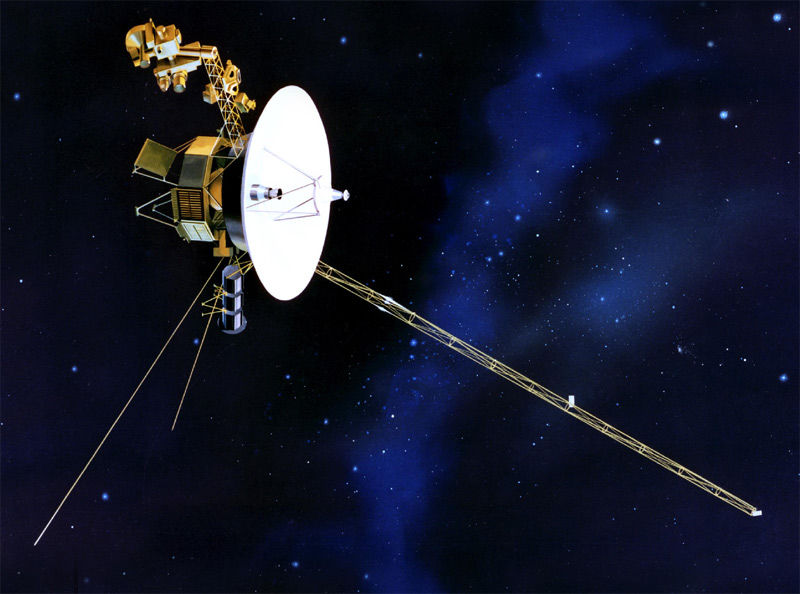
As humanity's first visitor to interstellar space, NASA's Voyager 1 has revealed itself to be a trooper, answering commands that take almost 20 hours to arrive, and performing routine tasks and transmitting data back (another 20-hour one-way call) to the home planet.

Launched in 1977, the interstellar space probe Voyager 1 - a product of the US-funded NASA technology-incubation center, Jet Propulsion Laboratory (JPL), in California - has broken all records for spaceflight by travelling some 13 billion miles from the sun, farther than any man made device, while remaining a viable scientific platform.

Books

The production effect: Reading aloud improves recall

memory gears
You are more likely to remember something if you read it out loud, a study from the University of Waterloo has found.

A recent Waterloo study found that speaking text aloud helps to get words into long-term memory. Dubbed the "production effect," the study determined that it is the dual action of speaking and hearing oneself that has the most beneficial impact on memory.

"This study confirms that learning and memory benefit from active involvement," said Colin M. MacLeod, a professor and chair of the Department of Psychology at Waterloo, who co-authored the study with the lead author, post-doctoral fellow Noah Forrin. "When we add an active measure or a production element to a word, that word becomes more distinct in long-term memory, and hence more memorable."

The study tested four methods for learning written information, including reading silently, hearing someone else read, listening to a recording of oneself reading, and reading aloud in real time. Results from tests with 95 participants showed that the production effect of reading information aloud to yourself resulted in the best remembering.

Monkey Wrench

Better babies? Parents may one day be morally obligated to edit their baby's genes

babies
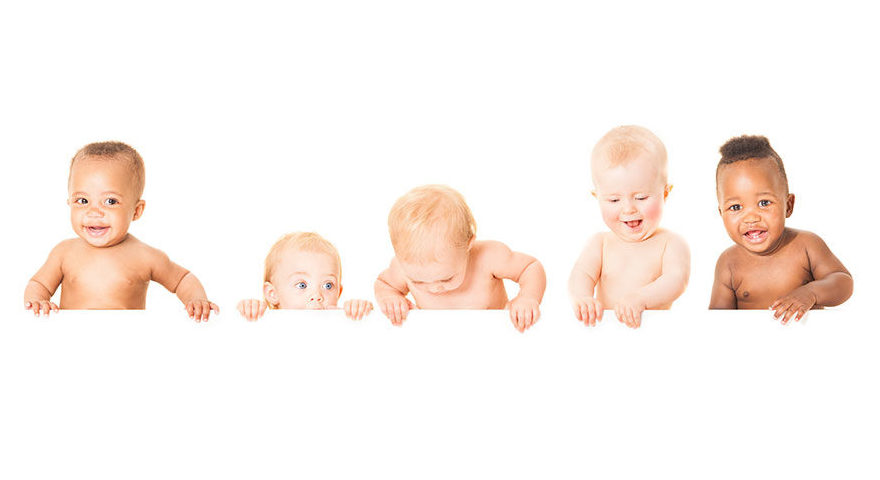
© WUNDERVISUALS/ISTOCKPHOTOIf CRISPR/Cas9 or other gene-editing technologies are ever approved for use in human embryos, parents may one day feel as if they have to use genetic enhancements to give their children the best life possible.
As genetic editing becomes a reality, some say it would be wrong not to use it to cure disease

A doctor explains to a young couple that he has screened the pair's in vitro fertilized embryos and selected those that had no major inheritable diseases. The couple had specified they want a son with hazel eyes, dark hair and fair skin. Then the doctor announces that he has also taken the liberty of eliminating the "burden" of genetic propensities for baldness, nearsightedness, alcoholism, obesity and domestic violence.

The prospective mother replies that they didn't want those revisions. "I mean diseases, yes, but ..." Her husband jumps in to say, "We were just wondering if it's good to leave a few things to chance."

But the doctor reminds the would-be parents why they came to him in the first place. They want to give their child "the best possible start."

Comment: Just in case human gene editing goes horribly wrong scientists fall back on "CRISPR off switch"
Perhaps one of the most concerning aspects about CRISPR-Cas9 was the inability for scientists to turn off the gene altering sequence. The potential for wrong genes to be snipped away and the consequential introduction of rogue genetic changes in human or animal DNA into the gene pool was (and still is) rather terrifying. Now, however, scientists claim that they have found a way to hopefully mitigate this tremendous risk. In a new study, researchers say that they have found a tiny protein that can actually turn off Cas9 and prevent it from creating unwanted gene alterations. They say that the protein works on human cells - at least if they are in a petri dish.


Comet 2

Comet Dust: Researchers present list of 'pristine' ingredients that make up comet 67P/Churyumov-Gerasimenko

Left: The surface of Rosetta’s comet. As the comet approaches the Sun
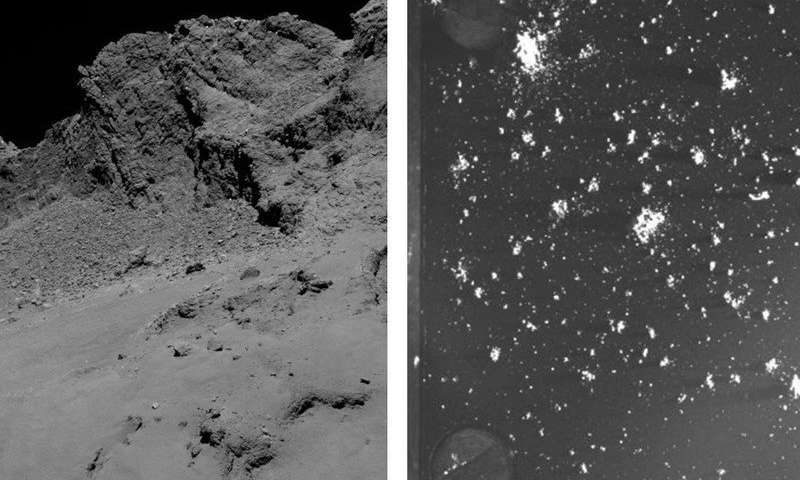
© ESA/Rosetta/MPS for OSIRIS Team MPS/UPD/LAM/IAA/SSO/INTA/UPM/DASP/IDA (left), ESA / Rosetta / MPS for COSIMA Team MPS / CSNSM / UNIBW / TUORLA / IWF / IAS / ESA / BUW / MPE / LPC2E / LCM / IMF / UTU / LISA / UOFC / vH & S. (right)Left: The surface of Rosetta’s comet. As the comet approaches the Sun, frozen gases evaporate from below the surface, dragging tiny particles of dust along with them. Right: These dust grains can be captured and examined using the COSIMA instrument. Targets such as this one measuring only a few centimeters act as dust collectors. They retain dust particles of up to 100 microns in size.
The dust that comet 67P/Churyumov-Gerasimenko emits into space consists to about one half of organic molecules. The dust belongs to the most pristine and carbon-rich material known in our solar system and has hardly changed since its birth. These results of the COSIMA team are published today in the journal Monthly Notices of the Royal Astronomical Society. COSIMA is an instrument onboard the Rosetta spacecraft, which investigated comet 67P/Churyumov-Gerasimenko from August 2014 to September 2016. In their current study, the involved researchers including scientists from the Max Planck Institute for Solar System Research (MPS) analyze as comprehensively as ever before, what chemical elements constitute cometary dust.

Comment: Also See:


Battery

Tesla activates Australia's 'mega battery' to feed their 'shaky' power grid using unreliable renewable energy

Tesla 'meag' battery in South Australia
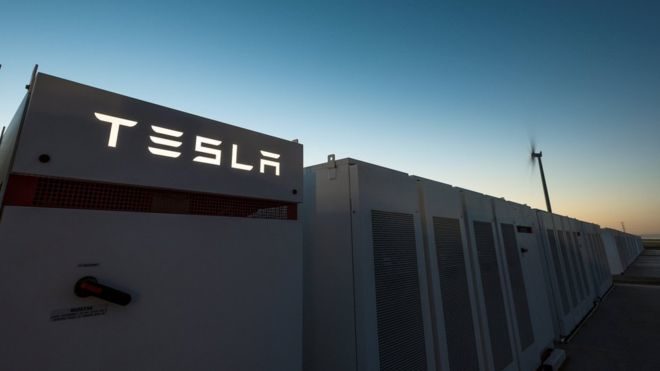
© ReutersTesla 'meag' battery in South Australia
Tesla Inc switched on the world's biggest lithium ion battery on Friday in time to feed Australia's shaky power grid for the first day of summer, meeting a promise by Elon Musk to build it in 100 days or give it free.

"South Australia is now leading the world in dispatchable renewable energy," state Premier Jay Weatherill said at the official launch at the Hornsdale wind farm, owned by private French firm Neoen.

Tesla won a bid in July to build the 129-megawatt hour battery for South Australia, which expanded in wind power far quicker than the rest of the country, but has suffered a string of blackouts over the past 18 months.

Satellite

Nasa successfully fires Voyager 1 backup thrusters after 37 years

Voyager 1
© NASA
Nasa's Voyager 1 spacecraft - cruising interstellar space billions of miles from Earth - was back on the right track Friday thanks to thrusters that were fired up for the first time in 37 years.

The unmanned spaceship was launched along with its twin, Voyager 2, more than 40 years ago to explore the outer planets of our solar system, traveling further than any human-made object in history.

But after decades of operation, the "attitude control thrusters" that turn the spacecraft by firing tiny "puffs" had degraded. The small adjustments are needed to turn Voyager's antenna toward Earth, allowing it to continue sending communications.

"At 13 billion miles from Earth, there's no mechanic shop nearby to get a tune-up," Nasa said in a news release.

Experts at the agency's Jet Propulsion Laboratory in California decided to turn to four backup thrusters that were last used on November 8, 1980.

"The Voyager flight team dug up decades-old data and examined the software that was coded in an outdated assembler language, to make sure we could safely test the thrusters," said Chris Jones, chief engineer at JPL.

The engineers fired up the thrusters on Tuesday and tested their ability to turn Voyager using 10-millisecond pulses. Then they waited 19 hours, 35 minutes for the test results to arrive at an antenna in Goldstone, California.

Comment: Back in 2013, the spacecraft is reported to have left the solar system.