Science & TechnologyS


Question

The politics of science: Scientists might not say what the evidence supports

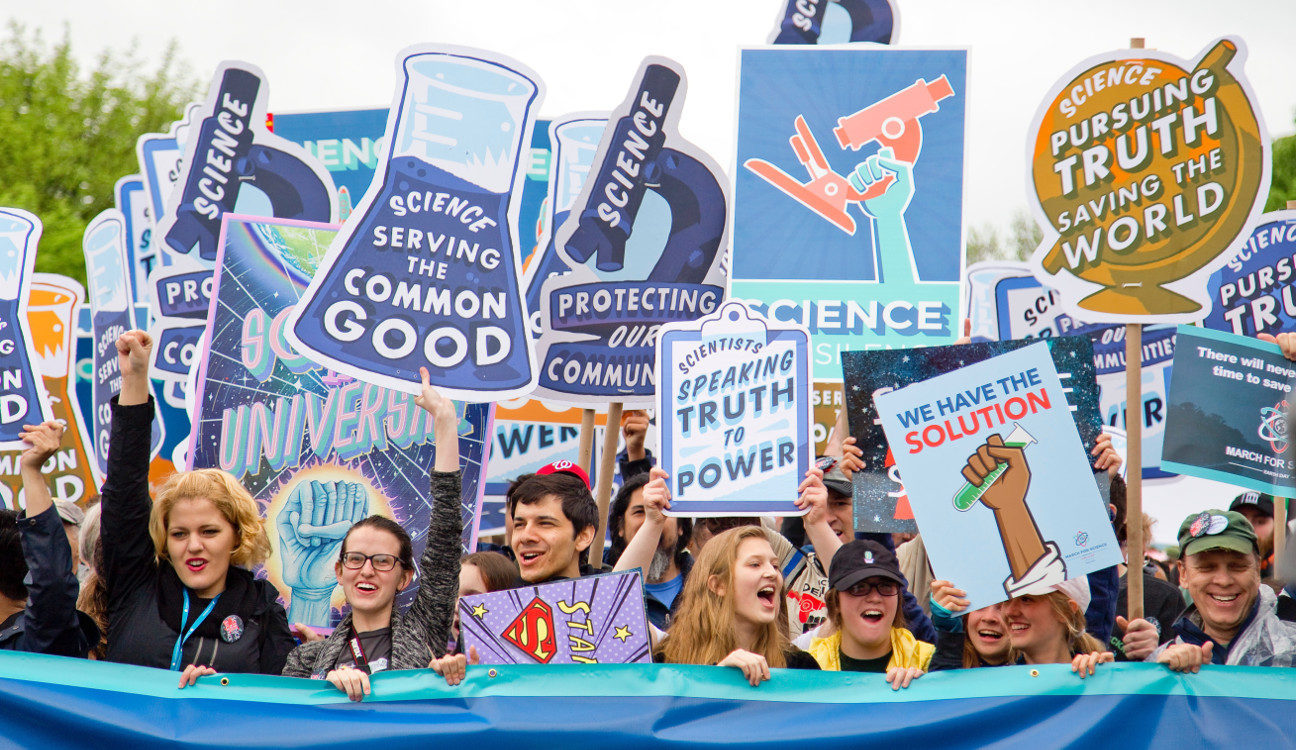
protesters
Suppose a scientist makes a bold claim that turns out to be true. How confident are you that this claim would become widely accepted?

Let's start with a mundane case. About a century ago, cosmologists began to realize that we can't explain the motions of galaxies unless we assume that a certain amount of unknown matter exists that we cannot yet observe with telescopes. Scientists called this "dark matter." This is a bold claim that requires extraordinary evidence. Still, the indirect evidence is mounting and most cosmologists now believe that dark matter exists. To the extent that non-scientists think about this issue at all, we tend to defer to experts in the field and move on with our lives.

Fireball 3

Russian astronomers show big 'unusual orbit' asteroid 3200 Phaethon approaching Earth - UPDATE

Russian Astronomers Show Big Asteroid Approaching the Earth
© CC0/Pixabay
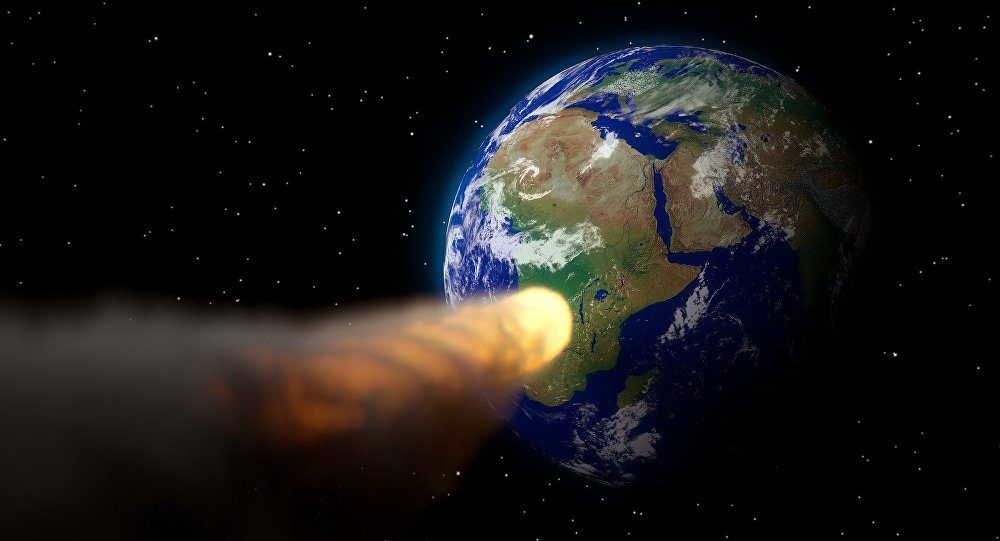
The astronomer community at Immanuel Kant Baltic Federal University used its own Astro-Model simulation environment to produce a virtual image of object 3200 Phaethon approaching the Earth, plus the expected Geminids meteor shower.

December 17, 2017 will see an interesting astronomic event in the form of object 3200 Phaethon approaching our planet. This is a fairly large asteroid nearly 5 kilometers in diameter, which will fly past the Earth within 10 million kilometers, close by space standards.

The asteroid derives its name from its unusual orbit that in perihelia brings it closer to the Sun than any other named asteroid (20 million kilometers). To compare: Mercury, the closest planet to the Sun in the Solar system, is 46 million kilometers from the Sun.


Comment: The activity in our sky is increasing and in the last week or so there have been at least these sightings of meteor-fireballs:

(8th Nov) Bright meteor fireball explodes over northern Germany

(13th Nov) Impressive fireball blazes over Toledo, in the South of Spain (VIDEO)

(14th Nov) 'Blue sphere with green tail' meteor fireball seen over Alsace, France

(15th Nov) Another bright meteor fireball explodes over Germany (VIDEOS)

(15th Nov) Meteor fireball recorded over Ohio

(15th Nov) Fireball streaks across Phoenix sky (VIDEO)

(15th Nov) Bright fireball-meteor lights up sky over San Juan, Argentina

And for a more in-depth look at the recent events check out: (16th Nov) Incoming! Bright bolide explodes over northern Finland (VIDEOS)


Satellite

Russian weather satellite fails to enter orbit after launch

Souyz-2 spacecraft with Meteor-M satellite
© REUTERSThe Souyz-2 spacecraft with Meteor-M satellite and 18 additional small satellites launches from Russia's new Vostochny cosmodrome, near the town of Tsiolkovsky in the Amur region of Russia Tuesday.
Contact with 19 satellites, including Russia's Earth observation Meteor-M 2.1, has been lost following a launch of a Soyuz rocket from Vostochny Cosmodrome, according to Roscosmos.

The three-stage unmanned Soyuz-2.1b carrier rocket blasted off from the new spaceport in the Russian Far East at 8:41am Moscow time (5:41am GMT) on Tuesday. The rocket carried the Meteor-M 2.1 weather satellite and the secondary payload of 18 smaller satellites from other countries, including Canada, Norway, Japan and the US.

While the main satellite apparently reached intermediate orbit, contact with it was then lost. "During the first planned communication session with the satellite, it was not possible to establish a connection due to its absence in the target orbit," Russia's space corporation said in a statement, adding that further information is currently being analyzed.

The Russian Meteor satellite was aimed at monitoring the climate, controlling emergency situations and providing data for weather forecasts. The satellite can provide both global and local images of clouds, as well as data on ice and snow coverage conditions. Information received from the satellite could also have been used to monitor Earth's radiation balance.

Cell Phone

Google apps track Android users with 'clandestine surveillance software'

Google
© Global Look Press
Smartphone apps such as Tinder and Snapchat are being used to secretly monitor the activities of Android phone users, according to new research.

The joint study from Yale Privacy Lab, an initiative linked to Yale Law School, and French non-profit research group Exodus Privacy, looked into 25 trackers found hidden in popular Google Play apps such as Uber, Tinder, Skype, Twitter, Spotify and Snapchat. The samples were taken from a total of 44 suspected smartphone trackers identified by Exodus Privacy.

The apps Tinder, Spotify, Uber and Amazon Echo in particular were identified as using Crashlytics, a Google-owned service designed to monitor app crash reports but which was later found to be providing firms with insights into users' activities.

"Publication of this information is in the public interest, as it reveals clandestine surveillance software that is unknown to Android users at the time of app installation," Privacy Lab said in a blog posted to its website. "These trackers vary in their features and purpose, but are primarily utilized for targeted advertising, behavioral analytics, and location tracking."

Comment: Google is evil:


Clock

'Arrow of time' reversed in quantum experiment

TURN BACK TIME
© Rawpixel.com/ShutterstockTURN BACK TIME: In a quantum experiment, scientists reversed the arrow of time, the idea that natural processes run in one direction in time.
Your lukewarm cup of coffee won't suddenly heat itself up, no matter how long you put off the trek to the microwave. But the same rule doesn't necessarily apply to quantum systems. Like chilly air warming a mug, heat can spontaneously flow from a cold quantum particle to a hotter one under certain conditions, researchers report November 10 at arXiv.org. This phenomenon seems to reverse the "arrow of time," the idea that natural processes run forward but not in reverse (SN: 7/25/15, p. 15).

The existence of an arrow follows from the second law of thermodynamics. The law states that entropy, or disorder, tends to increase over time. That rule explains why it's easy to shatter a glass but hard to put it back together, and why heat spontaneously flows from hot to cold but not the opposite direction.

The new result, however, "shows that the arrow of time is not an absolute concept, but a relative concept," says study coauthor Eric Lutz, a theoretical physicist at the University of Erlangen-Nürnberg in Germany. Different systems can have arrows of time that point in different directions, Lutz says. While the arrow was apparently reversed for the two quantum particles the researchers studied, for example, the arrow pointed in its typical direction in the rest of the laboratory.

Microscope 1

Developing precision human medicines may be possible by studying circadian rhythms in plants and their pathogens

plants watch clock
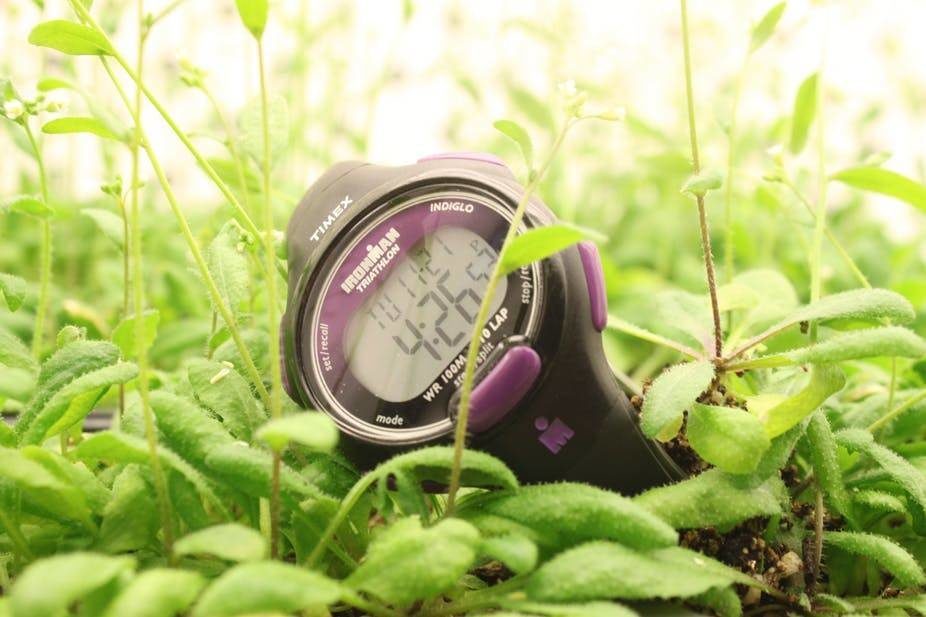
© Hua Lu, CC BY-NDThough not this obvious from the outside, plants are keeping time.
At dusk, the leaves of the tamarind tree close, waiting for another dawn. Androsthenes, a ship captain serving under Alexander the Great, made the first written account of these leaf movements in the fourth century B.C.

It took centuries longer to discover that he was describing the effects of the circadian clock. This internal time-sensing mechanism allows many living organisms to keep track of time and coordinate their behaviors along 24-hour cycles. It follows the regular day/night and seasonal cycles of Earth's daily rotation. Circadian research has advanced so far that the 2017 Nobel Prize in physiology or medicine was awarded for the groundbreaking work that elucidated the molecular basis underlying circadian rhythms.

Biologists like us are studying the circadian clocks in plants for insights into how they affect the health and well-being of all life on Earth. As researchers continue to untangle more about how these clocks work - including how they influence interactions between hosts and their invading pathogens and pests - new forms of specially timed precision medicine could be on the horizon.

Info

Alien life? Living bacteria 'that had not been there' found on ISS hull, Russian cosmonaut says

Russian spacecraft
© Reuters
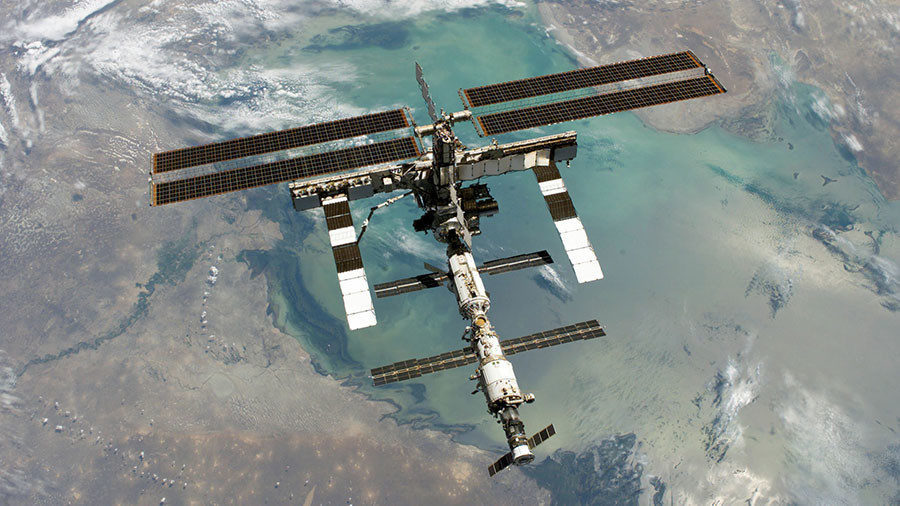
Living bacteria were found on the surface of the International Space Station (ISS), and they might have extraterrestrial origins, Russian cosmonaut Anton Shkaplerov said. The microorganisms will be studied further on Earth.

Shkaplerov, an ISS expedition flight engineer who will take his third trip to the ISS in December as part of the Expedition 54 crew, said that scientists found living bacteria while they were taking samples from the surface of the station. Speaking to TASS, he said that the microorganisms might have come from outer space.

"Bacteria that had not been there during the launch of the ISS module were found on the swabs," Shkaplerov said. "So they have flew from somewhere in space and settled on the outside hull." The cosmonaut added that the samples are currently being studied and seem to be safe.

Comet 2

World's first manmade meteor shower to showcase in 2019

fake meteor shower
© Ryan Hallock
Meteor showers are an awe-inspiring sight, and skywatchers often plan well in advance for their shot at spotting shooting stars as they rain down from the heavens. The rare events have, up until now, been a totally natural phenomenon, but one company is planning on turning on-demand meteor showers into big business, and it's scheduled its first man-made shooting star showcase for early 2019.

The company, called ALE, has created a spectacle it calls Sky Canvas, and it's as close to controlled meteor showers as we may ever get. What makes it so interesting is that this isn't some kind of slight of hand or illusion, but actual material dropped from special satellites burning up in the atmosphere to produce a brilliant light show overhead. It's wild, wild stuff.

The cube-shaped satellites that control ALE's Sky Canvas are tiny - less than two feet on each side - but they carry the proprietary pellets that create the "shooting stars" and can be controlled remotely from the ground. On command, the satellites release their payload, which then falls to Earth and, after coming into contact with the intense friction of the atmosphere, ignite.

Robot

U.S. starts testing mood changing brain implants on humans

Mood changing brain implants
© Flickr/Taka Umemura
Two scientific teams from the University of California and Massachusetts General Hospital, funded by the Pentagon's Defense Advanced Research Projects Agency (DARPA), are using "closed-loop" implants to create algorithms to detect various mood disorders and "shake" the brain back to a healthy state, Nature wrote.

The neural implants, which generate electrical pulses that regulate human feelings and behavior, could stimulate the brain to treat mental disorders, including dementia and Alzheimer's.

The device, believed to be able to treat nervous conditions like depression and post-traumatic syndromes, has already been tested on six volunteers.

Galaxy

Lumpy Universe: What simulations of the universe have overlooked

UNEVEN TERRAIN Universe simulations that consider general relativity (one shown) may shift knowledge of the cosmos.
If the universe were a soup, it would be more of a chunky minestrone than a silky-smooth tomato bisque.

Sprinkled with matter that clumps together due to the insatiable pull of gravity, the universe is a network of dense galaxy clusters and filaments - the hearty beans and vegetables of the cosmic stew. Meanwhile, relatively desolate pockets of the cosmos, known as voids, make up a thin, watery broth in between.

Until recently, simulations of the cosmos's history haven't given the lumps their due. The physics of those lumps is described by general relativity, Albert Einstein's theory of gravity. But that theory's equations are devilishly complicated to solve. To simulate how the universe's clumps grow and change, scientists have fallen back on approximations, such as the simpler but less accurate theory of gravity devised by Isaac Newton.