Science & TechnologyS


Bulb

Scientists say that prefrontal executive control of the brain may be harnessed to help reduce the risk of anxiety

prefrontal cortex
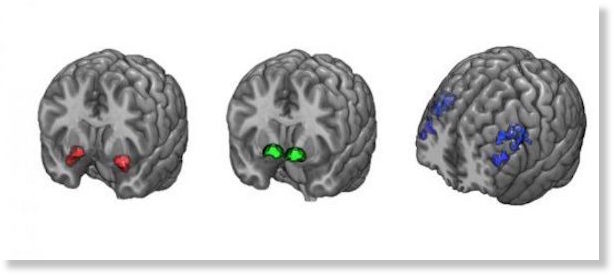
© Matthew Scult/Duke UniversityIndividuals whose brains exhibit a high response to threat in the amygdala (left) and a low response to reward in the ventral striatum (middle) are more at risk of developing symptoms of anxiety and depression over time. This new Duke University study shows that these at-risk individuals were less likely to develop anxiety if they also had high activity in the dorsolateral prefrontal cortex (right).
Greater executive control via the dorsolateral prefrontal cortex (DLPFC) may strengthen resilience for those at risk for anxiety disorders, according to a new study from Duke University. This potentially groundbreaking paper, "Prefrontal Executive Control Rescues Risk for Anxiety Associated with High Threat and Low Reward Brain Function," was published November 17 in the journal Cerebral Cortex.

This pioneering discovery is noteworthy because it may bring clinicians one step closer towards tailoring psychological therapies for individual patients that target this specific region of the PFC. As an example, individuals whose brains exhibit the at-risk signatures of generalized anxiety disorders (GAD) may be more likely to benefit from strategies that boost the brain's dorsolateral prefrontal activity. These interventions could include cognitive behavioral therapy (CBT), working memory training, and/or transcranial magnetic stimulation (TMS).

For this study, the neuroscientists used fMRI brain imaging to assay the triad of (1) baseline threat-related amygdala, (2) reward-related ventral striatum, and (3) executive control-related prefrontal cortex activity. Each of the 120 young adult volunteers who participated in this study provided self-reported mood and anxiety ratings at baseline and at follow-up.


Beaker

Is a cure for baldness just around the corner?

baldness
© GettyWill scientists soon finally be able to cure baldness?
For many men, going bald is just about the worst thing they can imagine happening to them. So blokes worried about their failing follicles may want to take some solace from a new study which could pave the way for a cure for baldness.

South Korean scientists have cooked up a chemical that's been shown to promote hair growth in mice. This game-changing substance has the snappy name 'CXXC-type zinc finger protein 5' and disrupts a process within cells which controls the development of hair follicles and also the healing of wounds.

When tested on mice over a 28 day period, the CXXC protein promoted the growth of new follicles.

Hair was also found to grow at a faster rate when applied to mice along with a chemical called valproic acid.

Comment: See also:


Sherlock

CARMEL, the code-breaking computer attempts to decipher the letters of the Zodiac Killer

zodiac killer
© Wikipedia
The computer that is attempting to decode the cryptic letters signed by the Zodiac killer can also produce haunting poems.

The Zodiac killings are a series of unsolved murders that took place from December 1968 to the early 1970s in Northern California.

The identity of the killer, allegedly responsible for the deaths of at least five people, and the targeting of a further two, remains unknown.

In addition to being a famously unsolved murder, the Zodiac gained public attention because of the letters detailing the crimes, written in code, that were frequently sent to newspapers.

The name 'Zodiac' came from one of the symbols used in the letter, and by the description given by one of the survivors of an attempted murder.

Officially declared to be 'inactive' in 2004, the case remains the subject of enthusiastic amateur investigations.

Bizarro Earth

Mysterious deep-Earth seismic signature explained?

movement of seismic waves through mantle
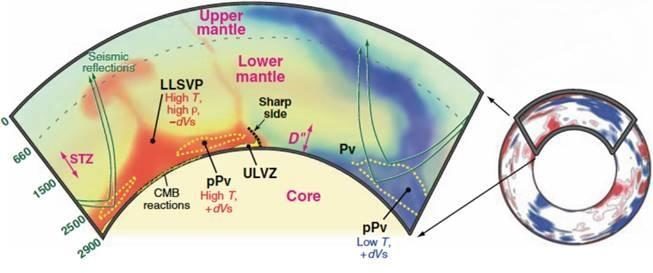
© Edward Garnero and Allen McNamaraThe movement of seismic waves through the material of the mantle allows scientists to image Earth's interior, just as a medical ultrasound allows technicians to look inside a blood vessel.
Finding has implications for conditions that set the stage for life

New research on oxygen and iron chemistry under the extreme conditions found deep inside Earth could explain a longstanding seismic mystery called ultralow velocity zones. Published in Nature, the findings could have far-reaching implications on our understanding of Earth's geologic history, including life-altering events such as the Great Oxygenation Event, which occurred 2.4 billion years ago.

Sitting at the boundary between the lower mantle and the core, 1,800 miles beneath Earth's surface, ultralow velocity zones (UVZ) are known to scientists because of their unusual seismic signatures. Although this region is far too deep for researchers to ever observe directly, instruments that can measure the propagation of seismic waves caused by earthquakes allow them to visualize changes in Earth's interior structure; similar to how ultrasound measurements let medical professionals look inside of our bodies.

These seismic measurements enabled scientists to visualize these ultralow velocity zones in some regions along the core-mantle boundary, by observing the slowing down of seismic waves passing through them. But knowing UVZs exist didn't explain what caused them.

However, recent findings about iron and oxygen chemistry under deep-Earth conditions provide an answer to this longstanding mystery.

It turns out that water contained in some minerals that get pulled down into Earth due to plate tectonic activity could, under extreme pressures and temperatures, split up -- liberating hydrogen and enabling the residual oxygen to combine with iron metal from the core to create a novel high-pressure mineral, iron peroxide.

Comment: The rise of oxygen caused Earth's earliest ice age


Fireball 2

Geminid meteor shower: how to watch as Phaethon asteroid debris lights up Earth's skies

A view of the Geminid meteor shower Asim Patel/Wikimedia
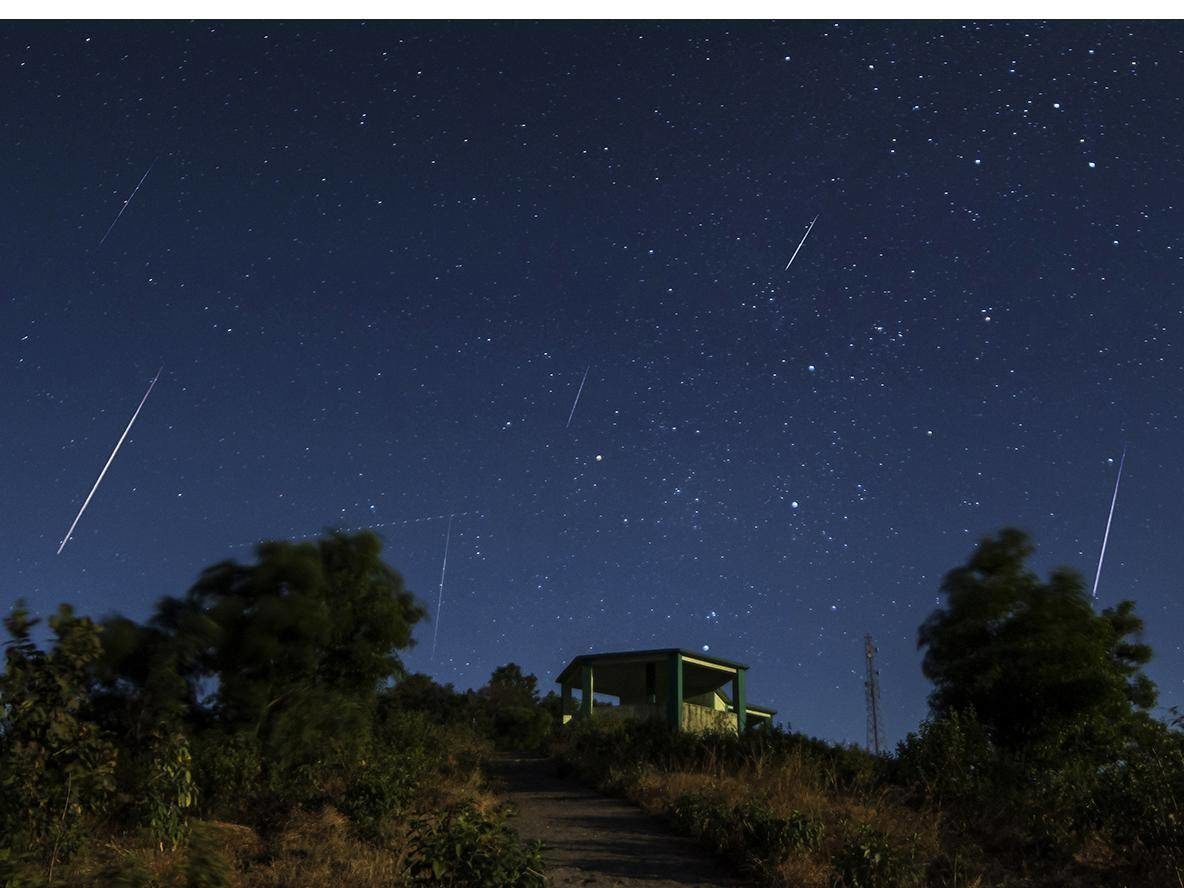
© Asim Patel/WikimediaA view of the Geminid meteor shower
Photographers and sky-watchers will be treated to an awe-inspiring celestial display in December as the Geminid meteor shower lights up Earth's atmosphere.

As our planet moves through the debris field left by the Phaethon asteroid next month, flashes and trails of light will be visible overhead - as long as the weather is clear.


Phaethon, named for the son of Greek god Helios, is a rocky asteroid that orbits the Sun unusually closely.

Nuke

Nuclear reactor meltdown wouldn't end the world, say scientists

radiation/map
© Daily Star
'Keep calm and carry on' if you happen to get caught up in a nuclear disaster. That's the advice scientists are giving after a study simulating the effects of radioactive fallout in West Sussex found it wouldn't be that bad. Apparently.

A group of British scientists found the damage caused by a nuclear accident wouldn't quite live up to long-held 'hysterical' assumptions on its toxicity. Researchers at the University of Bristol simulated a disaster at a fictional reactor in West Sussex using Public Health England's contingency plans.

Although a radioactive leak may lower life expectancy among the British public and heighten the chance of developing cancers, the study found that the health impacts for people in contaminated areas were no worse than those in polluted cities such as London. Well, that's reassuring.

Of the 44,000 people who would have to evacuate the contaminated region, just 650 would benefit from leaving area, as the stress of finding a new job and starting life anew somewhere else would likely outweigh the mild health effects for the majority.

It raises questions over the effectiveness of Soviet and Japanese authorities when they ordered the evacuation of almost half a million people following the nuclear disasters of Chernobyl in 1986 and Fukushima in 2011.

Comment: As of April 2017, 30 countries worldwide are operating 449 nuclear reactors for electricity generation and 60 new nuclear plants are under construction in 15 countries. Some of these are the same design as Fukushima and many are over 30 years old. More studies, please.


Bulb

Warning: Too much artificial light on Earth is 'lighting our way to darkness'

artificial light
© Mario Anzuoni / Reuters
A new study conducted using satellite data shows that artificial lighting is growing brighter. The data suggest this is disrupting the order of ecological and human life, which previously depended on natural light sources such as the moon.

The international study led by Christopher Kyba of the GFZ German Research Centre for Geoscience tracks what researchers are calling a negative trend that has implications for the health of human beings and the environment. The light pollution that humans are creating can affect living things, because they have evolved in accordance with the normal day-night cycle, according to the study. This is due to the fact that major sources of light during the night would have come only from the moon, or other sources like auroras, volcanoes and wildfires.

An international team of scientists used the Visible Infrared Imaging Radiometer Suite (VIIRS), a satellite sensor, to find out whether the human demand for light is still on the rise or leveling off. VIIRS is cited as a collaboration between NASA and the National Oceanic and Atmospheric Administration

Researchers studied data for the report in the month of October every year from 2012 to 2016, and ultimately discovered that the artificially-lit portion of the Earth's surface continued to grow by 2.2 percent per year. During this same period, Earth's radiance also climbed by 1.8 percent per year.

Info

An update: Sunspots a la Cyclic Catastrophism

Sunspot Cycles
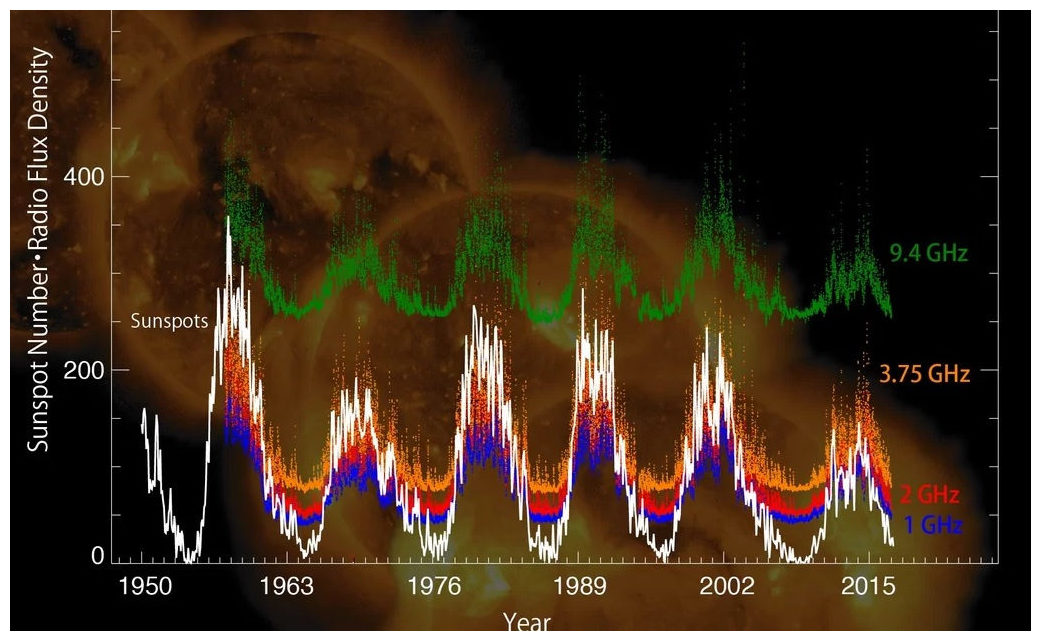
© NAOJ/Nagoya University/JAXAFig. 1 Fifty years of constant Sun observation.
This post is a response to "Variation of the Solar Microwave Spectrum in the Last Half Century", Masumi Shimojo et al. Astrophysical Journal, Volume 848, Number 1.

The abstract states:
"... we found that the microwave spectra at the solar minima of Cycles 20-24 agree with each other. These results show that the average atmospheric structure above the upper chromosphere in the quiet-Sun has not varied for half a century, and suggest that the energy input for atmospheric heating from the sub-photosphere to the corona have not changed in the quiet-Sun despite significantly differing strengths of magnetic activity in the last five solar cycles."
See Figure 1 above.

Robot

Eric Schmidt: Google search algorithm can't recognize 'truth' when opinion is polarized

eric schmidt
© Adam Jeffery / CNBC
In the United States' current polarized political environment, the constant publishing of articles with vehemently opposing arguments has made it almost impossible for Google to rank information properly.

So says billionaire Eric Schmidt, Chairman of Google's parent company, Alphabet, speaking at the Halifax International Security Forum on Saturday.

"Let's say that this group believes Fact A and this group believes Fact B and you passionately disagree with each other and you are all publishing and writing about it and so forth and so on. It is very difficult for us to understand truth," says Schmidt, referring to the search engine's algorithmic capabilities.

"So when it gets to a contest of Group A versus Group B - you can imagine what I am talking about - it is difficult for us to sort out which rank, A or B, is higher," Schmidt says.

Ranking is the holy grail for Google. And when topics have more consensus, Schmidt is confident in the algorithm's ability to lower the rank of information that is repetitive, exploitative or false. In cases of greater consensus, when the search turns up a piece of incorrect or unreliable information, it is a problem that Google should be able to address by tweaking the algorithm, he says.

Comment: Schmidt's comments are quite revealing. What do they reveal? He's an idiot. Truth, by its very definition, is not determined by consensus. What he's essentially saying is this: When people agree on something, Google can recognize that and rank any competing views lower than the consensus view. When there is no clear consensus, Google can't tell what the consensus is. Truth has nothing to do with it.


Cell Phone

Even when location services are disabled, Google can still track you

man texting cell phone
© Patrizia Cortellessa / Global Look Press
Many people realize that smartphones track their locations. But what if you actively turn off location services, haven't used any apps, and haven't even inserted a carrier SIM card?

Even if you take all of those precautions, phones running Android software gather data about your location and send it back to Google when they're connected to the internet, a Quartz investigation has revealed.

Since the beginning of 2017, Android phones have been collecting the addresses of nearby cellular towers-even when location services are disabled-and sending that data back to Google. The result is that Google, the unit of Alphabet behind Android, has access to data about individuals' locations and their movements that go far beyond a reasonable consumer expectation of privacy.

Quartz observed the data collection occur and contacted Google, which confirmed the practice.

Comment: Big Brother: Google's Location History is still recording your every move