Science & TechnologyS


Cell Phone

Russian experts developed an 'impenetrable' smartphone security system based on behavioral biometrics

Smartphone
© Sputnik/ Alina Polyanina
A research team from the Institute of Cyber Intelligence Systems at the National Research Nuclear University (MEPhI) has developed a new system of continuous authentication for smartphones based on behavioral biometrics.

The results of the new research were presented at several international conferences, the university's press service told a RIA Novosti representative.

Password-based authentication is the most popular mobile device security system today. This system, however, is rather inconvenient for users, since they constantly have to re-enter their digital number or unlock patterns.

Nuke

French and German scientists say radioactive cloud over Europe probably came from Russia

city Urals Russia radioactive
© David Filipov/The Washington PostA city near the Ural Mountains in Russia that might be the origin of the radioactive cloud released in September.
Remember that harmless radioactive cloud that mysteriously drifted across Europe back in September? Turns out it may indeed have come from Russia after all - from an area that had radioactivity of about 1,000 times higher than normal, as officials there acknowledged for the first time Tuesday. Experts emphasized that the unusually high levels may still have been harmless.

What remains a mystery, however, is what produced this cloud. The most likely culprit, a serial offender nuclear reprocessing plant, still denies any connection.

It was Austria that first detected unusually high levels of radiation Oct. 3, with Germany confirming them the next day. Over the next two weeks, the levels went up and down and finally faded away over a vast swath of the continent.

France's Institute for Radiological Protection and Nuclear Safety calmed fears this month, saying that the cloud of radioactive isotopes - Ruthenium-106 - had posed no health hazards. But the French researchers remained baffled by the cloud's origins, and over the next few weeks, they calculated that it most likely came from deep inside Russia. Germany's governmental Agency for Radiation Protection came to the same conclusion.


Comment: You can read more about the spike in radioactivity over Europe in September and October here. Bear in mind that the same thing happened already in January and February, except that back then the source was suspected to be somewhere near the Arctic Circle.


Magnify

Discovery: 260 million-year-old Antarctica forest that thrived long before dinosaurs

fossil fern
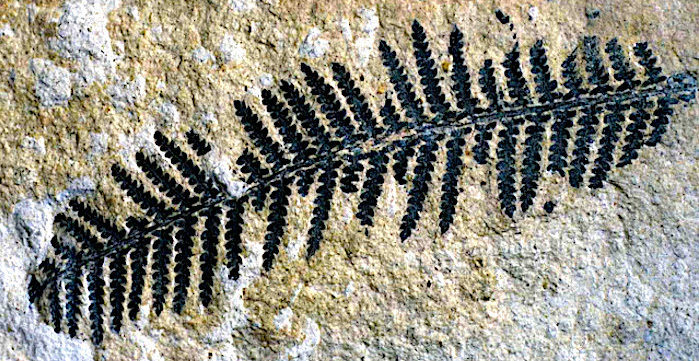
© UnknownFossil fern from Alexander Island, Antarctic Peninsula.
Antarctica once had a forest and researchers are trying to figure out why it disappeared.

During Antarctica's summer, from late November through January, UW-Milwaukee geologists Erik Gulbranson and John Isbell climbed the McIntyre Promontory's frozen slopes in the Transantarctic Mountains. High above the ice fields, they combed the mountain's gray rocks for fossils from the continent's green, forested past.

By the trip's end, the geologists had found fossil fragments of 13 trees. The discovered fossils reveal that the trees are over 260 million years old, meaning that this forest grew at the end of the Permian Period, before the first dinosaurs.

Gold Bar

Scientists discover gold literally grows on trees

gold leaves
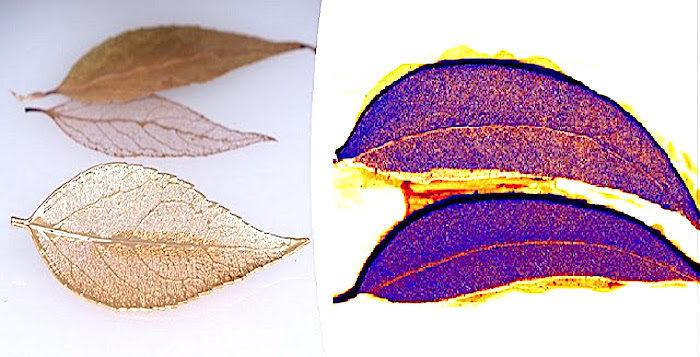
© Mel LinternScientists have discovered that gum leaves absorb gold buried beneath the ground.
Money might not grow on trees, but scientists have confirmed that gold is found in the leaves of some plants. Scientists from Australia's national science agency, the Commonwealth Scientific and Industrial Research Organisation (CSIRO), have proved that the leaves of certain eucalyptus trees contain minute amounts of the precious metal that have been naturally absorbed.

Eucalypts in the Kalgoorlie region of Western Australia and the Eyre Peninsula in South Australia are drawing up water containing gold particles from the earth via their roots and depositing it in their leaves and branches.

One of the authors of the paper, the CSIRO geochemist Dr Mel Lintern, said some eucalyptus root systems dived down deeper than 30m, through much of the sediment that sits on top of solid ore-bearing rock. The tree acts "as a hydraulic pump ... drawing up water containing the gold", he said. "As the gold is likely to be toxic to the plant, it is moved to the leaves and branches where it can be released or shed to the ground."

Galaxy

Physicist suggests looking to the cosmos to solve computational problems

COSMOS
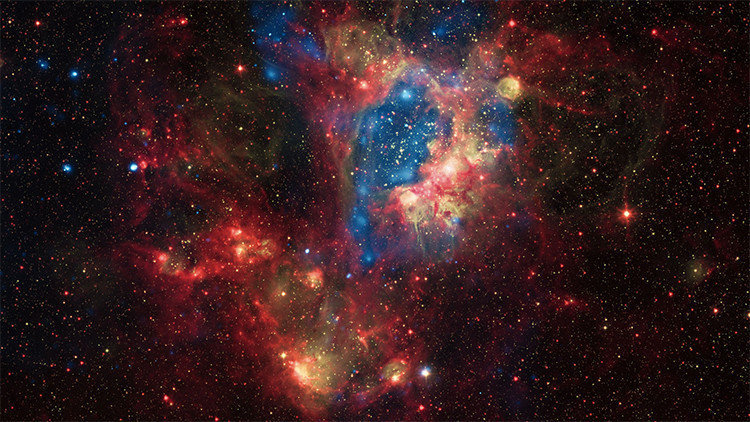
© Foto ilustrativa / NASA
Can a close look at the universe give us solutions to problems too difficult for a computer -- even if we built a computer larger than a planet? Physicist Stephen Jordan reflects on this question in a new video by the National Institute of Standards and Technology (NIST), along with a new scientific paper that considers one particular tough problem the universe might answer.

In The Computational Power of the Universe, Jordan does not imagine what we could learn if humanity somehow converted the entire cosmos into a vast computing device (however marvelous a science-fiction premise that idea might make). Rather, he asks, now that the universe has undergone billions of years of change in accordance with the laws of nature, can we use what we see through our telescopes to gain insights into difficult computational problems? After all, computers crunch numbers to simulate complex change. What if we consider the cosmos to be the output of a 13.7-billion year computation?

Microscope 1

Scientists clock the incredible speed of an electron being emitted from an atom

atom vacuum chamber
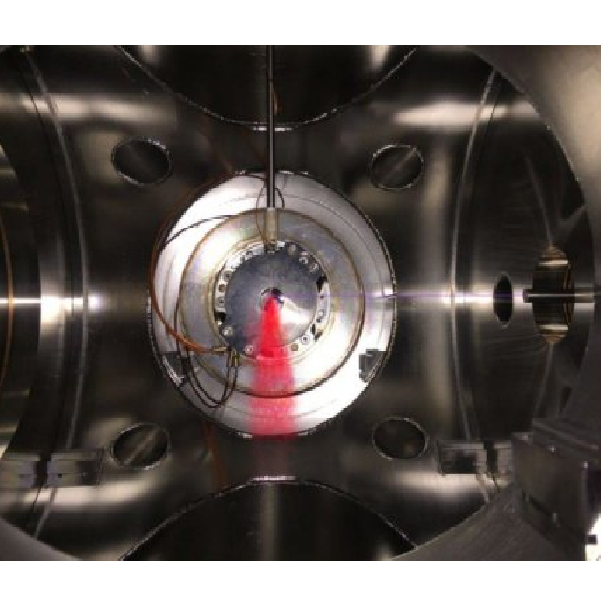
© Marcus IsingerInside the vacuum chamber.
In a unique experiment, researchers have clocked how long it takes for an electron to be emitted from an atom. The result is 0.00000000000000002 seconds, or 20 billionths of a billionth of a second. The researchers' stopwatch consists of extremely short laser pulses. Hopefully, the results will help to provide new insights into some of the most fundamental processes in nature.

Researchers from Lund, Stockholm and Gothenburg in Sweden have documented the incredibly brief moment when two electrons in a neon atom are emitted.

"When light hits the atom, the electrons absorb the energy from the light. An instant later the electrons are freed from the binding powers of the atom. This phenomenon, called photoionization, is one of the most fundamental processes of physics and was first theoretically mapped by Albert Einstein, who was awarded the Nobel Prize in Physics in 1921 for this particular discovery," says Marcus Isinger, doctoral student in attophysics at Lund University in Sweden.

Heart

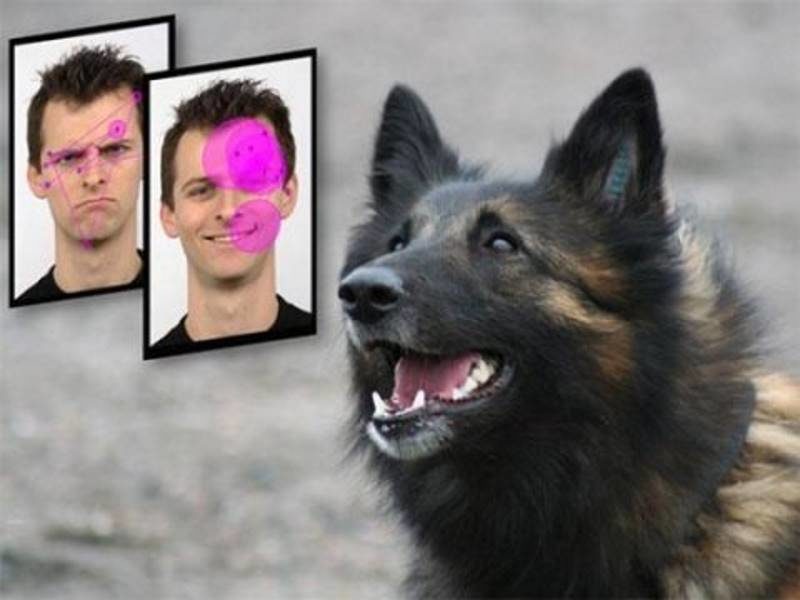
Dogs respond to smiling human faces thanks to oxytocin

human smile dogs oxytocin
© Sanni SomppiThe hormone oxytocin is probably a key factor in the interaction between dogs and humans.
Researchers found that oxytocin made dogs interested in smiling human faces. It also made them see angry faces as less threatening. Associated with affection and trust, the hormone oxytocin is probably a key factor in the interaction between dogs and humans

Researchers in the University of Helsinki's Canine Mind research project found that oxytocin made dogs interested in smiling human faces. It also made them see angry faces as less threatening. Associated with affection and trust, the hormone oxytocin is probably a key factor in the interaction between dogs and humans.

"It seems that the hormone oxytocin influences what the dog sees and how it experiences the thing it sees," says doctoral student Sanni Somppi.

Tornado1

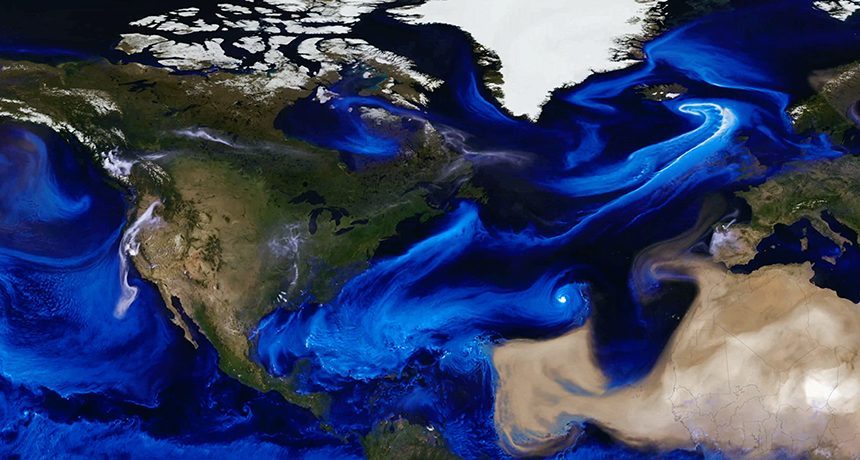
The 2017 hurricane season: NASA's mesmerizing new video

NASA image Hurrican Ophelia
© NASAHurricane Ophelia (its core appears here as a white dot at the lower right) dragged in dust from the Sahara and smoke from wildfires in Portugal as the storm spun northeast toward Ireland in October 2017.
Supercomputers and advanced physics made the stunning new simulation possible

How do you observe the invisible currents of the atmosphere? By studying the swirling, billowing loads of sand, sea salt and smoke that winds carry. A new simulation created by scientists at NASA's Goddard Space Flight Center in Greenbelt, Md., reveals just how far around the globe such aerosol particles can fly on the wind.

The complex new simulation , powered by supercomputers, uses advanced physics and a state-of-the-art climate algorithm known as FV3 to represent in high resolution the physical interactions of aerosols with storms or other weather patterns on a global scale (SN Online: 9/21/17). Using data collected from NASA's Earth-observing satellites, the simulation tracked how air currents swept aerosols around the planet from August 1, 2017, through November 1, 2017.

Ice Cube

Mpemba effect: Why hot water freezes faster than cold water

icicles,Mpemba effect
The fact that preheated liquids freeze faster than those that are already cold was observed for the first time by Aristotle in the 4th century AD.
A team of researchers from Universidad Carlos III de Madrid, the Universidad de Extremadura and the Universidad de Sevilla have defined a theoretical framework that could explain the Mpemba effect, a counterintuitive physical phenomenon revealed when hot water freezes faster than cold water.

The researchers, who have recently published the findings in Physical Review Letters, have confirmed how this phenomenon occurs in granular fluids, that is, those composed of particles that are very small and interact among those that lose part of their kinetic energy. Thanks to this theoretical characterization, "we can simulate on a computer and make analytical calculations to know how and when the Mpemba effect will occur," said Antonio Lasanta. Lasanta is from the UC3M Gregorio Millán Barbany University Institute for Modeling and Simulation on Fluid Dynamics, Nanoscience and Industrial Mathematics. "In fact," he said, "we find not only that the hottest can cool faster but also the opposite effect: the coldest can heat faster, which would be called the inverse Mpemba effect."

Eye 2

Justifiable paranoia: Hundreds of websites are watching your every move, permanently recording keystrokes and mouse movements

big brother websites, internet spying
"Collection of page content by third-party replay scripts may cause sensitive information, such as medical conditions, credit card details, and other personal information displayed on a page, to leak to the third-party as part of the recording"
If you have the uncomfortable sense someone is looking over your shoulder as you surf the Web, you're not being paranoid. A new study finds hundreds of sites-including microsoft.com, adobe.com, and godaddy.com-employ scripts that record visitors' keystrokes, mouse movements, and scrolling behavior in real time, even before the input is submitted or is later deleted.

Session replay scripts are provided by third-party analytics services that are designed to help site operators better understand how visitors interact with their Web properties and identify specific pages that are confusing or broken. As their name implies, the scripts allow the operators to re-enact individual browsing sessions. Each click, input, and scroll can be recorded and later played back.

A study published last week reported that 482 of the 50,000 most trafficked websites employ such scripts, usually with no clear disclosure. It's not always easy to detect sites that employ such scripts. The actual number is almost certainly much higher, particularly among sites outside the top 50,000 that were studied.