Science & TechnologyS


Airplane

A Boeing 757 was hacked and now DHS is worried more planes could be at risk

boeing
© REUTERS/Yuri GripasUS Air Force C32 A, the military version of a Boeing 757-200.
  • A Department of Homeland Security official admitted that the agency was able to remotely hack into a Boeing 757 during a test in 2016.
  • The DHS official indicated that he and his team were able to do so without having any direct contact with the aircraft or using any materials that would be flagged by security.
  • While the exact details of the hack are confidential, Boeing insists that the hackers were not able to take control of the aircraft's flight systems.
The increasing use of electronics and internet connectivity in transportation vehicles is a double-edged sword. While new technology gives drivers and pilots more information and makes communication easier, it also leaves vehicles more vulnerable to cyber attacks.

The Department of Homeland Security illustrated that fact when it remotely hacked into a Boeing 757 through its radio communication system at an airport in Atlantic City, NJ, according to CSO . While the hack occurred in September 2016, it wasn't revealed until DHS official Robert Hickey gave his keynote address at an aerospace security summit on Nov. 8.

Health

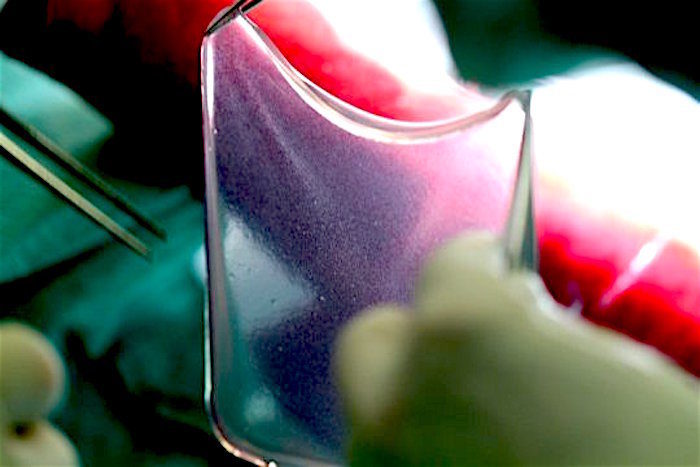
Gene therapy gives boy new skin

stem cell graft
© Frank JacobsenStem cell graft.
A medical team at the Ruhr-Universität Bochum's burn unit and the Center for Regenerative Medicine at the University of Modena (Italy) were the first ever to successfully treat a child suffering from extensive skin damage using transplants derived from genetically modified stem cells. The boy is a so-called butterfly child: he suffers from epidermolysis bullosa, a genetic skin disease that had destroyed approximately 80 percent of his epidermis. After all established therapies had failed, the medical team from Bochum decided to try an experimental approach: they transplanted skin derived from genetically modified stem cells onto the wound surfaces. Thanks to the successful therapy, the boy is now -- two years after the treatment -- able to participate in his family's life and social life. The scientists published their report in Nature.

Life-threatening condition

Epidermolysis bullosa is the scientific name of a congenital skin disease that is currently considered to be incurable. Its underlying mechanism is a defect in protein-forming genes that are essential for skin regeneration. Even minor stress can result in blisters, wounds, and skin loss with scar formation. Depending on disease severity, internal organs may likewise be affected, leading to critical dysfunctions.

Star

Star dust: Discovery of winds blowing off a dying star

wind dying star
© ALMA [ESO/NAOJ/NRAO], Takigawa et al, Kyoto University
Stars like our Sun eject large amounts of gas and dust into space, containing various elements and compounds. Asymptotic giant branch - AGB - phase stars, near their end of life, are particularly significant sources of such substances in our galaxy.

Formation of dust around AGB stars has been considered to play an important role in triggering acceleration of stellar wind, but the detailed mechanism of this acceleration has not been well explained.

And there is yet another conundrum. In space, silicon is ten times more abundant than aluminum. However, many oxygen-rich AGB stars are rich in aluminum oxide dust - the major carrier of aluminum - but poor in silicate dust - the carrier of silicon, which has puzzled researchers: why is aluminum oxide dust so abundant around oxygen-rich AGB stars?

Hardhat

Head transplant 'frankensurgeon' claims he successfully carried out procedure on corpses

Sergio Canavero
© Reuters
Scientists have successfully performed a head transplant on a corpse, and are ready to do it on a living person, according to the man famous for promising it.

Surgeon Sergio Canavero has become famous for claiming to be working on the first human head transplant. And he says that the successful test shows that his plans will work.

The successful transplant on the corpse shows that his newly developed techniques for re-connecting the spine, nerves and blood vessels to allow the two bodies to live together will work, he said. It also seems to suggest that the surgery could be done in the 18-hour target that the team has set itself to be successful.

Comment: See also: Italian 'Frankensurgeon' says first head transplant will be possible in two years


Robot

'World's most dynamic humanoid' can get knocked down and get back up

robot and trainer
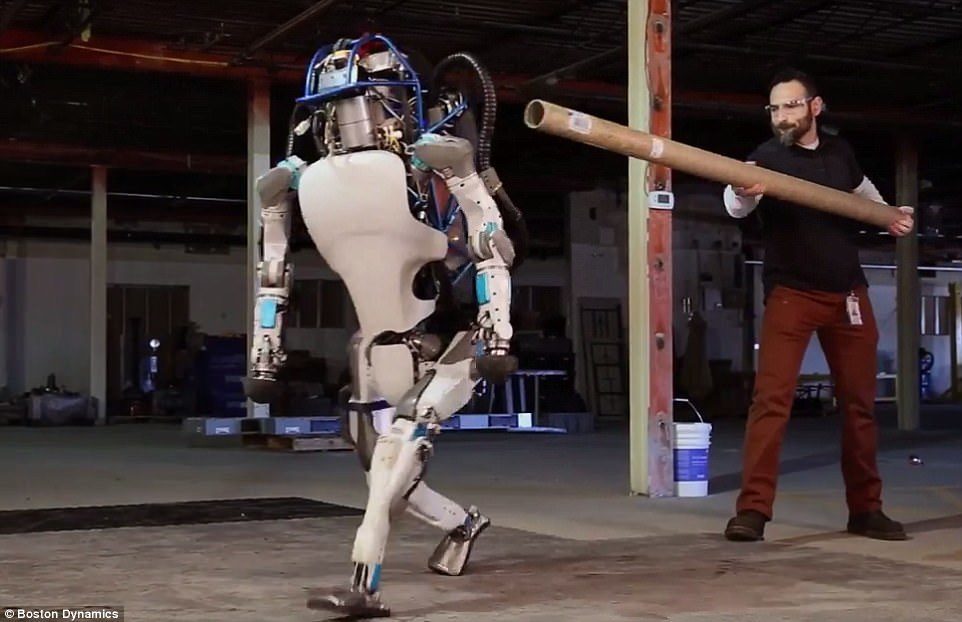
© Boston DynamicsHe's behind you! Boston Dynamic has revealed the new wireless version of its humanoid robot in a new video showing it walk, run, and even be pushed over and get up again on its own.
Standing 6 foot 9 and weighing in at 167 pounds, Atlas is a robot that you really don't want to argue with.

Just months ago, Boston Dynamic's humanoid bot became an object of ridicule after a series of accidents at a government 'robo olympics' saw if falling constantly, and needing a crane to get back on its feet.

Now, 'the World's Most Dynamic Humanoid' is back - and you really don't want to mess with it.

Its makers have given the bot an overhaul, and it is now so stable it can even perform a perfect backflip.

'Atlas is the latest in a line of advanced humanoid robots we are developing, Boston Robotics said.

'Atlas keeps its balance when jostled or pushed and can get up if it tips over.'

To stay upright, Atlas has stereo vision, range sensing and other sensors give Atlas the ability to manipulate objects in its environment and to travel on rough terrain.

Music

Study reveals how the songbird changes its tune in a way 'very similar' to human speech

Study reveals how the songbird changes its tune Biology
© Brainard Lab / UCSF
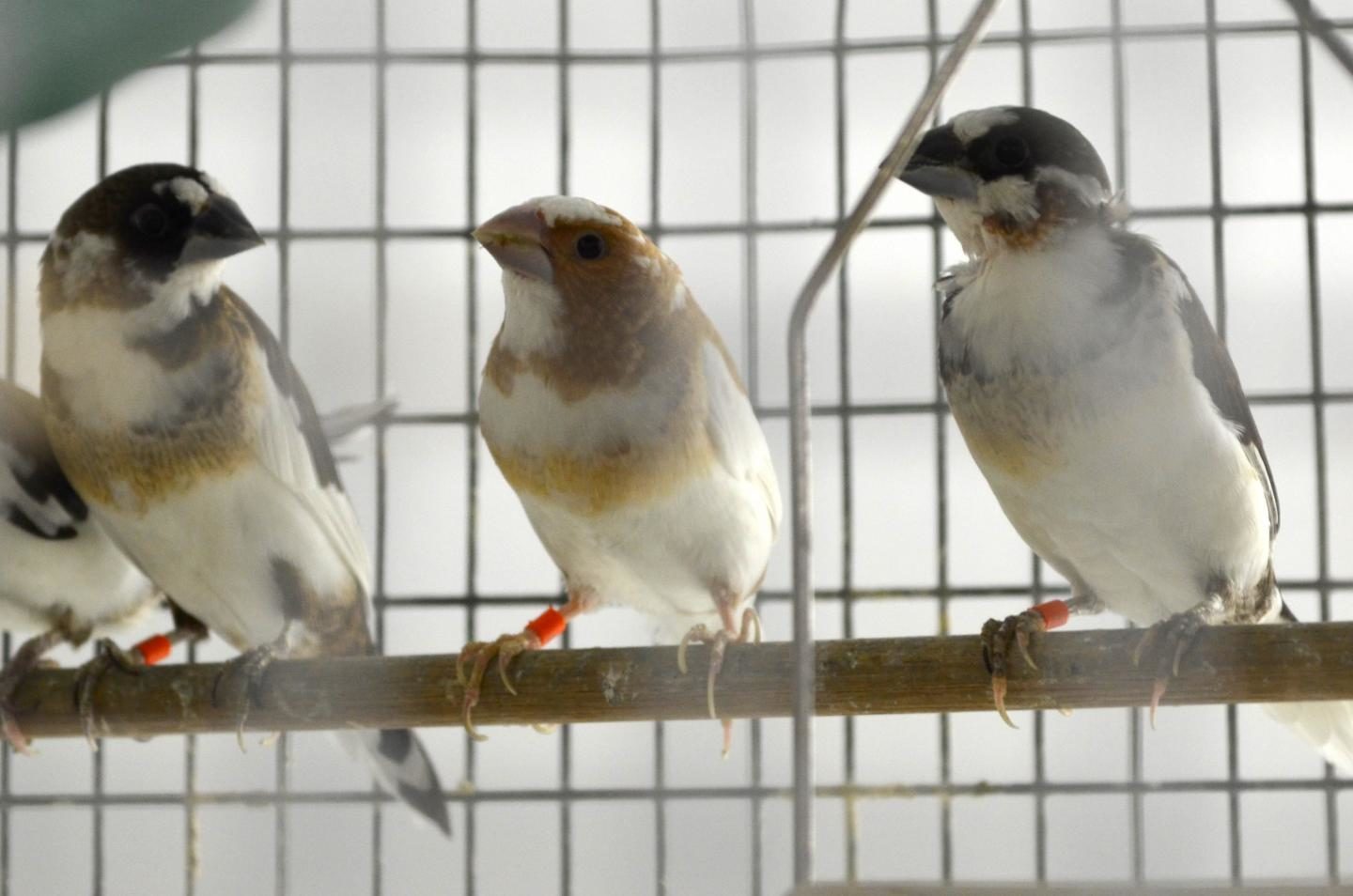
Researchers at UC San Francisco have shown how the Bengalese finch, a domesticated songbird, can learn to tweak its song in specific ways depending on context, which could shed light on how the human brain learns to apply different rules depending on the situation, and have implications for understanding human language and movement disorders.

The study, published November 16, 2017, in Neuron, showed that finches switch from generic to specific versions of their songs depending on the situation they are in. What's more, the researchers identified two distinct areas in the birds' brains dedicated to this learning process: one region that encodes generalizable rules to produce default songs, and another area that can override the default pathway to produce different sounds for different contexts.

This is much like how your own brain learned in infancy the standard arm movement to reach and grab an object, but since then has also learned to adjust the force of your arm and grip of your hand based on the situation - if, for example, you are picking up a full cup rather than an empty one.

Comment: Also See:


Network

Flashback Internet Archive wins copyright reprieve; can now store old computer games and software

Internet Archive
The Internet Archive project has won an exemption from US copyright law, overcoming an obstacle which threatened the entire work of the not-for-profit group. It can now host copies of obsolete computer games and software without fear of prosecution.

The Library of Congress has published six exemptions to the Digital Millennium Copyright Act, which criminalises duplication of material copyrighted to someone else. The exemption is from punishment for breaking the kinds of copy controls on material which are designed to stop unauthorised duplication.

One of the six exemptions is for computer software or games for the purposes of preservation, but only if the original machine, format or technology involved is obsolete.

Comment: See also, Archiving to fight the memory hole: the internet's Wayback Machine is stored in a church


Network

Archiving to fight the memory hole: the internet's Wayback Machine is stored in a church

Internet Archive's headquarters in San Francisco, California Christian Science church in the Richmond district of San Francisco,
The Internet Archive, San Francisco.
At the Internet Archive's headquarters in San Francisco, California, on Wednesday, technologists, educators, archivists, and others fact-oriented folks gathered to discuss how they and the like-minded can save news from the memory hole - a conceit conjured by George Orwell to describe a political mechanism for altering the truth.

The event, Dodging the Memory Hole 2017, was the fifth such gathering since 2014, sponsored by the Donald W. Reynolds Journalism Institute and a grant from the Institute of Museum and Library Services. It comes at a time when news publishers in the US faces heightened hostility from the Trump administration, not to mention ongoing revenue pressure.


The Internet Archive is a non-profit digital library, explained founder Brewster Kahle during his keynote presentation. The Archive's goal, he said, is to provide universal access to all knowledge. In that it echoes Google's self-avowed aspiration, but without the ads, data harvesting or commercial chicanery. And with a handy little copyright exemption.

Info

Study claims Don Juan Pond in Antarctica, among the saltiest waters on Earth, is fed from deep below

Don Juan pond
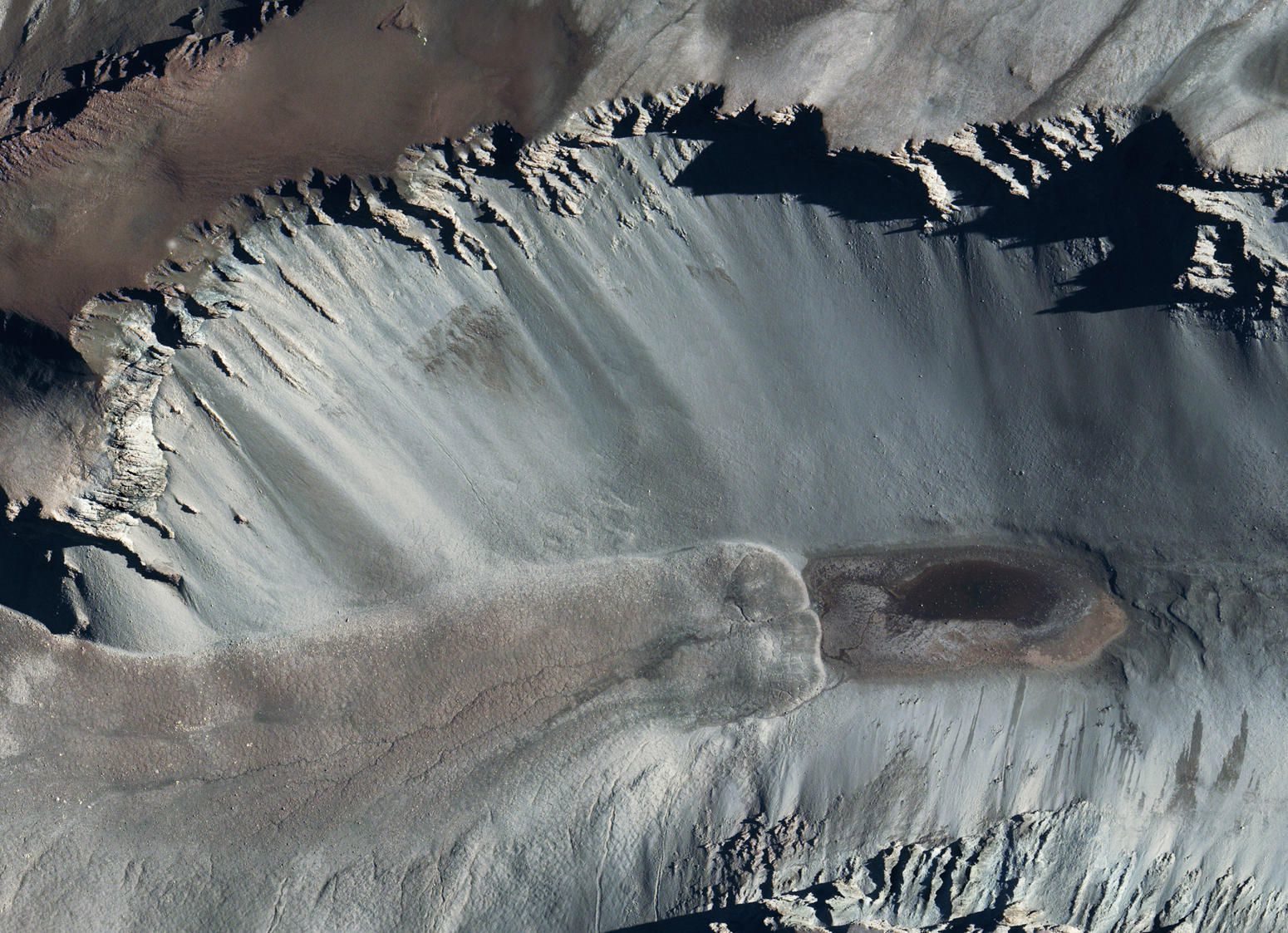
© NASAWhile scientists have previously hypothesized that it is fed by moisture trickling down from the surrounding valley slopes, a new study suggests it may instead be fueled by a groundwater system deep beneath the surface.
At the base of the Transantarctic Mountains lies a geological oddity. Don Juan Pond is one of the saltiest bodies of water on the planet, filled with a dense, syrupy brine rich in calcium chloride that can remain liquid to minus 50 degrees Celsius, far below the freezing point of water. But the source of water and salt to this unusual pond remains a mystery - even as hints emerge that water in a similar form could exist on Mars.

A new University of Washington study uses the pond's bizarre chemistry to pinpoint the water's source. The recent paper, published Sept. 15 in Earth and Planetary Science Letters, reports that it is fed by a regional deep groundwater system and not, as previously suggested, from moisture seeping down from local valley slopes.

"Don Juan Pond is probably one of the most interesting ponds on Earth," said lead author Jonathan Toner, a UW research assistant professor in Earth and space sciences. "After 60 years of extensive study, we still don't really know exactly where it's coming from, what drives the fact that it's visible on the surface, and how it's changing."

Comment: Scientists find evidence of large hydrologic network under Antarctica's 'bleeding glacier'


Comet

Astronomers discover comet shaped like a giant pink fire-extinguisher

comet path
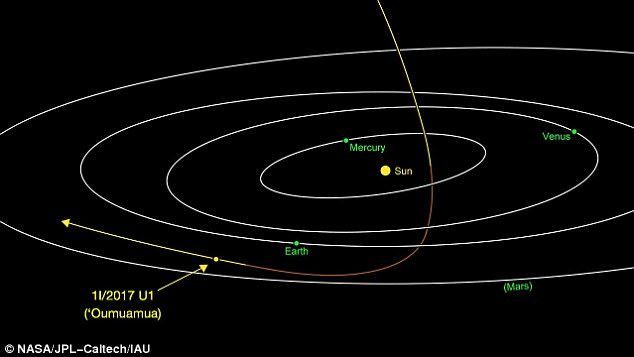
© NASA/JPL-Caltech/IAUPreviously known as C/2017 U1 (PANSTARRS) and A/2017 U1, approaching from above, it was closest to the Sun on 9 September. Traveling at 44 kilometres per second, the comet is headed away from the Earth and Sun on its way out of the solar system.
A newly discovered object from another star system that's passing through ours is shaped like a giant pink fire extinguisher, astronomers have revealed.

Astronomers who have been observing this first-ever confirmed interstellar visitor have named it Oumuamua, which in Hawaiian means a messenger from afar arriving first.

Scientists are certain this 600-foot-long, pale pink asteroid or comet originated outside our solar system.

'I'm surprised by the elongated shape - nobody expected that,' said astronomer David Jewitt of the University of California, Los Angeles, who led the observation team that reported on the characteristics.