Science & TechnologyS


Fireball 5

Spectacular lightshow or harbinger of doom? 5 facts about tonight's Perseid meteor shower

Perseid showers
© Mario Anzuoni/Reuters
This year's Perseid meteor shower promises to be one of the best for stargazers as a new Moon bringing darker skies means night time conditions are optimum for this potentially catastrophic cosmic event.

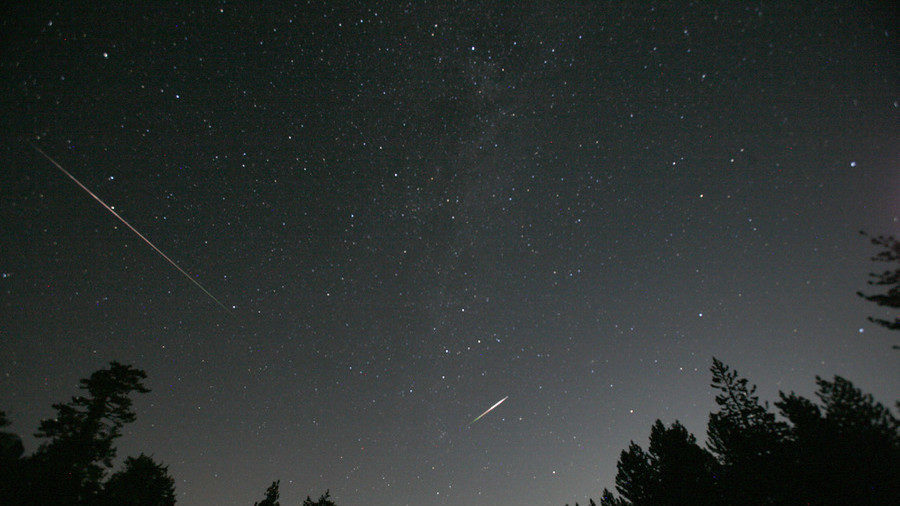
The trail of shooting stars created by the Swift-Tuttle comet have been active in the night sky since mid-July, however, they have been peaking since August 11 and as many 70 shooting stars per hour are expected to be visible from Earth in the early hours of Monday morning.

Here's five more facts about the Perseid meteor shower:

One of the most consistent:

The Perseid meteor shower is one of the most reliable showers year-after-year with Comet Swift-Tuttle being in orbit for thousands of years. It takes 133 years to ellipse the Sun and this is the first year it has passed into the inner solar system since 1991. The next time will be in 2126.


Comment: See also: The annual Perseids: Astronomers prepare for Earth to 'plow' into fiery meteor shower


Dig

40,000 year old, perfectly preserved foal unearthed from permafrost in Siberia's 'gateway to the underworld'

40,000 year old horse siberia
Sensational find of world's only completely preserved ancient baby horse, aged just three months when it died in the Palaeolithic period.

This is the first picture of an ancient foal dug out of the permafrost in the Batagai depression - also known as the 'Mouth of Hell' - in the Yakutia region of Siberia.

Head of the world famous Mammoth Museum in Yakutsk, Semyon Grigoryev, said: 'The foal was approximately three months old (when it died).

'The unique find was made in the permafrost of Batagai depression. The foal was completely preserved by permafrost.

Comment: Due to its unique conditions and history, Siberia it's proving it to be a goldmine for ancient archaeology:


Info

New Horizons spacecraft spots wall of hydrogen near edge of Solar System

Hydrogen Wall
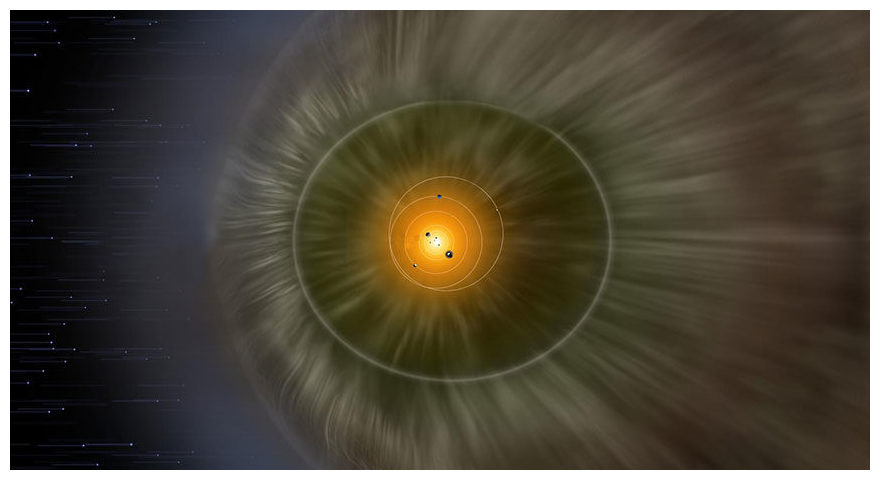
© Adler Planetarium/IBEX/NASAHELLO FROM THE OTHER SIDE The sun’s journey through the galaxy may build a wall of hydrogen near the edge of the solar system (curved line to the left of this illustration). The New Horizons spacecraft may have seen evidence of just such a wall.
The New Horizons spacecraft has spotted an ultraviolet glow that seems to emanate from near the edge of the solar system. That glow may come from a long-sought wall of hydrogen that represents where the sun's influence wanes, the New Horizons team reports online August 7 in Geophysical Research Letters.

"We're seeing the threshold between being in the solar neighborhood and being in the galaxy," says team member Leslie Young of the Southwest Research Institute, based in Boulder, Colo.

Even before New Horizons flew past Pluto in 2015 (SN: 8/8/15, p. 6), the spacecraft was scanning the sky with its ultraviolet telescope to look for signs of the hydrogen wall. As the sun moves through the galaxy, it produces a constant stream of charged particles called the solar wind, which inflates a bubble around the solar system called the heliosphere. Just beyond the edge of that bubble, around 100 times farther from the sun than the Earth, uncharged hydrogen atoms in interstellar space should slow when they collide with solar wind particles. That build-up of hydrogen, or wall, should scatter ultraviolet light in a distinctive way.

The two Voyager spacecraft saw signs of such light scattering 30 years ago. One of those craft has since exited the heliosphere and punched into interstellar space (SN: 10/19/13, p. 19).

Microscope 1

A tiny single-celled protozoan is one of the fastest creatures on Earth

Spirostomum ambiguum fast microbes
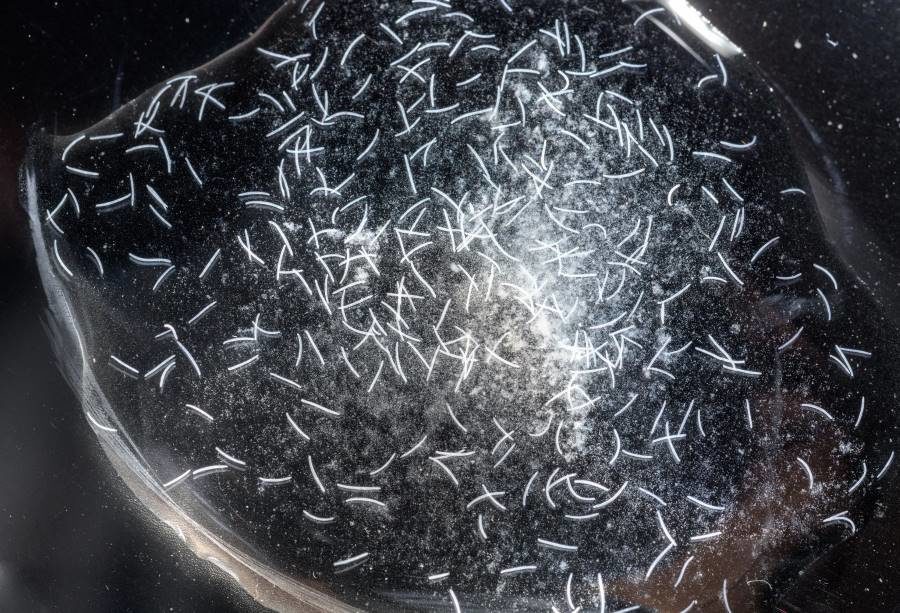
© Rob Felt/Georgia TechSpirostomum ambiguum specimens, each about 4 millimeters long in its expanded state, look wormlike under a microscope.
Ask most people to identify the fastest animal on Earth and they'll suggest a cheetah, falcon or even a sailfish. To that list of speedy animals, Georgia Institute of Technology assistant professor Saad Bhamla would like to add the Spirostomum ambiguum, a tiny single-celled protozoan that achieves blazing-fast acceleration while contracting its worm-like body.

Common to many lakes and ponds, the Spirostomum ordinarily moves about using tiny hairs called cilia. But its claim to speed involves extremely rapid acceleration while contracting its body when startled. The creature can shorten its body by more than 60 percent in a few milliseconds, going from a four-millimeter flat ribbon to the shape of an American football - all without the kind of muscles humans use.

How it does that, and how it does that without damaging fragile internal structures, is part of a four-year National Science Foundation (NSF) grant Bhamla just received. The physics and mathematics of the answers could help advance nanotechnology and accelerate a new generation of robots barely large enough to see with the naked eye.

Music

Researchers find sound waves a source of strange 'negative' gravity

supersonic jet break sound barrier
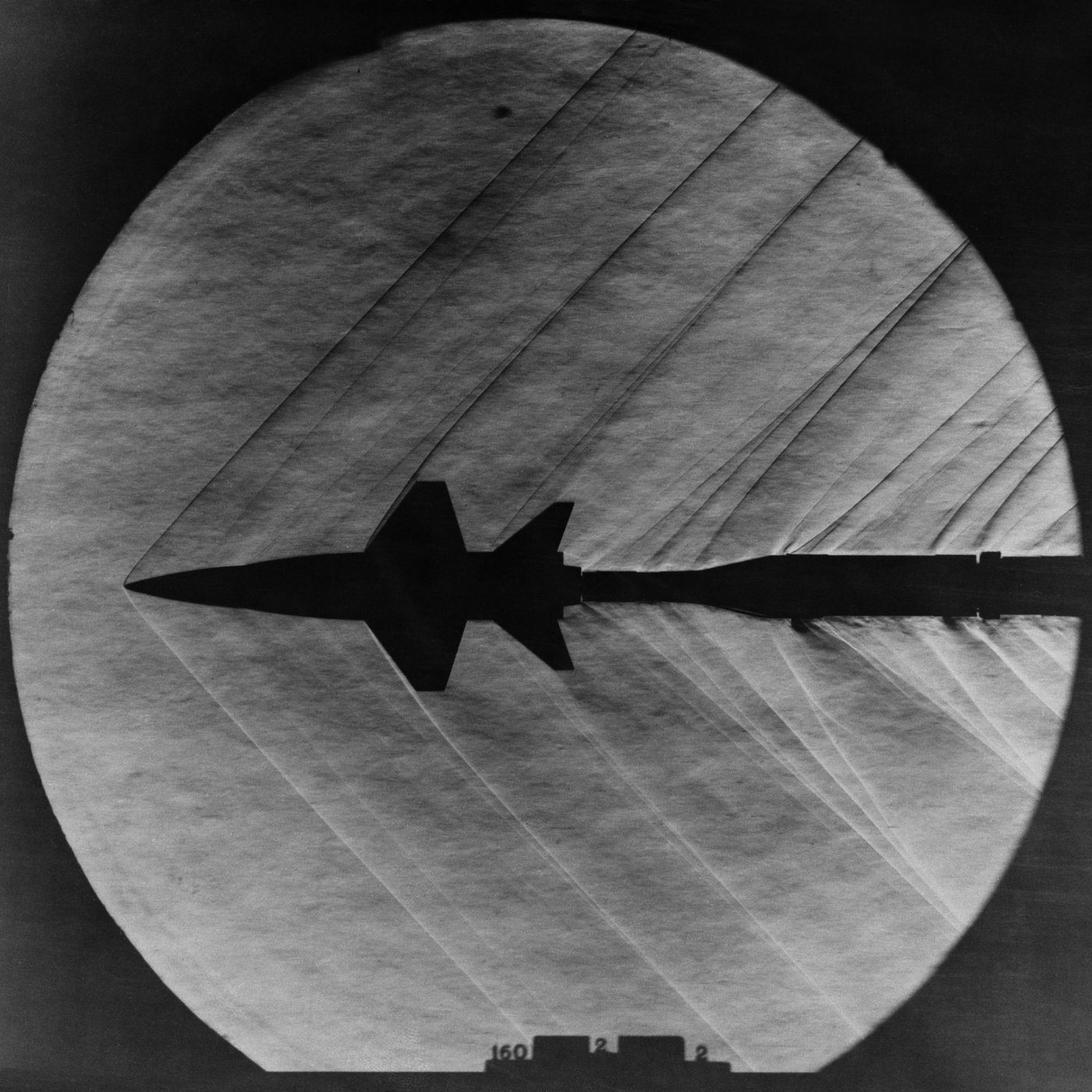
© ShutterstockScientists have long thought of soundwaves as massless, and this image of the sound waves surrounding a supersonic jet sure look that way. But new research suggests that isn't quite the case.
Sound has negative mass, and all around you it's drifting up, up and away - albeit very slowly.

That's the conclusion of a paper submitted on July 23 to the preprint journal arXiv, and it shatters the conventional understanding that researchers have long had of sound waves: as massless ripples that zip through matter, giving molecules a shove but ultimately balancing any forward or upward motion with an equal and opposite downward motion. That's a straightforward model that will explain the behavior of sound in most circumstances, but it's not quite true, the new paper argues.

A phonon - a particle-like unit of vibration that can describe sound at very small scales - has a very slight negative mass, and that means sound waves travel upward ever so slightly, said Rafael Krichevsky, a graduate student in physics at Columbia University.

Phonons aren't particles of the sort most people typically imagine, like atoms or molecules, said Krichevsky, who published the paper along with Angelo Esposito, a graduate student in physics at Columbia University, and Alberto Nicolis, an associate physics professor at Columbia.

Brain

Your brain contains magnetic particles, and scientists want to know why

brain
© Shutterstock
In a remote forest laboratory in Germany, free from the widespread pollution found in cities, scientists are studying slices of human brains.

The lab's isolated location, 50 miles (80 kilometers) from Munich, gives the researchers the opportunity to examine a bizarre quirk of the brain: the presence of magnetic particles deep within the organ's tissues.

Scientists have known since the 1990s that the human brain contains these particles, but researchers didn't know why. Some experts proposed that these particles served some biological purpose, while other researchers suggested that the magnets came from environmental pollution. [Inside the Brain: A Photo Journey Through Time]

Snowflake

New water memory research may lead to a better understanding of Homeopathic medicine

memory of water
On July 14th 2018 a conference held at London's Royal Society of Medicine, titled New Horizons in Water Science focussed on homeopathy. The conference hosted many esteemed speakers including Nobel Laureate, Professor Brian Josephson, Nobel Laureate, Professor Luc Montagnier, Professor Gerald Pollack, Professor Vladimir Voeikov, Professor Alexander Konovalov and Dr. Robert Verkerk

The Western medical model is heavily reliant on pharmaceutical drugs and surgery, and for acute medical conditions the model has proven to be highly effective. The case is significantly different for chronic conditions, when pharmaceutical drugs and surgery are ineffective and for which mainstream hospitals and clinics can offer little support for a patient beyond pain reduction. No one therapy or medical technique answers all that our health needs and today many complimentary and alternative therapeutic modalities have been developed that offer support for chronic conditions, including acupuncture, audible sound therapy, Reiki, hypnotherapy, homeopathy and many others. While complimentary and alternative therapies offer support for many aspects of health, including chronic conditions, homeopathy, in particular, has come in for major criticism. In the UK homeopathy remains available as an alternative treatment under the National Health System, yet the detractors are often vicious in their attacks on homeopathic medicine and even though patients of homeopathic treatment, worldwide, continue to report excellent results.

Sun

NASA launches solar probe in daring mission to "touch" our Sun

sunset
© CC0
The US space agency NASA will fire off a solar probe on Saturday in an ambitious bid to touch the Sun's millions-of-degrees-hot atmosphere.

The Parker Solar Probe will lift off atop a Delta IV Heavy rocket at 3:53 a.m. ET (7:53GMT) from Cape Canaveral air force station in Florida, the United States.

The satellite will zoom through space past Venus at a speed of up to 430,000 miles per hour, possibly setting the record for the fastest spacecraft in history.

During its 7-year mission, the probe will complete 24 orbits of the Sun, coming within 3.8 million miles of its surface, and dip into the corona, the plasmic aura that is even hotter than the surface.

Comment: Considering mainstream sciences current understanding our Sun, they could be in for some big surprises. And right now, it's undergoing changes not seen for hundreds of years or more see: Also check out SOTT radio's:


HAL9000

China looking for ways to employ Artificial Intelligence to help shape its foreign policy

AI in China
China is using artificial intelligence as a tool to help it decide its foreign policy, detaching from the emotions of useless humans that get in the way of the thought process. What could possibly go wrong allowing A.I. to help decide foreign policy with other countries?

The South China Morning Post has reported that "Several prototypes of diplomatic systems using artificial intelligence are under development in China, according to researchers involved or familiar with the projects."

The Post notes that "one early-stage machine, built by the Chinese Academy of Sciences, is already being used by the Ministry of Foreign Affairs."

If it's still not worrying you that robotic algorithms could be deciding foreign policy in China with other nations, the Ministry of Foreign Affairs further confirmed to the South China Morning Post that they had plans to use A.I. in diplomacy.

"Cutting-edge technology, including big data and artificial intelligence, is causing profound changes to the way people work and live. The applications in many industries and sectors are increasing on daily basis," a Ministry spokesman said last month, the news agency reported.

Hammer

Science as social control: Political paralysis and the genetics agenda

genetics
Synopsis: Over the last twenty years, human genetic research has convinced the public that genetic factors often underly disease and human behavior. Yet this genomic research project, which is one of the most expensive science programs ever conceived, has almost entirely failed to identify the important genes that geneticists predicted, or to account for the occurrence of human illness. Thus the BRCA1 equals breast cancer example, which remains the most cited example of a genetic contribution to common disease, plays a role in less than 10% of all breast cancer cases. This contrast between the hype of genetics and the meagre reality exposes, first a failure of geneticists to honestly report their results, and second a failure of the science media. It also brings into focus the disturbing historical fact that human disease genetics first attained prominence with money from the tobacco industry. The tobacco industry had decided it urgently needed to find alternative explanations for lung cancer and tobacco addiction that were capable of dissipating public opprobrium and derailing potential legal actions.