Science & TechnologyS


Cow Skull

Russian scientists discover region's largest mammoth tusk yet in Ural mountains

largest mammoth tusk russia
© CEN/NTVPaleontologists are celebrating after discovering the largest mammoth tusk ever found in Russia
Paleontologists are celebrating after discovering the largest mammoth tusk ever found in Russia.

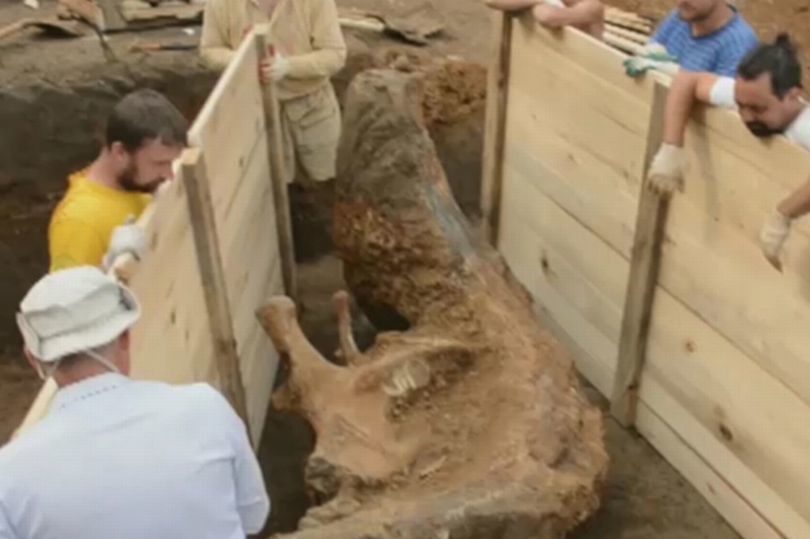
Part of the tusk of a steppe mammoth was found during an an expedition in the Ural Mountains in the Prikamye region of central Russia's Perm Krai region.

Paleontologists initially thought they had found just a small section of tusk - but when it was fully excavated it measured 3.15 metres (10ft 4ins) long and 22 centimetres (8.7 ins) in diameter.

Comment: What kind of world was able to support such massive creatures?


Brain

What really happens when you die?

Chilling new research says your brain knows you're dead
brain
There were times reading the University of Western Ontario's study, published this January in the Canadian Journal of Neurological Sciences, when I couldn't tell if it's all a big scary attempt to terrify us or if it's an earnest, scientific and intellectual inquiry into what happens to our memories when we die. The findings - which say our brains are working as much as 10 minutes after we pass - are mind blowing enough to argue that it's both.

As you know, the topic of what happens at the end has gotten a lot of attention in recent years. Authors have written books about it. Hollywood has made movies. The 2014 film Heaven Is For Real, about a 4-year old boy who told his parents he visited heaven while having surgery, was a huge box office success.

Comment:


Magnify

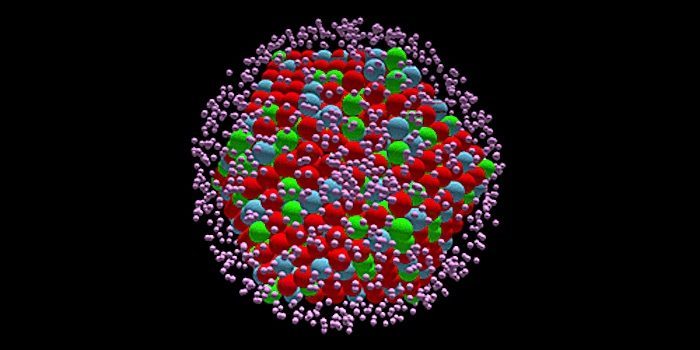
Observation of the birth of a nanoplasma

Nanoplasma
© Y. Kumagai/Tohoku University
A femtosecond-sensitive technique reveals the first steps in the creation of the nanoplasma that forms when a powerful x-ray pulse hits a nanoparticle.

The high-energy and high-intensity pulses available from x-ray free-electron lasers (XFELs) are leading to new studies of the structure of nanoscale objects such as proteins. But researchers also need to understand the interactions between x rays and matter in order to properly interpret such experiments. Now Yoshiaki Kumagai, of Tohoku University in Japan, and colleagues have revealed the earliest steps in the creation of a so-called nanoplasma, which appears when a powerful x-ray pulse hits a cluster of a few thousand atoms.

The process of creating a nanoplasma has not been clear because of the difficulty of measuring such rapid events, but Kumagai and colleagues used their recently developed technique that has femtosecond (fs) time resolution. They blasted a cluster of roughly 5000 xenon atoms with an x-ray pulse followed by a near-infrared (NIR) pulse capable of ionizing additional atoms, with a controllable delay in between.

Chalkboard

Physicists tie laser light waves into knots

A team of physicists has tied light into figure-8 and torus knots.

The researchers, according to a paper published July 30 in the journal Nature Physics, figured out how to make the waves of two laser beams of light interfere with one another, and ultimately loop around each other in ways you might be more likely to associate with shoelaces or the knots on a sailboat.
laser light knots torus
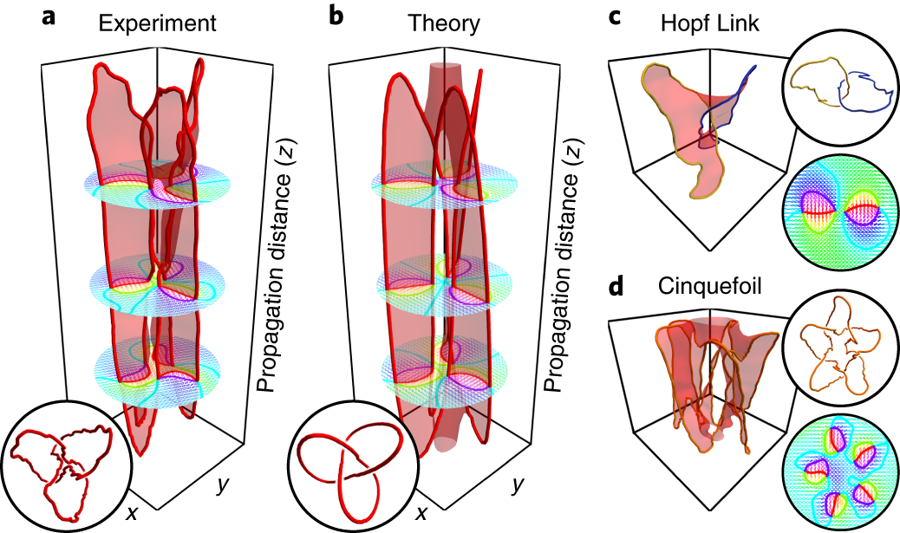
© University of Bristola,b, Depiction of the various entities attributed to an optical trefoil knot corresponding to experimental (a) and theoretical results (b). In this display, the knotted trajectories of the C-lines are shown in red and the Seifert surface defined by regions with an azimuth of ± π/2 are displayed in pale red. The transverse polarization profile of the optical knot is shown for different propagation distances as cross-sectional images. c,d, A similar experimental surface reconstruction is performed for other torus structures, including a Hopf link (c) and a cinquefoil knot (d). The polarization profile in the focal plane of these optical structures is shown at the bottom right corner of the surfaces. All three-dimensional images are accompanied by a top-view image in which crossings have been made more noticeable. The aspect ratios of the plots were chosen to better depict the main features of the knots’ structure and do not necessarily scale to the real dimensions of the knots. Additional details surrounding the knots’ dimensions can be found in the Methods.
But knots don't have to be made of string, the researchers explained in an accompanying statement. Instead, a knot is a mathematical term for any shape in space that loops around itself in particular ways. And by exploiting the complex shapes light waves form as they vibrate in two directions (up and down, and side to side) along their paths, and the ways those waves interact with one another, they were able to cause electromagnetic light fields to knot in the air.

The knots in question, the researchers wrote in their paper, were visible enough in images of the light wave data for them to identify the figure eights and toruses. They also confirmed their findings using formal knot theory mathematics.

Fireball

The annual Perseids: Astronomers prepare for Earth to 'plow' into fiery meteor shower

Meteor
© Dado RuvicA meteor streaks across the sky above medieval tombstones in Radmilje, Bosnia and Herzegovina, on 12 August, 2016.
A glowing shower of meteorites is set to light up the night skies this August as hundreds of burning space rocks wipe out in Earth's atmosphere, much to the delight of stargazers across the globe.

The Perseids is a prolific shower of fiery space particles that has streaked over our planet annually for generations as Earth encounters debris falling off the Swift-Tuttle comet, which was first discovered back in 1862.

The gleaming debris is generally first seen in mid-July in the northern hemisphere but enters a particularly sweet period of viewing for amateur stargazers between August 11-13, 2018. According to NASA, the peak period happens around a moonless night when the sky is darker than normal.

"Unlike most meteor showers, which have a short peak of high meteor rates, the Perseids have a very broad peak, as Earth takes more than three weeks to plow through the wide trail of cometary dust," said Jane Houston Jones, of the US space agency's Jet Propulsion Laboratory.

Info

Genome study upends notions of language evolution

Human Language
© Jens Schlueter/AFP/GettyThe human version of the gene FOXP2 harbours changes not found in chimpanzees or other primates.
The evolution of human language was once thought to have hinged on changes to a single gene that were so beneficial that they raced through ancient human populations. But an analysis now suggests that this gene, FOXP2, did not undergo changes in Homo sapiens' recent history after all - and that previous findings might simply have been false signals.

"The situation's a lot more complicated than the very clean story that has been making it into textbooks all this time," says Elizabeth Atkinson, a population geneticist at the Broad Institute of Harvard and MIT in Cambridge, Massachusetts, and a co-author of the paper, which was published on 2 August in Cell1.

Originally discovered in a family who had a history of profound speech and language disorders, FOXP2 was the first gene found to be involved in language production2. Later research touted its importance to the evolution of human language.

A key 2002 paper found that humans carry two mutations to FOXP2 not found in any other primates3. When the researchers looked at genetic variation surrounding these mutations, they found the signature of a 'selective sweep' - in which a beneficial mutation quickly becomes common across a population. This change to FOXP2 seemed to have happened in the past 200,000 years, the team reported in Nature. The paper has been cited hundreds of times in the scientific literature.

Pi

Four mathematicians are awarded the Fields Medal

Peter Scholze
© Soeren Stache/DPA/Alamy Live NewsPeter Scholze of the University of Bonn is one of the youngest recipients of the Fields Medal, often described as the Nobel Prize of mathematics.
Every four years, at an international gathering of mathematicians, the subject's youngest and brightest are honored with the Fields Medal, often described as the Nobel Prize of mathematics.

This year's recipients, announced on Wednesday at the International Congress of Mathematicians in Rio de Janeiro, include one of the youngest ever: Peter Scholze, a professor of mathematics at the University of Bonn who is 30 years old.

Two weeks ago, Peter Woit, a professor at Columbia University who blogs about mathematics and physics, was among those who anticipated that Dr. Scholze would receive the medal. Dr. Woit said Dr. Scholze was "by far the most talented arithmetic geometer of his generation."

By custom, Fields medals are bestowed to mathematicians 40 years old or younger. That means Dr. Scholze would have still been eligible for another two rounds of medals. The medal, first awarded in 1936, was conceived by John Charles Fields, a Canadian mathematician. The youngest winner, Jean-Pierre Serre in 1954, was 27.

Beaker

Cuprate class of metals known for unique behavior found to carry electrical current in a way never before observed

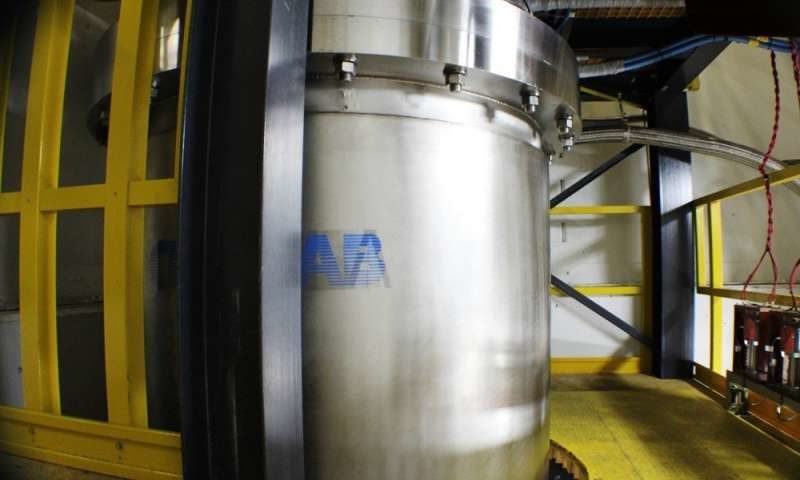
100 Tesla Multi-Shot Magnet
© National MagLabShekhter's group conducted some of their research in the MagLab's world-record 100 Tesla Multi-Shot Magnet.
Scientists at the Florida State University-headquartered National High Magnetic Field Laboratory have discovered a behavior in materials called cuprates that suggests they carry current in a way entirely different from conventional metals such as copper.

The research, published today in the journal Science, adds new meaning to the materials' moniker, "strange metals."

Cuprates are high-temperature superconductors (HTS), meaning they can carry current without any loss of energy at somewhat warmer temperatures than conventional, low-temperature superconductors (LTS). Although scientists understand the physics of LTS, they haven't yet cracked the nut of HTS materials. Exactly how the electrons travel through these materials remains the biggest mystery in the field.

Monkey Wrench

Bayer and BASF pursue plant gene editing elsewhere after EU ruling that the technology should be regulated

BASF/Bayer
© Reuters
Bayer and BASF, among Europe's largest makers of farm supplies, all but ruled out pursuing genetic plant breeding at home after the EU ruled the technology should be regulated like genetically modified organisms (GMO).

The European Court of Justice (ECJ) said on Wednesday mutagenesis-based gene-editing methods such as CRISPR/Cas9, which can rearrange targeted bits of DNA, fall under rules that now apply to genetic modification via strands of DNA from a different species.

"As we run a global platform, it would mean that basically these applications of these instruments would not be used in Europe and Germany. So overall, that does not impact us as a company too much, but as a European, I'm worried about what that means to the Europeans," Chief Executive Martin Brudermueller told analysts in a call on Friday.

Horse

Climate change nearly wiped out horses 11,700 years ago

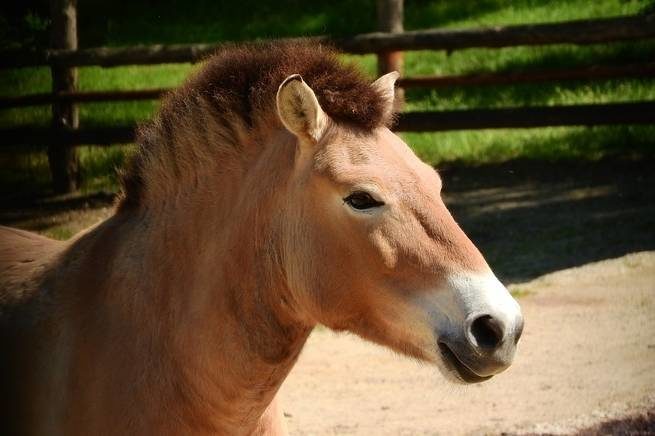
The endangered Przewalski's horse
The endangered Przewalski's horse remains a creature of mystery.
It's hard to imagine an ice age would be the ideal climate for horses, but almost 12,000 years ago, it was. Swathed in short shrubs and dry grass, the open tundra was a perfect place to gather, graze, and keep an eye out for predators. But when natural global warming turned up the thermostat on the Pleistocene period-or what some refer to as "the Last Ice Age"-the grasslands disappeared, and so did the wild horses.

At least that's what new research suggests. Ludovic Orlando, a professor of molecular archaeology at the University of Copenhagen, helped create a database of more than 3,000 horse fossils spanning 44,000 years-one of the largest collections to date-and noticed a steep decline in wild horse populations across Eurasia once the Holocene period (the beginning of the warm weather we live in today) hit 11,700 years ago.

Orlando says it was likely the disintegration of habitats that led wild horses to a similar fate (although not so permanent) as fellow prairie animals like the woolly mammoth.

Comment: The evidence suggests that a cataclysmic event 11,500 years ago caused the dramatic climate shifts which resulted in mass extinctions as well as a massive decline in species populations across the board: