Science & TechnologyS


Cut

Europe applies strict regulations to CRISPR crops

CRIPSR
© Wiki Media
A court has ruled that plants modified with CRISPR technology are subject to the restrictions of the 2001 GMO Directive

In 2001, the European Parliament passed a law known as the GMO (Genetically Modified Organism) Directive, which allows any of the 28 member states of the European Union to implement a blanket ban on the growth of GMO crops or import of GM organisms within their borders. But with the advent and rapid rise of CRISPR gene-editing technology, the definition of what is and what is not a GMO has gotten fuzzy. Scientists were hoping the EU restrictions on GMOs would not apply to crops created through CRISPR gene editing, but Arthur Nelson at The Guardian reports the Court of Justice of the European Union has weighed in on the issue, ruling that gene edited crops are also classified as GMOs and subject to the same stringent regulations.

The ruling comes after the French agricultural trade union, Confédération Paysanne and a consortium of other groups asked the court to interpret the GMO Directive in light of the new emerging technologies.

Comment: Not as precise or safe as we thought: CRISPR genome editing can cause big deletions or rearrangements of DNA


Info

Mysterious radio signals picked up by Canadian observatory

Radio Telescope
© CCO
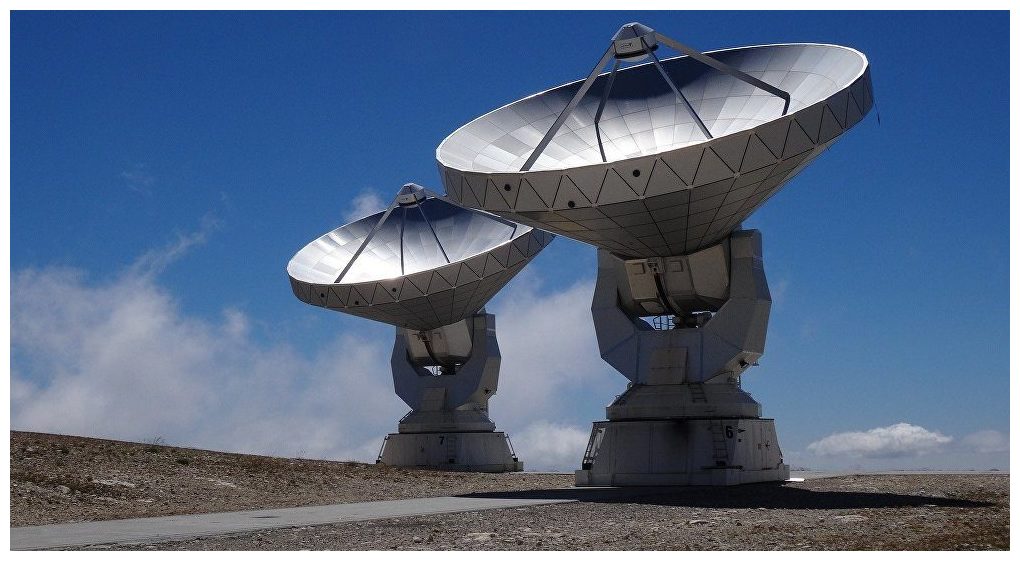
A new radio telescope has picked up milliseconds-long radio bursts originating in a mysterious source from across the universe. Exploding stars and black holes, as well as alien civilizations, have been cited as possible explanations.

The CHIME (which stands for the Hydrogen Intensity Mapping Experiment) telescope, located in British Columbia, could pick up the first-ever "fast radio bursts" (FRB) at frequencies below 700 MHz, according to a report by Patrick Boyle from McGill University on Astronomer's Telegram, which space researchers use to share the information about new discoveries. The signal, named FRB 180725A, was detected on July 25th and lasted milliseconds.

Besides this signal at 580 MHz, the scientists also detected several weaker signals, at frequencies as low as 400 MHz. They were registered in the day as well as at night. Although the results are said to be preliminary, the astronomers still posted them on-line to encourage fellow scientists to "to search for repeated bursts at all wavelengths."

Nebula

Has a decades-long investigation finally solved the mysterious disappearances in the Bermuda Triangle?

bermuda triangle
British oceanographers have concluded a decades-long investigation into the Bermuda Triangle and finally determined what is behind the hundreds of mysterious disappearances in the region.

The mysterious 700,000sqm triangle, stretching between the tip of Florida, Puerto Rico, and Bermuda, and has been the center of public fascination for over 100 years, when reports first started emerging of an unusual amount of shipwrecks in the region. The New York Times claimed at least 50 ships, 20 aircraft, and more than 1,000 people have succumbed to the Triangle over the past 500 years.

Now, researchers from the University of Southampton say ships are being sucked into the ocean by "rogue waves" over 30 meters (100ft) in height, and explained their theory on the Channel 5 documentary The Bermuda Triangle Enigma.

Comment: It's possible that rogue waves were involved in some of the disappearances, but that doesn't explain why 20 aircraft have disappeared. And the Bermuda triangle is not the only place where "storms to the South and North" come together nor is it the only area where rogue waves have been sighted. As is clear from the links below there is much more to the phenomenon than these scientists think:


Mars

Italian scientist suggests life on Mars exists after discovery of subglacial salt lake

Mars subglacial lake
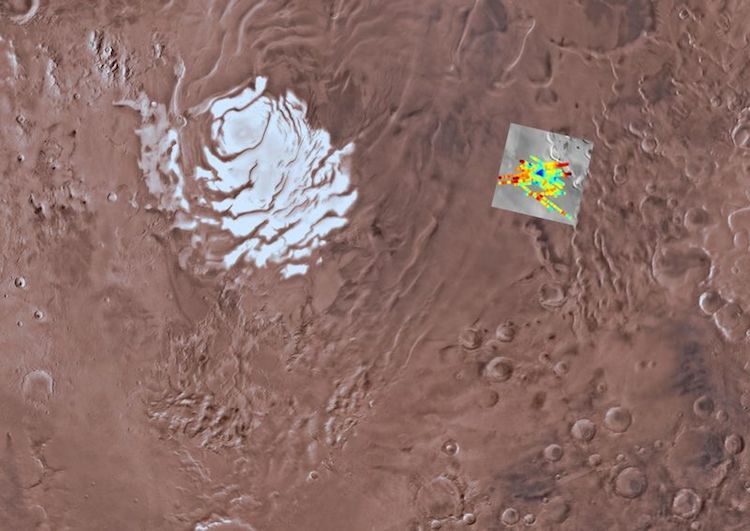
© USGS Astrogeology Science Center, Arizona State University, INAFRadar tracks on Mars's Planum Australe shows where the body of water is believed to be located (in blue).
A team of Italian researchers has discovered a salt lake on Mars using the Marsis radar on board the European Space Agency's Mars Express orbiter. Sputnik spoke with Roberto Orosei, a researcher at the Istituto Nazionale di Astrofisica and the Marsis' scientific director, to find out how important the discovery is for the future of humankind.

Sputnik:The news about your discovery has spread throughout the world. It's the first confirmation of the presence of water on Mars. What exactly does the discovery mean?

Roberto Orosei: This is a subglacial lake, similar to those in the Arctic Region or Greenland, such as Lake Vostok, which is the Arctic's largest subglacial lake. The Martian lake is located under a kilometer and a half of ice and it was discovered thanks to a radar similar to those used to study the glaciers on Earth. This type of radar is able to penetrate below the surface and obtain echoes from the material under the ice.

In that case, the water was recognizable because it better reflects the radio waves. When the radar is over a subglacial lake, the echoes coming from the bottom suddenly become very strong and even stronger than the echoes coming from the surface of the ice.

Comment: See also:


Arrow Down

Facebook patent reveals plans to use 'Emotion Detection' to spy on users

Spy Phones
© Pixabay composite
A patent application filed by Facebook in 2015 reveals some of the spycraft behind the company's ongoing quest to mine user data and leverage it for profit. This particular technology, however, isn't just about monitoring what you click or like as you create a treasure trove of data for the company to gleefully do what they please with.

Instead, it eliminates the need for any conscious action at all on the part of the user by using emotional recognition technology to interpret facial and physical expressions of mood, affect, and emotional reaction and deliver "content" - the media industry's catch-all phrase for everything from banal advertisements for dog food and diapers to propaganda efforts launched by Russian Intelligence Services on American social media platforms in an effort to destabilize the country - calibrated for each of those emotions.

How could Facebook possibly see you? Easy: your phone or computer's camera. That electrical tape has to come off eventually.

The patent application, titled "Techniques for emotion detection and content delivery," begins with a faulty syllogism that illustrates the simplicity of thought reigning at Facebook. "Users of computing devices spend increasing amounts of time browsing streams of posts on social networks, news articles, video, audio, or other digital content," goes Facebook's reasoning. "The amount of information available to users is also increasing. Thus, a need exists for delivering content [to] a user that may be of current interest to them" and that a "user's interests may be determined based upon their current emotional state."

Briefcase

Study: Carbon taxes could cause more food insecurity than climate change itself

drought India 2005
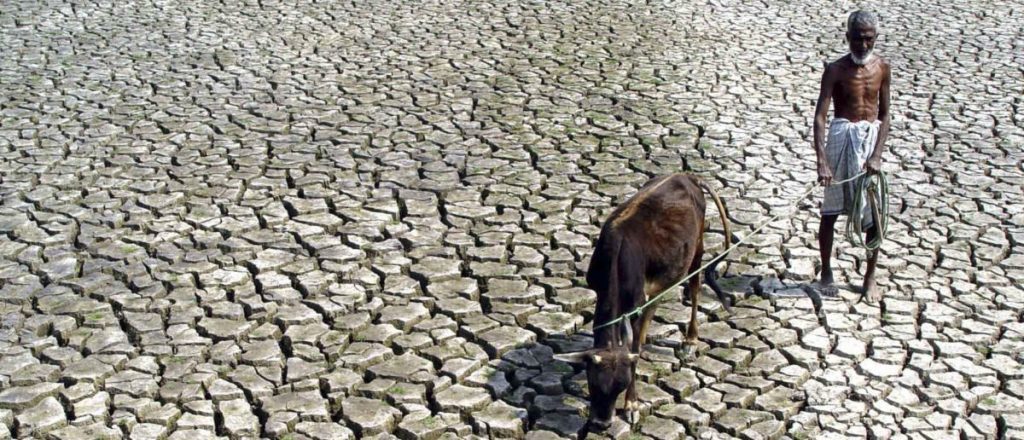
© REUTERS/Jayanta DeyAn Indian farmer walks with his hungry cow through a parched paddy field in Agartala, capital city of India’s northeastern state of Tripura, March 10, 2005.
Who would have guessed that raising the cost of energy with regressive carbon taxes would harm a vital, low margin energy intensive economic activity?
Climate taxes on agriculture could lead to more food insecurity than climate change itself
  • Date:July 30, 2018
  • Source:International Institute for Applied Systems Analysis
  • Summary:New research has found that a single climate mitigation scheme applied to all sectors, such as a global carbon tax, could have a serious impact on agriculture and result in far more widespread hunger and food insecurity than the direct impacts of climate change. Smarter, inclusive policies are necessary instead.
New IIASA-led research has found that a single climate mitigation scheme applied to all sectors, such as a global carbon tax, could have a serious impact on agriculture and result in far more widespread hunger and food insecurity than the direct impacts of climate change. Smarter, inclusive policies are necessary instead.

This research, published in Nature Climate Change, is the first international study to compare across models the effects of climate change on agriculture with the costs and effects of mitigation policies, and look at subsequent effects on food security and the risk of hunger.

...

The researchers stress that their results should not be used to argue against greenhouse gas emissions reduction efforts. Climate mitigation efforts are vital. Instead, the research shows the importance of "smart," targeted policy design, particularly in agriculture. When designing climate mitigation policies, policymakers need to scrutinize other factors and development goals more closely, rather than focusing only on the goal of reducing emissions.

"The findings are important to help realize that agriculture should receive a very specific treatment when it comes to climate change policies," says Hasegawa. "Carbon pricing schemes will not bring any viable options for developing countries where there are highly vulnerable populations. Mitigation in agriculture should instead be integrated with development policies."

Comment: Carbon taxes have never been about reducing the impact of greenhouse gases or mitigating 'climate change'. Such schemes are merely wealth transfer mechanisms for elites who aren't the least concerned about exacerbating the grinding poverty in developing countries.


Family

Seminal research shows that fathers pass on more than genetics in their sperm

vas deferens
© Stocktrek Images, Inc./AlamyFor sperm, there’s a vas deferens between start and finish, but the epididymis is what alters these swimmers en route.
Seminal research reveals that sperm change their cargo as they travel the reproductive tract - and the differences can have consequences for fertility

Eat poorly, and your body will remember - and possibly pass the consequences onto your kids. In the past several years, mounting evidence has shown that sperm can take note of a father's lifestyle decisions, and transfer this baggage to offspring. Today, in two complementary studies, scientists tell us how.

As sperm traverse the male reproductive system, they jettison and acquire non-genetic cargo that fundamentally alters sperm before ejaculation. These modifications not only communicate the father's current state of wellbeing, but can also have drastic consequences on the viability of future offspring.

Each year, over 76,000 children are born as a result of assisted reproduction techniques, the majority of which involve some type of in vitro fertilization (IVF). These procedures unite egg and sperm outside the human body, then transfer the resulting fertilized egg - the embryo - into a woman's uterus. Multiple variations on IVF exist, but in some cases that involve male infertility - for instance, sperm that struggle to swim - sperm must be surgically extracted from the testes or epididymis, a lengthy, convoluted duct that cradles each testis.

Comment: See also:


Magnify

Anxiety can run in families: Researchers discover inherited brain activity patterns linked to anxiety

anxious monkeys, anxiety passed down families
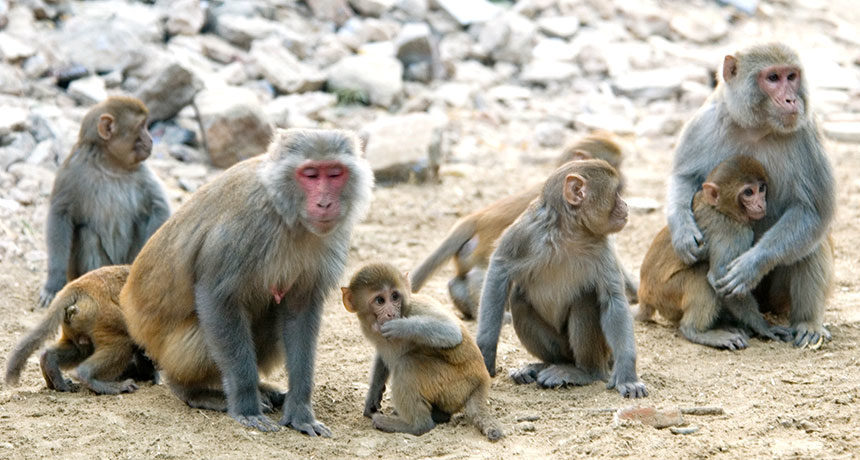
© Paul Asman and Jill Lenoble/Flickr (CC BY 2.0)Brain changes linked to anxiety can be passed down through family trees, a generation-spanning study of monkeys suggests.
Anxiety can run in families. Key differences in how an anxious monkey's brain operates can be passed along too, a large study suggests.

By finding a pattern of brain activity linked to anxiety, and by tracing it through generations of monkeys, the results bring researchers closer to understanding the brain characteristics involved in severe anxiety - and how these characteristics can be inherited.

"We can trace how anxiety falls through the family tree," which parents pass it on to which children, how cousins are affected and so on, says study coauthor Ned Kalin of the University of Wisconsin School of Medicine and Public Health in Madison. The newly identified brain activity pattern takes the same path through the family tree as the anxious behavior, Kalin and colleagues report July 30 in the Journal of Neuroscience.

Kalin and colleagues studied rhesus monkeys that, as youngsters, displayed an anxious temperament. Human children with this trait are often painfully shy, and are at much higher risk of going on to develop anxiety and depression than other children, studies have shown.

Comment: Related:


Life Preserver

Is there a limit to the human lifespan?

Jeanne Calment, aging, longevity
© Pascal Parrot/GettyJeanne Calment lived to be 122
If you want to break the world record for human longevity, the person you need to beat is Frenchwoman Jeanne Calment, who died in 1997 aged 122 years and 5 months. As her record has stood for 21 years, does it represent a limit for human lifespan, or will it be eclipsed?

Dislodging Calment is not an easy prospect. When you get really old - above 105 - your odds of making it from one birthday to the next are a little less than evens. How often have you tossed a coin and come up heads 17 times in a row? And, apparently, the odds could be even worse than this. For the average person past puberty, the risk of dying doubles with every eight additional candles on the birthday cake.

The good news - which comes from an analysis just published in Science that was based on demographic records from Italy - is that the inexorable rise in death rate with age appears to reach a plateau around 105 and remain level thereafter. The existence of a plateau could suggest that lifespan has no strict limit, and the authors conclude that if a limit does exist, we have not yet seen it.

All this is controversial. The existence of extreme-age mortality plateaus has been claimed before, and the new study, conducted by a highly respected team, supports this case. Yet what such plateaus signify remains an enigma. Ageing appears overwhelmingly likely to be driven by the build-up of damage in the body's cells and organs, so it would be surprising if there really is a stage when things stop getting worse.

Comment: Related:


Archaeology

The Great Pyramid is a concentrator of electromagnetic energy, says new study

Pyramid sphinx
© CCO
A towering skyscraper of stone built without computers or complex machinery, the Great Pyramid in Egypt has fascinated historians and archeologists for centuries.

A team of German and Russian physicists studying the properties of the Great Pyramid, also known as the Khufu Pyramid, have found that it can concentrate electromagnetic energy inside its hidden chambers and focus the electromagnetic waves into the substrate region, according to a study published in the latest issue of the Journal of Applied Physics.

Built on the plateau of Giza in the third millennium BC by Pharaoh Khufu, the 138.8-meter (455-foot) high Great Pyramid is one of the biggest and tallest structures ever built by man.

Over the past two centuries, scientists have discovered three chambers inside the Great Pyramid with one believed to hold the mummified remains of Pharaoh Khufu himself, another - that of his wife and one thought to be a trap for tomb raiders.