Science & TechnologyS


Rocket

Russia to develop super-heavy carrier rocket as reusable spacecraft

heavy rocket
© Alexei Savelyev/TASS
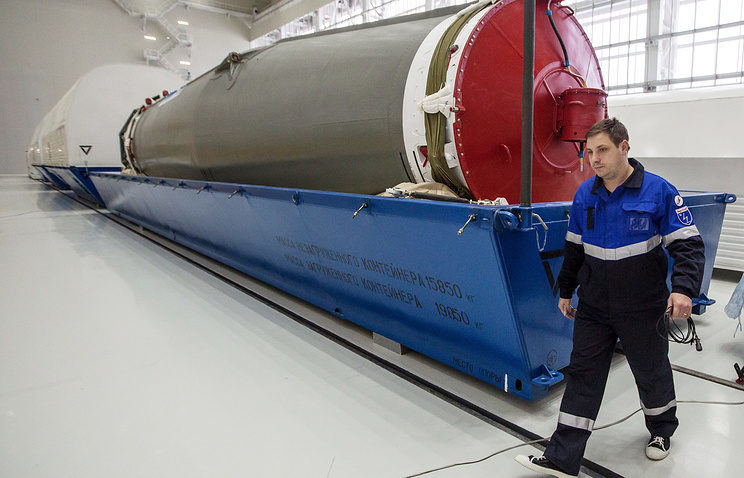
Russia's super-heavy carrier rocket scheduled to blast off for the first time from the Vostochny spaceport in the Russian Far East in 2028 will be a reusable spacecraft, State Space Corporation Roscosmos Chief Dmitry Rogozin told TASS on Thursday.

The multiple-use principle "will be formulated as a task during the work on the super-heavy rocket," Rogozin stressed.

According to designers' plans, the Russian super-heavy carrier rocket should be able to deliver over 70 tonnes of cargo into low near-Earth orbit at the first stage. It will be developed to provide for deep space flights, specifically, to the Moon and Mars.

The construction of the infrastructure for the new carrier rocket at the Vostochny cosmodrome is scheduled to begin in 2026 and its first launch will take place in 2028.

Comment: See also: Russia successfully tests clean pulse-detonation rocket engine: First in the world


Info

Artificial placenta created in the laboratory

Denise Mandt
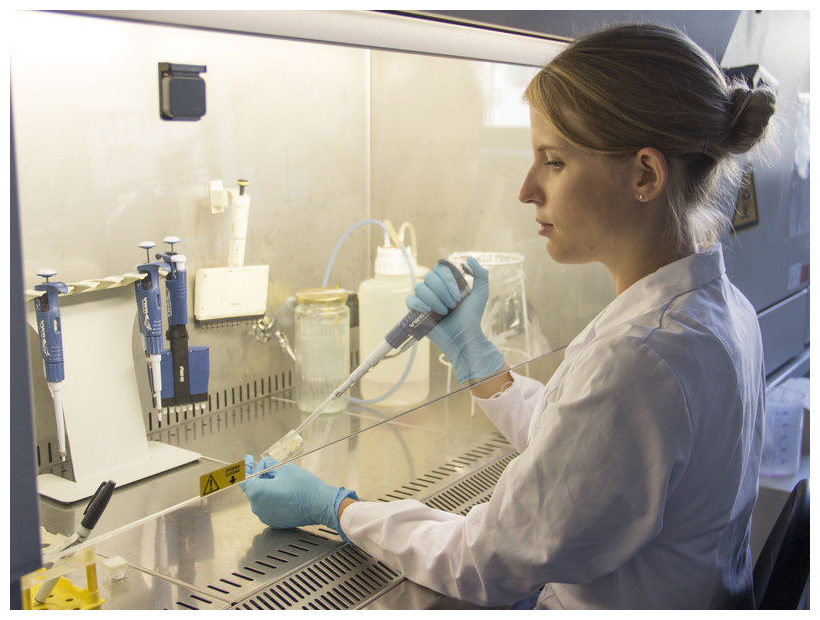
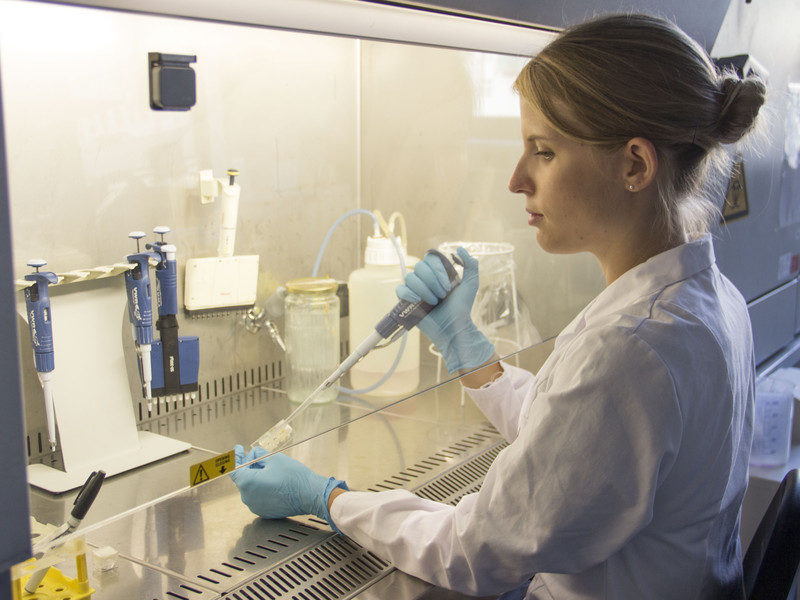
© Technische Universität WienDenise Mandt in the lab
The placenta has an essential and highly complex task: it must ensure the exchange of important substances between the mother and her unborn child, whilst simultaneously blocking other substances from passing through. Until now, it has not been fully understood what the permeability of the placenta depends on - after all, it is incredibly difficult to investigate its function in humans directly.
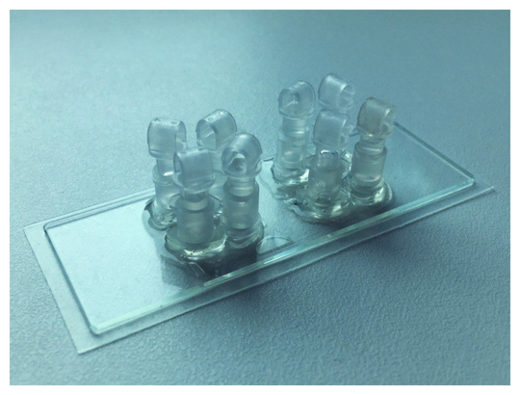
Bio-Chip
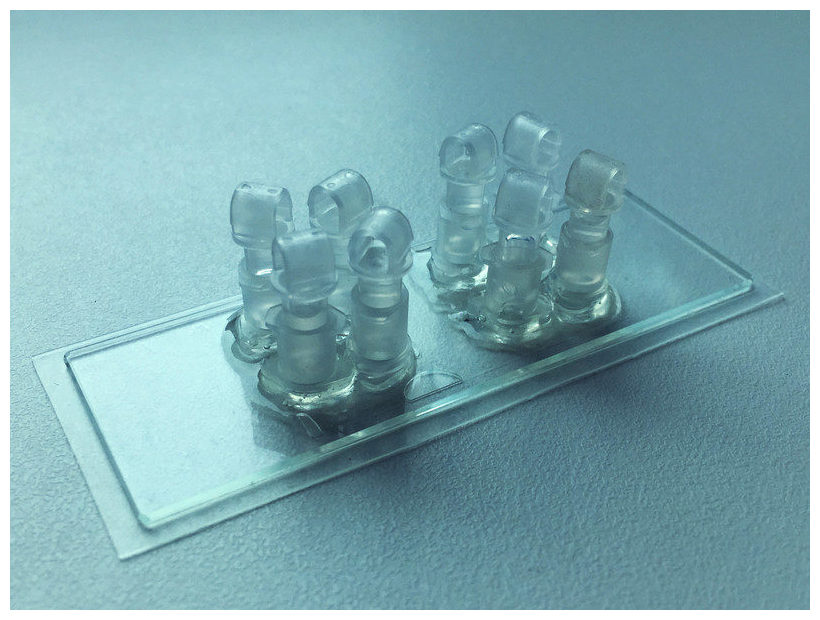
© Technische Universität WienThe bio-chip: this is where the placenta can be studied and analysed.
For this reason, TU Wien (Vienna) has now produced an artificial placenta model that very closely resembles the natural organ. Using a specially developed femtosecond laser-based 3D printing process, it is possible to produce customized hydrogel membranes directly within microfluidic chips, which are then populated with placenta cells. This means it is now possible to provide clarity in some vital research issues, such as the exchange of glucose between mother and child.

Complex substance exchange between mother and child


"The transport of substances through biological membranes plays an important role in various areas of medicine", says Prof. Aleksandr Ovsianikov of the Institute of Materials Science and Technology at TU Wien. "These include the blood-brain barrier, ingestion of food in the stomach and intestine, and also the placenta."

There are, for example, numerous studies showing that diseases in the mother such as diabetes can have an impact on the unborn child. High blood pressure can also affect the transport of substances to the foetus. Until now, however, it has been almost impossible to investigate the way in which the many parameters involved interact in such cases.

Water

Scientists find new properties of water

Big Wave
© iStock/NutureA team of scientists has uncovered new molecular properties of water—a discovery of a phenomenon that had previously gone unnoticed. Above, an ocean wave.
A team of scientists has uncovered new molecular properties of water-a discovery of a phenomenon that had previously gone unnoticed.

Liquid water is known to be an excellent transporter of its own autoionization products; that is, the charged species obtained when a water molecule (H2O) is split into protons (H+) and hydroxide ions (OH). This remarkable property of water makes it a critical component in emerging electrochemical energy production and storage technologies such as fuel cells; indeed, life itself would not be possible if water did not possess this characteristic.

Water is known to consist an intricate network of weak, directional interactions known as hydrogen bonds. For nearly a century, it was thought that the mechanisms by which water transports the H+ and OH ions were mirror images of each other - identical in all ways except for directions of the hydrogen bonds involved in the process.

Current state-of-the-art theoretical models and computer simulations, however, predicted a fundamental asymmetry in these mechanisms. If correct, this asymmetry is something that could be exploited in different applications by tailoring a system to favor one ion over the other.

Experimental proof of the theoretical prediction has remained elusive because of the difficulty in directly observing the two ionic species. Different experiments have only provided glimpses of the predicted asymmetry.

Info

Auroras discovered around brown dwarfs

Auroras on Brown Dwarf
© Caltech/Chuck Carter
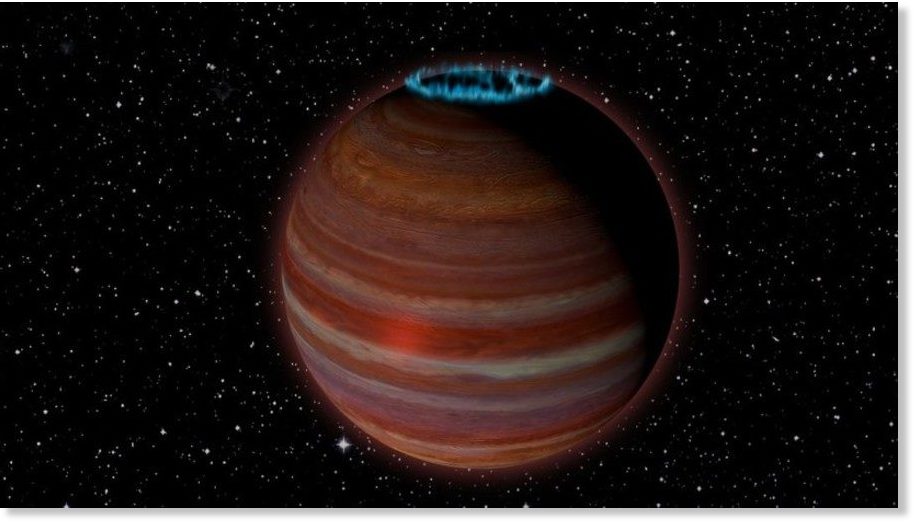
Magnetic fields are common in space yet their origin is poorly understood. In stars, they generate spots and flares; in planets, they can create amazing auroral displays. Now, a team of astronomers has detected surprisingly strong magnetic fields in multiple brown dwarfs, failed stars that are too big to be planets but too small to ignite hydrogen fusion in their cores. The detections carried an even bigger surprise: unexpected auroral activity on a "rogue planet" that wanders the cosmos alone.

Melodie Kao (Arizona State University) and colleagues used the National Science Foundation's Karl G. Jansky Very Large Array to detect high-frequency radio emissions from four nearby brown dwarfs, with masses between 12 and 30 times the mass of Jupiter. Their magnetic fields are hundreds to thousands of times stronger than those around the Sun and power brilliant, radio-emitting aurorae similar to the Northern Lights on Earth. The results appear in the Astrophysical Journal Supplement Series (free preprint).

Among the brown dwarfs under study is SIMP0136, an object with a mass just below 13 times the mass of Jupiter - just below the dividing line that separates planets from brown dwarfs. Floating in interstellar space 20 light-years away, this planet is isolated - a "rogue planet."

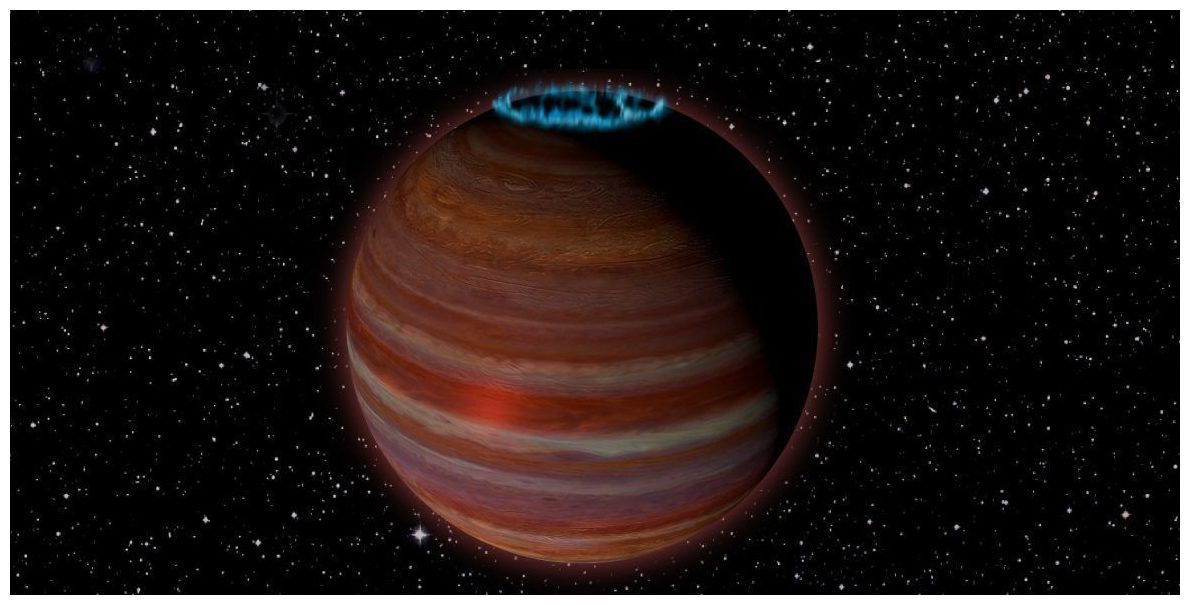
On Earth, brilliant aurorae appear around the North and South Poles, where charged particles from the Sun stream in along Earth's magnetic field and crash into the upper atmosphere. A similar mechanism works at Jupiter, where the particles come from Jupiter's moons rather than the Sun. But unlike Earth and Jupiter, SIMP0136 is on its own - it either formed by itself or was flung out of another solar system. Either way, it doesn't have a parent star, so its aurorae can't come from interactions with a stellar wind.

Perhaps the planet hosts a moon of its own - but it's too soon to come to that conclusion. More observations are needed to confirm the origin of the radio emissions.

Fire

Dormant California supervolcano found to sit atop 240 cubic miles of magma

cladera california
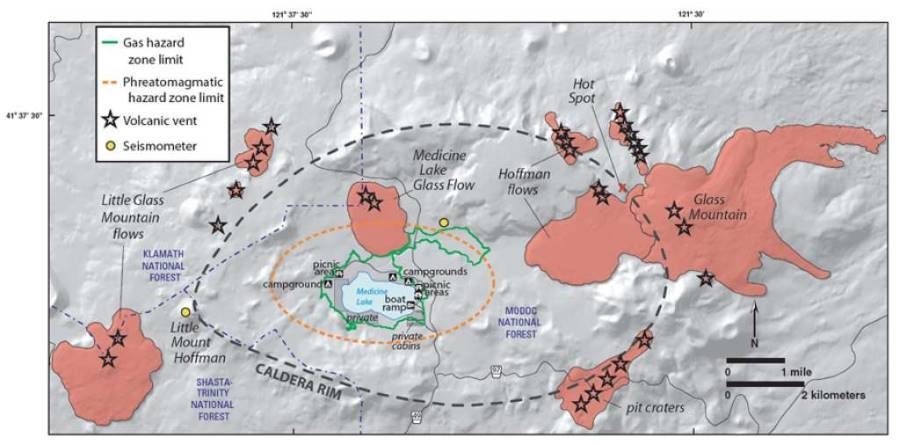
© USGSThis map shows caldera features and caldera-related hazards at Medicine Lake volcano.
Photo: USG
Scientists have discovered 240 cubic miles of semi-molten magma below the Long Valley Caldera, a supervolcano in eastern California near Mammoth Mountain.

The long-dormant supervolcano is currently a 20-mile-long caldera, or a crater that forms after an eruption forces the mouth of a volcano to collapse. According to an August report published in the scientific journal Geology, the semi-molten magma found could lead to possible eruptions.

The supervolcano erupted 760,000 years ago and blanketed land within a 30-mile radius in hot ash. Volcanic material from the eruption was even detected in Nebraska, but the volcano has been dormant for the last 100,000 years.

Microscope 2

Scientists track the speed of death as it moves through a cell

Cells
© Unknown
For the first time ever, scientists have witnessed death itself moving through a cell and have measured its speed. The revolutionary finding could hold potential for the future treatment of cancer and Alzheimer's disease.

Scientists from the Stanford University School of Medicine witnessed the wave-like motion of cell death and published their groundbreaking findings in the journal Science. The team found signals that trigger death to travel through cells in a domino-like effect, at a rate of three micrometers per minute. A micrometer is equal to one-millionth of a meter.

These signals trigger apoptosis, a type of cell suicide or programmed cell death (PCD). It is the most understood form of cell death and is used by the human body to get rid of old or damaged cells.
"This work is another example of how nature makes use of these trigger waves - things that most biologists have never heard of - over and over again," biochemist James Ferrell said. "It is a recurring theme in cell regulation. I bet we'll start to see it in textbooks soon."
Scientists used the egg of an African clawed frog, which is a single, large cell, to conduct the experiment. After removing the cytoplasm and placing it in a tube, they then initiated apoptosis and used a fluorescent green protein that glows when apoptosis occurs.

Rocket

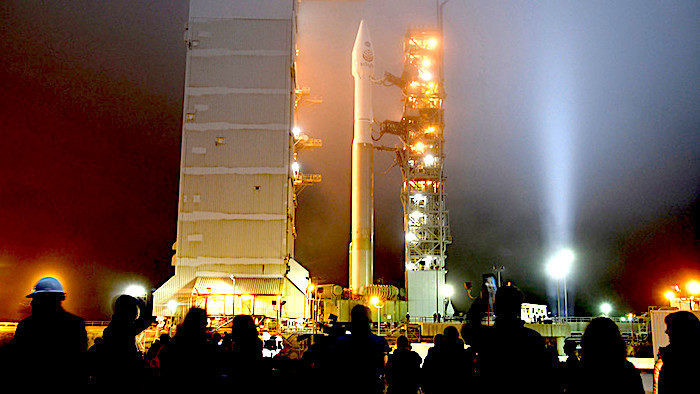
NASA working to cut dependence on Russia, hopes to still preserve 'unique' space cooperation

NASA rocket
© Gene BlevinsNASA Launch Alliance Atlas V rocket
NASA wants to maintain its unique cooperation with Russia to haul astronauts into space and continue to use RD-180 engines, while viable alternatives are being developed by US firms, the space agency's administrator said.
"The United States of America is working really hard not to be dependent on the RD-180 engine," Jim Bridenstine said on C-Span. "So, do we want to be dependent? No! Do we want to have a partnership? Absolutely."
For years, the United Launch Alliance (ULA) has been relying on Energomash RD-180 engines to power the Atlas V rocket. However, geopolitical tensions and sanctions introduced by the US against Russia has prompted calls by US politicians to consider replacement of the Russian-supplied technology. Until a viable alternative is produced, the US wants to preserve its cooperation with Russia.

The 2018 US National Defense Authorization Act limits purchases of Russian rocket engines after December 31, 2022. But on Thursday, in response to the latest round of US sanctions, Russian lawmaker Sergey Ryabukhin warned that Moscow could consider cutting off supplies of the RD-180 before that deadline.

Comment: Some say 'Space is the final frontier' but perhaps the real final frontier is 'cooperation and co-existence'!


Jupiter

Powerful magnetic field and auroras detected on Brown Dwarf 'star' 20 light years from Earth - Discovery defies (known) astrophysics

SIMP
© Chuck Carter, NRAO/AUI/NSFArtist's impression of the enormous object known as SIMP J01365663+0933473
A mysterious large object is floating around outside our solar system and researchers aren't sure exactly what it is - although it could be a rogue planet.

In the first radio-telescope detection of a planetary-mass object beyond our solar system, astronomers have found the strange celestial body has 12.7 times the mass of Jupiter. It doesn't appear to orbit a parent star, however, and is only 20 light-years away from Earth.

"This object is right at the boundary between a planet and a brown dwarf, or 'failed star,' and is giving us some surprises that can potentially help us understand magnetic processes on both stars and planets," study lead astronomer Melodie Kao said.

Comment: We previously ran this with the title 'Mysterious gigantic rogue planet...'

But in fact, when this was first observed in 2016, it was categorized as a star, albeit a Brown Dwarf 'dark star', which are, generally, companions to suns.

20 light years makes it too far away to be Sol's companion, but it's the behavior of this celestial body that is striking: the above write-up doesn't mention it, but one of the surprise discoveries is that it's producing spectacular auroras!

Combined with its powerful magnetic field, these things are only 'supposed' to happen when the solar wind from its sun - the 'primary' star in a binary system - buffets its poles.

But here they seem to have discovered a 'rogue' dark star with no solar companion to 'light it up'... Unless, like our system's, perhaps, the companion star just hasn't been detected yet.


Binoculars

Has Google accidentally revealed secret military base in an abandoned airport in Gobi Desert?

Gobi Desert
© Photo : PixabayGobi Desert
Speculation on the internet erupted after a video suggesting that the online map service Google Earth has revealed a hidden military base in the Gobi Desert in northern China emerged on YouTube.

Conspiracy theorists Blake and Brett Cousins have published on their YouTube channel a video showing a strange finding on Google Maps. The object, which is located in the Gobi Desert in northern China, reminded the conspirators at first glance of an abandoned industrial area. But if you look closely, a bizarre runway system can be seen.


Bulb

China investing in infrastructure to build world's longest tunnel link to Taiwan

Tunnel
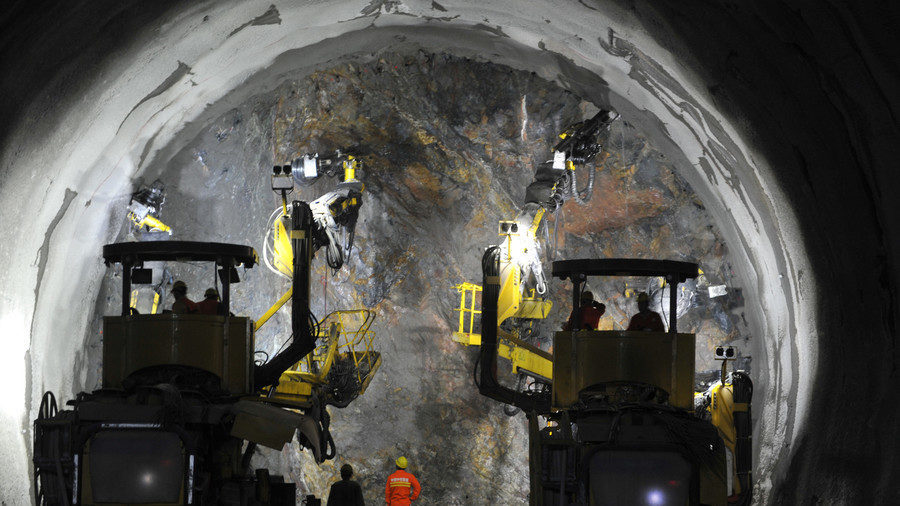
© China Stringer Network / Reuters
While its opponents are investing in wars, Beijing is investing in infrastructure. China seeks to build a tunnel that would connect its mainland with Taiwan.

If realized, shuttle trains would run through a 135km undersea section of the tunnel at up to 250kph by 2030 from China to Taiwan, which Beijing considers a renegade province rather than an independent state.

The gigantic project would be dug under the ocean, at a depth of 200 meters. In order to have enough fresh air in the tunnel, Chinese engineers are planning to heave two artificial islands halfway to pump air into the tubes, the South China Morning Post reports.