Science & TechnologyS


Comet 2

The beautiful Comet SWAN graces the skies this week — here's tips on how to spot it

comet swan may 2020
© Christian GloorThis image of Comet Swan was taken in Indonesia on May 1.
This week, Comet Swan will make a brief appearance in the evening sky. This comet put on a nice show for stargazers in the Southern Hemisphere over the past few weeks. Now it is far enough north for us to see it, but it will be a challenge to view.

Michael Mattiazzo, an Australian amateur astronomer, was the first to spot the comet in images from the Solar Wind ANisotropies (SWAN) instrument aboard the Solar and Heliospheric Observatory (SOHO), a joint ESA/NASA spacecraft.

As the comet moved northward and closer to the sun last month, it heated up and began to produce a lot of gas, which made for some pretty pictures. The comet's tail was particular impressive. Some observers reported seeing a tail 8 degrees long (or about 480 nautical miles).

Comet 2

New Comet C/2020 K3 (Leonard)

CBET 4782 & MPEC 2020-K159, issued on 2020, May 25, announce the discovery of a comet (magnitude ~18) by G. J. Leonard on images taken on May 22 UT with the Catalina Sky Survey's 0.68-m Schmidt reflector. The new comet has been designated C/2020 K3 (Leonard).

We performed follow-up measurements of this object while it was still on the PCCP webpage.

Stacking of 20 unfiltered exposures, 55 seconds each, obtained remotely on 2020, May 23.4 from H06 (iTelescope network) through a 0.50-m f/6.8 reflector + CCD + f/4.5 focal reducer, shows that this object is a comet with a diffuse irregular coma about 15" in diameter

Our confirmation image (click here for a bigger version)
C/2020 K3 Leonard
© Remanzacco Blogspot

Info

Researchers detect previously unnoticed signal from the heart of the Milky Way

Mystery Signal
© CCO
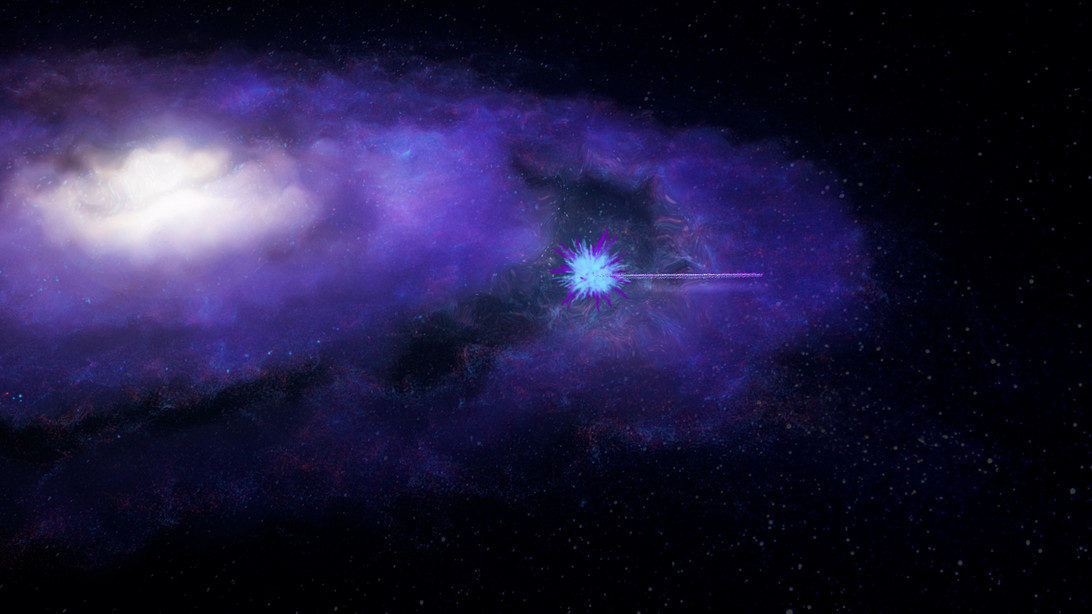
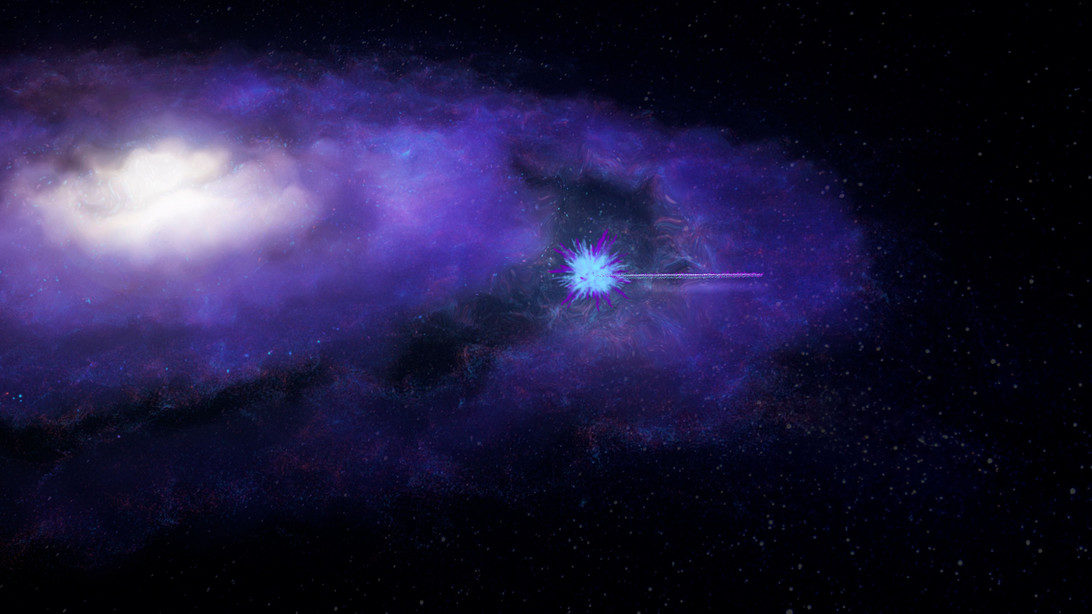
Scientists found something peculiar coming from the center of the Milky Way galaxy: a previously-undiscovered signal they think is coming from the supermassive black hole at the heart of our galaxy.

The team of Keio University researchers think that the signal is caused when the accretion disk around the black hole flares up and give off extremely rapidly-rotating radio spots, according to research published last month in The Astrophysical Journal Letters — a glimpse at the unimaginable chaos at the core of our galaxy.

The flickering signals aren't entirely new — scientists have previously discovered larger and slower flare ups. But thanks to the Atacama Large Millimeter/submillimeter Array (ALMA), now scientists can detect more minute emanations than ever before.

Laptop

Researchers claim internet speed record with an optical chip

Optical Chip
© Monash, RMIT, Swinburne universities.
Australian researchers say they have successfully tested and recorded the world's fastest internet speed from a single optical chip.

In a paper in the journal Nature Communications, they report achieving a data speed of 44.2 Terabits per second (Tbps) from a single light source - enough to download a thousand high-definition movies in a split second.

And they did it not in a lab but using existing communications infrastructure.

"We've developed something that is scalable to meet future needs," says co-lead author Bill Corcoran from Monash University. "And it's not just Netflix we're talking about here: it's the broader scale of what we use our communication networks for."

The project was a collaboration between Monash and two other Melbourne-based universities - Swinburne and RMIT - and utilised an optical device known as a micro-comb, which was added to 76.6 kilometres of optical fibres installed between two city campuses.

Bullseye

Amphibious warship USS Portland shot down drone with new high-tech laser

USS Portland
© UnknownUSS Portland
The San Antonio class landing platform dock USS Portland has successfully knocked down a small drone using its new laser directed energy weapon. The ship was first spotted with the system installed as it left its homeport in San Diego California in December 2019, which The War Zone was first to report.

The U.S. Navy's Pacific Fleet announced the test of Portland's laser weapon, which is formally known as the Laser Weapon System Demonstrator (LWSD) Mk 2 Mod 0, on May 22, 2020. The test itself took place on May 16 at an unspecified location in the Pacific Ocean. The service described the event as "the first system-level implementation of a high-energy class solid-state laser," but did not say if this was the first time that the ship has actually fired the weapon.


Microscope 1

Harvard molecular geneticist vindicates Behe's principle argument in 'Darwin Devolves'

Michael behe book signing Darwin devolves
Michael Behe signs a copy of Darwin Devolves at a Socrates in the City event with Eric Metaxas.
When Michael Behe's book Darwin Devolves came out last year, critics were quick to pounce. Skeptic Magazine wrote that "In Darwin Devolves, Michael Behe continues to dig himself further into the hole he opened 20 years ago with Darwin's Black Box." Three Quarks Daily stated that Behe's central thesis in the book, "is clickbait, the book title misleading, and the argument long since rebutted."

That thesis is what Behe calls the "first rule of adaptive evolution," namely that Darwinian processes tend to "Break or blunt any functional gene whose loss would increase the number of a species's offspring." A review in the journal Science called Behe's arguments "quixotic" and charged that "[t]here are indeed many examples of loss-of-function mutations that are advantageous, but Behe is selective in his examples" — so much so that Behe "misrepresents theory and avoids evidence that challenges him."

A response in the journal Evolution had this to say:
Concise, catchy and matter-of-fact, Behe's First Rule makes for a quality sound bite, but it is overly simplistic and untruthful to the data. Darwin Devolves overemphasizes loss-of-function mutations, and brushes off countervailing examples as nothing more than a "sideshow."

Blue Planet

Mystery of the moving moss balls

Iceland
© Ruth MottramGlacier mice in Iceland.
In 2006, while hiking around the Root Glacier in Alaska to set up scientific instruments, researcher Tim Bartholomaus encountered something unexpected.

"What the heck is this!" Bartholomaus recalls thinking. He's a glaciologist at the University of Idaho.

Scattered across the glacier were balls of moss. "They're not attached to anything and they're just resting there on ice," he says. "They're bright green in a world of white."

Intrigued, he and two colleagues set out to study these strange moss balls. In the journal Polar Biology, they report that the balls can persist for years and move around in a coordinated, herdlike fashion that the researchers can not yet explain.

Comment: See also:


Question

Pluto's strange atmosphere appears to have collapsed

Pluto
© NASA/Johns Hopkins University Applied Physics Laboratory/Southwest Research Institute/Alex ParkerPluto
Pluto's atmosphere is hard to observe from Earth. It can only be studied when Pluto passes in front of a distant star, allowing astronomers to see the effect the atmosphere has on starlight. When this happened in 2016, it confirmed that Pluto's atmosphere was growing, a trend that astronomers had observed since 1988, when they noticed it for the first time.

Now, all that has changed — Pluto's atmosphere appears to have collapsed. The most recent occultation in July last year was observed by Ko Arimatsu at Kyoto University in Japan and colleagues. They say the atmospheric pressure seems to have dropped by over 20 percent since 2016.

First, some background. Astronomers have long known that Pluto's atmosphere expands as it approaches the sun and contracts as it recedes. When the sun heats its icy surface, it sublimates, releasing nitrogen, methane and carbon dioxide into the atmosphere. When it moves away, the atmosphere is thought to freeze and fall out of the sky in what must be one of the most spectacular ice storms in the solar system.

Pluto reached its point of closest approach to the sun in 1989, and has since been moving away. But its atmosphere has continued to increase to a level that is about 1/100,000 of Earth's.

Bizarro Earth

Earth's magnetic field is weakening for unexplained reason says ESA

Earth's Magnetic Field
© Science ABC
In an area stretching from Africa to South America, Earth's magnetic field is gradually weakening. This strange behaviour has geophysicists puzzled and is causing technical disturbances in satellites orbiting Earth. Scientists are using data from ESA's Swarm constellation to improve our understanding of this area known as the 'South Atlantic Anomaly.'

Earth's magnetic field is vital to life on our planet. It is a complex and dynamic force that protects us from cosmic radiation and charged particles from the Sun. The magnetic field is largely generated by an ocean of superheated, swirling liquid iron that makes up the outer core around 3000 km beneath our feet. Acting as a spinning conductor in a bicycle dynamo, it creates electrical currents, which in turn, generate our continuously changing electromagnetic field.

This field is far from static and varies both in strength and direction. For example, recent studies have shown that the position of the north magnetic pole is changing rapidly.

Over the last 200 years, the magnetic field has lost around 9% of its strength on a global average. A large region of reduced magnetic intensity has developed between Africa and South America and is known as the South Atlantic Anomaly.

Microscope 2

T cells found in coronavirus patients 'bode well' for long-term immunity

Immune hunters called T cells
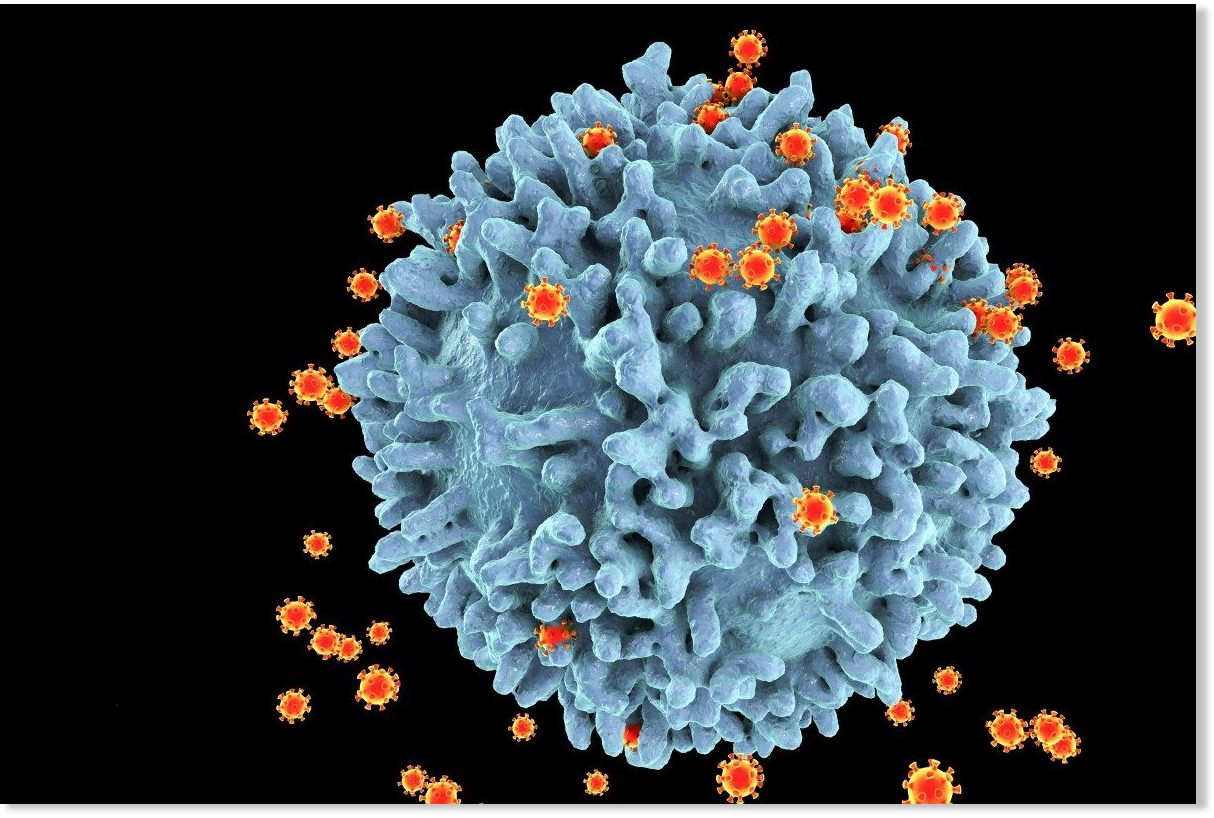
© NIAID/CC BY/FLICKRImmune hunters called T cells can seek and destroy a cell (green) infected with SARS-CoV-2 (yellow).
T cells are among the immune system's most powerful weapons, but their importance for battling SARS-CoV-2, the virus that causes COVID-19, has been unclear. Now, two studies show infected people harbor T cells that target the virus — and may help them recover. Both studies also found that some people never infected with SARS-CoV-2 have these cellular defenses, most likely because they were previously infected with other coronaviruses that cause the common cold.

"This is encouraging data," says virologist Angela Rasmussen of Columbia University, who wasn't involved in the work. Although the studies don't clarify whether people who clear a SARS-CoV-2 infection can ward off the virus in the future, both identified strong T cell responses to it, which "bodes well for the development of long-term protective immunity," Rasmussen says. The findings could also help researchers create better vaccines.

Comment: Notice the number of times this article translates the information about T cells into what a vaccine should be designed to do. Not once does the article (or the scientists cited) explain or suggest how one may naturally boost the quantity or quality of T cells or lymphocytes to effectively fight the virus without a vaccine.

It speaks volumes about who's funding all this research.