
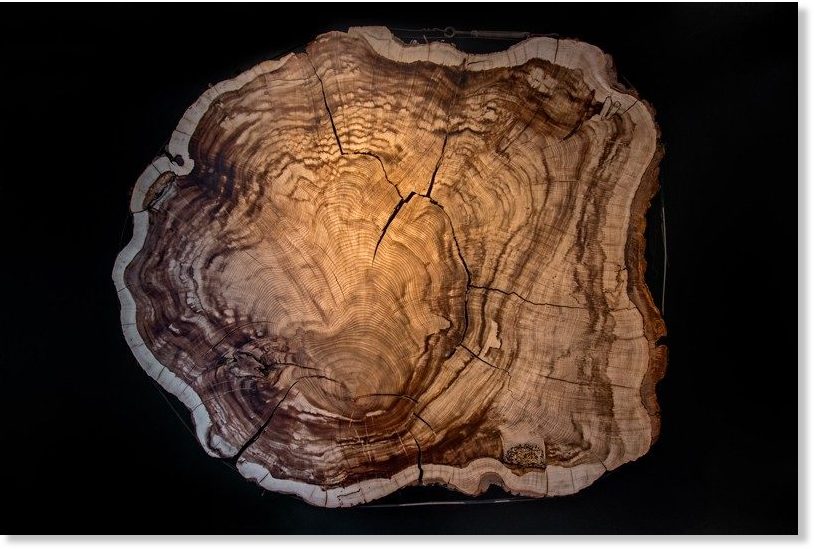
© Philippe Clement/Arterra/Universal Images Group/GettyResearchers use data from tree rings, sediment layers and other samples to calibrate the process of carbon dating.
Radiocarbon dating — a key tool used for determining the age of prehistoric samples — is about to get a major update. For the first time in seven years, the technique is due to be recalibrated using a slew of new data from around the world. The result could have implications for the estimated ages of many finds — such as Siberia's oldest modern human fossils, which according to the latest calibrations are 1,000 years younger than previously thought.
The work combines thousands of data points from tree rings, lake and ocean sediments, corals and stalagmites, among other features, and extends the time frame for radiocarbon dating back to 55,000 years ago — 5,000 years further than the last calibration update in 2013.
Archaeologists are downright giddy. "Maybe I've been in lockdown too long," tweeted Nicholas Sutton, an archaeologist at the University of Otago in New Zealand, "but ... I'm really excited about it!"
Although the recalibration mostly results in subtle changes, even tiny tweaks can make a huge difference for archaeologists and paleo-ecologists aiming to pin events to a small window of time. A new calibration curve "is of key importance" for understanding prehistory, says Tom Higham, archaeological chronologist and director of the Oxford Radiocarbon Accelerator Unit, UK.









Comment: Will school systems pay attention to news like this and stop their inhuman restrictions being placed on children? It's doubtful at this stage as hysteria has replaced even any semblance of reason.