Science & TechnologyS


Robot

Perfecting sleep: Astral travel may become possible via nanobot injection!

Image
© Good Magazine'Futurist' Ray Kurzweil
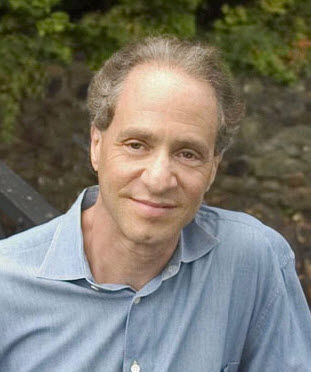
Virtual Reality has long promised a way to create an immersive illusion so convincing you can't tell the fake from the real. Futurist Ray Kurzweil says it's that kind of virtual reality will make virtual travel possible. Not in the way you might expect, with a super-realistic display creating faux imagery on a screen or a pair of goggles. But instead by injecting nanobots into your brain.

Kurzweil speculates in an interview with Good magazine that nanotechnology could simulate travel because an injection of nanobots could trick your neurons into thinking that you're really traveling someplace you aren't.

Star

Thieving dwarves cause supernovae

Image
© NASALight from Type I supernovae is used as a standard for distances
Researchers have come up with a theory for how stars can end in a spectacular so-called Type Ia supernova in less than 100 million years.

While such early-stage supernovae are well-known, theory has been unable to explain them.

The secret, the researchers say, is that white dwarf stars steal mass from nearby "helium stars" until they have enough mass to initiate a supernova.

The research appears in Monthly Notices of the Royal Astronomical Society.

Rocket

A Murky All-Sky Background Is Resolved

Image
© Nreplah KramBLAST is readied for liftoff at McMurdo, Antarctica. The south polar continent is uniquely suited for balloon experiments that need to get above most of Earth's atmosphere for long periods at a time. High-altitude winds carry payloads around and around the pole for weeks on end, regularly bringing them back near their starting points and avoiding problems with international borders.
A team flying a balloon-borne instrument 120,000 feet (37 km) over Antarctica has resolved yet another type of cosmic background radiation and tracked it back to its source.

"Backgrounds" are emissions that are seen coming from the entire surface of the sky. The most famous is the microwave background from the hot gas that filled the universe 380,000 years after the Big Bang.

Other backgrounds in infrared light, X-rays, and gamma rays have proven to originate from later, but still extremely distant, astronomical sources that are too faint and numerous to resolve individually in most cases. Last January radio astronomers announced finding a new background at longer wavelengths that they can't yet explain.

Sun

Coronal Hole

Image
© SOHO Extreme UV Telescope
A solar wind stream flowing from the indicated coronal hole could reach Earth on April 15th or 16th.

Saturn

Radio Storms On Jupiter

Image
On April 11th, the loudspeaker of Thomas Ashcraft's 21 MHz radio telescope in New Mexico suddenly began to hiss and crackle. The sounds grew louder as Jupiter rose in the blue morning sky. "I am pleased to report," says Ashcraft, "a successful recording of Jovian S-bursts--the first of 2009."

The staccato pops sound like lightning in the loudspeaker of a car radio, but lightning did not make these sounds. S-bursts are caused by natural radio lasers in Jupiter's magnetosphere that sweep past Earth as Jupiter rotates. Electrical currents flowing between Jupiter's upper atmosphere and the volcanic moon Io can boost these emissions to power levels easily detected by ham radio antennas on Earth. Jovian S-bursts and L-bursts can mimic the sounds of woodpeckers, whales, and waves crashing on the beach. Here are a few audio samples: S-bursts, S-bursts (slowed down 128:1), L-Bursts.

Frog

"The Bio Code" - Is Life Written Into the Laws of Physics?

A recent mathematical analysis says that life as we know it is written into the laws of reality. DNA is built from a set of twenty amino acids - the first ten of those can create simple prebiotic life, and now it seems that those ten are thermodynamically destined to occur wherever they can.

For those unfamiliar with thermodynamics, it's the Big Brother of all energy equations and science itself. You can apply quantum mechanics at certain scales, and Newtonian mechanics work at the right speeds, but if Thermodynamics says something then everyone listens. An energy analysis by Professors Pudritz and Higgs of McMaster University shows that the first ten amino acids are likely to form at relatively low temperatures and pressures, and the calculated odds of formation match the concentrations of these life-chemicals found in meteorite samples.

Red Flag

One speck of blood or tissue may be enough to diagnose cancer

A drop of blood or speck of tissue no bigger than a full stop could soon be all that is required to diagnose cancers and assess their response to treatment, research suggests.

New technology that allows cancer proteins to be analysed in tiny samples could spell the end of surgical biopsies, which involve removing lumps of tissue, often under general anaesthetic.

Researchers at Stanford University, California, have developed a machine that separates cancer-associated proteins by means of their electric charge, which varies according to modifications on the protein's surface.

Antibodies, immune system agents that bind to specific molecules, are then used to identify the relative amounts and positions of different proteins. The technique was able to detect varying levels of activity of common cancer genes in human lymphoma samples and even distinguish between different lymphoma types.

People

Odor Matching: The Scent Of Internet Dating

Image
© iStockphoto/Jacob Wackerhausen
Dating websites will soon be able to compare partners in terms of whether the personal body odour of the other party will be pleasant to them. This has a very serious biological background.

If the start-up company Basisnote get their way, we will soon not only be able to match looks and interests in the profile of a potential partner with our own preferences. Now even the individual smell of the other party can be recorded in the profile and then checked to see if it will be pleasant for us. Even before going on the first date.

Display

Facebook to celebrate 200 millionth user

Hot social-networking website Facebook expects to welcome its 200 millionth user on Wednesday, says its co-founder Mark Zuckerberg.

FB
© UnknownFacebook expects to welcome its 200 millionth user on Thursday, says its co-founder Mark Zuckerberg.
Zuckerberg, who created Facebook with two Harvard University room-mates five years ago, announced the milestone in a post on the official Facebook blog.

"We will welcome our 200 millionth user to Facebook some time today," the 24-year-old chief executive said, describing it as a "really good start".

"We are working hard to build a service that everyone, everywhere can use, whether they are a person, a company, a president or an organisation working for change," Zuckerberg said.

Control Panel

Moldovans outwit Communists with Twitter

twit
© UnknownSome 10,000 young Moldovans stormed parliament in protest of what they say were rigged elections.
Young Moldovans have outwitted their Communist leaders with Twitter.

The social network came in handy after mobile-phone networks went down and cable-news television stations went off air on Tuesday as 10,000 people protested what they say were rigged elections. Some stormed parliament and the offices of President Vladimir Voronin in violent riots that left more than 90 injured and led to 200 arrests.

Television stations around the world on Tuesday aired images of the violent protest, with the parliament and Voronin's offices on fire. But in Moldova, where press freedoms are weak, state television chose to broadcast a soap opera and another station showed images of dance routines.