Science & TechnologyS


Meteor

Mars Rover takes picture from Meteorite

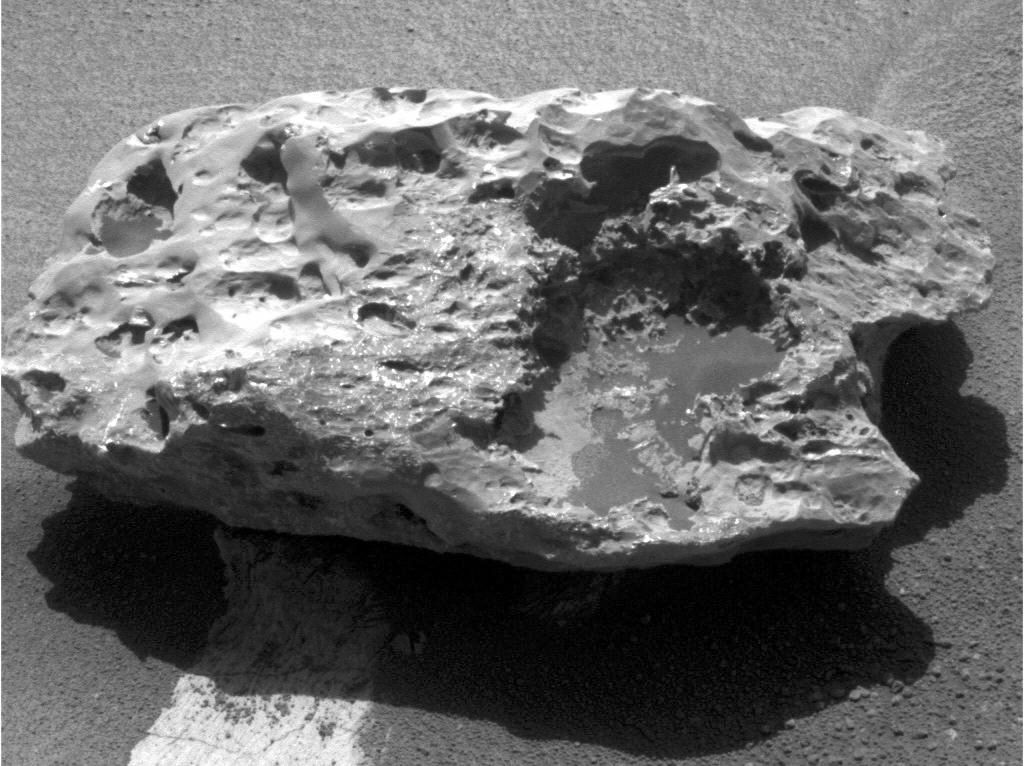
'Block Island' Meteorite on Mars
© NASA'Block Island' Meteorite on Mars. Left-eye view of stereo pair
Composition measurements by NASA's Mars Exploration Rover Opportunity confirm that this rock on the Martian surface is an iron-nickel meteorite.

This image combines exposures from the left eye and right eye of the rover's panoramic camera to provide a three-dimensional view when seen through red-green glasses with the red lens on the left. The camera took the component images during the 1,961st Martian day, or sol, of Opportunity's mission on Mars (July 31), after approaching close enough to touch the rock with tools on the rover's robotic arm.

Meteor

Triple asteroid system passes by Earth

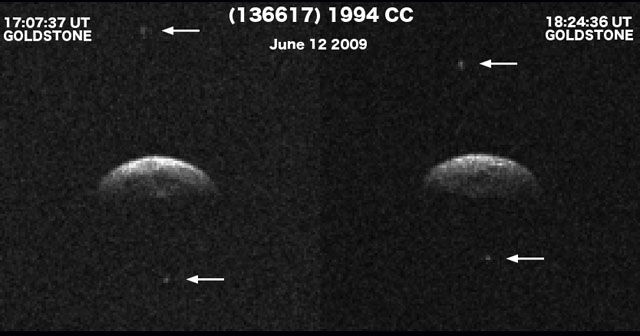
Near-Earth asteroid 1994 CC
© NASA/JPL/GSSRRadar imaging at NASA's Goldstone Solar System Radar on June 12 and 14, 2009, revealed that near-Earth asteroid 1994 CC is a triple system.
Radar imaging at NASA's Goldstone Solar System Radar on June 12 and 14, 2009, revealed that near-Earth asteroid 1994 CC is a triple system. Asteroid 1994 CC encountered Earth within 2.52 million kilometers (1.56 million miles) on June 10. Prior to the flyby, very little was known about this celestial body. 1994 CC is only the second triple system known in the near-Earth population. A team led by Marina Brozovic and Lance Benner, both scientists at NASA's Jet Propulsion Laboratory in Pasadena, Calif., made the discovery.

1994 CC consists of a central object about 700 meters (2,300 feet) in diameter that has two smaller moons revolving around it. Preliminary analysis suggests that the two small satellites are at least 50 meters (164 feet) in diameter. Radar observations at Arecibo Observatory in Puerto Rico, led by the center's director Mike Nolan, also detected all three objects, and the combined observations from Goldstone and Arecibo will be utilized by JPL scientists and their colleagues to study 1994 CC's orbital and physical properties.

Eye 1

'Cuddle chemical' may create green-eyed monster

The cuddle chemical has a dark side. Oxytocin - a hormone thought to play a role in maternal bonding, trust and even attraction - amplifies feelings of envy and gloating, research suggests.

Volunteers who played a game involving monetary gains and losses felt more envy after an imaginary opponent's wins if they had received a dose of oxytocin, compared with a placebo. Similarly, oxytocin boosted feelings of schadenfreude - pleasure at another's misfortune - after volunteers won more money than their opponent.

"The bottom line is that [oxytocin] doesn't only work on pro-social, positive emotions, it has a general effect on social emotions and it depends on the context," says Simone Shamay-Tsoory, a cognitive scientist at the University of Haifa, Israel, who led the study.

Info

Large Hadron Collider to restart at half its designed energy

Image
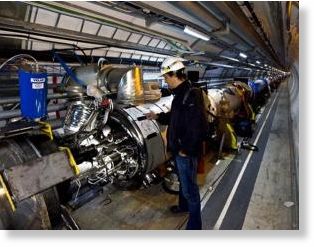
© CERNA technician inspects the site of a faulty electrical connection that damaged the LHC in September 2008
The world's most powerful particle smasher will restart in November at just half the energy the machine was designed to reach. But even at this level, the Large Hadron Collider has the potential to uncover exotic new physics, such as signs of hidden extra dimensions, physicists say.

The LHC is a new particle accelerator at the CERN laboratory near Geneva, Switzerland, designed to answer fundamental questions, such as what gives elementary particles their mass, by colliding particles at higher energies than ever achieved in a laboratory before.

But the first attempt to turn on the LHC failed in September 2008 when a joint connecting a pair of superconducting wires overheated, causing an explosive release of helium used as a coolant. Scientists have been making repairs and checking the strength of other electrical connections since then to pave the way for a second start attempt.

Magnify

Roman Emperor Vespasian's Villa Found

Image
© Pierluigi FeliciangeliSummer Home
An archaeologist works on the site of Roman Emperor Vespasian's summer villa. Titus Flavius Vespasianus, the emperor who ordered the construction of the Colosseum, ascended to the throne at the ripe old age of 60 and remained emperor until his death at age 69
The summer villa of Roman Emperor Vespasian has been found in the Sabine hill country northeast of Rome, Italian archaeologists announced today.

Titus Flavius Vespasianus is known for rebuilding the Roman Empire following the tumultuous reign of Emporer Nero. Vespasian changed the face of Rome by launching a major public works program, which included the construction of the Colosseum, the structure that arguably defines the glory of ancient Rome.

Dating back to the first century A.D., the massive villa, adorned with mosaic floors, baths and marbled halls, has emerged following four years of digs near the town of Cittareale, in the province of Rieti.

Magnify

World's oldest map: Spanish cave has landscape from 14,000 years ago

Image
© EPAArchaeologists have discovered what they believe is man's earliest map, dating from almost 14,000 years ago
A stone tablet found in a cave in Abauntz in the Navarra region of northern Spain is believed to contain the earliest known representation of a landscape.

Engravings on the stone, which measures less than seven inches by five inches, and is less than an inch thick, appear to depict mountains, meandering rivers and areas of good foraging and hunting.

A team from the University of Zaragoza spent 15 years deciphering the etched lines and squiggles after unearthing the artefact during excavation of the cave in 1993.

Satellite

Kepler spacecraft sees its first exoplanets

Image
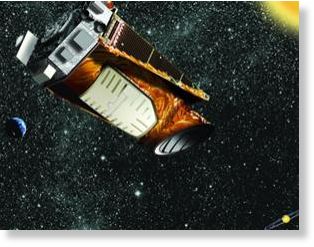
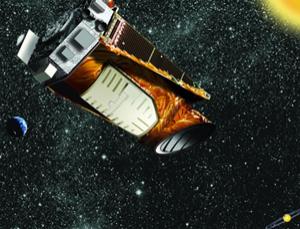
© NASAKepler's computer has mysteriously entered a standby, or "safe", mode twice since launch - possibly because it was hit by charged particles from space called cosmic rays
The planet-hunting Kepler space telescope has found its first extrasolar planets: three alien worlds that had been previously discovered with ground-based telescopes. The finds confirm that Kepler's instruments are sensitive enough to detect Earth-like planets around sun-like stars - but they might also be unexpectedly sensitive to charged particles in space that can zap circuitry.

Kepler launched on 6 March with a simple charge: Stare at a swatch of sky for three and a half years, and look for Earths. The telescope will hunt transiting exoplanets, planets that pass in front of their stars and dim their brightness at regular intervals.

It's focused on a 100-square-degree patch of the Milky Way between the constellations Cygnus and Lyra that contains about 4.5 million stars, 100,000 of which are prime candidates for planets.

In the first 10 days of its calibration period, Kepler collected data on 52,496 stars, three of which were known to have transiting planets. "We expected to be able to see those instantly from the first data that we took," says project manager Jim Fanson at NASA's Jet Propulsion Laboratory. "Any planet that you can detect from the ground will be very obviously visible to Kepler."

One of these planets, HAT-P-7b, provided some good news: Kepler is indeed sensitive enough to detect alien Earths.

Popcorn

Lab created out-of-body experiences help bring avatars to life

The dream of many of paralysed people, computer-game designers - and pornographers - is one step closer to reality with the demonstration of a technique that allows people to physically identify with a virtual body.


Telescope

Astronomers Discover Stars in Early Galaxies had a Need for Speed

Galaxy
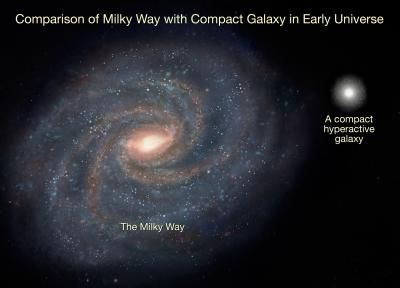
© NASA, ESA, and A. Feild (STScI)Astronomers found that the stars in extremely compact galaxies in the early universe are moving at incredibly high speeds.
A team of astronomers has measured the motions of stars in a very distant galaxy for the first time and discovered they are whizzing around at astonishingly high speeds - about one million miles per hour, or twice the speed at which the Sun circles our own Milky Way galaxy. The finding offers new insights into how these early galaxies may have evolved into the more familiar ones we see in the nearby universe.

The team spent an unprecedented 29 hours observing the galaxy with one of the largest telescopes on Earth - the Gemini South Telescope in Chile - to collect enough light to determine how fast its stars are moving.

Because stars' velocities are directly related to the mass they are orbiting, the ultra-fast speeds would ordinarily suggest the galaxy is very large. But additional observations from the Hubble Space Telescope showed that the galaxy is in fact much smaller than expected, with a diameter of about 5000 light years.

Meteor

Comet Swarm Delivered Earth's Oceans?

Comet
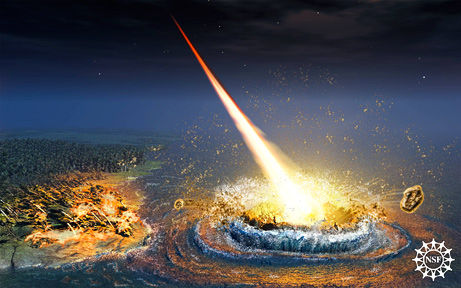
© Nicolle Rager-Fuller, NSFA comet slams into what is now Chesapeake Bay in an artist's conception.
A barrage of comets may have delivered Earth's oceans around 3.85 billion years ago, a new study suggests.

Scientists have long suspected that Earth and its near neighbors were walloped by tens of thousands of impactors during an ancient event known as the Late Heavy Bombardment.

This pummeling disfigured the moon, leaving behind massive craters that are still visible, preserved for millennia in the moon's airless environment. But it's been unclear whether the impactors were icy comets or rocky asteroids.

Now, based on levels of a certain metal in ancient Earth rocks, a team led by Uffe Jorgensen of the Niels Bohr Institute in Denmark says comets were the culprits.

Whether Earth had oceans before any comets arrived has been intensely debated, Jorgensen noted.