Science & TechnologyS


Bulb

Geologists uncover the truth about the origin of valuable mineral

A recent study has revealed that "earthly" minerals such as rhodium and platinum did not originate from our beloved blue planet. University of Toronto geology professor James Brenan collaborated with William McDonough at the University of Maryland to outline a new theory explaining the existence of certain metals in the Earth's crust.

Brenan and McDonough simulated the extreme temperature conditions that occurred during the Earth's formation. This allowed them to measure the proportion of metals that would have remained after the Earth's temperature cooled. Through their intensive research, they demonstrated that metals such as platinum, rhodium, and iridium (from the platinum metal group) should have been completely eliminated from the Earth's outermost layer as a result of high temperatures.

Satellite

Boeing: Laser Systems Destroys Unmanned Aerial Vehicles

Image
Image available for use by news media.
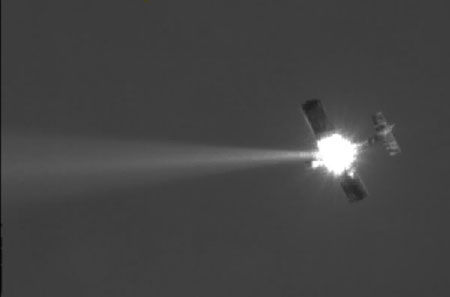
The Boeing Company [NYSE: BA] in May demonstrated the ability of mobile laser weapon systems to perform a unique mission: track and destroy small unmanned aerial vehicles (UAVs).

During the U.S. Air Force-sponsored tests at the Naval Air Warfare Center in China Lake, Calif., the Mobile Active Targeting Resource for Integrated experiments (MATRIX), which was developed by Boeing under contract to the Air Force Research Laboratory, used a single, high-brightness laser beam to shoot down five UAVs at various ranges. Laser Avenger, a Boeing-funded initiative, also shot down a UAV. Representatives of the Air Force and Army observed the tests.

"The Air Force and Boeing achieved a directed-energy breakthrough with these tests," said Gary Fitzmire, vice president and program director of Boeing Missile Defense Systems' Directed Energy Systems unit. "MATRIX's performance is especially noteworthy because it demonstrated unprecedented, ultra-precise and lethal acquisition, pointing and tracking at long ranges using relatively low laser power."

Question

The Giant Steps Back on Two GMO's. Why?

Image

Monsanto has abandoned its ambitious plans for two types of a so-called "second generation GM crop" rather than accede to a request from European regulators for additional research and safety data.

Monsanto has informed the European Food Safety Authority (EFSA) that it no longer wishes to pursue its application for approval of GM maize LY038 and the stacked variety LY038 x MON810. Both of these varieties were designed to accelerate the growth rate of animals. Two letters were sent to EFSA from the Monsanto subsidiary company Renessen at the end of April this year confirming the withdrawal of its applications originally submitted in 2005 and 2006. The letters cite "decreased commercial value worldwide" and state that the high-lysene varieties "will no longer be a part of the Renessen business strategy in the near future." There has been no announcement of these decisions on the Monsanto web site, and there are no mentions on EFSA or European Commission web sites either.

Laptop

Twitter urges Murdoch to be open

Newspapers should become "radically open" if they want to make money in the online world, the co-founder of social networking site Twitter has said.

Biz Stone said that he would "love to see what happens" if newspaper mogul Rupert Murdoch went ahead with plans to block Google from his websites.

"The future is in openness not [being] closed," he told the BBC.

Mr Murdoch recently said that search engines could not legally use material such as headlines in search results.

Earlier this year, he said his News Corp business would start charging customers for access to its websites.

Sherlock

Archaeologists to Recover Pieces of USS Westfield

The resting place of the USS Westfield is being disturbed to retrieve what's left of the Civil War-era vessel from a Texas ship channel.

Archaeologists seek to recover the remains to allow deepening of the Texas City channel by the U.S. Army Corps of Engineers.

Experts say a cannon is believed to be the largest remnant of the USS Westfield, a Union ship scuttled by the crew to avoid capture during the 1863 Battle of Galveston.

The cannon search began Wednesday as part of the $71 million ship channel upgrade.

The artifacts will go to the Texas A&M Conservation Research Laboratory, in an effort that could land some items at museums.

Sherlock

New Fossils Reveal a World Full of Crocodiles

Image
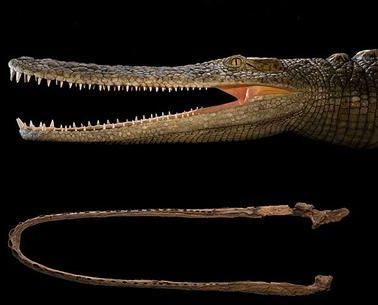
© Reuters/Mike HettwerPancakeCroc (above) and its fossil lower jaw. PancakeCroc was a fish eater with a 3-foot-long, pancake-flat skull. It likely rested motionless for hours, its open jaws waiting for prey.
New fossils unearthed in what is now the Sahara desert reveal a once-swampy world divided up among a half-dozen species of unusual and perhaps intelligent crocodiles, researchers reported Thursday.

They have given some of the new species snappy names -- BoarCroc, RatCroc, DogCroc, DuckCroc and PancakeCroc -- but say their findings help build an understanding of how crocodilians were and remain such a successful life form.

They lived during the Cretaceous period 145 million to 65 million years ago, when the continents were closer together and the world warmer and wetter than it is now.

"We were surprised to find so many species from the same time in the same place," said paleontologist Hans Larsson of McGill University in Montreal who worked on the study.

"Each of the crocs apparently had different diets, different behaviors. It appears they had divided up the ecosystem, each species taking advantage of it in its own way."

Laptop

IBM Reports Progress in Creating Brain-Like Computer

International Business Machines Corp. (IBM) on Wednesday announced that its researchers have made significant progress toward creating a computer system that simulates the way the brain works.

Reporting their results at a supercomputing conference being held in Portland in the U.S. state of Oregon, IBM researchers said they have achieved a simulation with 1 billion neurons and 10 billion synapses using a supercomputer that has 147,456 processors.

Neurons are the key functional elements of the brain and synapses are the connections between them.

The advancement represents the first near real-time simulation of the brain that exceeds the scale of a cat's cerebral cortex, a structure within the brain that plays a key role in memory, attention and thought.

The results indicate the feasibility of building a cognitive computing chip, Dharmendra Modha, one of the researchers, wrote in a blog posting.

Cloud Lightning

Venezuelan government to 'seed' clouds with rain

Image
© Unknown
Venezuela's President Hugo Chavez says he will join a team of Cuban scientists on flights to "bomb clouds" to create rain amid a severe drought that has aroused public anger due to water and electricity rationing.

Chavez, who has asked Venezuelans to take three-minute showers to save water, said the Cubans had arrived in Venezuela and were preparing to fly specially equipped aircraft above the Orinoco river.

"I'm going in a plane; any cloud that crosses me, I'll zap it so that it rains," Chavez said at a ceremony late on Saturday with family members of five Cubans convicted of spying in the United States.

Many countries have programs aimed at altering weather patterns, commonly known as cloud seeding, although the effectiveness of such techniques is disputed.

Firing silver iodine at clouds is one common method. China uses rockets loaded with the chemical to spur rainfall in arid regions. Chavez did not say what technology the Cubans will use.

Snowman

Taking A Bite Of Antarctic Ice

Image
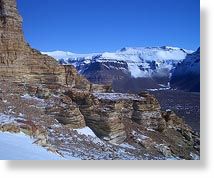
© UnknownAntarctica's mile-high University Valley lies within the only region on Earth where the terrain matches that of Phoenix landing site. This is where NASA's IceBite team will test ice-penetrating drills for a future Mars mission.
Scientists with NASA's IceBite project are heading this week for University Valley, a hanging valley perched more than 1600 meters (more than 1 mile) above sea level in Antarctica's McMurdo Dry Valleys. Their objective: to test a set of ice-penetrating drills and select one for use on a future mission to the martian polar north, the same region of the planet that NASA's Phoenix lander investigated in 2008.

The northern polar region on Mars is of particular interest to scientists because it once may have provided a habitable environment for life. Due to variations over time in Mars' orbit and the angle at which it tilts toward the Sun, Mars' north pole received much more sunlight several million years ago than it does today -- enough sunlight to produce liquid water, enough liquid water to support life. Indeed NASA's Phoenix lander found evidence in martian Arctic soil that liquid water had been present there in the past.

That makes the martian northern plains a favored place for a future mission to Mars targeted at the search for life. And it makes analogue sites on Earth, locations that mimic the conditions encountered by Phoenix, a good place to prepare for a Phoenix follow-up mission. University Valley, where IceBite researchers will conduct their field work, is just such a site.

Magnify

Valley in Jordan inhabited and irrigated for 13,000 years

You can make major discoveries by walking across a field and picking up every loose item you find. Dutch researcher Eva Kaptijn succeeded in discovering - based on 100,000 finds - that the Zerqa Valley in Jordan had been successively inhabited and irrigated for more than 13,000 years. But it was not just communities that built irrigation systems: the irrigation systems also built communities.

Archaeologist Eva Kaptijn has given up digging in favour of gathering. With her colleagues, she has been applying an intensive field exploration technique: 15 metres apart, the researchers would walk forward for 50 metres. On the outward leg, they'd pick up all the earthenware and, on the way back, all of the other material. This resulted in more than 100,000 finds, varying from about 13,000 years to just a few decades old. Based on further research on the finds and where they were located, Kaptijn succeeded in working out the extent of habitation in the Zerqa Valley in Jordan over the past millennia.