Science & TechnologyS


People

Female Educators Teach Math Anxiety to Girls

Young girls may develop a fear of math based on the way their teachers handle the subject.

The Gist:

*Girls may be intimated by math as a result of their teachers rather than their textbooks.
*Young students tend to model themselves after adults of the same sex.
*This anxiety could contribute to the stereotype that boys are better at math.

Little girls may learn to fear math from the women who are their earliest teachers. Despite gains in recent years, women still trail men in some areas of math achievement, and the question of why has provoked controversy.

Now, a study of first- and second-graders suggests what may be part of the answer: Female elementary school teachers who are concerned about their own math skills could be passing that along to the little girls they teach.

Rocket

Pentagon's latest sales pitch? Only nukes can stop planetsmash asteroids, say US boffins

Top American boffins have warned that the US government's efforts to prevent global apocalypse caused by meteor strike are inadequate. The scientists add that nuclear weapons are the only practical means of defence against large, planet-wrecker sized asteroids.

In a new report, the US National Research Council says that so-called Near Earth Objects (NEOs) fall broadly speaking into three classes.

First and most terrible are large NEOs bigger than 1km (eg roughly Vatican sized and up) which would release energies in the hundred-thousand-megaton range - more than a global nuclear war, and with similarly catastrophic consequences for human civilisation or even survival. NASA has got most of these NEOs logged in its databanks, but not all - there are likely to be a few on orbits which only bring them within observation at very long intervals.

Magnify

The Ancient City of Ulpiana

Remnants of the Roman empire lie just 7 kilometres south east of Prishtina at the Ulpiana excavation site, located in a field near the town of Gracanica.

The ancient city is believed to date back to the first century and thrived during Roman occupation and the early Byzantine period.

At that time, the territories of Serbia, Kosovo, and portions of Macedonia and Bulgaria were known as the Roman province of Moesia Superior, and Ulpiana was one of the main hubs of political, cultural and economic activity.

Stone, marble and brick constructions, such as walls, rooms and sections of a cemetery, can be seen at the site today. A few stones are engraved with Roman scripture.

Magnify

'Huge head' discovered in ancient Mayan city in Guatemala

Image
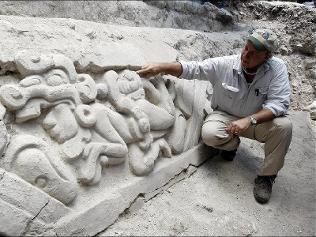
© AFPUS archaeologist Richard Hansen explaining details of a frieze found in El Mirador archaeological site, in Peten, some 650 km north of Guatemala City. A giant head has been found in the same region.
Archaeologists have discovered a huge Mayan sculptured head in Guatemala that suggests a little-known site in the jungle-covered Peten region may once have been a significant city.

The stucco sculpture, which is more than three metres wide by four metres high, was buried for centuries at the Chilonche ruins, close to the border with Belize.

The recent discovery of the head, which dates from the early Classic period between 300 to 600 AD, means the site is much older than previously thought.

The Maya often constructed new buildings using older ones as foundations.

Grey Alien

Scientist: Alien Life Could Already be on Earth

For the past 50 years, scientists have scoured the skies for radio signals from beyond our planet, hoping for some sign of extraterrestrial life. But one physicist says there's no reason alien life couldn't already be lurking among us - or maybe even in us.
Paul Davies
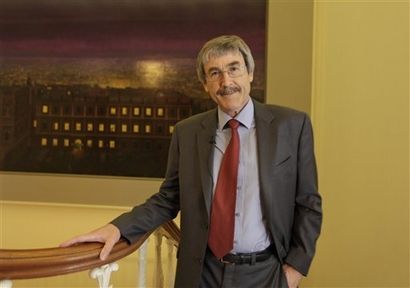
© Associated PressPaul Davies of Arizona State University poses for the Associated Press prior to his lecture in the Royal Society in central London, Tuesday Jan. 26, 2010.

Paul Davies, an award-winning Arizona State University physicist known for his popular science writing said Tuesday that life may have developed on Earth not once but several times.

Davies said the variant life forms - most likely tiny microbes - could still be hanging around "right under our noses - or even in our noses."

Sherlock

Dinosaur Extinction Grounded Ancient Birds, New Research Finds

Image
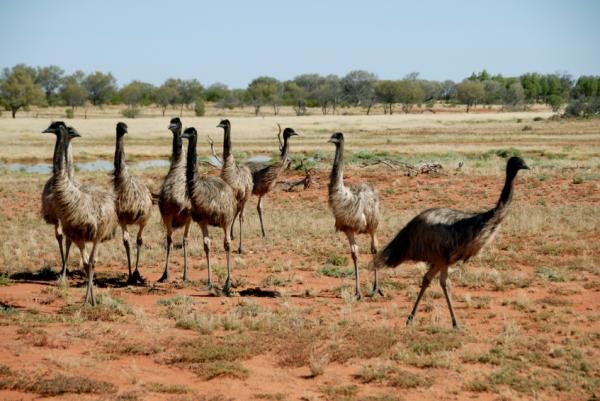
© iStockphoto/John CarnemollaNew research suggests that ancestors of the African ostrich, Australasian emu plus cassowary, South American rheas and New Zealand moa became flightless independently, in close association with the extinction of the dinosaurs about 65 million years ago.
An abundance of food and lack of predators following the extinction of dinosaurs saw previously flighted birds fatten up and become flightless, according to new research from The Australian National University.

The study, led by Dr Matthew Phillips, an ARC Postdoctoral Fellow at the ANU Research School of Biology, looked at the mitochondrial genome sequences of the now-extinct giant moa birds of New Zealand. To their surprise, the researchers found that rather than having a flightless relative, their closest relatives are the small flying tinamous of South America.

Their molecular dating study suggests that the ancestors of the African ostrich, Australasian emu plus cassowary, South American rheas and New Zealand moa became flightless independently, in close association with the extinction of the dinosaurs about 65 million years ago.

Telescope

Universe is 30 Times More Run Down than Thought, Astronomers Find

Image
© iStockphoto/Paul LeFevreTelescope image of the Pleiades star cluster.
Cars run out of petrol, stars run out of fuel and galaxies collapse into black holes. As they do, the universe and everything in it is gradually running down. But how run down is it? Researchers from The Australian National University have found that the universe is 30 times more run down than previously thought.

PhD student Chas Egan and Dr Charley Lineweaver from the ANU Research School of Astronomy and Astrophysics have computed the entropy of the universe. Scientists compute entropy to out how efficient an engine is or how much work can be extracted from a fuel or how run down and disordered a system is. Using new data on the number and size of black holes they found that the universe contains 30 times more entropy than earlier estimates.

"We considered all contributions to the entropy of the observable universe: stars, star light, the cosmic microwave background. We even made an estimate of the entropy of dark matter. But it's the entropy of super-massive black holes that dominates the entropy of the universe. When we used the new data on the number and size of super-massive black holes, we found that the entropy of the observable universe is about 30 times larger than previous calculations," said Mr Egan.

Magnify

Inflammation 'On Switch' Also Serves as 'Off Switch'

In a surprising finding, researchers at North Carolina State University have discovered the critical importance of a protein previously believed to be a redundant "on switch" for certain immune-system responses.

Scientists previously understood that the protein called TAB2 activates inflammation, an important biological process that stimulates wound-healing and prevents invasion of harmful organisms. But scientists considered TAB2 nonessential to the process due to the redundant function of a cousin protein, called TAB3, which has no trouble serving as an "on switch" to activate the inflammation process in TAB2's absence.

In a study published in the Jan. 22 edition of the Journal of Biological Chemistry, the NC State researchers show that underestimating TAB2 can be dangerous. Rather than merely serving as an "on switch," TAB2 also serves as an "off switch" that turns off the inflammation process. When TAB2 is absent or knocked out in cell cultures, the inflammation process continues unabated.

Magnify

Unwanted Guests: How Herpes Simplex Virus Gets Rid of the Cell's Security Guards

Image
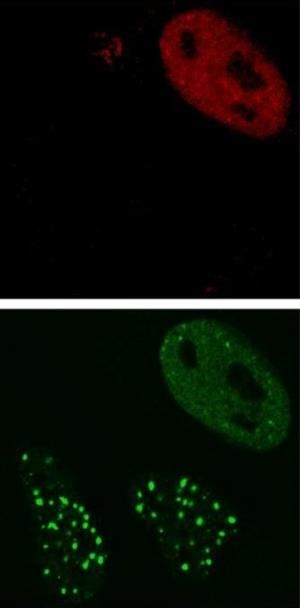
© Dr. Caroline Lilley/Salk Institute for Biological StudiesWhen cells with DNA damage are infected with HSV-1 virus (top image, virus shown in red) the viral ICP0 protein prevents the DNA repair proteins (bottom image, DNA repair proteins shown in green) from accumulating at sites of DNA damage.
A viral infection is like an uninvited, tenacious houseguest in the cell, using a range of tricks to prevent its eviction. Researchers at the Salk Institute for Biological Studies have identified one of the key proteins allowing herpes simplex virus (HSV) DNA to fly under the radar of their hosts' involuntary hospitality.

Their findings, to be published in a forthcoming issue of The EMBO Journal, reveal one of the tactics that HSV employs in order to overcome its hosts' defenses and may suggest a common mechanism by which viruses can successfully infect host cells.

HSV, like all viruses, requires a living host in order to multiply. But before it can hijack the cellular machinery to produce scores of copies of itself, it needs to evade the cell's security system. "We found that detection of the viral DNA by the host cell is an important barrier that the virus must overcome in order to achieve its goal," says Matthew Weitzman, Ph.D., associate professor in the Laboratory of Genetics, who led the study. "For this purpose, it brings along a protein that shuts down the normal cellular responses that would otherwise recognize and silence it."

To the host cell, invading viral DNA looks just like the product of DNA damage, which must be repaired or removed in order for the cell to stay healthy. As a result, DNA "security guards" continuously patrol our cells looking for unusual bits of DNA. "We reasoned that viral DNA would be recognized by the cell's DNA repair machinery and that the virus must somehow manipulate the cell's response to this foreign DNA," explains Weitzman.

Magnify

Hacking Into Cells' Communications System Could Lead to New Drugs to Tackle Neurodegeneration

Image
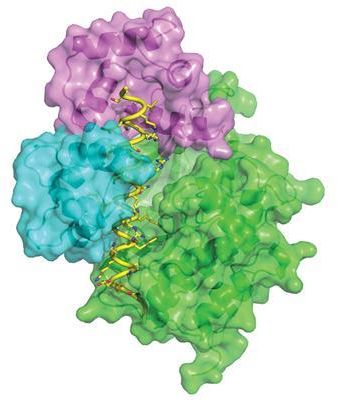
© Mathias Wilmanns/EMBLThis image shows the three-dimensional structure of Death-Associated Protein Kinase (green and yellow) when bound to calmodulin (violet and blue). It was obtained by X-ray crystallography.
Cells rely on a range of signalling systems to communicate with each other and to control their own internal workings. Scientists from the European Molecular Biology Laboratory (EMBL) in Hamburg, Germany, have now found a way to hack into a vital communications system, raising the possibility of developing new drugs to tackle disorders like neurodegeneration, cancer and cardiovascular disease.

In a study published in Science Signaling, they have pieced together the first snapshot of what two of the system's components look like while interacting.

One way these signalling systems work is by triggering a flood of calcium ions inside the cell. These get picked up by a receiver, a protein called calmodulin which turns this calcium signal into action by switching various parts of the cell's machinery on or off. Calmodulin regulates a set of proteins called kinases, each of which controls the activity of specific parts of the cell, thus altering the cell's behaviour.