Science & TechnologyS


Microscope 1

More evidence that genetic mutations aren't random

hawk eye evolution random mutation
© abrinsky via FlickrA hawk's eye
Earlier this year we covered a paper in Nature which found that mutations in the Arabidopsis genome were not occurring randomly. As that paper noted, "The random occurrence of mutations with respect to their consequences is an axiom upon which much of biology and evolutionary theory rests." Yet the findings of the paper overturned these basic principles of modern evolutionary biology. Now another paper, this one published in Genome Research by biologists from Israel and Ghana, reports similar findings about the non-random nature of mutations.

Comment: Darwin takes another hit.


Fireball 4

Best of the Web: Small asteroid 2022 EB5 tracked hitting Earth's atmosphere on March 11

Asteroid 2022 EB5
© K. Sarneczky
On 2022 March 11.80, K. Sarneczky found a small asteroid using the 0.60-m Schmidt + CCD of GINOP-KHK, Piszkesteto (K88 MPC code) that was soon after put on the NEOCP list with the provisional designation Sar2593 for the follow-up by other observers. The Minor Planet Center subsequently assigned the following official designation to this object 2022 EB5.

Discovery images (19:25UT) of asteroid 2022 EB5

Credit: K. Sarneczky

At 20:46UT of March 11, Bill Gray sent an alert in the MPML mailing list about the impact of Sar2593 with the Earth's atmosphere and: "to urge European observers to take a look for this object, currently on NEOCP. It should come in at 21:23 UTC at latitude +70.47, longitude W 10.40, plus or minus a few dozen km. That's about forty minutes from "right now", a bit north of Iceland". Below you can see a map of the impact location as calculated by Gray, southwest of Jan Mayen island.
Jan Mayen island
© B.Gray

Comment: To be clear, by 'impact', in this case, they mean that it detonated high up in the atmosphere as a meteor fireball.


Telescope

Solar coronal loops might not be loops at all

coronal loop
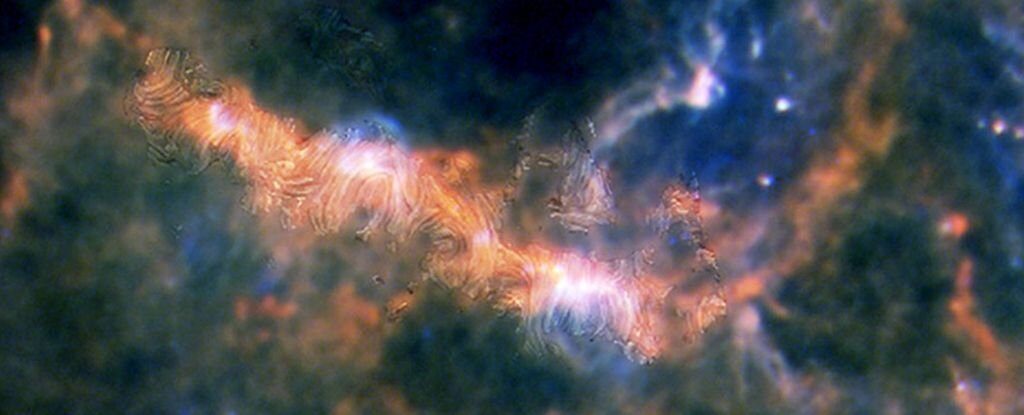
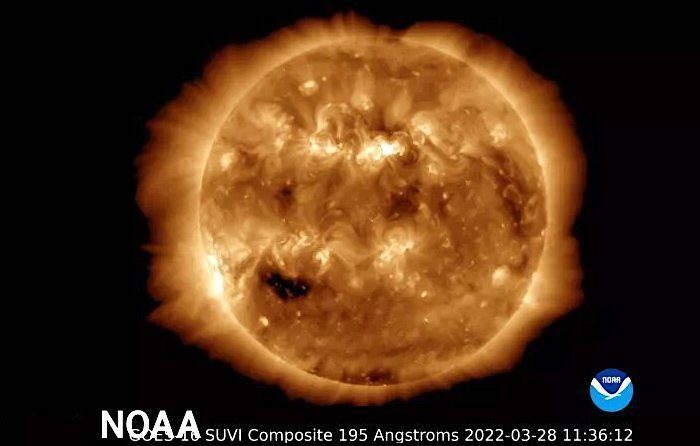
We've all seen the gorgeous images and videos of coronal loops. They're curved magnetic forms that force brightly glowing plasma to travel along their path. They arch up above the Sun, sometimes for thousands of kilometres, before reconnecting with the Sun again.

But a new study says that some of what we're seeing aren't loops at all. Instead, they're a type of optical illusion. Do we know the Sun as well as we think we do?


Comment: Discoveries are made all the time showing that mainstream theories of space are lacking: The Sun is stranger than astrophysicists imagined


The Sun's corona is the outermost layer of its atmosphere. It's made of plasma, which contains lots of charged particles. That means that it readily responds to electromagnetic fields. The Sun has a powerful magnetic field that varies by place and time. Sometimes that magnetism drives the plasma high above the corona, forming fantastical structures called coronal loops that eventually reconnect to the Sun's surface. Some of these structures can last for days or even for weeks.

Comment: See also: And check out SOTT radio's:


Cassiopaea

Gamma light from a nova

White Dwarf
© DESY / H.E.S.S., Science Communication LabExplosion in space: Artist's impression of the white dwarf and red giant binary system following the outburst of a nova like RS Ophiuchi. Material ejected from the surface of the white dwarf generates shockwaves that rapidly expand, forming an hour-glass shape. Particles are accelerated at these shock fronts, which collide with the dense wind of the red giant star to produce very-high-energy gamma-ray photons.
With the H.E.S.S. observatory and the Fermi satellite, researchers track the eruption of RS Ophiuchi.

For the first time, it has been possible to observe the outburst of a nova in very high-energy gamma light and to follow the glow and subsequent fading over a period of one month. The researchers combined the data from the H.E.S.S. observatory with those from the Fermi satellite and gained insights into the processes underlying the emission of gamma rays. The scientists were surprised to find that the nova apparently accelerates particles to the theoretical limit.

In the constellation of Ophiuchus (the Serpent Bearer) there is a double star system called "RS Ophiuchi", about 7500 light years away, consisting of a white dwarf and a red giant. Their separation is only about one and a half times the distance between the Earth and the Sun, close enough for the white dwarf to continuously pull matter from the atmosphere of its companion.

Episodically, enough material is accumulated on the white dwarf's surface for the strong gravity to ignite a thermonuclear explosion. Between 1898 and 2006, astronomers have previously observed eight such nova outbursts of RS Ophiuchi. On the of August 8, 2021, another outburst occurred that was visible even to the naked eye.

Starting the following night, H.E.S.S. set its sights on the star and was indeed able to detect it. "This is the very first observation of a nova in very-high-energy gamma radiation," says Alison Mitchell of the Friedrich-Alexander-Universität Erlangen-Nürnberg and principal investigator of the H.E.S.S Nova programme. For an unprecedented period of one month - with a brief period of interruption around full moon - H.E.S.S. was able to track the evolving luminosity of the nova.

Complementing the H.E.S.S. observations were lower-energy gamma-ray measurements by the Fermi satellite. Combining data from the two instruments revealed unique insights into the processes underlying the gamma-ray emission and their evolution. In both energy ranges, the rate of gamma-rays received by the instruments displays a period of steady increase before decaying at the same rate.

Info

Hiawatha crater in Greenland older than thought

Greenland Ice Sheet
© Pierre BeckFieldwork at the edge of the Greenland Ice Sheet in 2019.
Danish and Swedish researchers have dated the enormous Hiawatha impact crater, a 31 km-wide asteroid crater buried under a kilometer of Greenlandic ice. The dating ends speculation that the asteroid impacted after the appearance of humans and opens up a new understanding of Earth's evolution in the post-dinosaur era.

Ever since 2015, when researchers at the University of Copenhagen's GLOBE Institute discovered the Hiawatha impact crater in northwestern Greenland, uncertainty about the crater's age has been the subject of considerable speculation. Could the asteroid have slammed into Earth as recently as 13,000 years ago, when humans had long populated the planet? Could its impact have catalyzed a nearly 1,000-year period of global cooling known as the Younger Dryas?

New analyses performed on grains of sand and rocks from the Hiawatha impact crater by the Natural History Museum of Denmark and the GLOBE Institute at the University of Copenhagen, as well as the Swedish Museum of Natural History in Stockholm, demonstrate that the answer is no. The Hiawatha impact crater is far older. In fact, a new study published in the journal Science Advances today reports its age to be 58 million years old.

"Dating the crater has been a particularly tough nut to crack, so it's very satisfying that two laboratories in Denmark and Sweden, using different dating methods arrived at the same conclusion. As such, I'm convinced that we've determined the crater's actual age, which is much older than many people once thought," says Michael Storey of the Natural History Museum of Denmark.

Info

Mathematical discovery could shed light on secrets of the Universe

Quantum Mechanics
© Chalmers University of TechnologyThe quantum mechanical description of black holes is still in its infancy but involves spectacular advanced mathematics.​​
How can Einstein's theory of gravity be unified with quantum mechanics? This challenge could give us deep insights into phenomena such as black holes and the birth of the universe. Now, a new article in Nature Communications, written by researchers from Chalmers University of Technology, Sweden, and MIT, USA, presents results that cast new light on important challenges in understanding quantum gravity.

A grand challenge in modern theoretical physics is to find a 'unified theory' that can describe all the laws of nature within a single framework - connecting Einstein's general theory of relativity, which describes the universe on a large scale, and quantum mechanics, which describes our world at the atomic level. Such a theory of 'quantum gravity' would include both a macroscopic and microscopic description of nature.

"We strive to understand the laws of nature and the language in which these are written is mathematics. When we seek answers to questions in physics, we are often led to new discoveries in mathematics too. This interaction is particularly prominent in the search for quantum gravity - where it is extremely difficult to perform experiments," explains Daniel Persson, Professor at the Department of Mathematical Sciences at Chalmers university of technology.

An example of a phenomenon that requires this type of unified description is black holes. A black hole forms when a sufficiently heavy star expands and collapses under its own gravitational force, so that all its mass is concentrated in an extremely small volume. The quantum mechanical description of black holes is still in its infancy but involves spectacular advanced mathematics.

Microscope 1

Student researchers discover genes unique to humans in search for source of our evolutionary distinctiveness

DNA Illustration
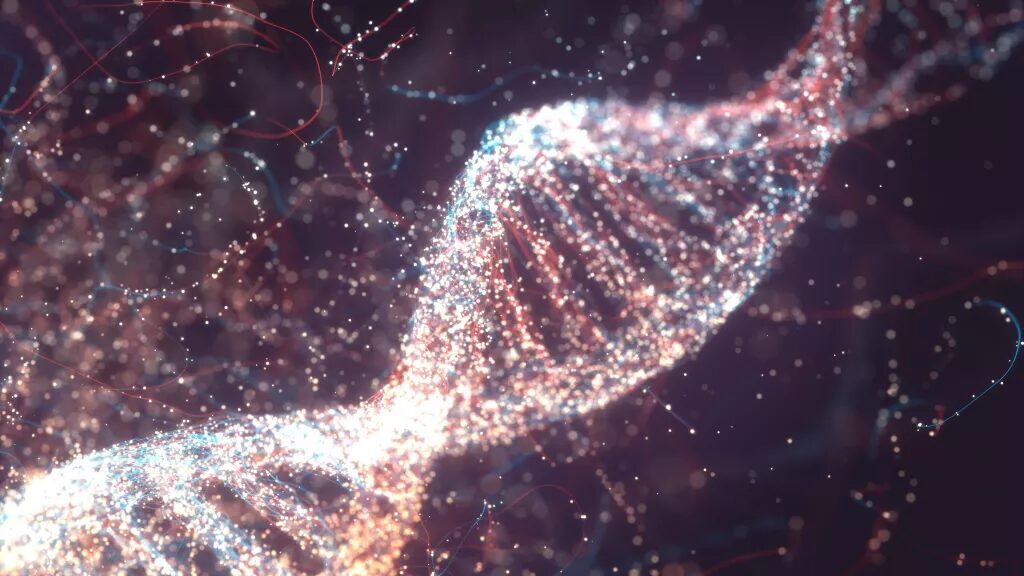
A team of student researchers has discovered human microRNA genes not shared with any other primate species and which may have played an important role in the unique evolution of the human species.
The students found at least three families of microRNA genes on chromosome 21.

A team of student researchers from John Jay College of Criminal Justice has discovered human microRNA genes not shared with any other primate species and which may have played an important role in the unique evolution of the human species. The students, under the direction of John Jay Professors Dr. Hunter R. Johnson and Dr. Nathan H. Lents, found at least three families of microRNA genes on chromosome 21.

The team utilized genome alignment tools to compare the most recent drafts of human and chimpanzee genomes, meticulously scanning for novel genetic elements unique to humans. Beginning with the smallest human chromosome, chromosome 21, the researchers were surprised to find a large region of human-unique DNA, called 21p11, that harbors several orphan microRNA genes.

Bulb

Five amazing adaptations that help animals thrive in the dark

horseshoe bat
© DeAgostini / Getty ImagesA greater horseshoe bat can use echolocation to target an insect meal.
From snakes that use infrared radiation to find prey to deep sea fishes that communicate via bioluminescence, these creatures flourish without light

Humans have a bias for the daylight hours, when most of our activity takes place. But across the animal kingdom many species have a different perspective. They embrace the darkness. After all, roughly half of the planet experiences night at any given time, and environments like subterranean caves and the deep sea never receive any sunlight at all.

The darkness is alive with creatures of all types, and many of them have evolved incredible senses and abilities that help them prosper in a world without light. Here are five exceptional adaptations to the dark that stand out.

Comment: Are the above really "adaptations" - or actually features of intelligent design?? Notice that the above article, from Smithsonian Magazine, doesn't even hint at the possibility that these highly complex and almost astounding abilities could have been "the product" of some higher level of intelligence and organization. But this approach is about what one should come to expect from such an establishment institution that seeks to keep Western society "in the dark" - which is why humanity, if it truly wants to evolve, must discard Darwinism and render it extinct with the acceptance of how it limits our understanding of the world.


Bullseye

Paper retroactively concedes a lack of evidence for Darwinian evolution

lamprey
© M. Buschmann, CC BY-SA 3.0 , via Wikimedia CommonsA lamprey
Years ago I began to recognize a repeating phenomenon in the rhetoric of evolutionary literature: Scientists, echoed by science journalists, would only admit a problem with their models or a challenge to their ideas once they thought they had found a solution. I've called these "retroactive admissions of ignorance." We now have another example of this, from a paper just published in Nature Communications purporting to demonstrate Darwinian gradualism: "General statistical model shows that macroevolutionary patterns and processes are consistent with Darwinian gradualism." Retroactive admissions of ignorance, weakness, or other problems typically come in the first sentences of the abstract or introduction of a paper. The rest of the paper is then supposed to show why the admission no longer applies, as the weakness has been cleared up. This paper is no exception to the pattern. From the abstract:
Macroevolution posed difficulties for Darwin and later theorists because species' phenotypes frequently change abruptly, or experience long periods of stasis, both counter to the theory of incremental change or gradualism.

Comet

Comet Bernardinelli-Bernstein confirmed as largest ever observed, twice the size of Hale-Bopp

Bernardinelli-Bernstein comet
© Dark Energy Survey/DOE/FNAL/DECam/CTIO/NOIRLab/NSF/AURA/P. Bernardinelli & G. Bernstein (UPenn)/DESI Legacy Imaging SurveysThe 85-mile-wide Bernardinelli-Bernstein comet is winging its way toward the interior of the solar system. An image taken by the Dark Energy Survey shows Comet Bernardinelli-Bernstein in October 2017.
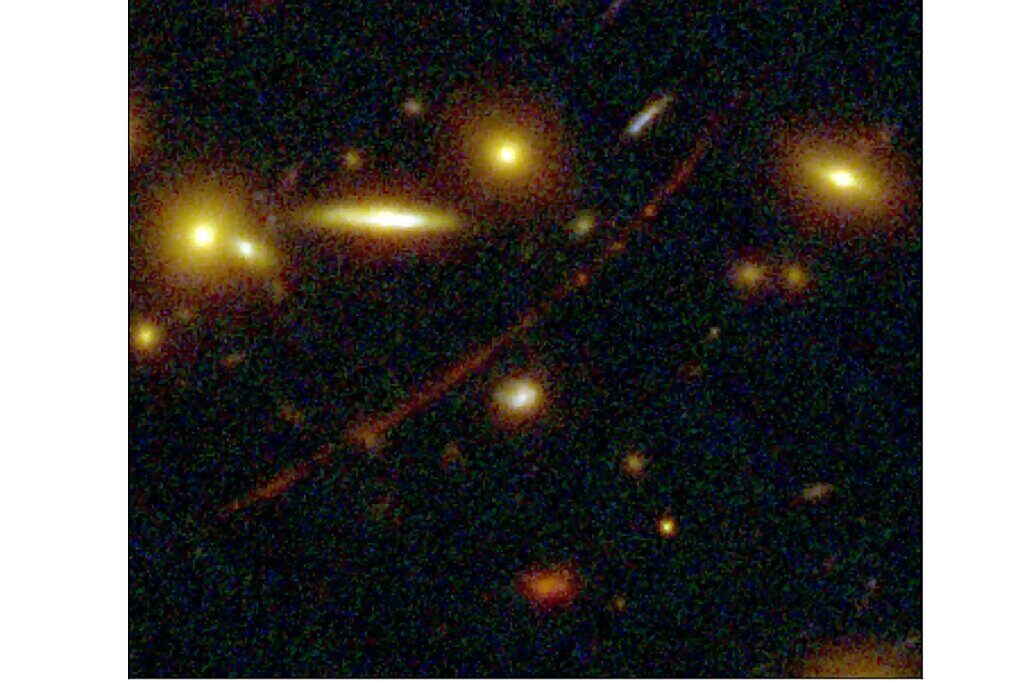
The Bernardinelli-Bernstein comet, identified in 2021, is officially the biggest comet ever observed.

The new record, reported on the preprint website arXiv and now accepted for publication in the journal Astronomy and Astrophysics Letters, bumps the Hale-Bopp comet from the top spot. Hale-Bopp was discovered in 1995 and became visible to the naked eye in 1996; it was about 46 miles (74 kilometers) across. Bernardinelli-Bernstein, also known as comet 2014 UN271, has now been calculated to be about 85 miles (137 km) across.

The Bernardinelli-Bernstein comet is named after its discoverers, University of Pennsylvania cosmologist Gary Bernstein and University of Washington postdoctoral scholar Pedro Bernardinelli, who first spotted the comet in the Dark Energy Survey dataset. The images showing the comet date back to 2014, which is why that year is in the comet's official scientific designation. Bernardinelli and Berstein noticed the tiny dot moving as they studied images from subsequent years.