Science & TechnologyS


Blue Planet

Planet-scale MRI: High resolution illumination of Earth's interior down to the planet's core

deep crust analysis earth MRI Azimuthal anisotropy
© Ebru Bozdag, Colorado School of MinesAzimuthal anisotropy (black dashed lines showing the fast direction of wave speeds) in the mantle at 200 km depth plotted on top of vertically polarized shear wave speed perturbations (dVsv) after 20 iterations based on global azimuthally anisotropic adjoint tomography. The maximum peak-to-peak anisotropy is 2.3%. Red and blue colors denote the slow and fast shear wave speeds with respect to the mean model which are generally associated with hot and cold materials, respectively.
Earthquakes do more than buckle streets and topple buildings. Seismic waves generated by earthquakes pass through the Earth, acting like a giant MRI machine and providing clues to what lies inside the planet.

Seismologists have developed methods to take wave signals from the networks of seismometers at the Earth's surface and reverse engineer features and characteristics of the medium they pass through, a process known as seismic tomography.

For decades, seismic tomography was based on ray theory, and seismic waves were treated like light rays. This served as a pretty good approximation and led to major discoveries about the Earth's interior. But to improve the resolution of current seismic tomographic models, seismologists need to take into account the full complexity of wave propagation using numerical simulations, known as full-waveform inversion, says Ebru Bozdag, assistant professor in the Geophysics Department at the Colorado School of Mines.

Brain

Memory found to lean more on the brain's electric field than on neurons

New York Philharmonic Orchestra
© Getty ImagesNew York Philharmonic Orchestra
MIT researchers compare the electric field to an orchestra conducting the neurons as players

The Picower Institute for Learning and Memory at MIT offers an interesting new model of how memories are processed in the brain. Using two macaques playing a game while their brain activities were recorded, the researchers suggest the orchestra as a model. The neurons are the players and the electric field is the conductor:
As the brain strives to hold information in mind, such as the list of groceries we need to buy on the way home, a new study suggests that the most consistent and reliable representation of that information is not the electrical activity of the individual neurons involved but an overall electric field they collectively produce.

Indeed, whenever neuroscientists have looked at how brains represent information in working memory, they've found that from one trial to the next, even when repeating the same task, the participation and activity of individual cells varies (a phenomenon called "representational drift"). In a new study in NeuroImage, scientists at The Picower Institute for Learning and Memory at MIT and the University of London found that regardless of which specific neurons were involved, the overall electric field that was generated, provided a stable and consistent signal of the information the animals were tasked to remember.

In a sense, once established, the field imposes itself on the neurons like the conductor of an orchestra in which each neuron is a single musician, said Dimitris Pinotsis, the study's lead and corresponding author. Even if the musicians change, the conductor still coordinates whomever is in the chairs to produce the same result.

"This ensures that the brain can still function even if some neurons die," said Pinotsis, an associate professor at University of London and a research affiliate in The Picower Institute at MIT. "The field ensures the same output of the ensemble of neurons is achieved even after individual parts change. The brain does not need individual neurons, just the conductor, the electric field, to be the same."

News, "Neurons are fickle. Electric fields are more reliable for information." at The Picower Institute (March 14, 2022)

Comment:


Blue Planet

Hundreds of mammals yet to be discovered, analysis of biodiversity data suggests

shrew
© Pixabay/CC0 Public Domain
At least hundreds of so-far unidentified species of mammals are hiding in plain sight around the world, a new study suggests.

Researchers found that most of these hidden mammals are small bodied, many of them bats, rodents, shrews, and moles.

These unknown mammals are hidden in plain sight partly because most are small and look so much like known animals that biologists have not been able to recognize they are actually a different species, said study co-author Bryan Carstens, a professor of evolution, ecology and organismal biology at The Ohio State University.

Comment: Analysis and discoveries like that mentioned above show how much more we've yet to learn about our planet, including that which we think we already know: Also check out SOTT radio's:


Cassiopaea

Ejection nebula of supernova Cassiopeia A does not expand evenly

image of Cassiopeia A
© J.Vink/astronomie.nlAn image of Cassiopeia A showing only two shells of nebulae. The blue arrows on the right (astronomers call this the west side) show that the inner shell is not expanding outwards at this point, but inwards. The red arrows show that the other remnants do expand outwards.
The inner nebula of the much-studied supernova Cassiopeia A is not moving smoothly outward. This has been discovered by astronomers from the University of Amsterdam and Harvard. The astronomers suspect that the remains have collided with something. Their finding have been accepted for publication in The Astrophysical Journal.

Cassiopeia A is the remnant of an exploded star in the Cassiopeia constellation, about 11,000 light years away from us. Light from the explosion should have reached Earth for the first time around 1670. However, there was too much gas and dust around the star for the explosion to be seen with the naked eye or with the then very basic telescopes. The Cassiopeia A explosion nebula is expanding at an average rate of 4,000 to 6,000 kilometers per second and has a temperature of about 30 million degrees Celsius. The expansion is most likely occurring in gas that was blown out by the star long before the explosion. Cassiopeia A is now about 16 light years across.

Short clip with English explanation of the discovery that the inner remnants of Cassiopeia A do not expand evenly. Note that the west is on the right. Credit: J. Vink

Sun

Strange new type of solar wave defies physics

Solar Dynamics Observatory Sun
© NASA/SDOA NASA Solar Dynamics Observatory image of the sun.
Scientists have detected a strange new type of high-frequency wave on the sun's surface, and the waves are moving three times faster than scientists thought was possible.

The acoustic waves, called high-frequency retrograde (HFR) vorticity waves, were spotted rippling backward through the sun's plasma in the opposite direction of its rotation. The previously unknown type of wave was described in a study published March 24 in the journal Nature Astronomy.

Scientists can't see into the sun's fiery depths, so they often measure the acoustic waves that move across its surface and bounce back toward its core to infer what's going on inside. But the unprecedented speed of the HFR waves, spotted in 25 years of data from space and ground-based telescopes, has hinted that scientists might be missing something big.

"The very existence of HFR modes and their origin is a true mystery and may allude to exciting physics at play," co-author Shravan Hanasoge, an astrophysicist at New York University Abu Dhabi's Center for Space Science, said in a statement. "It has the potential to shed insight on the otherwise unobservable interior of the sun."

Arrow Down

Microplastics found in blood for the first time

Microplastics
© Phys OrgMicroplastics had already been spotted in oceans, air and food—now researchers have found it in human blood.
Scientists have discovered microplastics in human blood for the first time, warning that the ubiquitous particles could also be making their way into organs.

The tiny pieces of mostly invisible plastic have already been found almost everywhere else on Earth, from the deepest oceans to the highest mountains as well as in the air, soil and food chain.

A Dutch study published in the Environment International journal on Thursday examined blood samples from 22 anonymous, healthy volunteers and found microplastics in nearly 80 percent of them.

Half of the blood samples showed traces of PET plastic, widely used to make drink bottles, while more than a third had polystyrene, used for disposable food containers and many other products.

"This is the first time we have actually been able to detect and quantify" such microplastics in human blood, said Dick Vethaak, an ecotoxicologist at Vrije Universiteit Amsterdam.

"This is proof that we have plastics in our body — and we shouldn't," he told AFP, calling for further research to investigate how it could be impacting health.

Fish

We've discovered why some whales stop feeding in response to the sound of sonar

Tagged pilot whales.
© Saana Isojunno,Tagged pilot whales.
In September 2002, a number of beaked whales were stranded and killed in the Canary Islands during a NATO naval exercise. It was the first time we started to get a real understanding of the negative effects of sonar sounds on cetaceans, which includes whales, dolphins and porpoises.

But why did the noise of sonar seem to affect beaked whales in particular, rather than other species of cetacean?

In our new research, we've discovered that the response of each species to predators could explain why some whales and dolphins are more sensitive to this human-made noise.

It was back in the early 2000s that we (along with other researchers around the world) began to study the impact of sonar on free-ranging whales. These new "behavioral responses studies" exposed different cetacean species to gradually increasing levels of sonar - with careful monitoring to keep the animals from harm. We were then able to identify the level of sonar noise at which behavioral changes began to occur.

From that early research we knew that feeding is commonly affected when marine mammals are disturbed by sonar, and some species are markedly more sensitive to this exposure than others. For example, Cuvier's beaked whales showed dramatically more severe changes in their feeding habits (swimming rapidly and silently away while extending their length of dive and non-feeding period) than blue whales.

But until now the reasons for this differing response between species were unclear. So, we decided to investigate whether they were responding to human-made sound in a similar way to their response to predators, as some theories suggested.

Quenelle

Tall el-Hammam cosmic impact paper survives latest #Pebblegate anti-science attack

Tall el-Hammam
Tall el-Hammam
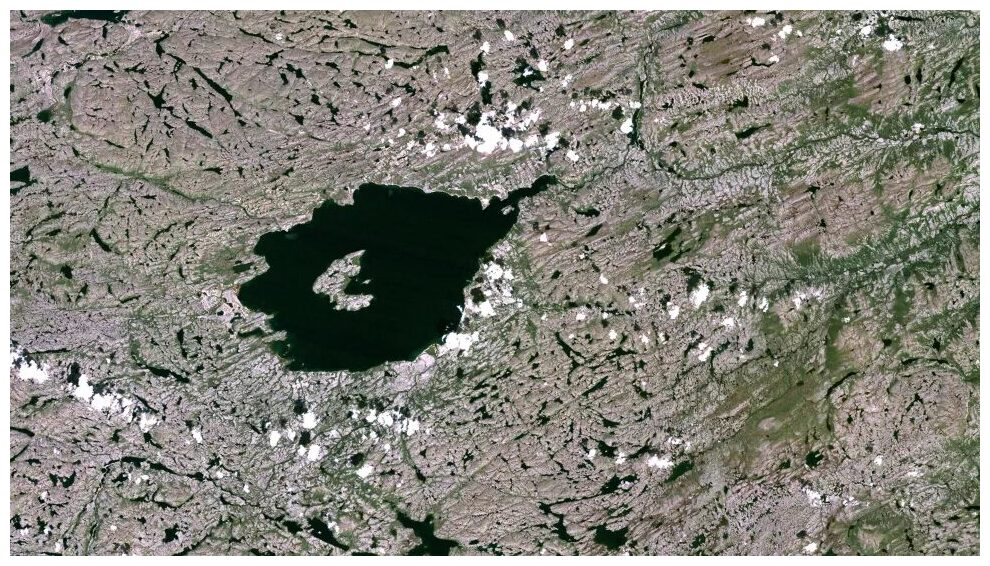
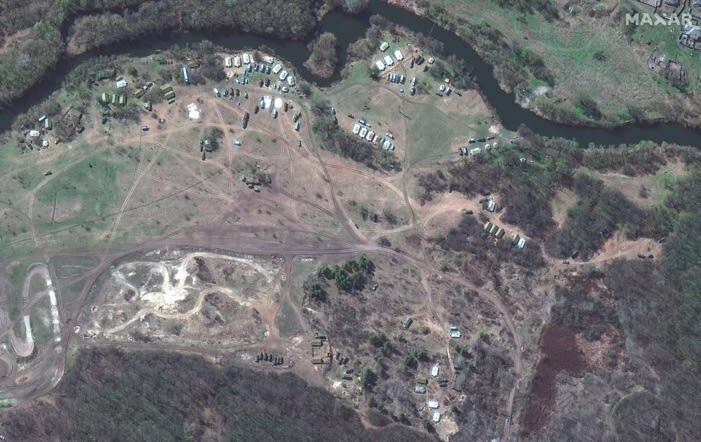
The Bunch et al. paper concerning the biblical city of Tall el-Hammam and co-authored by the Tusk has proven a dramatic publication. Arguably the most popular scientific journal article on earth, the paper has by turns been reported to millions; smeared by anti-Christian bigots; spared by a secular publisher; and most recently employed by James Lawrence Powell to defend the scientific method itself.

Immediately after publication, a twitter mob of sciency people decided that the Tall el-Hammam cosmic impact paper was simply unacceptable. The smear was christened by the Tusk as #Pebblegate. Scientific method and centuries of epistemological discipline notwithstanding, these narrow minded ideologically driven actors decided that an archaeologically experienced bible school, joined with a well credentialed, multidisciplinary, but controversial team of impact scientists, should not be allowed to present their discovery — and must be suppressed.

In an opaque request, elements of the mob petitioned Science Reports, claiming the photographs in the publication were fraudulent. The impact scientists immediately responded to the nuisance claim carefully and appropriately. I have not mentioned the controversy or the CRG response here, and allowed the matter to play out in the intervening months.

Comment: See also: And check out SOTT radio's: MindMatters: The Holy Grail, Comets, Earth Changes and Randall Carlson


Family

Largest ever human family tree identifies nearly 27 million ancestors

ancestors human race genomes
© A. W, Wohns, Yan Wong, et alVisualizing inferred human ancestral lineages over time and space.
Each line represents an ancestor-descendant relationship in our inferred genealogy of modern and ancient genomes. The width of a line corresponds to how many times the relationship is observed, and lines are colored on the basis of the estimated age of the ancestor.
Researchers create massive genealogical network dating back 100,000 years

Researchers using modern and ancient genomes have created the largest human family tree ever made, reports Jack Guy of CNN.

An international team of scientists combined genetic reports of 3,609 individual genome sequences from 215 populations around the globe to produce a massive family tree that identifies nearly 27 million ancestors and where they lived, per U.S. News and World Report.

"We have a single genealogy that traces the ancestry of all of humanity and shows how we're all related to each other today," Anthony Wilder Wohns, leader of a new study published in the journal Science, tells CNN.

Archaeology

Ferocious 'Ocucaje Predator' was a sea serpent-like mammal with knives for teeth

Basilosaurus skull peru desert whale
The skull of the newfound Basilosaurus species found in Peru
The creature is probably a new species of basilosaurus, a ferocious ancestor of modern whales.

Researchers digging in Peru's Ocucaje desert have uncovered the skull of an enormous marine predator thought to be the ancestor of modern whales and dolphins.

Four feet long (1.2 meters) and lined with knife-like teeth, the skull appears to be a new species of Basilosaurus — a genus of ferocious marine mammals that lived some 36 million years ago during the Eocene epoch, researchers from the National University of San Marcos (UNMSM) in Lima told Reuters. From snout to tail, the creature probably measured about 39 feet (12 meters) long, or about the size of a city bus.

For now, researchers are calling this ancient beast the "Ocucaje Predator." It won't be formally named until the team publishes a scientific description of the species in a peer-reviewed journal.