Science & TechnologyS


Telescope

Mars Express sees deep fractures on Mars

Mars Express Nili Fossae
© ESA/DLR/FU Berlin (G. Neukum)Nili Fossae is a graben system on Mars. It is found at 22°N / 77°E, northeast of the Syrtis Major volcanic province, on the northwestern edge of the giant Isidis impact basin. This image shows an area covering approximately 10,300 sq km. It was taken during orbit 5270, on Feb. 8, 2008, using the High-Resolution Stereo Camera on Mars Express.
Newly released images from ESA's Mars Express show Nili Fossae, a system of deep fractures around the giant Isidis impact basin. Some of these incisions into the martian crust are up to 500 m deep and probably formed at the same time as the basin.

Nili Fossae is a 'graben' system on Mars, northeast of the Syrtis Major volcanic province, on the northwestern edge of the giant Isidis impact basin. Graben refers to the lowered terrain between two parallel faults or fractures in the rocks that collapses when tectonic forces pull the area apart. The Nili Fossae system contains numerous graben concentrically oriented around the edges of the basin.

Saturn

Mysterious Space Force Finally ID'ed

Portuguese physicists report that they have identified the unknown force whose influence on outward bound interplanetary space probes has puzzled scientists since 1998.

Until now, theorists speculated that this "Pioneer anomaly," - affecting NASA's Pioneer 10 and 11 - is caused by unseen matter in space, the gravity of an unknown planet, or even new principles of physics: beyond even Einstein's theory of general relativity.

This anomaly is one of a long line of mysterious motions in our solar system, many of which were resolved when investigators discovered new objects or physical effects.

Case in point: In the 19th century, Uranus deviated from its calculated orbit and the gravity of an unknown planet was suggested as the cause. In 1846, the discovery of Neptune solved the mystery. Astronomers blamed a quirk in Mercury's orbit on the influence of undiscovered matter near the sun, perhaps in the form of a small planet, or on a problem with Newton's theory of gravity. The third suggestion panned out in 1915 - Albert Einstein's general theory of relativity - an advance beyond Newton, explained the Mercury effect.

Attention

Computer Scientists Induce Schizophrenia in a Neural Network, Causing it to Make Ridiculous Claims

Crazy Computer
© Jeanamann / PhotobucketCrazy Computer I'm afraid. I'm afraid, Dave. Dave, my mind is going. I can feel it. I can feel it. My mind is going. There is no question about it. I can feel it. I can feel it. I can feel it.

Researchers testing mental illness figured out how to induce schizophrenic symptoms in a computer, causing it to place itself at the center of crazy delusions, such as claiming responsibility for a terrorist bombing. The results bolster a hypothesis that claims faulty information processing can lead to schizophrenic symptoms.

Computer scientists at the University of Texas-Austin built a neural network called DISCERN, which is able to learn natural language. The humans taught it a series of simple stories, teaching it to store information as relationships between words and sentences - much the same way a person would learn a story.

Then they started again, but cranked up DISCERN's rate of learning - so it was assimilating words at a faster rate, and it was not ignoring as much noise in the data.

Some mental health experts believe schizophrenics cannot forget or ignore as much stimuli as they should, which makes it difficult to synthesize and process the correct information. This "hyperlearning" phenomenon causes schizophrenics to lose connections among individual stories, losing the distinction between reality and illusion. Dopamine is a key factor in the process of understanding and differentiating experiences.

Question

More Evidence of Liquid Erosion on Mars?

Terby Crater
© NASA / JPL / University of ArizonaPossible water-formed gullies cut through sedimentary layers in Terby Crater.

Terby Crater, a 170-km-wide (100-mile-wide) crater located on the northern edge of the vast Hellas Planitia basin in Mars' southern hemisphere, is edged by variable-toned layers of sedimentary rock - possibly laid down over millennia of submersion beneath standing water. This image (false-color) from the HiRISE camera aboard the Mars Reconnaissance Orbiter shows a portion of Terby's northern wall with what clearly looks like liquid-formed gullies slicing through the rock layers, branching from the upper levels into a main channel that flows downward, depositing a fan of material at the wall's base.

But, looks can be deceiving...

Dry processes - especially on Mars, where large regions have been bone-dry for many millions of years - can often create the same effects on the landscape as those caused by running water. Windblown Martian sand and repetitive dry landslides can etch rock in much the same way as liquid water, given enough time. But the feature seen above in Terby seem to planetary scientists to be most likely the result of liquid erosion... especially considering that the sedimentary layers themselves seem to contain clay materials, which only form in the presence of liquid water. Is it possible that some water existed beneath Mars' surface long after the planet's surface dried out? Or that it's still there? Only future exploration will tell for sure.

Magnify

For Mysterious Downed Plane, Call Woods Hole

Image
© APIn this June 8, 2009 file photo released by Brazil's Air Force, Brazil's Navy sailors recover debris from the missing Air France Flight 447 in the Atlantic Ocean.

In June 2009, Air France Flight 447 crashed into the Atlantic Ocean off the coast of Brazil. All 228 people on-board died. Nearly two years later, authorities have no idea why the plane went down.

Yet.

David Gallo, a researcher at the Woods Hole Oceanographic Institute on Cape Cod, hopes to change that. He was the co-leader of the team that found the sunken plane last month, nearly three miles below the ocean's surface.

Meteor

UK: What if an Asteroid Crashes Near You?

asteroid impact, meteor, earth
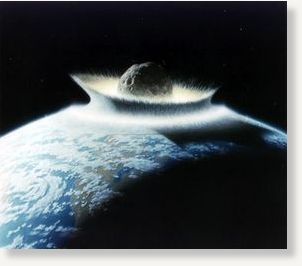
What if a giant asteroid crashed into the area near your home? Scientists have come up with an 'impact effects calculator' that lets you work out what would happen if an asteroid hits our planet.

Users can type in the size of their hypothetical asteroid, its speed, what it will hit, its angle of entry and even how far they are from the blast, the Daily Mail reported.

For those who cannot visualise how big their asteroid could be, there is even a helpful drop-down menu of pre-set sizes which include 'school bus', 'humpback whale', 'Empire State Building', all the way up to the ominous-sounding 'small planet'.

The website's algorithms then calculate what the effects of the asteroid's impact would be on the earth's axis, whether there would be a fireball - and what chance of surviving any bystanders would have.

It even tells you how far you should be from the impact to avoid being buried in the material thrown up from any crater that is left behind.

Calculator

For Kids: Tiny PC is Size of USB Stick, Offers 1080p, Costs $25 USD

Image
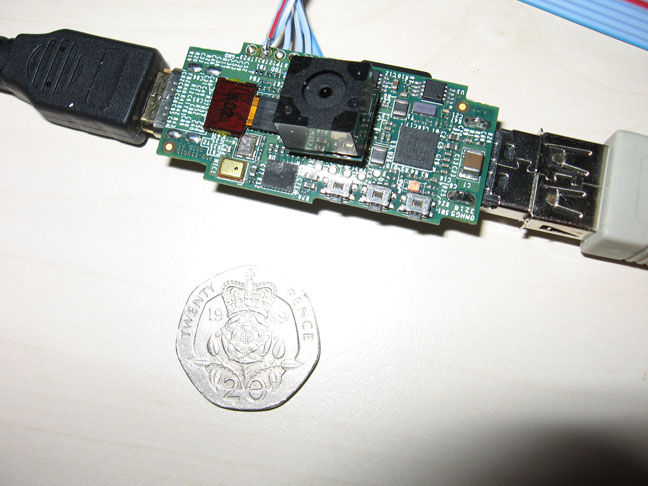
© Raspberry Pi FoundationA closeup of the marvelous mini-computer, that's the size of a USB stick -- and almost as cheap as one.
The One Laptop Per Child (OLPC) project was an ambitious and forward-looking plan. Unfortunately for all its ambition, it might have been a bit poorly executed. The initial target cost of $100 ballooned to $188 per laptop.

However, a software great in Britain has devised [video] what could be the salvation of OLPC and similar future programs -- a fully functional computer that's as small as a USB stick and costs only $25 USD (£15) to make.

The tiny computer -- dubbed "Raspberry Pi" -- looks somewhat like a standard USB memory stick, as a USB 2.0 connector juts out of it. But on the side it packs a SD/MMC/SDIO card reader to provide Flash storage (of course buying said storage might bump the price $10-$20). And on the side opposite to the USB port an HDMI connector sits, capable of piping out 1080p video to a monitor/TV.

The little board has smartphone-esque hardware, with a 700MHz ARM11 processor and 128 MB of SDRAM packed in. Specifics on the processor, including the manufacturer were not yet revealed. The GPU also was not revealed, but it is said to be capable of handling OpenGL ES 2.0 (hence the 1080p output).

Radar

NASA Announces Results of Epic Space-Time Experiment

Image
© National Aeronautics and Space AdministrationAn artist's concept of GP-B measuring the curved spacetime around Earth.
Einstein was right again. There is a space-time vortex around Earth, and its shape precisely matches the predictions of Einstein's theory of gravity.

Researchers confirmed these points at a press conference today at NASA headquarters where they announced the long-awaited results of Gravity Probe B (GP-B).

"The space-time around Earth appears to be distorted just as general relativity predicts," says Stanford University physicist Francis Everitt, principal investigator of the Gravity Probe B mission.

"This is an epic result," adds Clifford Will of Washington University in St. Louis. An expert in Einstein's theories, Will chairs an independent panel of the National Research Council set up by NASA in 1998 to monitor and review the results of Gravity Probe B. "One day," he predicts, "this will be written up in textbooks as one of the classic experiments in the history of physics."

Time and space, according to Einstein's theories of relativity, are woven together, forming a four-dimensional fabric called "space-time." The mass of Earth dimples this fabric, much like a heavy person sitting in the middle of a trampoline. Gravity, says Einstein, is simply the motion of objects following the curvaceous lines of the dimple.

UFO 2

US: Boeing Completes First Test Flight of Phantom Ray Stealth UAV

Image
© BoeingBoeing Phantom Ray
Boeing first unveiled a near-complete version of its Phantom Ray unmanned aerial vehicle (UAV) nearly a year ago. This week, the company announced that its Phantom Ray has completed its first flight.

The first flight lasted for 17 minutes during which the Phantom Ray reached a maximum altitude of 7,500 feet and a top speed of 178 knots.

The program is being completely funded by Boeing, and the first test flight's primary goals were to test fight characteristics of the aircraft. The company also notes that future mission parameters for the aircraft could include strike operations and autonomous in-air refueling.
Image
© Boeing

The Boeing Phantom Ray is 36 feet long and has a wingspan of 50 feet. The maximum takeoff weight for the aircraft is 36,500 pounds and is powered by a single GE F404-GE-102D engine.

"Autonomous, fighter-sized unmanned aircraft are real," said Phantom Ray program manager Craig Brown. "The UAS bar has been raised. Now I'm eager to see how high that bar will go."

Comment: Craig Brown: "The U[S]A[']S bar has been raised. Now I'm eager to see how high that bar will go."

One could argue the above, that word for word, the opposite can be said.


Question

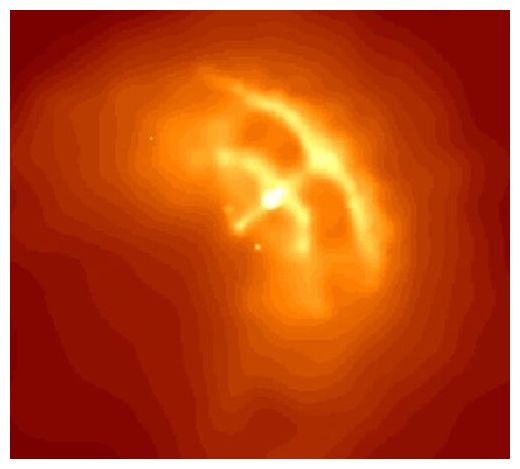
Mystery Cosmic Rays Zapping South Pole -- "From the Neutron Star of the Vela Supernova?"

Supernova
© The Daily Galaxy

Cosmic rays zapping the Earth over the South Pole appear to be coming from particular locations, rather than being distributed uniformly across the sky. Cosmic ray "hotspots" have also been seen in the northern skies too, yet there is no source close enough to produce this strange pattern.

"We don't know where they are coming from," says Stefan Westerhoff of the University of Wisconsin, who used the IceCube neutrino observatory at the South Pole with a team of colleagues to create the most comprehensive map to date of the arrival direction of cosmic rays in the southern skies.

IceCube detects muons produced by neutrinos striking ice, but it also detects muons created by cosmic rays hitting Earth's atmosphere. These cosmic ray muons can be used to figure out the direction of the original cosmic ray particle.

Between May 2009 and May 2010, IceCube has detected 32 billion cosmic-ray muons, with a median energy of about 20 teraelectronvolts (TeV). These muons revealed, with extremely high statistical significance, a southern sky with some regions of excess cosmic rays ("hotspots") and others with a deficit of cosmic rays ("cold" spots).

Over the past two years, a similar pattern has been seen over the northern skies by the Milagro observatory in Los Alamos, New Mexico, and the Tibet Air Shower array in Yangbajain.