Science & TechnologyS


Alarm Clock

NASA can give 30 minute warning before a killer solar storm hits Earth

solar flare
© NASA / SDOImage from the Solar Dynamics Observatory of a solar flare captured in 2014.
We've touched on the hazards of solar storms plenty of times in the past. We've also recently started reporting even more stories involving some sort of AI, especially in the last few months since it has come back to the forefront of many discussions around technologies. So it should come as no surprise that a team at NASA has been busily applying AI models to solar storm data to develop an early warning system that they think could give the planet about 30 minutes notice before a potentially devastating solar storm hits a particular area.

That lead time is thanks to the fact that light (i.e., what radio signals are made out of) can travel faster than the solar material ejected out of the Sun in the event of these solar storms. In some events, such as one that impacted Quebec around 35 years ago, they can shut off power for hours. More extreme events, such as the Carrington event that happened more than 150 years ago, can cause massive destruction of electrical and communication infrastructure if they were to happen today.


Comment: If the warning were to be issued today, it wouldn't make much sense to the average person who is very poorly informed as to the implications of such an event. An event which recent studies are revealing is more common than once believed, and there's data showing what would normally be considered relatively minor solar storms are having a much greater effect due to Earth's weakening magnetic field: Also check out SOTT radio's:


Snakes in Suits

Corporate psychopaths: Unmasking the silent threat to financial stability

corporate psychopath graphic financial crisis
© Neuroscience NewsThe term corporate psychopath refers to well-performing psychopaths who work in corporate settings
A new study highlights the need for corporations to identify and manage "corporate psychopaths" to prevent financial crises.

A new academic study examining the actions of Bernie Madoff, the New York banker behind the world's biggest Ponzi fraud, suggests companies do more to root out "corporate psychopaths" within their organizations to prevent financial ruin.

The study, published in the International Journal of Market Research, looked at Madoff's behavior throughout his life including during his business dealings, his trial, and his time in prison.

It warns that while people with some psychopathic personality traits tend to get ahead in corporate finance, their recklessness and greed can bring down organizations and even entire economies.

Author of the research Dr Clive R. Boddy, Associate Professor at Anglia Ruskin University (ARU), is a pioneer in the field of corporate psychopathy.

Cassiopaea

New supernova in the pinwheel galaxy

Astronomers are scrambling to photograph a new supernova in the Pinwheel Galaxy (M101). "This is best supernova in a decade," says Eliot Herman of Tucson, Arizona. "It has tripled in brightness in only 24 hours."
Supernova
© Eliot Herman of Tucson, Arizona
At this rate, it will soon rival or outshine the spiral galaxy's core.

Astronomer Yvette Cendes of Harvard's Center for Astrophysics says the supernova should continue to brighten for another day or so. "We think it will peak around magnitude +10, although it is hard to be certain."

Info

New volcano discovered in the Barents Sea

A unique new volcano has been discovered at 400 meters depth in the Barents Sea. The volcano erupts mud, fluids and gas from the planets interior, giving new insight to Earth science.
New Volcano
© UIT/AKMA3A new volcano has been discovered by scientists in the Barents Sea. The volcano rests inside a crater which is approximately 300m wide and 25m deep. The Borealis Mud Volcano, which is ca 7 meters in diameter and 2.5 meters high, continuously emits fluids rich in methane.
Scientists from UiT, The Arctic University of Norway, in partnership with REV Ocean, have discovered the second ever mud volcano found within Norwegian waters. This unusual geological phenomenon was discovered onboard the research vessel Kronprins Haakon with the piloted submersible vehicle ROV Aurora in the Southwestern Barents Sea at the outer part of Bjørnøyrenna (Outer Bear Island Trough). It lies at approximately 70 nautical miles south of Bear Island and at 400m depth.

"Seeing an underwater mud eruption in real time reminded me how "alive" our planet is," says Professor Giuliana Panieri, expedition leader and Principal Investigator of the AKMA project.

The volcano has been named The Borealis Mud Volcano.

Cassiopaea

Space missions set to improve solar storm forecasts using satellite data

satellite earth
© Unsplash/CC0 Public Domain
Satellites launched into outer space could send back improved warnings of dangerous solar storms thanks to a breakthrough in the way scientists use space weather measurements.

Experts from the University of Reading have found that using satellite data that is less reliable but is returned to Earth rapidly can be used to improve the accuracy of solar wind forecasts — which are harmful streams of charged particles sent from the sun — by nearly 50%.

Their research, published today in Space Weather, could pave the way for agencies, such as the Met Office, to provide more accurate forecasts for severe space weather, which can cause blackouts and harm human health.

Comment: Western governments have spent more resources on teaching the general public about gender dysphoria than space weather, the average person has no knowledge of it, never mind them 'preparing' for the time that a severe solar storm does strike. That said, it's notable that more funds are being ploughed into space weather matters because there are a variety of signs that show an uptick in activity and an increase in its severity is in process: And for more, check out SOTT radio's:


Fire

Yellowstone volcano super-eruptions appear to involve multiple explosive events

yellowstone super volcano
© Holger Leue/Getty ImagesThe Grand Prismatic Spring at Yellowstone National Park sits in the Yellowstone Caldera, which formed 631,000 years ago
The last super-eruption at Yellowstone volcano, which occurred 631,000 years ago, was not one huge explosion. Instead, new research suggests it was a series of eruptions or multiple vents spewing volcanic material in rapid succession.

According to the U.S. Geological Survey's (USGS) Yellowstone Volcano Observatory 2022 Annual Report (opens in new tab), published May 4, fieldwork over the past year has provided new geological evidence that "the formation of Yellowstone Caldera was much more complex than previously thought." A caldera is a large crater that forms after the collapse of a volcano following an eruption.

Yellowstone is one of the world's biggest volcanic systems. It sits above one of Earth's "hotspots" — areas in the mantle where hot plumes rise and form volcanoes on the crust above. It has produced three caldera-forming eruptions (opens in new tab) in the past 3 million years: the Huckleberry Ridge Tuff eruption, 2.1 million years ago; the Mesa Falls eruption, 1.3 million years ago; and the Lava Creek eruption, 631,000 years ago.

Rose

Plant cells shown to use mechanical cues to regenerate damaged tissues

plant cells regenerate mechanical cues
© Hiroyuki IidaMesophyll cells recognized their position by sensing a release from the pressure.
Plants have an impressive ability to regenerate damaged tissues, but how they do it is not fully understood. Now, researchers from Japan have discovered the mechanisms involved in this superpower.

In a recently published study in Nature Communications, a research group led by Osaka University has revealed that cells within plant leaves may be able to detect mechanical pressure — or the lack of it — to determine where they are and what type of cells they become in response to damage.

In land plants, the epidermis is an outer layer of tissue that forms a boundary between the external environment and the plants' internal tissues. It protects them from environmental stresses. Studying this cell type revealed that cell fate determination — how a cell develops into a final cell type — depends on a cell's location within the developing plant; for example, the epidermis only contains surface cells.

Butterfly

Butterfly 'tree of life' reveals an origin in North America

butterfly genetic dispersal
About 100 million years ago, a group of trendsetting moths started flying during the day rather than at night, taking advantage of nectar-rich flowers that had co-evolved with bees. This single event led to the evolution of all butterflies.

Scientists have known the precise timing of this event since 2019, when a large-scale analysis of DNA discounted the reigning hypothesis that pressure from bats prompted the evolution of butterflies after the extinction of dinosaurs.

Now, scientists have discovered where the first butterflies originated and which plants they relied on for food.

Before reaching these conclusions, researchers from dozens of countries had to create the world's largest butterfly tree of life, assembled with DNA from more than 2,000 species representing all butterfly families and 92% of genera. Using this framework as a guide, they traced the movements and feeding habits of butterflies through time in a four-dimensional puzzle that led back to North and Central America. According to their results, published today in the journal Nature Ecology and Evolution, this is where the first butterflies took flight.

For lead author Akito Kawahara, curator of lepidoptera at the Florida Museum of Natural History, the project was a long time coming.

Comment: More on these marvelous creatures:


Microscope 1

Researchers reveal newfound DNA repair mechanism

newfound dna repair mechanism
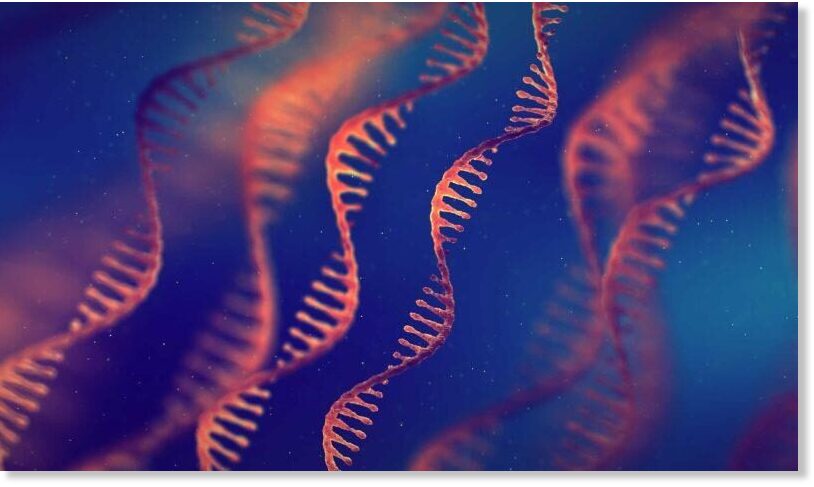
© Evgeny NudlerThe study enzyme RNAseHII repairs DNA by riding along on the enzyme that reads the genetic code, RNA polymerase, and cutting out (see scissors) misplaced code letters when it “sees” them in bacterial genetic material.
New study helps show how bacterial cells fix faulty DNA sections.

A new study adds to an emerging, radically new picture of how bacterial cells continually repair faulty sections of their DNA.

Published online May 16 in the journal Cell, the report describes the molecular mechanism behind a DNA repair pathway that counters the mistaken inclusion of a certain type of molecular building block, ribonucleotides, into genetic codes. Such mistakes are frequent in code-copying process in bacteria and other organisms.

Comment: See also:


HAL9000

OpenAI CEO warns of artificial intelligence's ability to persuade voters: It may 'cause significant harm to the world'

sam altman OpenAI
Sam Altman
On Tuesday, OpenAI CEO Sam Altman appeared before Congress to address the need for new rules to help guide the development of artificial intelligence as the sector continues to grow exponentially.

He suggested that while he was committed to working with the government to ensure that humans remain in control of the technology, there was a chance that things could get out of control.

As the Daily Mail reports, Altman warned that if left unattended, AI could "go quite wrong," adding that OpenAI sought to "work with the government to prevent that from happening." He admitted that his "worst fear" was that products such as OpenAI's ChatGPT would cause "significant harm to the world."

Comment: See also: