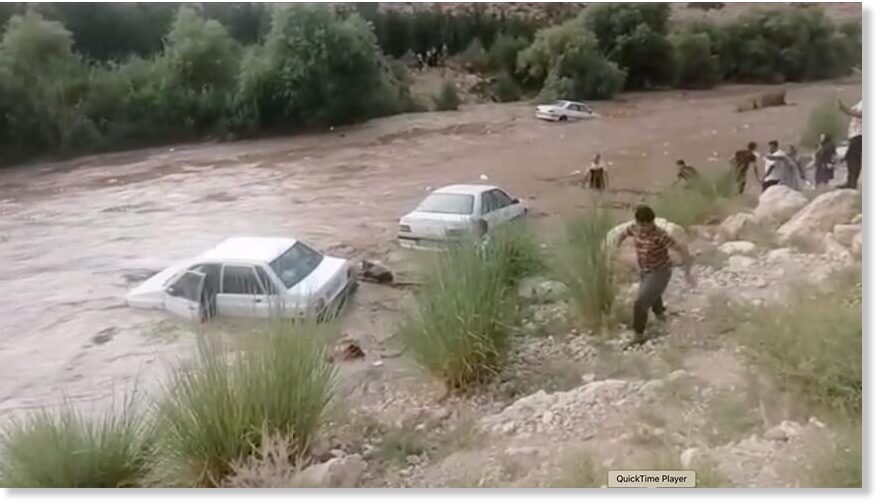
A handout picture provided by the Iranian Red Crescent shows members of a rescue team working at the site of a flash flood in the Emamzadeh Davoud northwestern part of Tehran, on July 28 2022.
At least six people were killed in floods near Tehran Thursday, most in a landslide that dumped mud four metres deep in a village west of the capital, emergency services said.
The flash flooding near the capital, in the foothills of the Alborz mountains, comes less than a week after floods in the normally arid south of Iran left 22 people dead.
Footage from the village of Emamzadeh Davoud posted on social media showed a teenager caked in mud clinging to a pole as a roaring spate of debris-filled water rushes past him. A wall is seen collapsing moments later.
Record rainfall caused severe flash flooding in parts of Missouri on 26 July 2022. The Mayor of St Louis has declared a state of emergency, while emergency services have rescued dozens of people from trapped vehicles and flooded homes. St Louis Fire Department reported at least one fatality.
National Weather Service (NWS) St. Louis reported a record 7.02 inches (178 mm) of rain in 5 hours early on 26 July 2022, surpassing the old record of 6.85″ (174 mm) recorded in August 1915.
"Historic rainfall event causing widespread flash flooding this morning," NWS St Louis said, adding that "rainfall totals varied immensely across the area. While some locations were shattering records, others saw only a trace of rain."
The city of St Peters in St. Charles County recorded 12.86 inches (326.6 mm) in 24 hours to 26 July 2022. St Louis saw 7.79 inches (198 mm), and Hannibal and Auxvasse both recorded 6.10 inches (155 mm) during the same period.
According to local media reports, heavy rain and flash flooding affected the capital Bangui and surrounding areas. The city recorded 183 mm of rain in 48 hours to 23 July 2022.
At least 3 children were reported missing after being swept away on the floods in two separate incidents. Six people were taken to hospital to be treated for injuries sustained during the severe weather. Around 250 homes collapsed and many more were damaged or flooded, leaving thousands homeless. Some of those left homeless took refuge in religious buildings or schools. There were no reports that the Ubangi River had broken its banks.
Severe weather also affected other areas of the country. In the prefecture of Lobaye, situated south of the capital, 9 people from the same family died in the village of Bouchia due to falling trees. Further north in Haute-Kotto prefecture, heavy rain caused the walls of a house to collapse in Bria, leaving one person dead and 3 injured.
Flash floods sweep cars in Sochi, a Black Sea city.
In Southern Russia, torrential rains are still wreaking havoc. They have caused flash floods which disrupt lives and cause significant damage. Officials in the city that hosted the Winter Olympics activated an emergency alarm system Saturday night. They advised residents to take shelter inside, but also be available for evacuations.
Around 11pm, emergency sirens could be heard in Sochi as storms continued to batter the city for the second consecutive day. This caused more chaos and flooding.
Heavy seasonal rains drove flash floods through Yemen and left at least nine people dead, official media reported Sunday.
The casualties were reported in the capital of Sanaa and the southwestern province of Dhamar, where it began raining late last week, the Houthi-run Sanaa Radio said.
Both Sanaa and Dhamar are held by the Iranian-backed Houthi rebels who have been warring since 2014 with the internationally recognized government which is aided by a Saudi-led coalition.
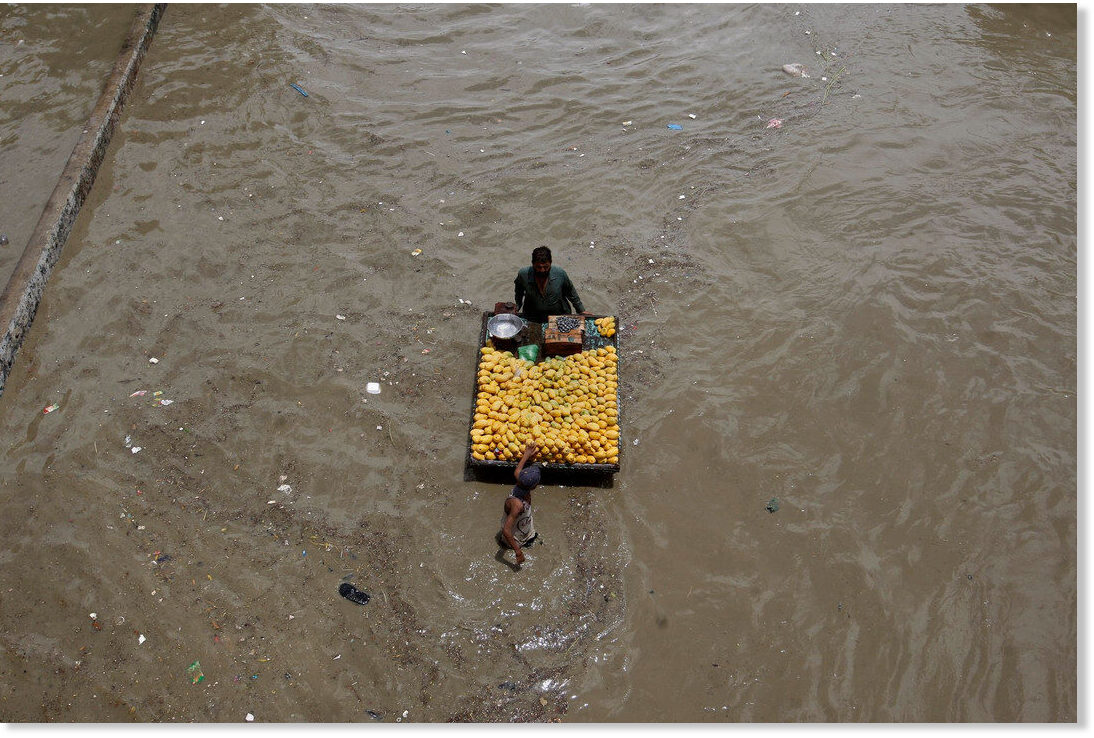
The death toll from more than five weeks of monsoon rains and flash flooding across Pakistan has reached 312, with those killed including 114 children, according to authorities.
Since mid-June, the deluge has swollen rivers and damaged highways and 44 bridges, disrupting traffic.
The National Disaster Management Authority reported that almost 6,500 homes had been fully destroyed or partially damaged.
In some cities, residents have abandoned their cars on submerged roads to walk through waist-high water, while others have arranged for boats to move them to safer places.
Flooding in southern Iran has killed at least 21 people and left others missing following heavy rainfall in the largely arid country, state media reported on Saturday.
"Twenty-one people were killed and two are still missing," in the floods that affected several towns in and around Estahban county in the southern province of Fars, Hossein Darvishi, provincial head of the Red Crescent Society, was quoted as saying by state TV.
Videos posted on local media and social media showed cars caught in the rising waters of the Roodball river and carried away while parents tried to rescue their children from the vehicles.
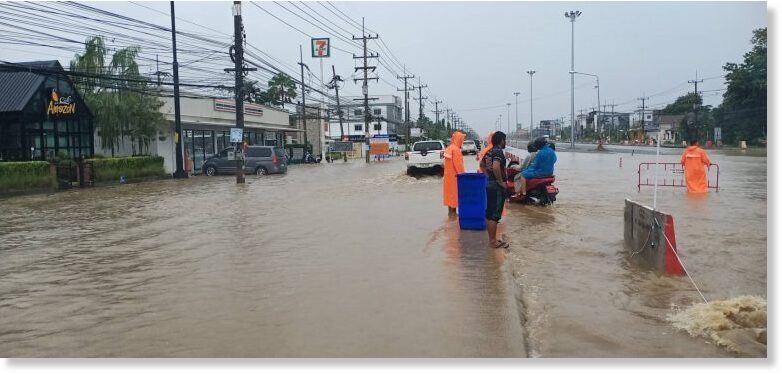
Authorities in Thailand report that heavy rainfall in the country since 17 July has caused flooding in at least 7 provinces, plus the country's capital Bangkok.
Flooding struck in Nakhon Ratchasima Province, on 17 July after heavy rain caused the Nong Kradon Reservoir to overflow, inundating areas of Phimai District. Around 200 residents were affected.
Thailand's Department of Disaster Prevention and Mitigation (DDPM) reported flooding in Khok Yai, Tha Li District, Loei Province on 20 July 2022. Around 25 homes were flooded.
Also on 20 July floods struck in areas of Bangkok, causing widespread traffic disruption. The Bangkok Metropolitan Administration (BMA) reported flooding in 26 locations across the city as of late 20 July. No injuries or fatalities were reported.
According to DDPM, heavy rain and flooding also affected the provinces of Khon Kaen, Rayong, Chon Buri, Samut Prakan and Nonthaburi from 20 July. A total of 190 homes were damaged by floods in Wang Chan District, Rayong. One fatality was reported in Chon Buri.
Carlo Migliore 3bmeteo-com Wed, 20 Jul 2022 12:40 UTC
The downside of the intense heat wave that is affecting Europe.
The intense heat wave that has affected and is still affecting a large part of Central Western and Northern Europe has had opposite consequences on the other side of the continent.
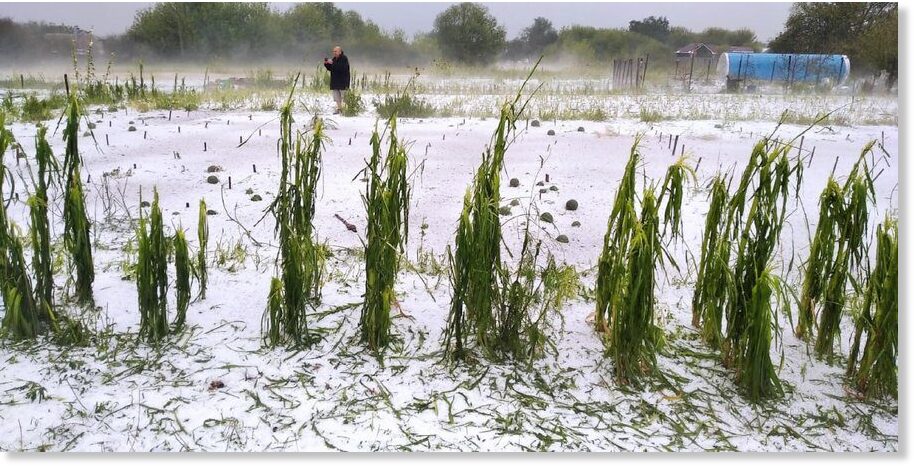
The scorching air that from the African latitudes has pushed up to Scandinavia has kept active a flow of colder currents on the far east of Europe and in particular on Russia where for days the temperatures have overall been below average, albeit slightly. But cooler-than-normal weather was not the only noteworthy event, where these cold currents came in contrast to the heat. One such event hitthe city of Lipetsk in European Russia, literally covered by hail that fell from the sky with the air temperature dropping during the event up to 9 ° C.
A similar situation affected the city of Olkovatka, also in southern Russia, while the city of Nizhny Novgorod was hit by a violent flash flood.