Animals
S


Arrow Down

In A Last 'Stronghold' For Endangered Chimpanzees, Survey Finds Drastic Decline

In a population survey of West African chimpanzees living in Côte d'Ivoire, researchers estimate that this endangered subspecies has dropped in numbers by a whopping 90 percent since the last survey was conducted 18 years ago. The few remaining chimpanzees are now highly fragmented, with only one viable population living in Taï National Park, according to a report in the October 14th issue of Current Biology, a Cell Press publication.

This alarming decline in a country that had been considered one of the final strongholds for West African chimps suggests that their status should be raised to critically endangered, said Geneviève Campbell of the Max Planck Institute for Evolutionary Anthropology.

The booming human population in Côte d'Ivoire is probably responsible for the chimpanzees' demise.

Bizarro Earth

Canada: Mysterious green algae blankets Hamilton Harbour

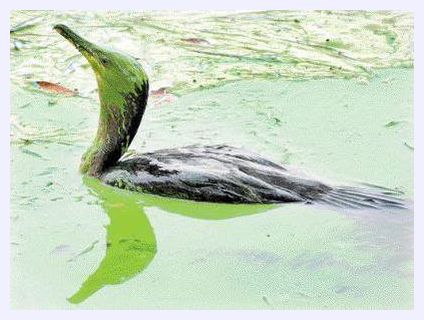
Algae bird
A bird is shown covered by the mysterious green algae that has blanketed parts of Hamilton Harbour.
A green slime has hit Hamilton Harbour, coating wildlife and causing a stink.

The inlets near Macassa Bay Yacht Club and Bayfront Park have been blanketed with pungent-smelling algae, though neither the city's public health department nor local boaters know if it's dangerous.

Fish

Future Looks Bleak For One Of World's Smallest Seal Species

One of the smallest seals - the Caspian - has joined a growing list of mammal species in danger of extinction.
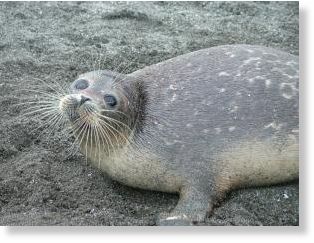
Caspian seal
© Simon Goodman, University of Leeds/Caspian International Seal SurveyCaspian seal (Pusa caspica).

Scientists from the University of Leeds together with international partners have documented the disastrous decline of the seal - a species found only in the land-locked waters of the Caspian Sea - in a series of surveys which reveal a 90 per cent drop in numbers in the last 100 years.

The research findings have prompted the International Union for Conservation of Nature (IUCN) to move the Caspian seal from the Vulnerable category to Endangered on its official IUCN Red List of Threatened Species, announced today in Barcelona [06 October 2008].

Dr Simon Goodman of Leeds' Faculty of Biological Sciences says: "Each female has just one pup a year, so with numbers at such a low levels, every fertile female that dies is a nail in the coffin of the species. We're hoping that the seal's change in Red List status will help raise awareness about their plight, and the many important conservation issues facing the whole Caspian ecosystem."

Commercial hunting, habitat degradation, disease, pollution and drowning in fishing nets have caused the population of the seal collapse from more than 1 million at the start of the 20th century to around 100,000 today.

Butterfly

A quarter of the world's mammals risk extinction

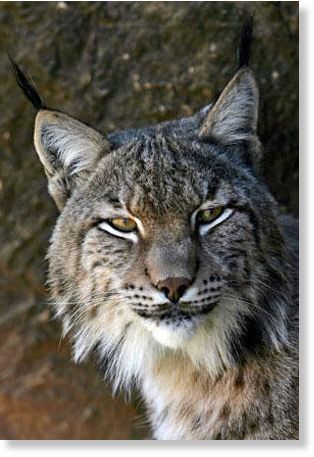
Image
© Reuters
The Iberian lynx has seen numbers drop to between just 84 and 143 adults
A quarter of the world's mammals are at risk of extinction, the latest global analysis of threatened species revealed today.

At least 1,141 of the 5,487 mammals on Earth are under threat, largely as a result of hunting and the destruction of their habitat by humans, according to the International Union for the Conservation of Nature (IUCN).

Frog

US: Central Florida Neighborhoods Invaded By Frogs

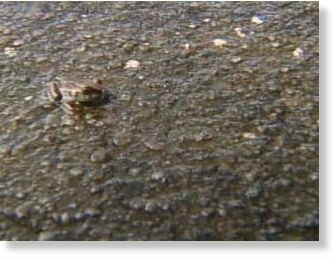
Frog
Standing water everywhere and hot weather create the perfect situation to incubate eggs. Central Florida is being invaded, not by mosquitoes, but by frogs. The tiny frogs are too daunting -- until you multiple them by about 1 million.

"Last night there was 11 big ones on my house, jumping and hitting me in the head and stuff like that," Cindy Trumpolt said.

"I told them we should get on our knees and pray, because I think it is a plague. I do," one resident said.

Many residents are worried the frogs will get into their home or car.

Bizarro Earth

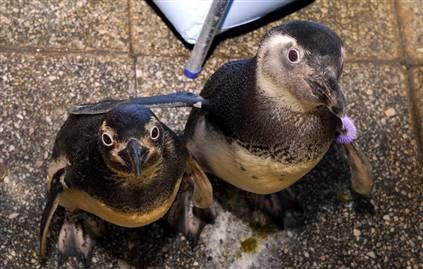
In warm Brazil, a perplexing inrush of penguins

penguins
© Washington Post
Not everyone in Rio de Janeiro has taken to the penguins quite the way Cecilia Breves has, but even for her, there is a learning curve.

Bizarro Earth

Marine 'dead zones' leave crabs gasping

It's not easy being a fish these days, but it could be even harder being a crab. Research into marine "dead zones" around the world suggests that crustaceans are the first to gasp for air when oxygen levels get low.

The findings, based on a review of 872 published studies of 206 ocean-floor dwelling species, also suggest that a much greater area than we thought is dangerously low on oxygen.

In marine dead zones - also known as hypoxic zones - the amount of dissolved oxygen in the water becomes too low for organisms to survive.

They are usually caused by synthetic fertilisers, which are carried from fields, down rivers, and out to sea, where algal blooms gorge on the extra nutrients. When these phytoplankton die, they fall to the bottom where they are eaten by bacteria that consume all the local oxygen in the process.

Marine biologists generally hold that any area that has less than 2 milligrams of dissolved oxygen per litre of seawater is hypoxic - "dead". The threshold was set by a study in 1983 in the Gulf of Mexico, when marine biologists found that fish and shrimp had deserted bottom waters that had 2 mg/l of oxygen or less.

Bizarro Earth

Pollution slowly killing world's coral reefs

Cancun, Mexico - Dainty blue fish dart around coral shaped like moose antlers near the Mexican resort of Cancun, but sickly brown spots are appearing where pollution threatens one of the world's largest reefs.

Parts of the reef, nestled in turquoise waters, have died and algae -- which feed on sewage residues flowing out of the fast-growing resort city -- has taken over.

Coral reefs like Chitales, near the northern tip of a Caribbean reef chain stretching from Mexico to Honduras, are dying around the world as people and cities put more stress on the environment.

Climate change alone could trigger a global coral die-off by 2100 because carbon emissions warm oceans and make them more acidic, according to a study published in December.

But local environmental problems like sewage, farm runoff and overfishing could kill off much of the world's reefs decades before global warming does, said Roberto Iglesias, a biologist from UNAM university's marine sciences station near Cancun.

"The net effect of pollution is as bad or maybe worse than the effects of global warming," said Iglesias, a co-author of the study in the journal Science on how climate change affects reefs.

Human waste like that from Cancun's hotels and night spots aggravates threats to coral worldwide like overzealous fishing which hurts stocks of fish that eat reef-damaging algae.

Info

Impact Of Beetle Kill On Rocky Mountain Weather, Air Quality

Mountain pine beetles appear to be doing more than killing large swaths of forests in the Rocky Mountains. Scientists suspect they are also altering local weather patterns and air quality.

Image
©Carlye Calvin, UCAR
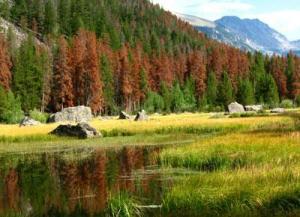
Mountain pine beetles have killed large numbers of trees in the Rockies.

A new international field project, led by scientists at the National Center for Atmospheric Research (NCAR), is exploring how trees and other vegetation influence rainfall, temperatures, smog, and other aspects of the atmosphere. Plants take in and emit chemicals that affect the air, and they also absorb varying amounts of incoming heat from the Sun. When portions of a forest die, the local atmosphere can change in subtle ways.

"Forests help control the atmosphere, and there's a big difference between the impacts of a living forest and a dead forest," says NCAR scientist Alex Guenther, a principal investigator on the project. "With a dead forest, we may get different rainfall patterns, for example."

Info

Feds ask to put wolves back on endangered list

Billings, MT - Federal wildlife officials have asked a judge to put gray wolves in the Northern Rockies back on the endangered species list - a sharp reversal from the government's prior contention that the animals were thriving.

Attorneys for the Fish and Wildlife Service asked U.S. District Judge Donald Molloy in Missoula to vacate the agency's February finding that more than 1,400 wolves in the region no longer needed federal protection.

The government's request Monday follows a July injunction in which Molloy had blocked plans for public wolf hunts this fall in Montana, Wyoming and Idaho pending resolution of a lawsuit by environmentalists.

"What we want to do is look at this more thoroughly," Fish and Wildlife spokeswoman Sharon Rose said. "We definitely have a lot of wolves out there, but we need to address some of (Molloy's) concerns in a way that people feel comfortable with."

At issue is whether a decade-long wolf restoration program has reversed the near-extermination of wolves, or if - as environmentalists claim - their long-term survival remains in doubt due to proposed hunting.