Animals
S


Red Flag

Acorns Gone; Nature Does What GOP Fails to Do

An article in today's Washington Post, Acorn Watchers Wonder What Happened to Crop reports that in many parts of America, the acorns are gone and squirrells are acting as though they are starving. The article starts,
The idea seemed too crazy to Rod Simmons, a measured, careful field botanist. Naturalists in Arlington County couldn't find any acorns. None. No hickory nuts, either. Then he went out to look for himself. He came up with nothing. Nothing crunched underfoot. Nothing hit him on the head.

Then calls started coming in about crazy squirrels. Starving, skinny squirrels eating garbage, inhaling bird feed, greedily demolishing pumpkins. Squirrels boldly scampering into the road. And a lot more calls about squirrel roadkill.

Alarm Clock

Update: 150 whales die in stranding off Australian coast

SYDNEY - At least 150 whales have died in a mass stranding off Tasmania's west coast, Australian authorities said on Sunday, despite the efforts of rescuers who managed to shepherd a small number back to the ocean.

The state government said the number of long-finned pilot whales that had perished had climbed to 150 after a body count on Sunday, almost double the earlier estimate of 80.

Frog

Sudden cold weather endangers sea turtles; many being rescued

Jacksonville - Recent cold weather caught sea turtles off-guard before they could reach warmer Gulf Stream waters, and that has led to nearly 25 rescues along the North Carolina coast in the past week.

Karen Beasley Sea Turtle Rescue and Rehabilitation Center on Topsail Island has rescued numerous cold-stunned sea turtles since Thursday, said Jean Beasley, the hospital's executive director.

"We're overwhelmed, this has never happened before -- at least not since the turtle hospital has been in existence," Beasley said. "We had 11 turtles come in last Thursday, 12 on Saturday and six (Sunday). We're frantically trying to make more space."

Alarm Clock

80 whales die in stranding in Australia

HOBART - A group of about 80 whales stranded on a remote coastline in southern Australia were battered to death on rocks before rescuers could reach them.

Officials from Tasmania state's Parks and Wildlife Service rushed Sunday in four-wheel-drive vehicles to the remote site at Sandy Cape after the long-finned pilot whales were spotted by air a day earlier.

Life Preserver

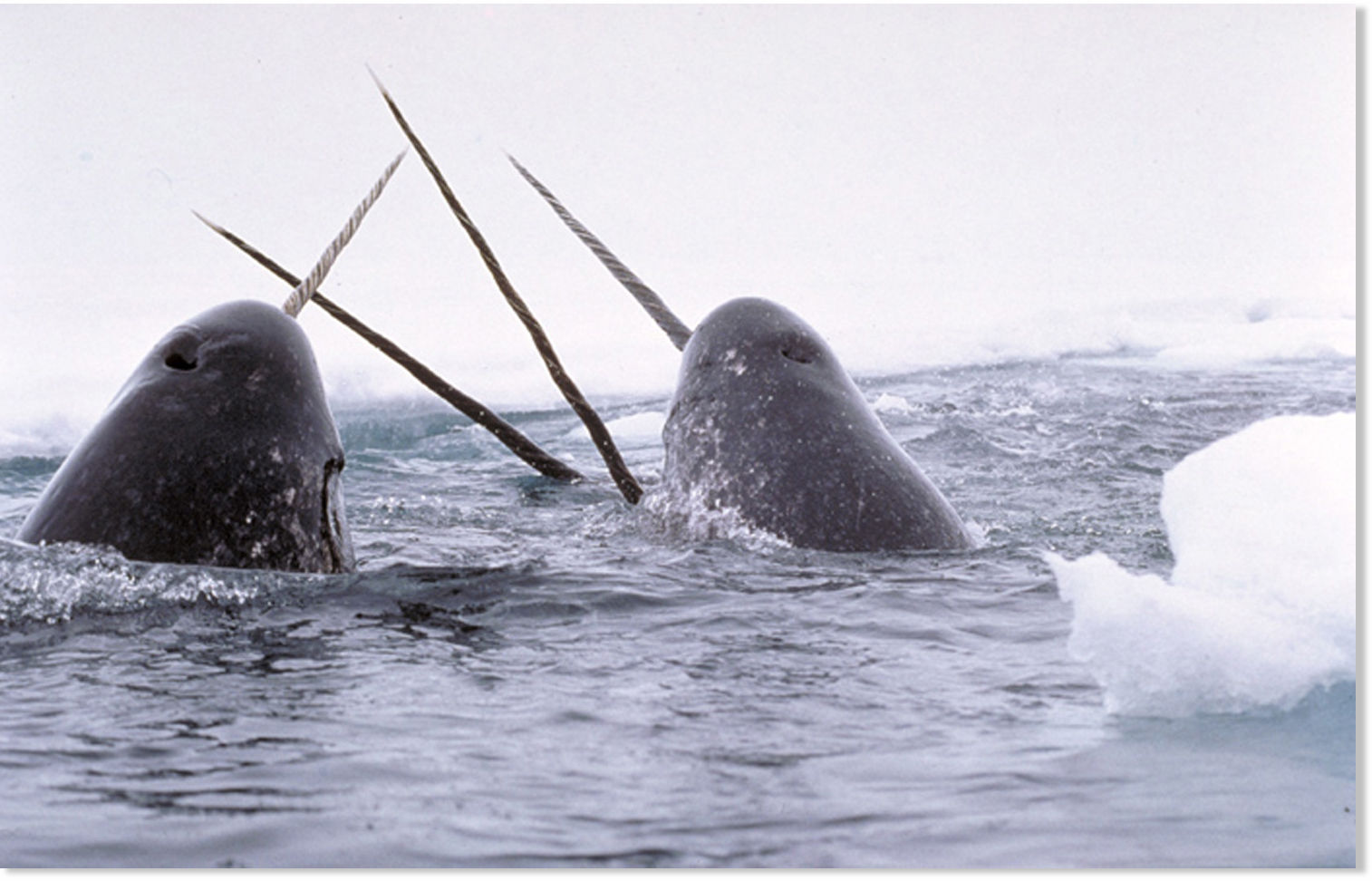
500 trapped narwhals culled in Canada

Cetaceans have a bad habit of stranding themselves. Last week a large pod of 65 pilot whales stranded themselves on a beach in Tasmania. Only 11 survived.

When a similar mass stranding occured in 2003, a predator was suspected of having scared the animals onto the beach. Military use of sonar has also been linked - and cleared of causing - whale strandings.
Narwhals
© UnknownNarwhals breach.

Now there's another disaster, on a bigger scale: a huge group of about 500 narwhals have trapped themselves in sea ice in Nunavut, in Arctic Canada. The trapped animals are being culled to prevent a more painful death by starvation or suffocation as the ice closes in around them.

Info

Long-lost 'Furby-like' Primate Discovered In Indonesia

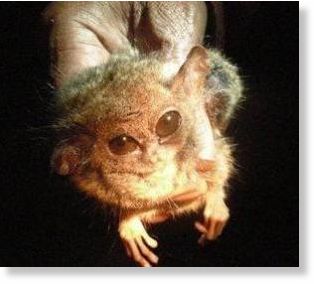
A team led by a Texas A&M University anthropologist has discovered a group of primates not seen alive in 85 years. The pygmy tarsiers, furry Furby-like, or gremlin-looking, creatures about the size of a small mouse and weighing less than two ounces, have not been observed since they were last collected for a museum in 1921.

Several scientists believed they were extinct until two Indonesian scientists trapping rats in the highlands of Sulawesi accidentally trapped and killed a pygmy tarsier in 2000.
pygmy tarsier
© Texas A&M UniversityA pygmy tarsier, furry Furby/gremlin-looking creatures about the size of a small mouse and weighing less than 2 ounces, being held in one hand.

Sharon Gursky-Doyen, working with one of her graduate students, Nanda Grow, and a team of locals trapped three of the nocturnal creatures in Indonesia in late August. The pygmy tarsiers possess fingers with claws instead of nails, which Gursky-Doyen says is a distinguishing feature of this species, and distinguishes them from nearly all other primates which have nails and not claws. The claws may be an adaptation to the mossy environment, she believes.

Fish

Quarter of Atlantic sharks and rays face extinction

New figures show 26% of all sharks, rays and related species in the north-east Atlantic are threatened with extinction

More than a quarter of sharks and rays in the north-east Atlantic face extinction from overfishing, conservationists warned today.

A "red list" report from the International Union for Conservation of Nature (IUCN) found that 26% of all sharks, rays and related species in the regional waters are threatened with extinction. Seven per cent are classed as critically endangered, while a fifth are regarded as "near-threatened".

The total number of at-risk species may well be higher because scientists lack of sufficient information to assess the populations of more than a quarter (27%) of them, the report adds. Many are slow-breeding fish that are especially vulnerable to fisheries.

Fish

Overfishing Threatens European Bluefin Tuna

Bluefin tuna disappeared from Danish waters in the 1960s. Now the species could become depleted throughout the northeast Atlantic and Mediterranean, according to analyses by the Technical University of Denmark (DTU Aqua) and University of New Hampshire. The species is highly valued as sushi.

Bluefin tuna is a treasured delicacy. A kilo of its much sought after meat can bring in prices reaching 130 Euros at fish auctions. The species in the Mediterranean Sea and northeast Atlantic is caught by fishermen from many countries, particularly France, Spain and Italy.

Info

Mysterious Bat Disease Decimates Colonies: Newly Identified Fungus Implicated In White-nose Syndrome

A previously undescribed, cold-loving fungus has been linked to white-nose syndrome, a condition associated with the deaths of over 100,000 hibernating bats in the northeastern United States. The findings are published in this week's issue of Science.

The probable cause of these bat deaths has puzzled researchers and resource managers urgently trying to understand why the bats were dying in such unprecedented numbers. Since the winter of 2006-07, bat declines at many surveyed hibernation caves exceeded 75 percent.
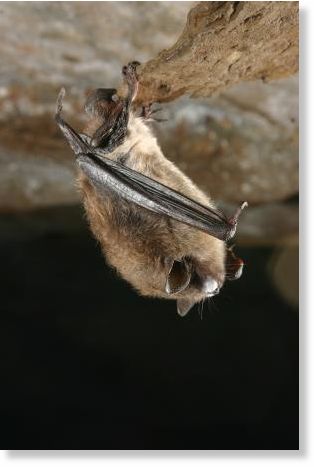
brown bat
© Al Hicks, NY DECLittle brown bat with fungus on muzzle.

The fungus - a white, powdery-looking organism - is commonly found on the muzzles, ears and wings of afflicted dead and dying bats, though researchers have not yet determined that it is the only factor causing bats to die. Most of the bats are also emaciated, and some of them leave their hibernacula - winter caves where they hibernate - to seek food that they will not find in winter.

USGS microbiologist and lead author David Blehert isolated the fungus in April 2008, and identified it as a member of the group Geomyces. The research was conducted by U.S. Geological Survey scientists in collaboration with the New York State Department of Environmental Conservation, the New York State Department of Health, and others.

Fish

Increased bacterial infection outbreaks in California sea lions in Monterey Bay

Researchers are trying to understand why there is a surge in the number of California sea lions in Monterey Bay stricken by a potentially deadly bacterial infection.

This year researchers report more than 100 animals coming to the center with leptospirosis - a bacterial disease that affects the kidneys and can be deadly if animals are left untreated.

"And we are still in the midst of our year," says Dr. Jeffrey Boehm, executive director at the Marine Mammal Center. "When we tally the numbers up, we're going to see another year like one of those surge years."