Animals
S


Fish

Mercury Pollution Causes Immune Damage To Harbor Seals

Methylmercury (MeHg), the predominant form of mercury found in the blood of marine mammals and fish-eating communities, could be more damaging to seals than has previously been thought. New research shows that MeHg harms T-lymphocytes, key cells in a seal's immune system. Similar results were also found for human lymphocytes.
Harbor seal swimming
© iStockphoto/Andy RaatzHarbor seal swimming.

Mercury exposure is known to occur as a result of man-made pollution and natural events such as volcanic eruptions.

According to the lead author of this study, Krishna Das of the Université de Liège, Belgium, "Mercury is known to bioaccumulate and to magnify in marine mammals, which is a cause of great concern in terms of their general health. In particular, the immune system is known to be susceptible to long-term mercury exposure". In order to determine the scale of this problem, the authors carried out analysis of the blood mercury levels of harbour seals caught in the North Sea and tested the effects of MeHg in lab experiments.

Alarm Clock

Beetle invasion threatens New England trees

WORCESTER, Mass. - A wood-devouring beetle has gained a foothold in New England, and authorities plan to cut down large numbers of infested trees and grind them up to stop the pest from spreading to the region's celebrated forests and ravaging the timber, tourism and maple-syrup industries.

Bizarro Earth

Earth In Midst Of Sixth Mass Extinction: 50% Of All Species Disappearing

The Earth is in the midst of the sixth mass extinction of both plants and animals, with nearly 50 percent of all species disappearing, scientists say.
Buttercups
© iStockphoto/Mark GoddardButtercups. Losing the buttercup, where it occurs in grasslands, would have a much bigger impact on the system than losing a daisy or a sunflower, for example.

Because of the current crisis, biologists at UC Santa Barbara are working day and night to determine which species must be saved. Their international study of grassland ecosystems, with flowering plants, is published in the Proceedings of the National Academy of Sciences.

"The current extinction event is due to human activity, paving the planet, creating pollution, many of the things that we are doing today," said co-author Bradley J. Cardinale, assistant professor of ecology, evolution and marine biology (EEMB) at UC Santa Barbara. "The Earth might well lose half of its species in our lifetime. We want to know which ones deserve the highest priority for conservation."

Fish

US: Billions of fish, fish eggs die in power plants

BUCHANAN, New York - For a newly hatched striped bass in the Hudson River, a clutch of trout eggs in Lake Michigan or a baby salmon in San Francisco Bay, drifting a little too close to a power plant can mean a quick and turbulent death.

Bizarro Earth

US: About 100 horses die from mystery illness

Ocala, Florida - State veterinary officials say a mystery illness has killed nearly 100 horses at one farm in central Florida.

As many as 100 horses have died in just over a week in Marion County, an area known for its hundreds of horse farms. The cause of the illness is unknown.

The owners of the farm think contaminated hay wreaked havoc on the animals' nervous systems.

Fish

Australia: Fish kill remains a mystery

Authorities are yet to establish the cause of a fish kill in the Swan River.

More than 70 fish were found floating in the river near the Barrack Street Jetty yesterday.

Lake Monger is being examined as a potential source, as well as waste water from Perth work sites.

Both discharge water into a drainage system which leads to the river outlet near Barrack Street Jetty where the fish were discovered yesterday.

Bizarro Earth

Perth seagull deaths remain a mystery

The mysterious deaths of 300 seagulls that dropped from the sky in July in two beachside suburbs south of Perth may never be explained.

The state's Department of Environment and Conservation confirmed yesterday that two months of exhaustive investigations, including dozens of autopsies, interstate forensic testing and pollution inspections at nearby businesses, had failed to identify a cause.

The deaths closed the popular Woodman Point beach for more than two weeks amid fears of a threat to human health.

Almost 150 seagulls were found dead on the beach on July 21. The death toll reached 230 after three days and 282 a week later. No other bird species were affected.

Attention

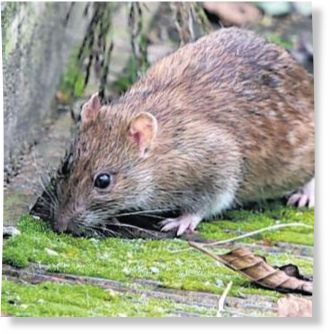
England: Mutant rats plague Hampshire

Rat
© UnknownRat
Mutant super-rats immune to normal poisoning techniques are swarming Hampshire, according to one of Britain's leading rodent experts.

The revelation comes as a survey of councils reveals the number of rats infesting Hampshire has skyrocketed in recent years.

The pesky rodents are also proving a costly menace, with spending soaring by more than £40,000 in one borough.

DNA tests on rats collected across the county confirmed the presence of a mutant gene that helps rodents develop the resistance.

Health

US: Weld County prairie dogs test positive for plague

Colorado - Prairie dogs found dead south of Briggsdale have tested positive for plague, the Weld County Department of Public Health and Environment confirmed.

The highly infectious bacterial disease is transmitted primarily by flea bites. Although human cases are rare, the illness can be life-threatening.

This year, 22 positive tests for plague have been confirmed in animals in the state.

Fish

Beluga whales in Alaska listed as endangered

Anchorage - The depleted population of beluga whales that swim off the coast of Alaska's largest city was listed as endangered on Friday by the federal government.
Yulka, a beluga whale
© REUTERS/Heino KalisYulka, a beluga whale, swims at the Oceanografic in Valencia August 11, 2006.


The National Oceanic and Atmospheric Administration said it has determined that belugas in Cook Inlet, the channel that flows from Anchorage to the Gulf of Alaska, are at risk of extinction and deserving of strict protections under the Endangered Species Act.

The population, which fell to a low of 278 in 2005 from 653 in 1994, has yet to rebound from a period of over-harvesting by the region's Native hunters, officials said.

Hunting of Cook Inlet belugas largely ceased in 1999, but the population continues to struggle, officials said.