Animals
S


Info

Recovery Efforts Not Enough For Critically Endangered Asian Vulture

Captive breeding colonies of a critically endangered vulture, whose numbers in the wild have dwindled from tens of millions to a few thousand, are too small to protect the species from extinction, a University of Michigan analysis shows.

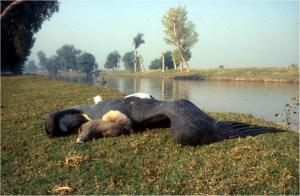
endangered vulture
©Munir Virani
Captive breeding colonies of a critically endangered vulture are too small to protect the species from extinction.

Adding wild birds to the captive colonies, located in Pakistan and India, is crucial, but political and logistical barriers are hampering efforts, says lead author Jeff A. Johnson.

The study was published online August 15 in the journal Biological Conservation.

With a seven-foot wingspan, the oriental white-backed vulture (Gyps bengalensis) was an awesome presence in south Asia until the mid-1990s, when populations began to collapse. At first the cause was unclear, but researchers eventually zeroed in on an anti-inflammatory drug, diclofenac, that is used to alleviate arthritis-like symptoms in livestock but is toxic to vultures. Vultures that feed on carcasses of animals treated with the drug die of kidney failure within a day or two after eating the tainted meat. And although India, Nepal and Pakistan outlawed its manufacture in 2006, diclofenac is still available, and birds are still dying.

Better Earth

Parrots wreak havoc at New Zealand bird sanctuary

Wellington, New Zealand -- A gang of unruly teenage bush parrots have wrought havoc at a bird sanctuary in New Zealand by using their powerful beaks to destroy nesting boxes.

Image
©AP/Kakori Sanctuary
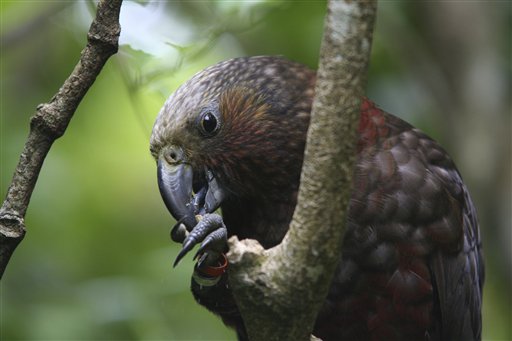
Teenage native Kaka parrot

The native Kaka parrots - juvenile birds that haven't reached sexual maturity - have torn off nesting box doors and vandalized the bird homes, sanctuary conservation officer Matt Robertson said Friday.

Twenty-four of 44 new Kaka nest boxes built over the winter have been ripped apart, he said, adding that the birds then gouged out chunks of wood with their strong beaks.

"It may be that the challenge of taking doors off nest boxes is the Kaka equivalent to the Rubik's Cube," said Robertson. "As far as I'm aware, this extent of destruction has never been observed."

Kaka are acutely threatened by loss of habitat, competition from introduced species, and predators like stoats, ferrets and wild cats. They disappeared from the capital Wellington in the late 19th century when forests were cleared for settlement.

After an absence of more than a century, Kaka parrots were reintroduced to the Karori Sanctuary in Wellington in 2002 with six captive-raised birds. Since then, sanctuary staff have counted more than 100 juvenile parrots.

The birds are highly intelligent and extremely resourceful, Robertson said.

Arrow Down

Thousands of Australia's koalas felled by land-clearing

Sydney - Australian koalas are dying by the thousands as a result of land clearing in the country's northeast, while millions of birds and reptiles are also perishing, conservation group World Wildlife Fund (WWF) said Sunday.

The environmental body warned that unless urgent action was taken to stop trees being felled, some species would be pushed to the brink of extinction.

In an annual statement, Queensland state last week revealed that 375,000 hectares of bush were cleared in 2005-06 -- a figure WWF said would have resulted in the deaths of two million mammals.

Among those that perished as a result of loss of habitat would have been 9,000 tree-hugging koalas, WWF Australia spokesman Nick Heath said.

"It's a horrifying figure," Heath told AFP. "Two million mammals and that's all sorts of kangaroos, wallabies. We couldn't come to an exact figure on the birds, but I would say it would be over five million."

Alarm Clock

Mysterious dolphin die-off worries scientists

Since mid-May, 46 bottlenose dolphins have stranded themselves and died on beaches throughout the Indian River Lagoon, alarming scientists who say that's six more dolphins than they usually find in an entire year.

Three of the dead dolphins have been found in Mosquito Lagoon, on the southern end of Volusia County.

Info

Unexpected Large Monkey Population Discovered In Cambodia: Tens Of Thousands Of Threatened Primates

A Wildlife Conservation Society report reveals surprisingly large populations of two globally threatened primates in a protected area in Cambodia.

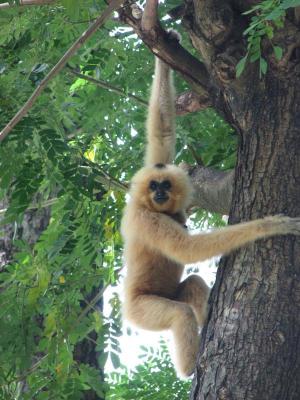
Yellow-cheeked crested gibbon
©Matt Hunt
Yellow-cheeked crested gibbon.

The report counted 42,000 black-shanked douc langurs along with 2,500 yellow-cheeked crested gibbons in Cambodia's Seima Biodiversity Conservation Area, an estimate that represents the largest known populations for both species in the world.

WCS scientists conducted the surveys with the Royal Government of Cambodia's Ministry of Agriculture, Forestry and Fisheries across an area of 300 square miles (789 square kilometers) within a wider landscape of 1,150 square miles (3,000 square kilometers), which is about the size of Yosemite National Park. The scientists believe total populations within the wider landscape may be considerably greater.

Attention

Why Wind Turbines Can Mean Death For Bats

Power-generating wind turbines have long been recognized as a potentially life-threatening hazard for birds. But at most wind facilities, bats actually die in much greater numbers. Now, researchers reporting in Current Biology, a Cell Press journal, on August 26th think they know why.

wind turbines
©Grady Semmens, University of Calgary
The majority of bats killed at wind turbines are the migratory bats that roost in trees, according to PhD candidate and project leader Erin Baerwald.

Ninety percent of the bats they examined after death showed signs of internal hemorrhaging consistent with trauma from the sudden drop in air pressure (a condition known as barotrauma) at turbine blades. Only about half of the bats showed any evidence of direct contact with the blades.

"Because bats can detect objects with echolocation, they seldom collide with man-made structures," said Erin Baerwald of the University of Calgary in Canada. "An atmospheric-pressure drop at wind-turbine blades is an undetectable - and potentially unforeseeable - hazard for bats, thus partially explaining the large number of bat fatalities at these specific structures.

"Given that bats are more susceptible to barotrauma than birds, and that bat fatalities at wind turbines far outnumber bird fatalities at most sites, wildlife fatalities at wind turbines are now a bat issue, not a bird issue."

Stop

Scotland declares war on urban seagulls

The Scottish government has declared war on increasingly aggressive urban seagulls.

The initial battle will be joined in the southwestern town of Dumfries during next spring's breeding season when a special anti-gull "task force" will seek to destroy nests and drive out the birds.

Stop

Abandoned baby whale euthanized in Australia

An injured baby humpback whale found earlier this week off Sydney's coast has been euthanized, Radio Australia reported on Friday.

The calf, nicknamed Colin, was abandoned by its mother and was unable to feed himself.

After vain attempts to save the animal's life, wildlife rescue workers decided to kill it to stop its suffering.

Bizarro Earth

Oceanic Dead Zones Continue to Spread

Fertilizer runoff and fossil-fuel use lead to massive areas in the ocean with scant or no oxygen, killing large swaths of sea life and causing hundreds of millions of dollars in damage

Image
©Science/AAAS
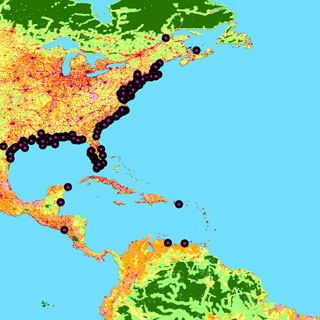
Dead Zone: Waters with little or no oxygen continue to form in coastal areas worldwide thanks to fertilizer washing off agricultural fields and fossil fuel burning.

More bad news for the world's oceans: Dead zones - areas of bottom waters too oxygen depleted to support most ocean life - are spreading, dotting nearly the entire east and south coasts of the U.S. as well as several west coast river outlets.

According to a new study in Science, the rest of the world fares no better - there are now 405 identified dead zones worldwide, up from 49 in the 1960s - and the world's largest dead zone remains the Baltic Sea, whose bottom waters now lack oxygen year-round.

Heart

Cow chases bear away from her favorite apple tree

Residents of a rural Colorado town say a cow named Apple chased off a bear that had climbed into her favorite apple tree. Jack McDonald of Hygiene, about 30 miles northwest of Denver, said the bear had climbed out of the tree when the cow approached it Sunday afternoon.

McDonald says the animals touched noses and hung out together for a bit before Apple chased the bear off.