Animals
S


Fish

Canada: Lake at Marden Park closed after dozens of dead fish found

Image
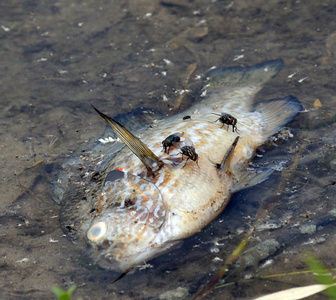
© Greg Layson/Guelph MercurySomething's Fishy Flies dine on one of dozens of dead fish Wednesday washed up on the shores of the lake at Marden Park. The lake is closed to swimming and fishing due to what the Township of Guelph-Eramosa is calling "a public health concern."

Guelph - The Township of Guelph-Eramosa immediately cordoned off the lake at Marden Park after dead fish began washing ashore Monday.

By Wednesday morning, hundreds of flies were dining on dozens of dead, blanched fish floating on their sides in the shallow shoreline. At least one dead bird was found rotting near the water.

Guelph-Eramosa chief administrative officer Janice Sheppard said a fisherman called the township Monday after he noticed the dead fish. She called the closure a precaution.
Fish

U.S.: Thousands of dead fish in Red River

Love County, Oklahoma -- Fishermen in a small community in southern Oklahoma are looking for answers after finding thousands of dead fish on the Red River.


"I've never seen anything like it..they just..for some unknown reason they're just dying," Bob Stewart.

Several residents in the Love County community of Courtney...near the Red River.. say thousands of fish have turned up dead over the past few days.

Fish

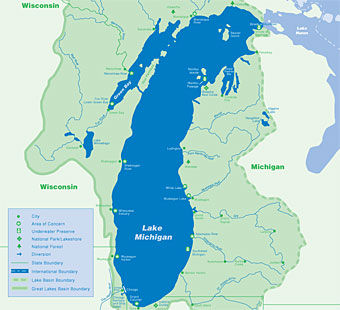
U.S.: Thousands of Dead Fish Wash Up On Lake Michigan Shores

Image

-- Thousands of dead fish are washing up on the shores of Lake Michigan.

"It brings back the horror stories we used to have in Milwaukee with the enormous populations of alewives would wash up and destroy our beaches," said Dan Steininger, of Milwaukee.

Experts said small, shiny fishes, called alewives, have been dying off and showing up on beaches around Lake Michigan in recent weeks.

Bug

Millions of Locusts Invade Russia

Giant swarms of locusts are said to be threatening the food supply for nearly 20 million people in the region.


Bizarro Earth

Jellyfish Invasions Force Shutdowns at 3 Separate Nuclear Plants

Jelly Fish Swarm
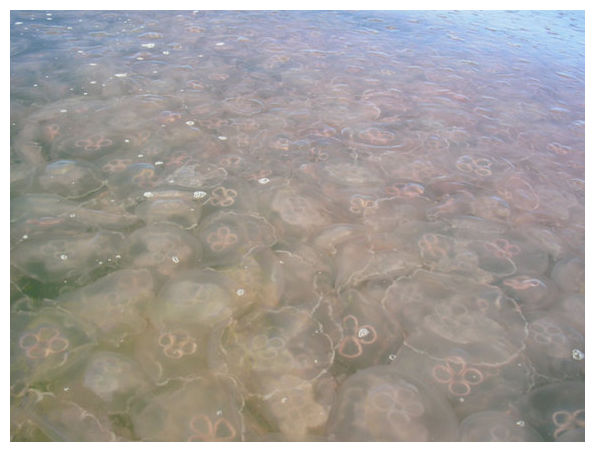
© Dauphin Island Sea LabIn the Gulf of Mexico's densest jelly swarms, there are more jellyfish than there is water. More than 100 jellies may jam each cubic meter of water.

A nuclear power plant on the coast of Israel was forced to shut down this week when its seawater cooling system became clogged with jellyfish. A similar incident temporarily disabled two nuclear reactors at the Torness power station on the Scottish coast last week. A week before, a reactor in Shimane, Japan was crippled by yet another jellyfish infiltration.

Amid speculation that warm waters and ocean acidification - both driven by climate change - are boosting jellyfish populations, are these three incidents signs of a growing trend?

"The several [power plant incidents] that happened recently aren't enough to indicate a global pattern. They certainly could be coincidental," said Monty Graham, a jellyfish biologist and senior marine scientist at the Dauphin Island Sea Lab off the Gulf Coast of Alabama.

Graham said there have been dozens of cases of jellyfish causing partial or complete shutdowns of coastal power plants in the past few decades, as well as shutdowns of desalination plants. Steve Haddock of the Monterrey Bay Aquarium Research Institute said a power plant in Australia was shut down by jellyfish as long ago as 1937. Such events aren't surprising; all these plants draw water out of the ocean, and they are already fitted with filtration devices called flumes that remove jellyfish and other debris.

Bandaid

Russia Spent 120 Million Rubles to Protect Grains From Locusts


Russia spent 120 million rubles ($4.3 million) to fight locusts this year and protect crops, the Agriculture Ministry said.

The money was used to spray the insects on 760,000 hectares (1.88 million acres) of land, the ministry said today on its website. Some 8.6 million hectares were inspected and locusts were found to have landed on 2.2 million hectares.

The ministry estimated the potential damage to be as much as 50 billion rubles.

"Grains did not suffer in Russia," Agriculture Minister Yelena Skrynnik said on the department's website.

Locust incidents rose significantly in Dagestan, Kalmykia, Astrakhan, Saratov and other southern regions this year as a result of last year's drought and a relatively warm winter, Interfax cited Skrynnik as saying in Kalmykia earlier today. Locusts' peak seasons occur once every 10 years, and the last took place in 2001, Interfax cited Skrynnik as saying.

Pistol

Canada: Rampaging Polar Bear Shot in Churchill

Image
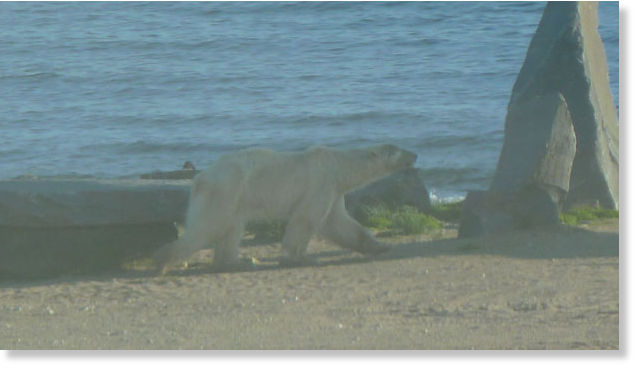
© Laura Gray-EllisThe head of a man who got too close to a polar bear while taking pictures can be seen just behind a rock in the background.
Conservation officers in Churchill, Man., were forced to shoot and kill a polar bear after it wandered into town, became aggressive and started charging their truck.

Early Monday morning, the bear turned on a man who was on the beach in town taking photographs. The man hid behind some rocks and the bear kept him trapped by pacing around the area.

Conservation officer Bob Windsor and his partner distracted the bear by firing off noisemakers known as bear bangers. The ruckus startled and confused the bear enough to give the man a chance to escape.

Laura Gray-Ellis, who was watching from her apartment window as the events unfolded, saw the man scramble over the rocks.

"He ran up the road into town, rounded the corner of the apartment building that I live in, and started jumping from backyard to backyard," she said.
Bear heads into town

Ambulance

US: Grizzly Kills Hiker in Yellowstone National Park

grizzly
© AP Photo/Yellowstone National Park, James PeacoIn this 2005 file photo, a grizzly bear moves through the brush at Yellowstone.

It's the first such fatality in 25 years

A man out on a hike with his wife in Yellowstone National Park's backcountry was killed by a female grizzly after the couple apparently surprised the bear and its cubs today, park officials said. The attack was the first fatal bear mauling in the park since 1986. "In an apparent attempt to defend a perceived threat to her cubs, the bear attacked and fatally wounded the man," said a park statement. "Another group of hikers nearby heard the victim's wife crying out for help, and used a cell phone to call 911."

Bell

Attack of the jellyfish: Sea creatures shut down ANOTHER power station amid claims population surge is due to climate change

Another power station was shut down by jellyfish today amid claims that climate change is causing a population surge among the species.

A huge swarm clogged up the Orot Rabin plant in Hadera, Israel, a day after the Torness nuclear facility in Scotland was closed in a similar incident.

Hadera ran into trouble when jellyfish blocked its seawater supply, which it uses for cooling purposes, forcing officials to use diggers to remove them.

Image
© Agency Presse France/GettyNuisance: A digger drops jellyfish cleared from the power station in Hadera, Israel.

Fish

US: Fourth of July weekend jellyfish invasion

Image
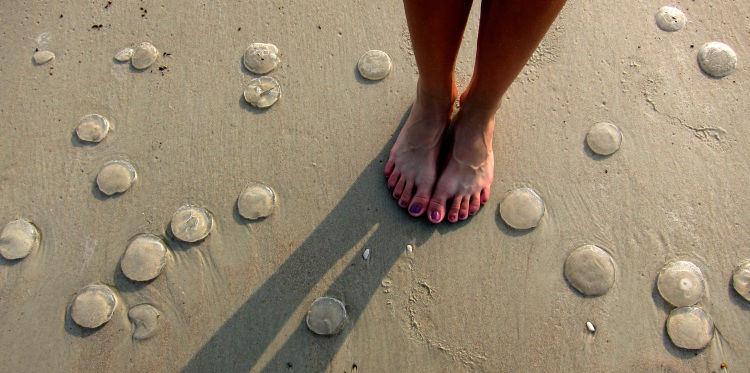
© Joe Burbank/Orlando SentinelDozens of Sea Nettle jellyfish are among the thousands that washed ashore in Ormond Beach, Saturday, July 2, 2011. This photo was shot about two miles north of Granada Blvd.
Florida's Volusia County beaches were littered with Sea Nettle jellyfish over Fourth of July holiday weekend

In all my years of beaching it in northern Volusia county, I've never seen an invasion of jellyfish, also known as sea jellies, quite like what filled the surf and littered the beach shoreline in Ormond on Saturday.

Looking like glass medallions twinkling in the afternoon sun, the jellies stretched by the thousands in northern Volusia, up to Ormond-By-The-Sea. More than 2,000 visitors countywide reported being stung according to Volusia County Beach Patrol.