
A huge swarm clogged up the Orot Rabin plant in Hadera, Israel, a day after the Torness nuclear facility in Scotland was closed in a similar incident.
Hadera ran into trouble when jellyfish blocked its seawater supply, which it uses for cooling purposes, forcing officials to use diggers to remove them.
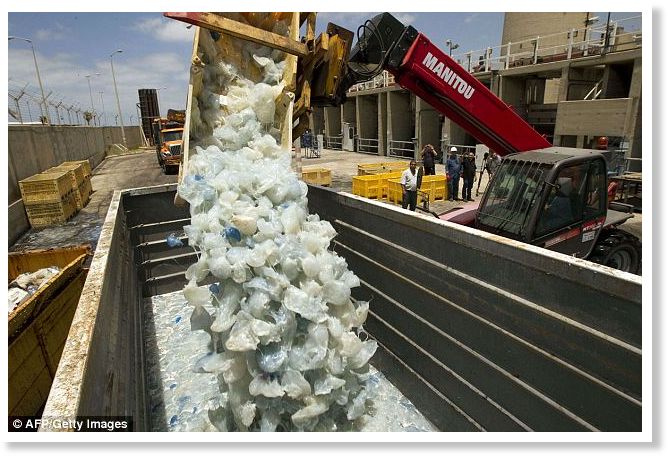
© Agency Presse France/GettyNuisance: A digger drops jellyfish cleared from the power station in Hadera, Israel.
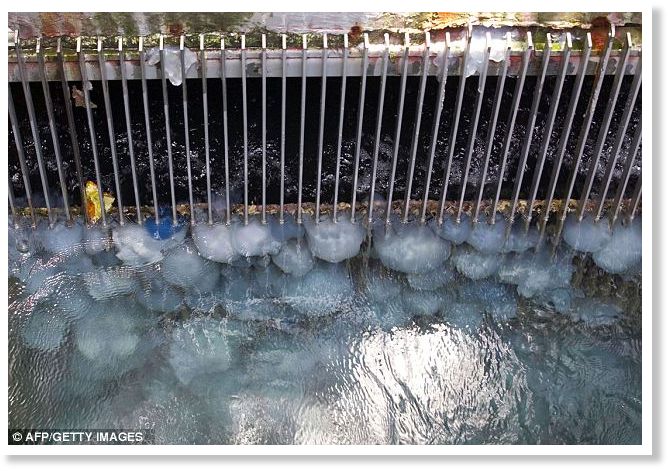
© Agency Presse France/GettySwarm: Hundreds of jellyfish blocked the water-supply grills at the Hadera plant.
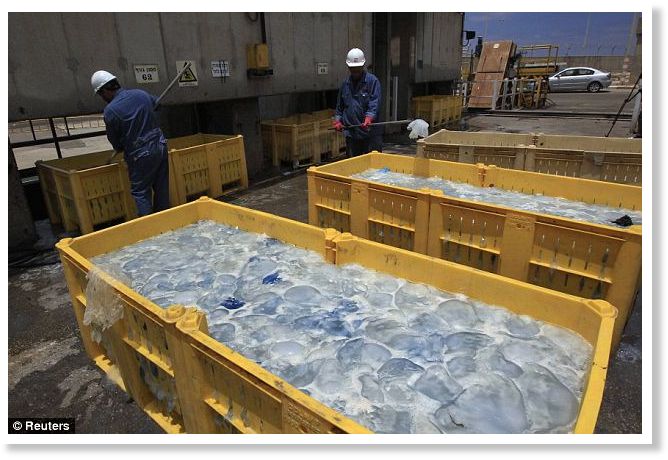
© ReutersDisruption: Containers filled with jellyfish at Orot Rabin coal-fired power station.
Almost 2,000 beach-goers were stung as they celebrated Independence Day weekend in the surf at Volusia County, Florida.
Beach Patrol spokeswoman Captain Tamara Marris reported the staggering statistics but stressed that no victims were seriously injured.
Amid soaring temperatures in the sunshine state, Jellyfish targeted sunseekers along a 20-mile stretch from Ormond Beach to New Smyrna Beach.
The influx was thought to be down to onshore winds bringing more jellyfish into contact with bathers.
Beach officials identified two species as the culprits - moon and cannonball jellyfish - but say moon jellyfish are likely to be the main culprits.
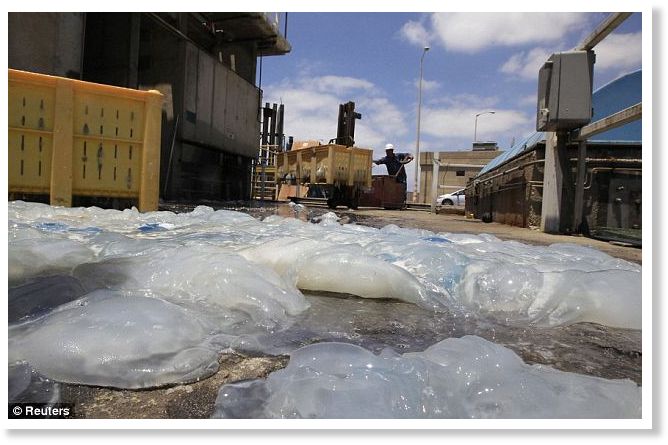
© ReutersSlimy: Jellyfish cover the floor in a lot at the power station.
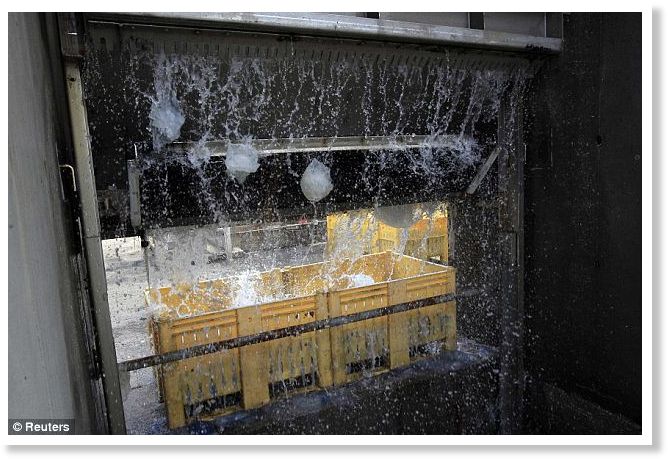
© ReutersClear out: Jellyfish fall from a filter into a container at the Israeli power station.
'It's really not a seasonal thing. They are just at the mercy of the wind and current, so they can show up any time of the year.'
Scientists say the number of jellyfish are on the rise thanks to the increasing acidity of the world's oceans driving away the blubbery creatures' natural predators.
The warning came in a report into ocean acidification - an often overlooked side effect of burning fossil fuel.
Studies have shown that higher levels of carbon dioxide in the atmosphere doesn't just trigger climate change but can make the oceans more acidic.
Since the start of the industrial revolution, acidity levels of the oceans have gone up 30 per cent, marine biologists say.
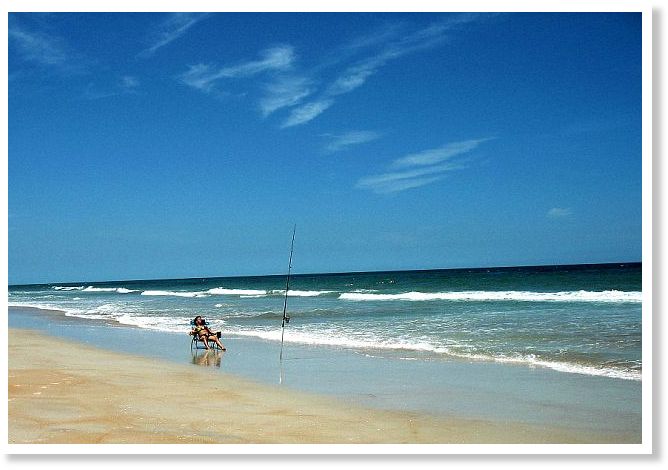
© UnknownAttack: Ormond Beach was attacked by a swarm of jelly fish over the holiday weekend.
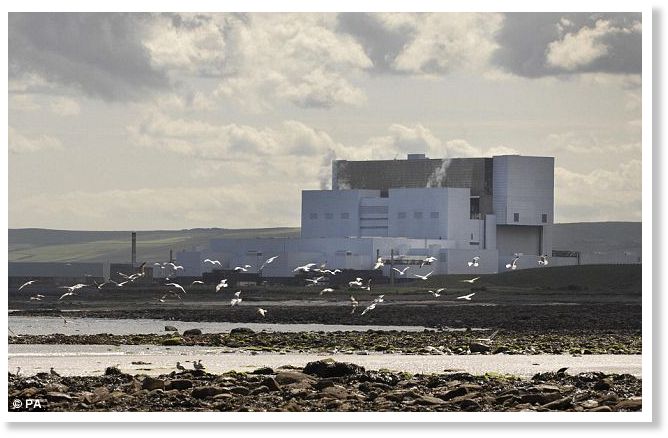
© PAJellyfish: Torness nuclear plant near Dunbar, Scotland, shutdown both their reactors so the filters could be cleared.
The decline in creatures with shells could trigger an explosion in jellyfish populations.
The report, written by Dr Carol Turley of Plymouth University, said: 'Ocean acidification has also been tentatively linked to increased jellyfish numbers and changes in fish abundance.'
Jellyfish are immune to the effects of acidification. As other species decline, jellyfish will move in to fill the ecological niche.
Populations have boomed in the Mediterranean in recent years. Some marine scientists say the changing chemistry of the sea is to blame.



Reader Comments
to our Newsletter