Animals
S


Bizarro Earth

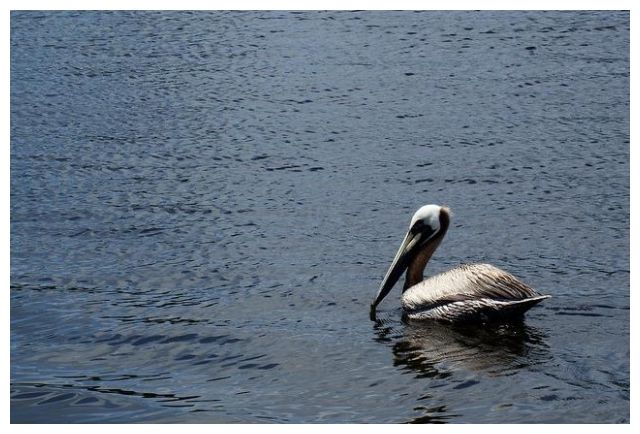
100 pelicans found dead in Brevard County; cause unknown

Pelican
© flickr|Dallas Krentzel

About 100 brown pelicans have been found dead in Brevard County in the past two months and officials are not sure why, the Florida Fish and Wildlife Conservation Commission said.

The birds are found emaciated and filled with parasites.

"The pelicans are emaciated and have heavy parasite counts, and, to our knowledge, other bird species have not been affected," said FWC researcher Dan Wolf in a press release.

Researchers are assessing the birds to figure out what is going on. They sent samples to the National Wildlife Health Center for testing but have not yet heard back.

Additional testing will tell researchers whether botulism is the cause. According to officials, botulism is sometimes the cause of die-offs like this.

But botulism usually kills birds too quickly for them to become emaciated.

People should report any dead or sick pelicans online at MyFWC.com/Bird or by calling the FWC's Wildlife Alert Hotline at 888-404-3922.

Bizarro Earth

Elephant seal blocks traffic in Brazil

Image
A 10ft elephant seal weighing more than half a ton shuffles across a street in a southern Brazilian town, to the amazement of passersby. The marine mammal held up traffic for more then an hour on the main street of Balneário Camboriú. Police and fire officers splashed water on the seal to keep it wet before it eventually returned to the Atlantic.


Bizarro Earth

More weirdness - Thousands of dead prawns and crabs wash up on beach in Chile

Thousands of dead prawns have washed up on a beach in Chile, sparking an investigation. Hundreds of dead crabs were also washed ashore in Coronel city, about 530km (330 miles) from the capital, Santiago.


Fishermen suggested the deaths may have been caused by local power stations that use seawater as a cooling agent. The power firms have not commented. Experts are looking into water temperature and oxygen levels and other details to explain the deaths.

"We're investigating the Coronel Bay to establish the physical parameters of temperature, electric conductivity and, above all, the oxygen," said local environment official Victor Casanova.

Stop

White nose syndrome: the mysterious bat fungus that threatens entire species, everyone else

Image
© Unknown
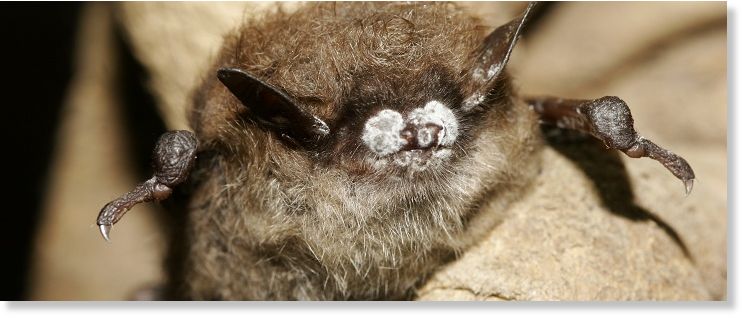
We know what it is. We know what it does. We have an idea of how it's being spread. Despite a large number of concerned scientists focused on white nose syndrome (WNS), the bat fungus that is spreading rapidly and that has a 95% mortality rate, we still don't know how it started, how to slow its spread, and how to cure it.

Bats are not normally considered essential parts of the ecosystem, but they are an integral part in balancing the natural infrastructure of the world, particularly in insect population control. Areas where the bats have been hit by WNS have noted a measurable increase in insects, including those that are damaging to crops.

Here's what we know. A white fungus grows on the face and wings of bats as they hibernate in lower temperatures. This stirs the bats and makes them active prematurely. As a result of increased activity during times of limited food supply, they die. Estimates are conservative placing the deaths of bats in North America at around 6 million since it was first noted in 2006.

The spread is continuing. It starts in caves and spreads throughout them where tens of thousands of bats may be hibernating. It then spreads bat to bat, infecting other caves as a result. From Canada to Alabama and from the east coast to the Mississippi river, more bat caves are being infected every month.

Butterfly

Mexico monarch butterfly population smallest in years, study says

Image
© Marjorie Miller, Associated PressA scientist collects a monarch butterfly near Zitacuaro, Mexico
The amount of land occupied by the migrating creatures shrank 59% from a year ago, scientists say. The decline could hurt tourism and the ecosystem.

Scientists who take the annual measure of Mexican forestland famously occupied by migrating monarch butterflies said Wednesday that the butterfly population is the smallest they have seen in two decades.

The likely cause is unseasonably warm weather recently in the United States, as well as a dramatic loss of habitat in the U.S. Corn Belt, the scientists said.

In a survey carried out in December and January, researchers found nine monarch colonies wintering in central Mexico, occupying a total of 1.19 hectares, or 2.94 acres, a 59% decrease compared with the previous year's study.

It was troubling news for the Mexican states of Michoacan and Mexico, where the yearly arrival of the butterflies is a major tourist attraction. Of even greater concern, experts say, is the potential impact that a diminished butterfly population could have on interconnected habitats and species across North America.

The results were released by the World Wildlife Fund, the Mexican government and giant Mexican cellphone company Telcel, which has supported butterfly habitat conservation.

Attention

Giant mosquito invasion scares Florida

Image
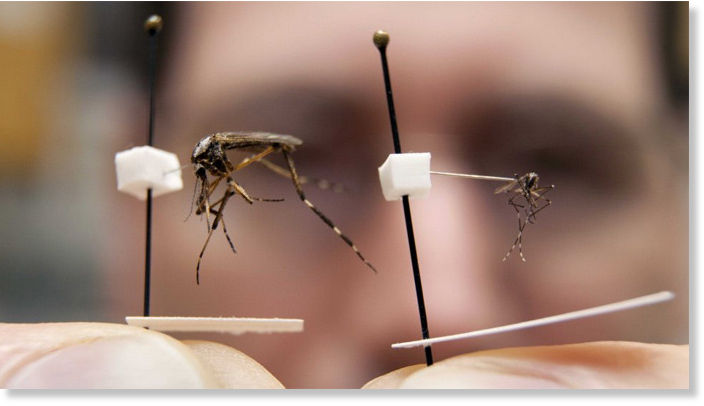
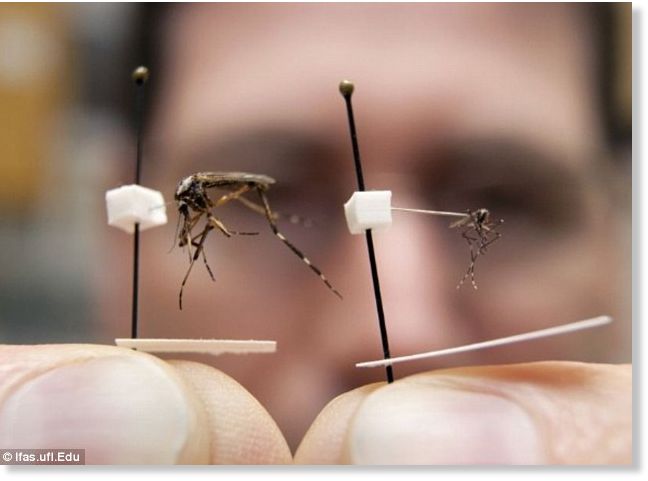
© Image credit University of FloridaEntomologist Phil Kaufman shows the size difference between the invasive Asian tiger mosquito, right, and the native species Psorophora ciliata, sometimes called the gallinipper
You might want to think twice about your beach vacation this year: giant mosquitoes are expected to invade Florida this summer. The insects are 20 times larger than most other mosquitoes and their bites feel like stab wounds.

They attack fish, wild animals and pets. Their larvae are so ferocious they can eat small fish and tadpoles. With bodies the size of a quarter, the giant insects can bite through clothing and are known to attack at all times of the day.

"It feels like you're being stabbed," one Florida resident told Fox Orlando, describing the bites of the gallinipper mosquitoes. And these massive mosquitoes are predicted to plague Florida this summer.

The giant insects usually appear after significant rainstorms or floods. Florida already had a high number of gallinippers last year, and is anticipating even higher numbers this year. After Tropical Storm Debby produced torrential storms and dumped more than 20 inches of rain across some areas of Florida last June, the state's gallinipper mosquitoes were given the perfect breeding ground to lay their eggs. The massive bloodsuckers are expected to hatch in the Sunshine State this year, plaguing their victims with itchy and painful bites.

Question

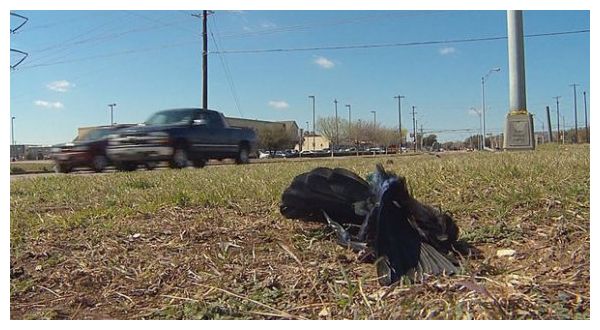
Dead birds fall out of the sky near Fort Worth, Texas - Second time in 5 months

Dead Birds
© WFAA
Arlington Animal Services responded to reports from drivers Tuesday morning of about 150 birds lying dead on Pioneer Parkway.

The birds were found directly under an electrical transmission line starting at the utility pole just east of Walgreens at 2200 E. Pioneer Parkway and running north across Pioneer to the next pole.

The City of Arlington's contract veterinarian, Dr. Jani Hodges, performed an examination of one of the birds to determine the cause of death. The results, however, were inconclusive.

Winds gusts of 40 mph were reported Monday night and lasted through the early hours of Tuesday morning. Winds, coupled with the fact that the birds were found directly under an electrical transmission line, resulted in one theory for the bird deaths.

According to an e-mail from Arlington Office of Communication Director, Rebecca Rodriguez, "The transmission lines touched briefly, causing an arc which could have electrocuted the birds."

There were no reports of power outages or power surges in the area. There was also no evidence of electrical burns on the birds.

Comment: See also:

25 November 2012: Dead birds falling from the sky in Arlington, Fort Worth


Info

Red tide killing record number of manatees in Florida

Manatee
© Photos.com
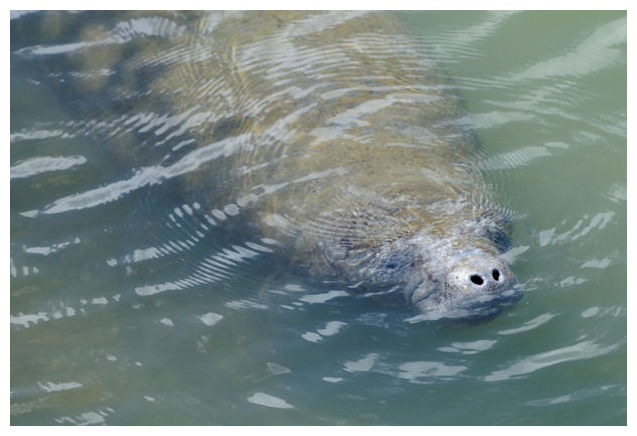
A red algae bloom, also known as Red Tide, is currently killing a record number of manatees living off the coast of Florida.

Last week, the Florida Fish and Wildlife Conservation Commission (FWC) found an average of 10 dead manatees a day and some observers said the phenomenon doesn't appear to be receding. A toxin produced by the red algae affects the nervous system of the manatees causing them to drown.

"This is probably going to be the worst die-off in history," said Martine DeWit, veterinarian with the FWC.

DeWit noted that a confluence of factors has caused the animals to swim into a precarious situation.

"It's a very large bloom that persisted through the winter and there are lots of manatees in the same area," she said. "They all aggregated to the warm-water side, and that put them in the wrong place at the wrong time."

As of Friday, state officials had this year's number of manatee casualties pegged at 149, just two animals short of the record high mark of 151 set by a Red Tide in 1996.

Bizarro Earth

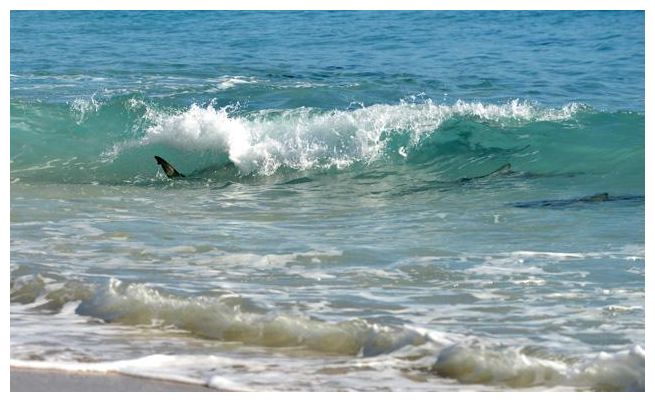
Tens of thousands of sharks spotted by marine biologists in South Florida

Sharks_1
© Jeff Langlois/ZUMAPRESS.comSpinner sharks are seen near the shore Tuesday morning at Midtown Beach.
It's Shark Month in South Florida, and authorities are asking beachgoers to use caution.

Tens of thousands of sharks, heading north to North Carolina after migrating south for the winter, have been spotted by marine biologists in the last week.

Bizarro Earth

Snakes, sinkholes, mega-mosquitoes: Florida's troubles continue to mount

Mega-mosquitoes known as gallinippers could invade Central Florida this summer, as flood waters from tropical storms force the larvae to hatch this hurricane season. Entomologists at the University of Florida say the mosquitoes are 20 times the size of a typical mosquito, about the size of a quarter. They also pack a painful bite, according to UF entomologist Phil Kaufman. He calls the species "notoriously aggressive." The best way to protect against these super-sized mosquitoes is to wear bug spray with DEET and cover up as best as possible. Gallinippers were spotted last year in Florida after Tropical Storm Debbie doused the state, but scientists predict they'll make an appearance again this summer. According to Kaufman and his team one good thing about these mosquitoes is that they aren't known to carry any viruses that could be harmful to humans. - Click Orlando
Image
Super-sized: Scientist says mega-mosquitoes also known as gallinippers, left, could be common in central Florida this summer. They can be 20 times bigger than typical Asian tiger mosquitoes