Animals
S


Wolf

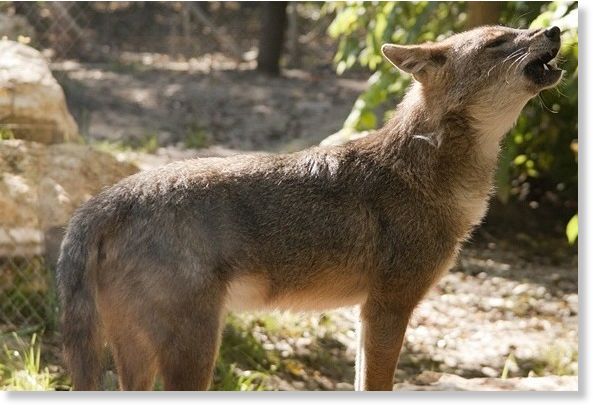
Jackal usually found in southeast Europe turns up in Denmark

Image
© Attis1979The European jackal is usually found in southeast Europe
Denmark seems to be attracting all kinds of interesting animals these days.

First the wolves made a spectacular return to Denmark after a 200-year absence, and now the European jackal has suddenly popped up in the Jutland countryside.

It has been confirmed that a dead male European jackal - which is usually found in southeast Europe (mostly in Greece and Serbia) - has been found near Karup in Jutland, and nothing suggests that it has been released or has escaped from captivity.

"It's always very exciting and quite rare to see new mammal species in Denmark's nature," said Ella Maria Bisschop-Larsen, the president of the conservation society Danmarks Naturfredningsforening. "Although we have experienced the raccoon dog and the wolf recently."

"We're not too happy about the raccoon dog, but the wolf, which is a native species, needs protecting. Now we must discuss how we will handle it if there are more jackals out there or if more arrive."
Wolf

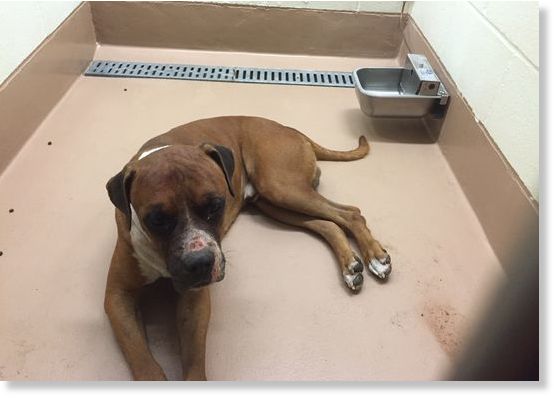
Man killed by dogs near Salton Sea, California

Image
© Riverside County Department of Animal ServicesTwo dogs were taken into custody after they killed a man and injured a woman in North Shore Tuesday. They were taken to the Riverside County animal campus in Thousand Palms.
The victim of Tuesday's fatal dog attack in North Shore was identified as a 65-year-old resident.

Emilio Rios was pronounced dead at 6:32 a.m. in front of a home at 70-670 Sea Gull Drive, according to the Riverside County Coroner's office.

Riverside County sheriff's deputies found him at about 6:15 a.m. Shortly after, they heard a cry from a woman who was being attacked by dogs nearby.

The officers sounded lights and sirens, which scared the dogs away, and paramedics transported the victim to a local hospital, where she is being treated for major injuries.


Attention

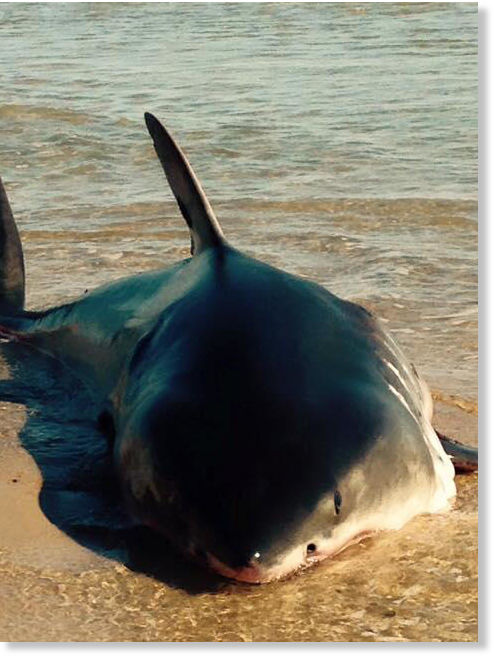
Massive Great White shark dies following beaching on Cape Cod

Image
© Wellfleet, Massachusetts Police DepartmentA stranded Great White shark on Whitecrest Beach in Mass. on Sept. 6, 2015.
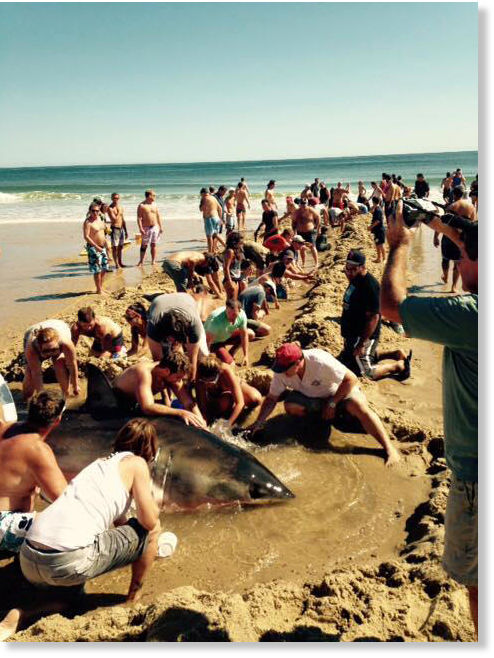
Dozens of holiday beach-goers formed a bucket brigade to try to save a mammoth great white shark that beached itself over the weekend on Cape Cod, Massachusetts, but the beast died, authorities said.

At least 100 people at White Crest Beach for the Labor Day weekend rushed to help the 1-ton, 14-foot-long shark, which was reported beached at 8:09 a.m. Sunday, Wellfleet police said. Many of them relayed buckets of water to splash on the shark while specialists from the Atlantic White Shark Conservancy and the National Park Service were called.

Police said the shark was helped out to deeper water by a Shark Conservancy boat. The animal appeared to be injured, they said, and NBC station WJAR of Providence, Rhode Island, reported that the animal later died.

"It was gasping for air on the shore," a witness, Bill Bellrose, told WJAR. "It was big — it was a big shark."


Image
© Wellfleet, Massachusetts Police Department

Arrow Down

Scientists to reanimate 30,000-year-old 'giant virus' found in Siberia

Virus
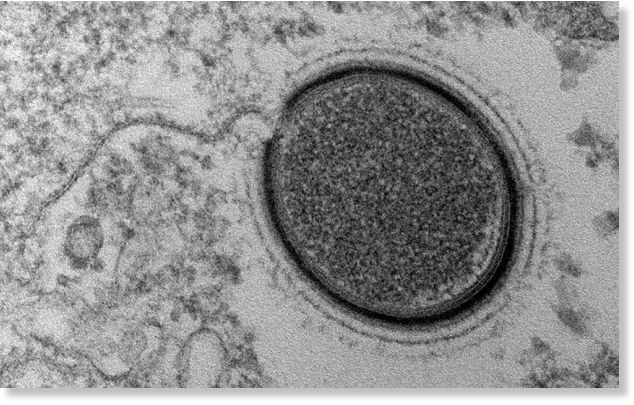
© Getty ImagesCells of the Mollivirus sibericum. The virus has been buried deep in the Siberian permafrost for over 30,000 years, is thought to be the newest representative of what are loosely known as "giant viruses".
Scientists said they will reanimate a 30,000-year-old giant virus unearthed in the frozen wastelands of Siberia, and warned climate change may awaken dangerous microscopic pathogens.

Reporting this week in the flagship journal of the US National Academy of Sciences, French researchers announced the discovery of Mollivirus sibericum, the fourth type of prehistoric virus found since 2003 - and the second by this team.

Before waking it up, researchers will have to verify that the bug cannot cause animal or human disease.

To qualify as a "giant", a virus has to be longer than half a micron, a thousandth of a millimetre (0.00002 of an inch).

Mollivirus sibericum - "soft virus from Siberia" - comes in at 0.6 microns, and was found in the permafrost of northeastern Russia.

Climate change is warming the Arctic and sub-Arctic regions at more than twice the global average, which means that permafrost is not so permanent any more.

"A few viral particles that are still infectious may be enough, in the presence of a vulnerable host, to revive potentially pathogenic viruses," one of the lead researchers, Jean-Michel Claverie, told AFP.

Attention

Tourist attacked by elephant in Zimbabwe

Image
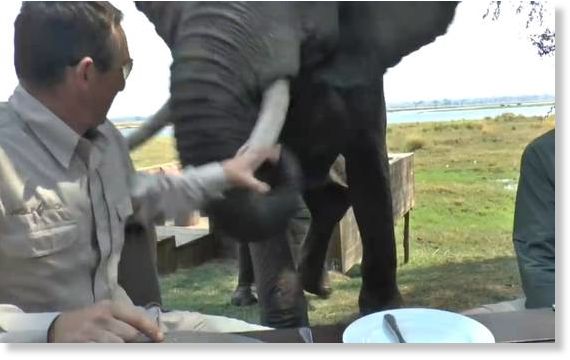
A shot from the video of the elephant attacking Stephen Montague
This is the terrifying moment when an elephant attacks a Northern Ireland man on holiday in Africa.

Stephen Montague was sitting with relatives in a restaurant in Zimbabwe when the animal swung its massive trunk at them, throwing them off their chairs.

Stephen's brother-in-law was wounded when the elephant's tusks cut into him. The family, who are on a photographic safari, seem to have had a lucky escape.

The animal went away when guards in the complex intervened. While elephants are generally not aggressive, males can be volatile and attack humans. Around 500 people a year are killed by elephants.


Attention

Surfer bitten by shark at North Shelly Beach, Australia

Image
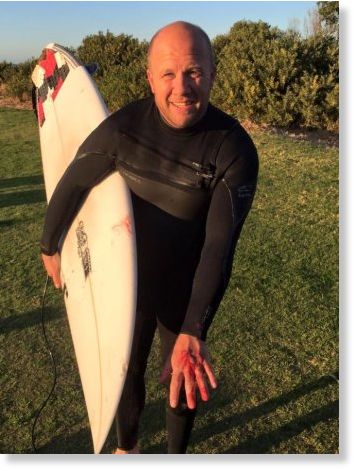
© Shaun HiltonJustin Daniels, 42, was bitten on the hand and shaken from his board during the shark attack.
A surfer who was bitten by a shark on the New South Wales Central Coast says it was like re-watching the Mick Fanning attack and he is lucky to have escaped with only minor injuries.

Justin Daniels, 42, from Berkeley Vale suffered minor puncture wounds to his left hand after being bitten close to shore about 6:15am at North Shelly Beach, north of Gosford.

"It easily could have taken my hand or arm or come back for me. I am lucky. It was frightening," Mr Daniels said.

"You are being attacked by a live animal ... It is survival, I was in a zone and I just wanted to get out of there."


Attention

Grizzly bear attacks 2 hunters near Fort Nelson, Canada

Image
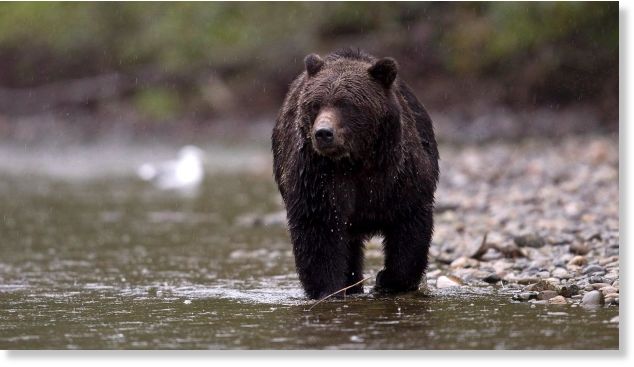
© Canadian PressA mother grizzly attacked two sheep hunters south of Fort Nelson, B.C. on Sunday.
Two injured hunters spent the night on a remote mountainside in the B.C. Peace Region after being mauled by a mother grizzly bear with two cubs on Sunday.

The men had been hunting sheep south of Fort Nelson and were packing out the meat and head of their kill when they heard the bear, said Insp. Mark West of the B.C. Conservation Officer Service.

"[The] hunter hears a crack in bush, and a short — a very, very short distance away — is a sow grizzly bear accompanied by two cubs," he said.

The sow attacked one man, then the other intervened and she turned on him as well, said West. The second hunter fired a couple of shots, but officers don't know if the mother grizzly was hit.

The men have injuries to their heads and necks, said West. Their conditions have been described as serious and critical.

Attention

Hammerhead shark bites foot of kayaker off Malibu, California

Image
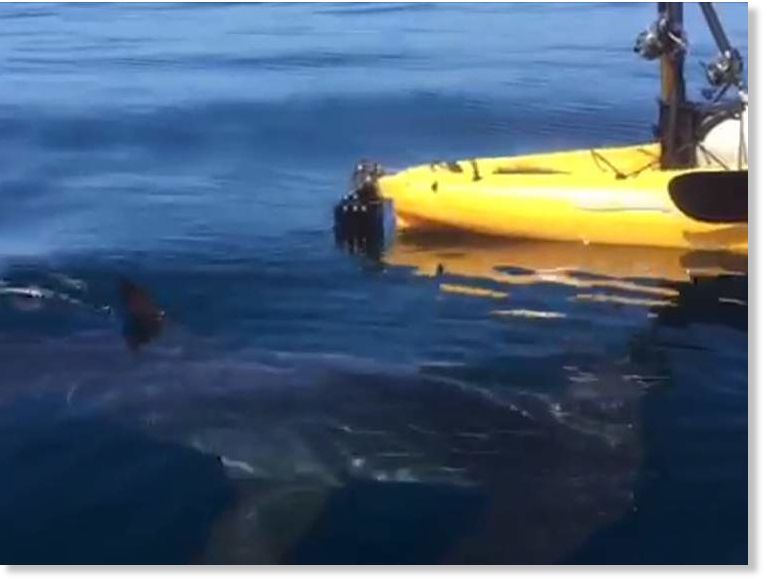
© CBSOther kayakers filmed a hammerhead circling them on the same day.
A kayaker suffered a deep wound to his foot after he was bitten by a hammerhead shark off the California coast.

Ventura County Fire Captain Ron Oatman said the victim had been dangling his feet over the sides of his kayak when the shark bumped against his foot, bit him and swam away off Deer Creek beach in Malibu.

Lidia Barillas, public information officer for the Los Angeles County Fire Department's Lifeguards Division, said it was a 10ft hammerhead shark.


Attention

Resident warns of raccoon attacks in Vancouver; 3 in the region this year

Raccoon
Raccoon
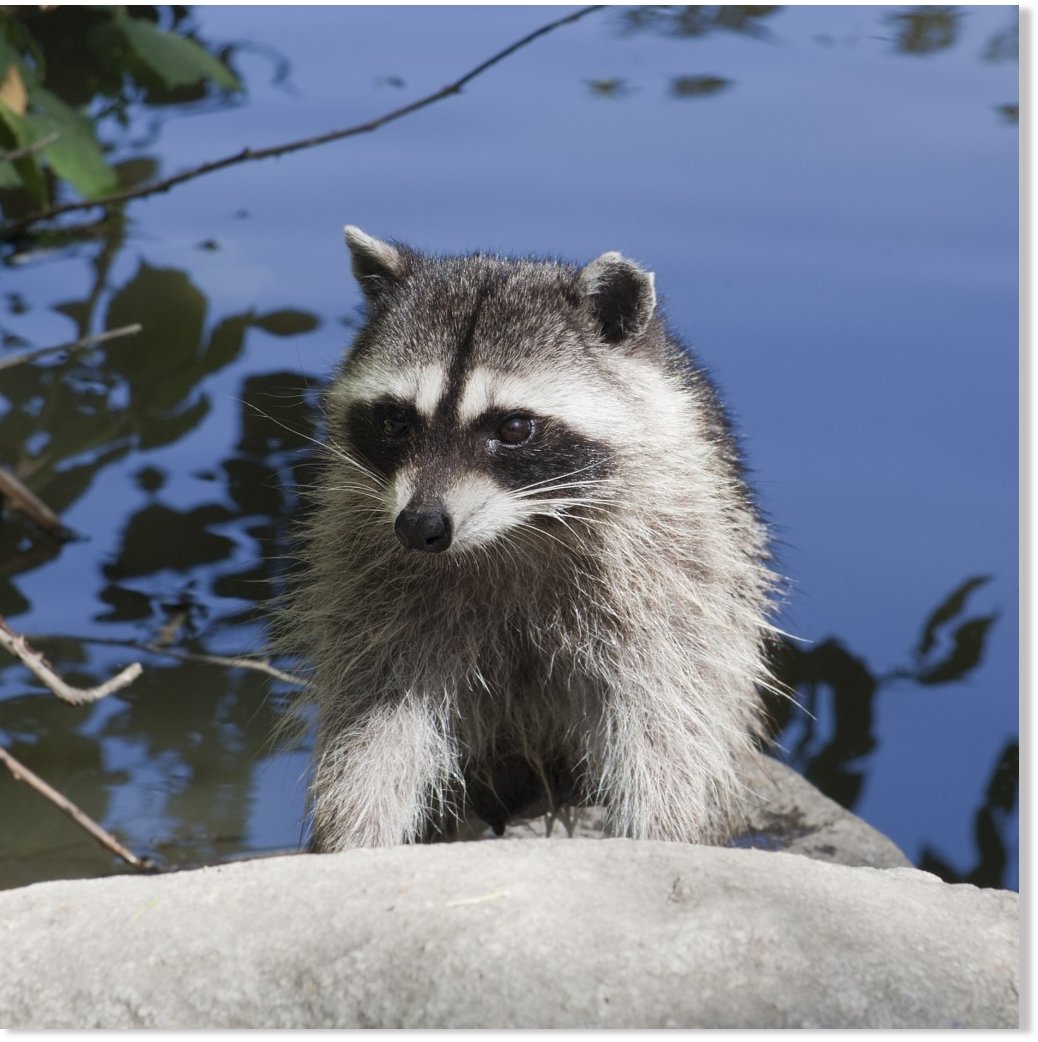
One of the furry raccoons living in Vancouver's West End has an area resident concerned for others — after one attacked him while he was out walking his dog on Davie near Nicola.

"I have a lot of elderly neighbours here. It could have been someone walking with a toddler. I don't know what would have happened if it had been someone different."

Mark Stahl is six feet tall and can handle himself. But when the animal charged and bit him Tuesday morning he lost his footing and fell.

The animal managed another bite as he rolled over to protect his small dog.

"It was just this little raccoon - you don't think of them being a danger - but it was super aggressive and it was an unprovoked attack."

Comment: See also: Pack of raccoons attack couple in San Francisco


Attention

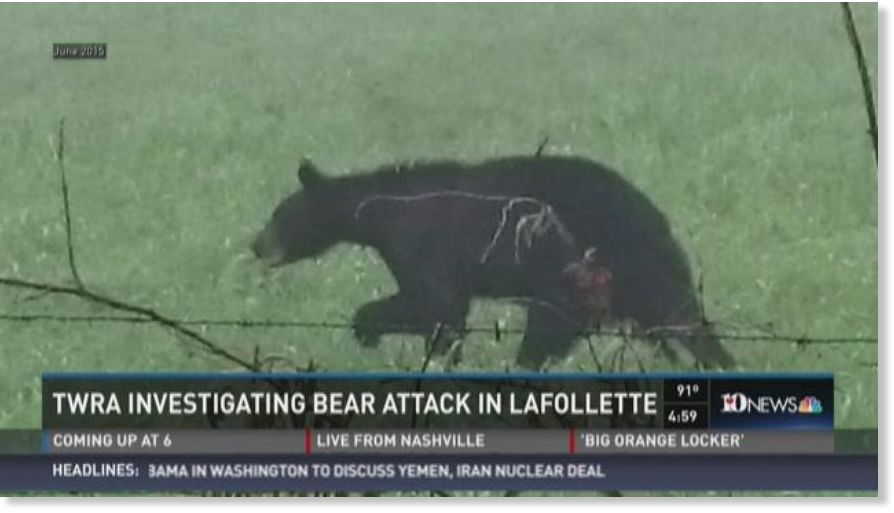
Man in stable condition following possible bear attack in Campbell County, Tennessee

Image
A Campbell Co. man is hospitalized after he was attacked by an animal overnight. Investigators believe it was a bear, and are searching for it.
A Campbell County man was sent to the University of Tennessee Medical Center on Friday morning after he was attacked by a "large animal with dark coarse hair."

Michael Savage, 27, of LaFollette sustained "severe and significant injuries," according to Sheriff Robbie Goins. A spokesperson with the University of Tennessee Medical Center said Savage was in stable condition.

Matthew Cameron with TWRA said at a news conference Friday afternoon that authorities could not confirm the animal was a bear. Cameron said the man doesn't know what attacked him.