Animals
S


Attention

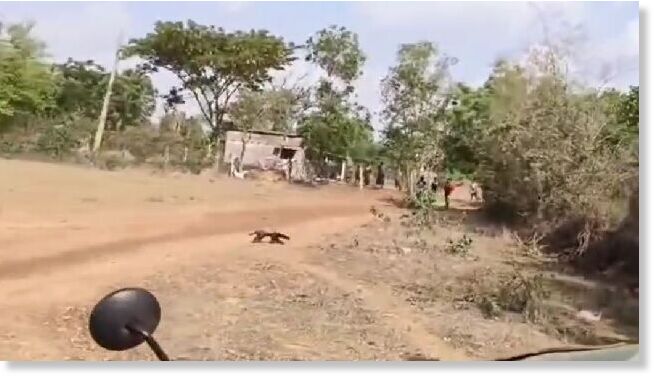
Three persons injured after honey badger attack in Odisha, India

nnnnnn
Three persons were injured after a honey badger attacked them at Nuagaon village in Keonjhar district on Thursday.

The injured were identified as Banamali Mohanty (55), his son, Biranchi (29), and Gayadhar Pradhan (58) of Sainkul village. They have been admitted to Anandapur sub-divisional hospital for treatment.

Banamali said the animal attacked him when he was going to defecate. Later, the animal chased Biranchi, when he went to help his father, and bit him. Later, the animal chased Gayadhar while he was guarding a cashew plantation. He ran in fear, but the animal attacked him and he sustained injuries, sources said.

After receiving a complaint, forest personnel arrived at the spot and caught two honey badgers with the help of a net. They took the animals to the forest camp of Anandapur range office. Later they released the animals in Patilo forest after medical examination. Nabakishor Nayak, range officer, said, "Injured persons will be treated free of cost."


Cow

Over 144,000 livestock dead after huge floods cause carnage in northeast Australia

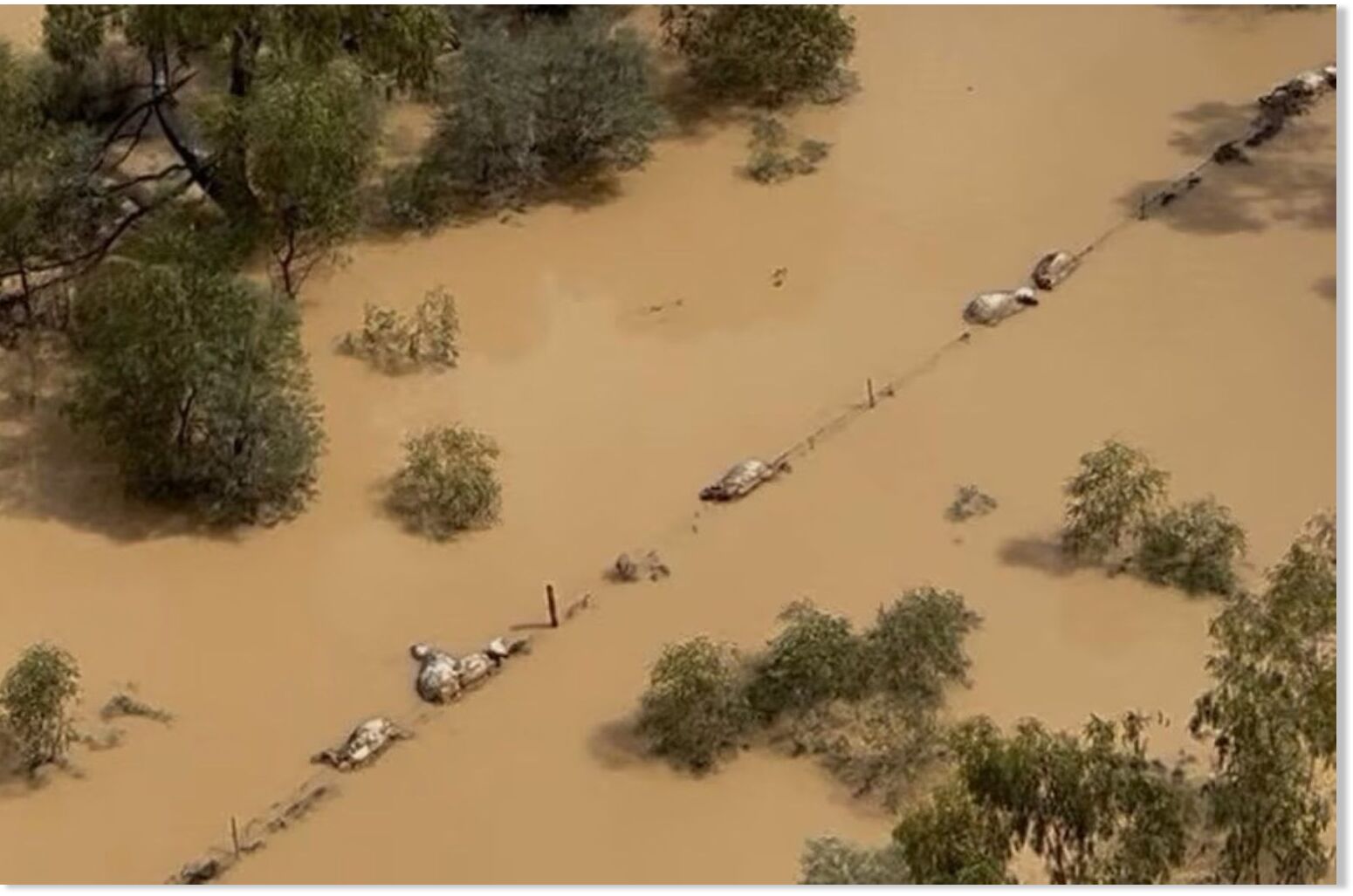
The most recent figures from the Queensland Department of Primary Industries suggest over 144,000 livestock, mostly cattle, sheep and goats, have been killed by floods.
Farmers in Queensland, Australia have suffered huge losses after floods engulfed over half a million square kilometres of the outback, causing carnage to farms and livestock.

The most recent figures from the Queensland Department of Primary Industries (DPI) suggest over 144,000 livestock, mostly cattle, sheep and goats, have been killed by the floods which were the result of heavy rains across the State.

According to the Bureau of Meteorology, some towns had recorded as much as 500mm (20 inches) of rain in the space of a week, which is the typical yearly total for the region.

The devastating floods come a few weeks after Cyclone Alfred did its damage, hitting Queensland's southeast coast and northern New South Wales.

As the floodwaters ease, more realistic figures of the true extent of the damage are likely to increase significantly as more dead livestock are revealed. It is also estimated that 3,183kms of fencing has been impacted, along with 4,076kms of private roads.


Doberman

Family's dog attacks, kills 7-month-old baby in Columbus, Ohio

MMMMMMMM
A 7-month-old girl was killed Wednesday when she was attacked by her family's dog inside their home, reports say.

"There's really not a lot of words I can say to convey how I feel and how the officers who arrived, family, everyone involved in this process is literally grieving as if this child belonged to us, because most of us, again, are parents and can't imagine just how tragic this scene is," Columbus Police Sgt. James Fuqua tells WCMH Channel 4.

WBNS Channel 10 reports the attack occurred Wednesday morning. A woman first took the infant to a nearby fire station and the child was then taken to Nationwide Children's Hospital, where she was pronounced dead.

Fuqua tells WBNS that no charges are expected to be filed. He said the situation appeared to "escalate quickly," WBNS reports.

Three dogs in the home were taken by Franklin County Animal Control, WCMH reports. There was no information released on the breeds of the dogs.


Info

6,500-year-old hunting kit found in West Texas

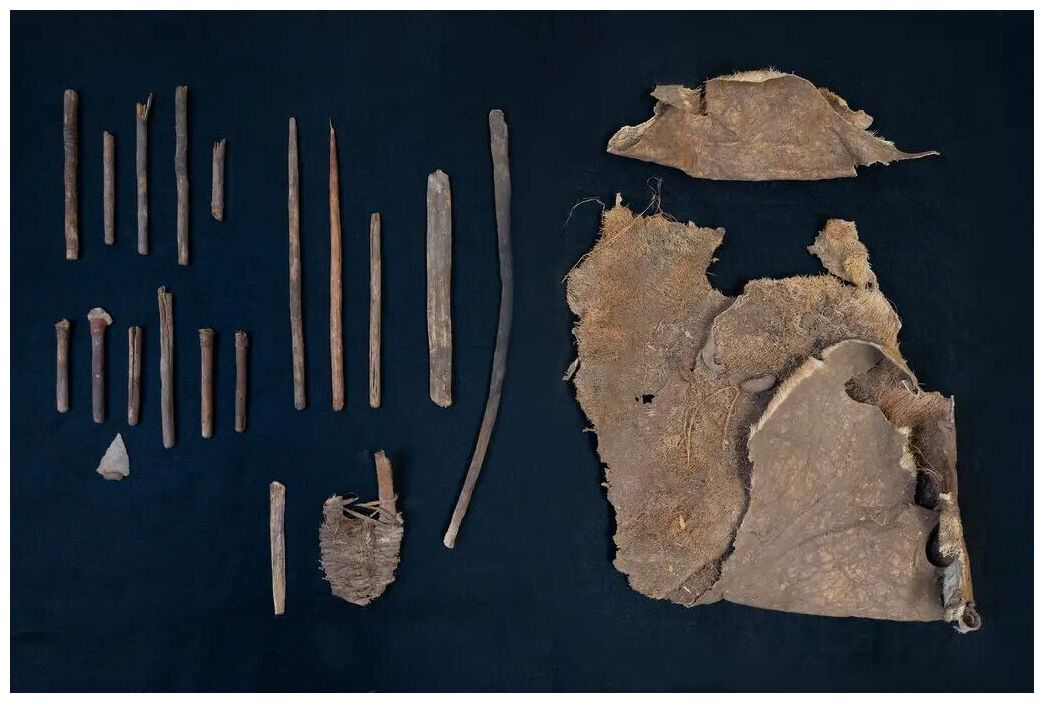
The 6,500-year-old weapons, found in a cave near Marfa, could be among the oldest near-complete set of wood and stone hunting tools found in North America.
Ancient Hunting Kit
© Robert GreesonA well-preserved hunting kit was recovered from a cave near Marfa, Texas, about 40 miles from the Mexican border.
The 6,500-year-old hunting kit contained pieces of a spear thrower and a boomerang, as well as wood- and stone-tipped darts. It was found in a cave in West Texas near the remains of a small fire, and a pile of well-preserved human waste — evidence of those who had once sheltered inside.

The weapons, discovered over the past several years near Marfa, a small desert town about 40 miles northwest of the border with Mexico, could be among the oldest near-complete sets of wood and stone hunting tools found in North America, according to archaeologists at Sul Ross State University and the University of Kansas.

The researchers have yet to publish their full findings, but they said that dating suggested that one of the weapons was about 7,000 years old. The artifacts, researchers say, could help shed light on the complex ways in which ancient humans hunted for their prey and fixed their broken belongings.

"We were just stunned, because I've never even seen that stuff," said Bryon Schroeder, the director of the Center for Big Bend Studies at Sul Ross State University and one of the lead researchers on the project.

Smiley

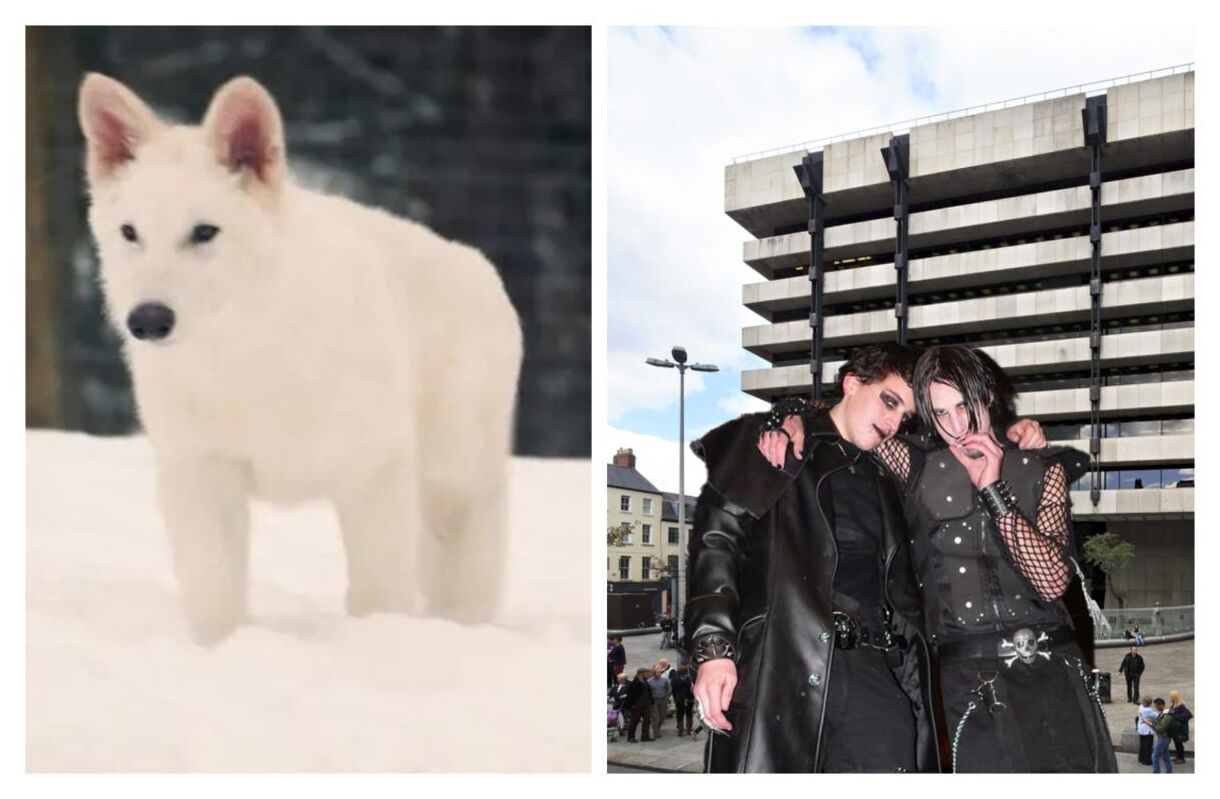
After resurrecting the Dire Wolf, scientists urged to bring back extinct temple bar Goths

Wolf and Goths
© Waterford Whispers News
IN ASTONISHING news, a group of scientists are laying claiming to having resurrected the long extinct dire wolf, last seen on earth 10,000 years ago.

However, instead of basking in worldwide adulation they presumed they'd receive, the scientists at Colossal Biosciences in America have been urged to direct their genome modifying tech to bringing back Ireland's rarest species; that of the old Central Bank dwelling goths.

"Ah they were always good for an auld point and laugh at," explained one Dubliner, who has urged for the reintroduction of the goth species of Irish person. "Those dour looking fannies always cracked me".

Info

The science behind the return of the Dire Wolf

Dire Wolfs
© Colossal BiosciencesRomulus and Remus are two 6-month-old dire wolves, created by genetically engineering cells from living gray wolves.
Nature gave the world the dire wolf 2.6 million years ago, and then, through the hard hand of extinction, took it away — some 10,000 to 13,000 years ago when the last of the species died out. Now, the dire wolf is back, brought bounding into the 21st century by Colossal Biosciences, a Dallas-based biotech company. On April 8, Colossal announced it had used both cloning and gene-editing based on two ancient samples of dire wolf DNA to birth three pups, the six-month-old males Romulus and Remus and the two-month-old female Khaleesi.

"Our team took DNA from a 13,000 year old tooth and a 72,000 year old skull and made healthy dire wolf puppies," said Colossal CEO Ben Lamm in a statement that accompanied the announcement of the births. "It was once said, 'any sufficiently advanced technology is indistinguishable from magic.' Today, our team gets to unveil some of the magic they are working on."

So what, exactly, does that work involve?

Traditional cloning — the kind that famously resulted in Dolly the sheep in 1996, and has since been used to create clones of pigs, cats, deer, horses, mice, goats, gray wolves, dogs and more — is a relatively straightforward, if invasive, process. First, a single cell is taken from a tissue sample of the animal to be cloned. That cell's nucleus — which contains the individual's entire genetic code — is then extracted and inserted into a donor ovum from the same species whose own nucleus has been removed. The ovum carrying the new genetic material is allowed to develop into an embryo and then transferred into the womb of a surrogate, which ultimately gives birth to an exact duplicate of the animal from which the donor cell was taken.

Colossal says its dire wolf work had key differences. Scientists first analyzed the genome of the dire wolves contained in the ancient tooth and skull. Comparing those genomes to that of the gray wolf — the dire wolf's closest living relative — they identified 20 differences in 14 genes that account for the dire wolf's distinguishing characteristics, including its greater size, white coat, wider head, larger teeth, more powerful shoulders, more-muscular legs, and characteristic vocalizations, especially howling and whining.

Next, they harvested endothelial progenitor cells (EPCs), which form the lining of bloodvessels, from the bloodstreams of living gray wolves — a less invasive procedure than taking a tissue sample — and edited the 14 genes in their nuclei to express those 20 dire wolf traits. This is trickier than it seems, since genes often have multiple effects, not all of them good. For example, as the company explains in its press release, the dire wolf has three genes that code for its light coat, but in gray wolves they can lead to deafness and blindness. The Colossal team thus engineered two other genes that shut down black and red pigmentation, leading to the dire wolf's characteristic light color without causing any harm in the edited gray wolf genome.

Attention

Humpback whale washes ashore on Danish beach

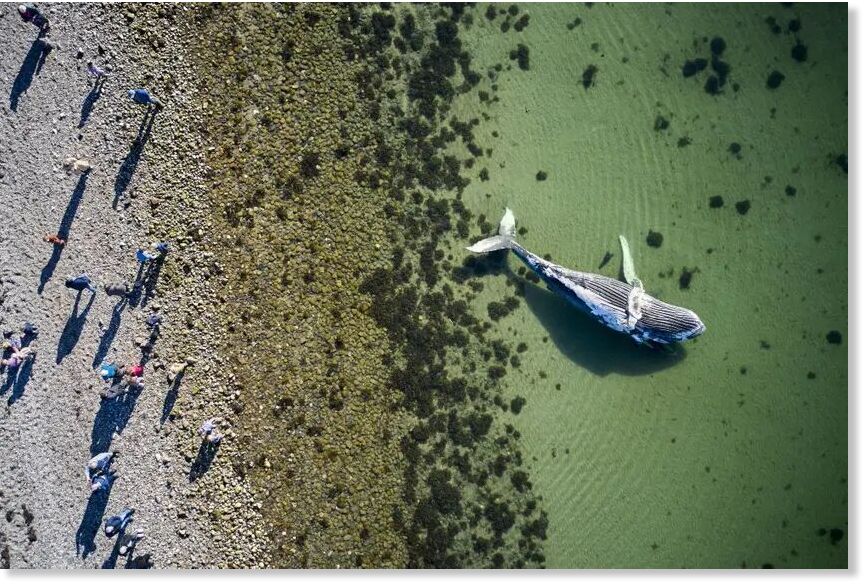
Local visitors view a dead humpback whale which has washed up on the coast of Djursland in Denmark.
© Mikkel Berg PedersenLocal visitors view a dead humpback whale which has washed up on the coast of Djursland in Denmark.
A seven-meter-long dead humpback whale has been found washed up on a beach in the eastern Jutland region of Djursland.

A dead humpback whale has been lying in the water at Løgten Bugt in Djursland, northeast of Aarhus, since Tuesday, according to local reports.

The whale, approximately seven meters long, has been found at the water's edge in Løgten Bugt, around 25 kilometers from Denmark's second-largest city.

Photos of the whale were first shared in local Facebook groups, before being reported by local media TV2 Østjylland.

People from the local area have since gone to the beach to observe the whale, an unusual sighting on the Danish coast.


Doberman

Stray dogs kill 4-year-old boy in Andhra Pradesh and 6-year-old boy in Uttar Pradesh, India

MMMMMMMM
A four-year-old boy has died after being mauled by a stray dog at Swarna Bharathi Nagar here, a police official said on Monday.

The incident occurred on Sunday evening when the boy stepped out to play near his house. A stray dog attacked him and bit him on the neck, severely injuring his jugular vein, said the official.

"These kinds of incidents are not common in this area and the locals are generally cynophile. As a result, municipal officials are facing difficulties in relocating or sterilising stray dogs," a police official told PTI.

After the dog attacked the boy, children around there stoned the creature and chased it away. The boy was immediately rushed to the hospital, where doctors declared him brought dead.

PTI

Comment: A day earlier another stray dog attack led to the death of a 6-year-old boy in the state of Uttar Pradesh:
A 6-year-old boy was mauled to death by a pack of stray dogs while he was on his way to deliver lunch to his father and uncle in Lakhimpur Kheri district on Saturday afternoon.

The Class 2 student, Shivyanshu Shukla, suffered grievous injuries to his neck and body. He died on the way to the hospital, police said. Achal Shukla, a resident of Bilari village in Neemgaon police station area, was working in the fields with his brother when the incident occurred. "My son had left home around 12:30 pm to bring us food. The fields are about 1.5 km from our house," said the boy's father.

Former village head Vipin Kumar, who informed police of the incident, said there were several stray dogs in the village, but such an attack was unheard of. "We will speak to officials and request immediate action to catch the dogs so that this never happens again," he added.

Neemgaon SHO Ashish Srivastava said: "The body has been sent for autopsy. There were visible deep injuries on several parts of his body. We've asked the local gram panchayat to ensure the dogs are rescued and removed from the area."


Info

Unknown human lineage lived in 'Green Sahara' 7,000 years ago, ancient DNA reveals

Researchers analyzed the ancient DNA of two mummies from what is now Libya to learn about people who lived in the "Green Sahara" 7,000 years ago.

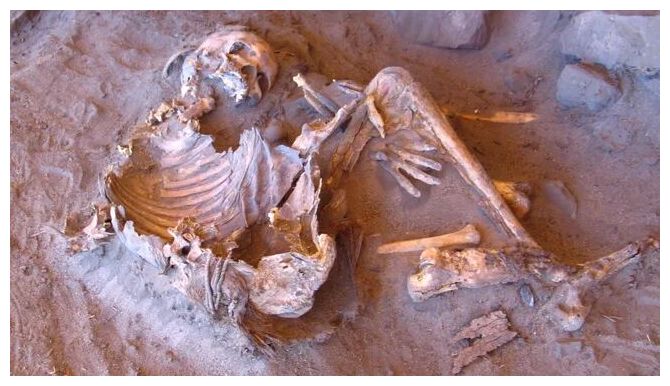
Naturally mummified human remains
© Archaeological Mission in the Sahara, Sapienza University of RomeNaturally mummified human remains found in the Takarkori rock shelter in the Sahara desert point to a previously unknown human population.
Two 7,000-year-old mummies belong to a previously unknown human lineage that remained isolated in North Africa for thousands of years, a new study finds.

The mummies are the remains of women who once lived in the "Green Sahara," also known as the African Humid Period. Between 14,500 and 5,000 years ago, the now-inhospitable Sahara was a humid and verdant savanna, home to humans who hunted and eventually herded animals alongside lakes and rivers.

DNA from the two mummies revealed that the never-before-seen North African lineage was distinct and isolated from populations living in sub-Saharan Africa around the same time. The findings, reported April 2 in the journal Nature, suggest there was little genetic exchange across the Green Sahara during this time, though some cultural practices may have spread through the region.

Between 2003 and 2006, archaeologists unearthed the remains of 15 individuals in the Takarkori rock shelter, located near the middle of the Sahara in what is now southwestern Libya. The site included evidence of human occupation and pastoralism, or herding, dating back more than 8,000 years. Of the 15 individuals, most of whom were women and children, two had naturally mummified, which helped preserve their DNA.

"We were very fortunate to have samples preserved at this level," study co-author Nada Salem, a paleogeneticist at the Max Planck Institute for Evolutionary Anthropology in Germany, told Science magazine. The region's high temperatures can quickly break down the DNA in human remains, leaving few examples of ancient DNA in the region.

Binoculars

Birdwatchers thrilled as a record 80 rare hoopoes seen in Ireland

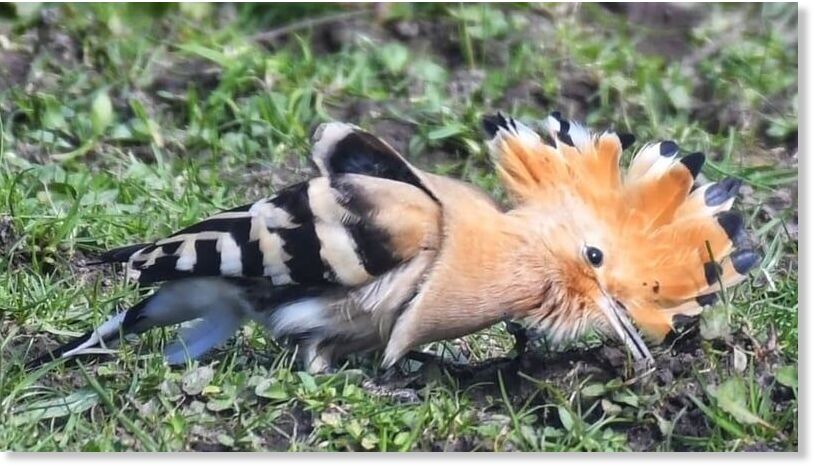
Vinny Hyland spotted an African Hoopoe in Kerry last week
© Vinny HylandVinny Hyland spotted an African Hoopoe in Kerry last week
Birdwatchers have been treated to multiple sightings of African Hoopoes as around 80 of the colourful, migratory birds have arrived in Ireland in the past two weeks.

African Hoopoes do not usually migrate as far north as Ireland, but it is believed that a weather phenomenon, known as Sahara Dust, has carried them here.

The previous record for sightings of the bird in Ireland in 1965, when 65 were recorded here.

Field ornithologist Ed Carty said the warm wind current would have carried the birds to Cork and Kerry, well past their usual summer spots of Portugal, France and Spain.

"There have been two influxes of the African Hoopoes to Irish shores in recent weeks," Mr Carty said.