Strange Skies
S


Fireball 2

Meteor fireball streaks through aurora-filled skies over Canada on June 3

A purple and blue aurora borealis is seen, combined with the bright contrail of a meteor in the skies above Canada.
© Andres U.A purple and blue aurora borealis is seen, combined with the bright contrail of a meteor in the skies above Canada.
Spectators were already out capturing the stunning aurora display when a blazing meteor sped past.

What is it?

At 5:57 a.m. local time skywatchers around Montréal, Canada and parts of the northeastern U.S. found themselves watching the brilliant streak of a bright meteor, also called a fireball, zoom across the sky.

The aurora borealis, or "the northern lights" happen when charged particles ejected from the sun interact with Earth's atmosphere. These particles are shuttled to our planet's north and south poles by Earth's magnetic field. There, the particles excite gas and molecules in Earth's atmosphere, creating various colors depending on which gas is in the atmosphere.

Nebula

Northern lights on display for 23 states after geomagnetic storm

bbbbb
The northern lights were visible for 23 states after experts say a geomagnetic storm helped push the patterns farther south than usual.


Info

A rogue star could hurl Earth into deep space, study warns

Solar System
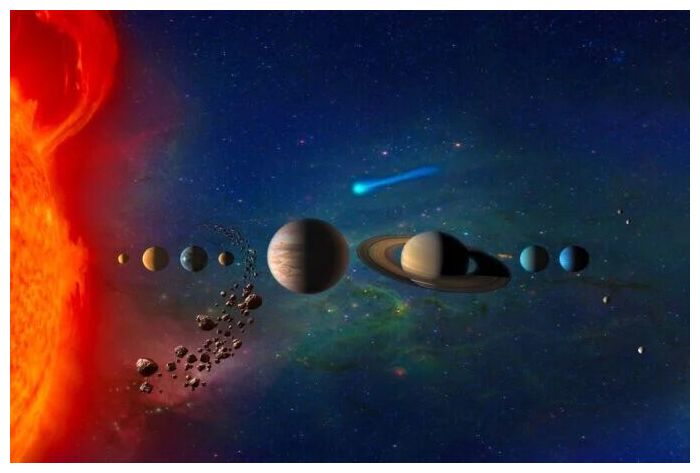
© NASAAn artist's simplified concept of our solar system.
Mars is not safe either.

Billions of years from now, the Sun will swell into a red giant, swallowing Mercury, Venus, and Earth. But that's not the only way our planet could meet its demise. A new simulation points to the menacing threat of a passing field star that could cause the planets in the solar system to collide or fling Earth far from the Sun.

When attempting to model the evolution of the solar system, astronomers have often treated our host star and its orbiting planets as an isolated system. In reality, however, the Milky Way is teeming with stars that may get too close and threaten the stability of the solar system. A new study, published in the journal Icarus, suggests that stars passing close to the solar system will likely influence the orbits of the planets, causing another planet to smack into Earth or send our home planet flying.

In most cases, passing stars are inconsequential, but one could trigger chaos in the solar system — mainly because of a single planet. The closest planet to the Sun, Mercury, is prone to instability as its orbit can become more elliptical. Astronomers believe that this increasing eccentricity could destabilize Mercury's orbit, potentially leading it to collide with Venus or the Sun. If a star happens to be nearby, it would only make things worse.

Question

Astronomers discover mysterious object firing strange signals at Earth every 44 minutes

ASKAP J1832-0911, which is periodically throwing out pulses of radio waves and X-rays, could be a brand-new cosmic object.
ASKAP J1832-0911
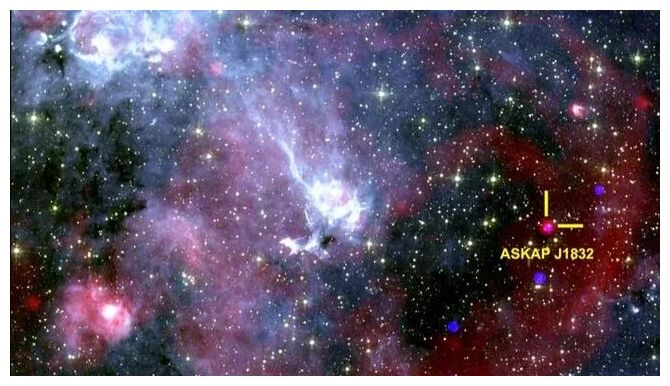
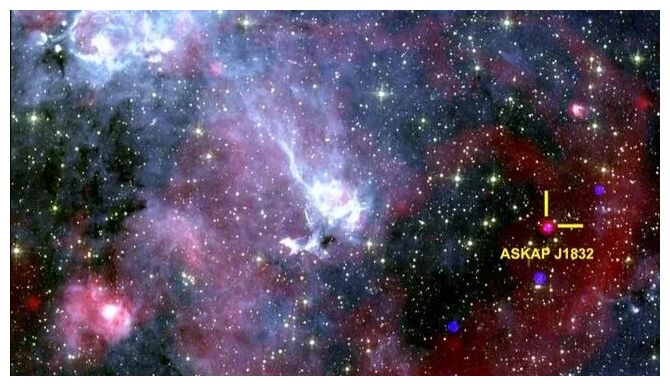
© Ziteng (Andy) Wang, ICRARA telescope image of the region of sky surrounding ASKAP J1832-0911.
Astronomers have discovered a mysterious object flashing strange signals from deep space, and they have no idea what it is.

The object, named ASKAP J1832-0911, spits out pulses of radio waves and X-rays for two minutes straight, once every 44 minutes.

Detected by Australian Square Kilometre Array Pathfinder (ASKAP) and NASA's Chandra X-ray observatory, the strange repeating signals are currently unexplained — and unravelling this cosmic mystery could reveal new physics, according to the researchers who discovered it. The team published their findings May 28 in the journal Nature.

"This object is unlike anything we have seen before," lead study author Andy Wang, an astronomer at Curtin University in Perth, Australia, said in a statement. "ASKAP J1831-0911 could be a magnetar (the core of a dead star with powerful magnetic fields), or it could be a pair of stars in a binary system where one of the two is a highly magnetised white dwarf (a low-mass star at the end of its evolution)."

"However, even those theories do not fully explain what we are observing," Wang added. "This discovery could indicate a new type of physics or new models of stellar evolution."

ASKAP J1832-0911 is a long-period transient (LPT), a class of rare and extreme astrophysical events that sweep out beams of radio waves like cosmic lighthouses. First discovered in 2022, thus far ten LPTs have been catalogued by astronomers.

Info

Possible dwarf planet discovered at solar system's edge

Composite of Dwarf Planets
© Images of dwarf planets: NASA/JPL-Caltech; image of 2017 OF201: Sihao Cheng et al.A composite image showing the five dwarf planets recognized by the International Astronomical Union, plus the newly discovered trans-Neptunian object 2017 OF201.
A small team led by Sihao Cheng, Martin A. and Helen Chooljian Member in the Institute for Advanced Study's School of Natural Sciences, has discovered an extraordinary trans-Neptunian object (TNO), named 2017 OF201, at the edge of our solar system.

The TNO is potentially large enough to qualify as a dwarf planet, the same category as the much more well-known Pluto. The new object is one of the most distant visible objects in our solar system and, significantly, suggests that the empty section of space thought to exist beyond Neptune in the Kuiper Belt is not, in fact, empty at all.

Cheng made the discovery alongside colleagues Jiaxuan Li and Eritas Yang from Princeton University, using advanced computational methods to identify the object's distinctive trajectory pattern on the sky. The new object was officially announced by the International Astronomical Union's Minor Planet Center on May 21, 2025, and in an arXiv pre-print shared today.

Trans-Neptunian objects are minor planets that orbit the Sun at a greater average distance than the orbit of Neptune. The new TNO is special for two reasons: its extreme orbit and its large size.

"The object's aphelion — the farthest point on the orbit from the Sun — is more than 1600 times that of the Earth's orbit," explains Cheng. "Meanwhile, its perihelion — the closest point on its orbit to the Sun — is 44.5 times that of the Earth's orbit, similar to Pluto's orbit."

Question

Perfectly spherical supernova is weirding us out

Dubbed Teleios, the unusually symmetrical space object is puzzling astronomers with its near-perfect shape and mysterious origin.
galactic supernova
© Filipović et al./arXivThe galactic supernova remnant shown here with its perfect symmetry.
The universe is a chaotic place filled with exploding stars, material falling into black holes, and rogue planets wandering off on their own. All that chaos makes astronomers suspicious when they glimpse a hint of perfection in the cosmos, like a bubble of material left over from the death of a star that appears to be in perfectly symmetrical shape.

Astronomers recently discovered the remnant of a galactic supernova with a remarkable circular symmetry, making it stand out as one of the most perfectly spherical objects detected in the universe. Perfection is not always a bad problem to have, but it does prompt certain questions regarding how the object came to be this way.

The discovery, submitted to the Publications of the Astronomical Society of Australia and made available on the preprint website arXiv, was spotted in images collected by the Australian Square Kilometer Array Pathfinder. The researchers behind the paper identified the object as a galactic supernova remnant — an expanding cloud of debris that forms in the aftermath of the exploding death of a star.

The object, located in the Milky Way galaxy, has been dubbed Teleios, the Greek word for perfect. Although it is almost perfectly symmetrical, Teleios is not very bright. It has one of the lowest recorded surface brightness levels among known supernova remnants. Astronomers observing Teleios are also uncertain about its distance to Earth, estimating that it could either be around 7,175 or 25,114 light-years away. That's a huge difference in distance, and the uncertainty is affecting our understanding of how long the object has been there.

Info

World's oldest star chart may be 2,300 years old and from China — but not everyone agrees

Is the Star Manual of Master Shi the oldest known astronomical catalog? Experts are divided.
Oldest Star Map
© CPA Media Pte Ltd via AlamyThe Dunhuang map (not the chart studied in the new research) is an early star map from China dating to the Tang Dynasty (A.D. 618 to 907).
The oldest star chart in the world was made in China more than 2,300 years ago, a hotly debated preprint study finds.

Researchers at the Chinese National Astronomical Observatories analyzed the "Star Manual of Master Shi," the oldest surviving star catalog in China, using a novel digital image processing technique. The method, called Generalized Hough Transform, uses a type of artificial intelligence known as computer vision to find and mitigate significant errors between similar images.

They found that the ancient star chart actually dates to 355 B.C. — 250 years earlier than previously thought — and that it was later updated around A.D. 125. This would make it the oldest-known star catalog of its kind in the world, predating a star chart by ancient Greek astronomer Hipparchus by more than 200 years.

"I think this is pretty definitive,"said David Pankenier, a professor emeritus of Chinese astronomy at Lehigh University in Pennsylvania who was not involved with the research. Pankenier told Live Science that the study confirms previous research — notably, the work of Joseph Needham, a British biochemist known for his expertise on ancient Chinese science and technology. And the new study places the manuscript's origin around the same time the historical Master Shi Shen was thought to have lived.

But other experts are less convinced.

Bizarro Earth

Monster tornado on the Sun

Tornado on Sun
© Andrew McCarthy and Jason Guenzel
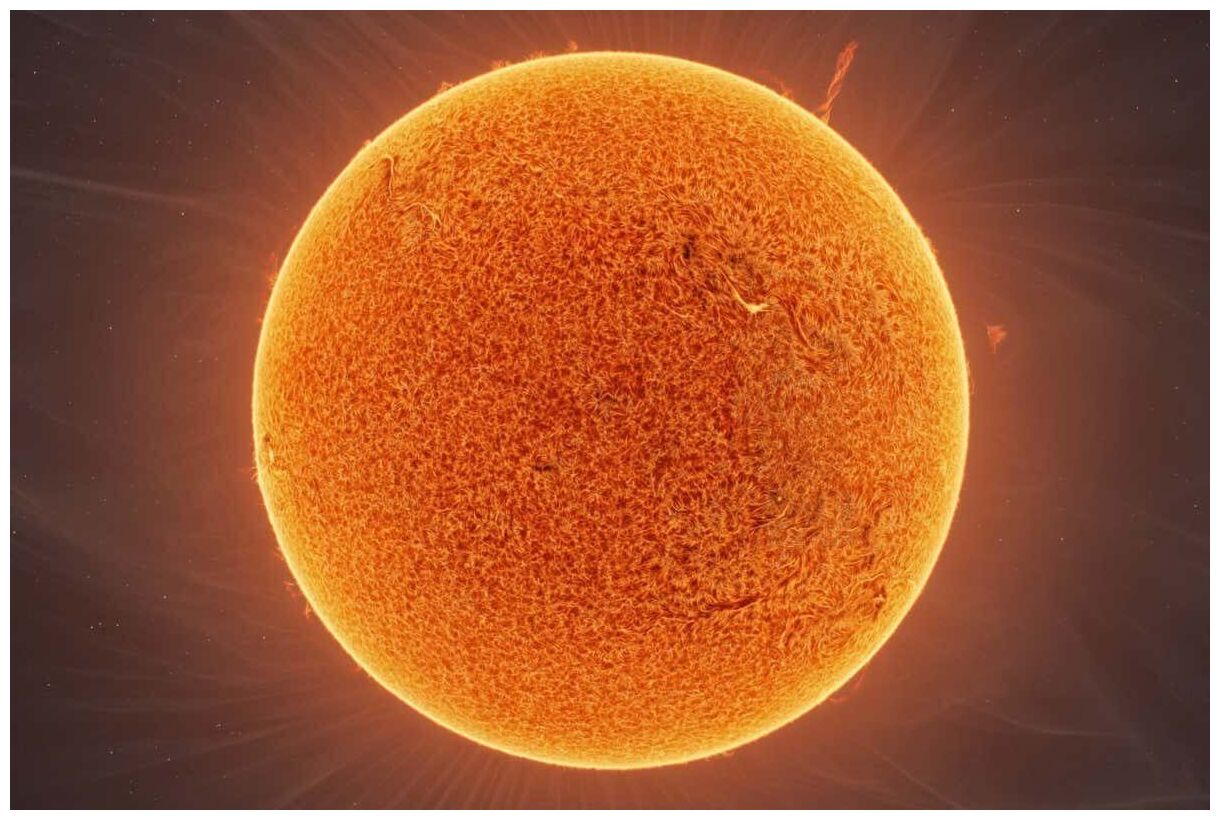
On Earth, the most dangerous tornadoes are rated F5. On the sun, they can be hundreds of times worse. David Wilson photographed this twister, big enough to swallow our entire planet, from his backyard observatory in Inverness, Scotland:

"I was recording this monster all day on April 24th when I noticed the central stem grow brighter until it let go at about 1300UT," says Wilson. "It looked like a huge swirl of plasma went round the stem and flew into space."

Question

Massive black hole 'waking up' in Virgo constellation

Black Hole
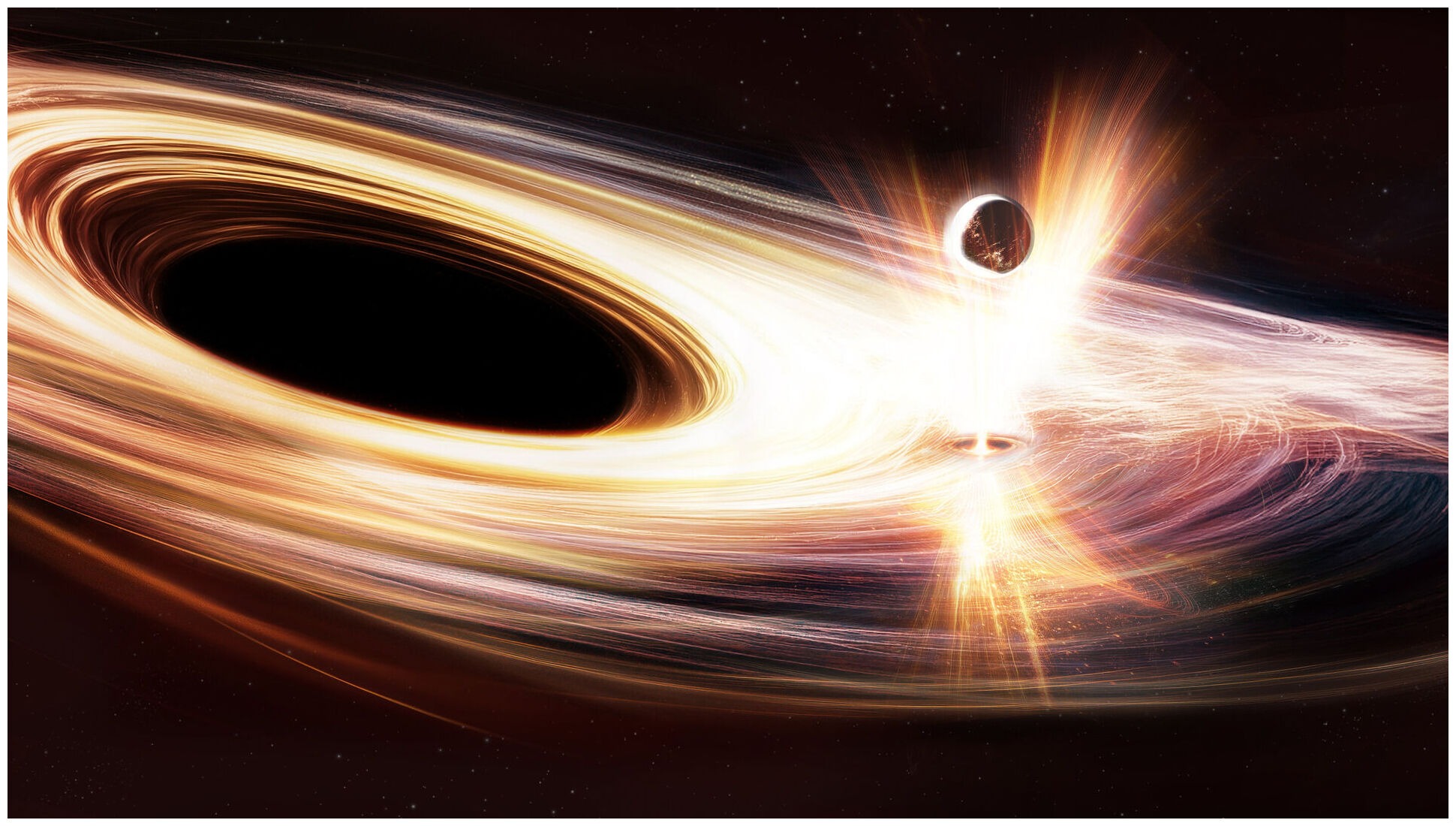
© European Space AgencyArtist's impression of the accretion disc around the massive black hole Ansky and its interaction with a small celestial object.
A massive black hole at the heart of a galaxy in the Virgo constellation is waking up, shooting out intense X-ray flares at regular intervals that have puzzled scientists, a study said Friday.

Astronomers previously had little reason to pay any attention to galaxy SDSS1335+0728, which is 300 million light years from Earth. But in 2019, the galaxy suddenly started shining with a brightness that turned some telescopes its way.

Then in February last year, Chilean astronomers started noticing regular bursts of X-rays coming from the galaxy.

This was a sign that the galaxy's sleeping black hole was waking from its slumber, according to the study published in the journal Nature Astronomy.

Most galaxies, including our home Milky Way, have a supermassive black hole squatting at their heart, like a spider in a web.

These invisible monsters gobble up everything that comes their way — not even light can escape their almighty suck.

If an unlucky star swings too close, it gets torn apart.

The star's shattered material becomes a stream that spins rapidly around the black hole, forming what is called an accretion disk that is gradually swallowed.

But black holes can also go through long periods of inactivity when they do not attract matter.

And after a fairly uneventful period, the bright, compact region at the heart of galaxy SDSS1335+0728 has been classified as an "active galactic nucleus" — and given the nickname "Ansky".

"This rare event provides an opportunity for astronomers to observe a black hole's behavior in real time" using several X-ray telescopes, astronomer Lorena Hernandez-Garcia of Chile's Valparaiso University said in a statement.

Cassiopaea

New nova in the 'Teapot'

A new nova for early risers plus three fun observing projects for the week ahead.

New Nova in Teapot
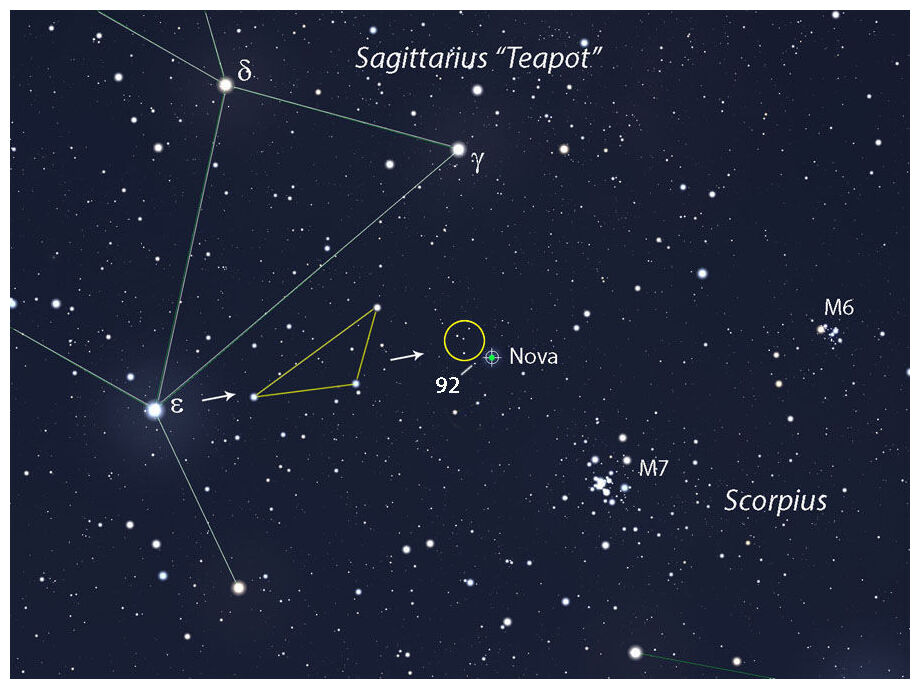
© Stellarium with additions by Bob KingThe nova is located between the Teapot's "Spout" and the bright open cluster M7 in Scorpius. I include a suggested star-hopping route, starting at the 2nd magnitude star Epsilon (ε) Sagittarii. Once you've arrived at the asterism (circled), use the chart below to pinpoint the nova's location. North is up.
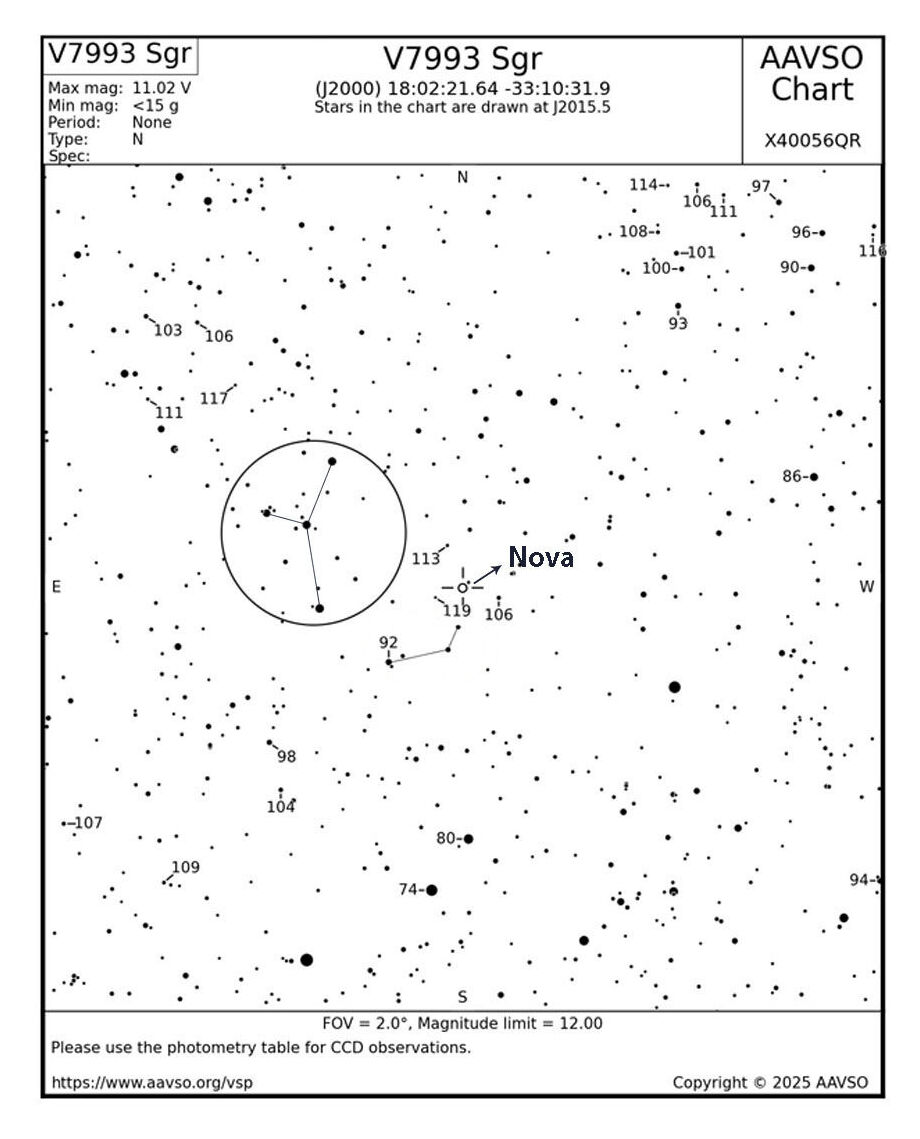
We have a new "star" in the night sky. In truth, it's been there for billions of years, but it only first revealed itself a little more than a week ago. Nova Sagittarii 2025 no. 3 was independently discovered on March 23-24 by the Russian New Milky Way (NMW) Survey and Japanese amateur Tadashi Kojima at a right ascension of 18h 02′ and declination of -33° 11′. Both parties caught the star around magnitude 13; two days later it had brightened to 10.5. Despite its southerly declination, the nova stands more than 10° above the horizon before the start of dawn, making it an attainable target even for observers in the northern U.S.

Nova Sagittarii 2025 no. 3
© Courtesy of the AAVSOIt's a quick hop to the nova from the circled asterism. Take a close look at the star's color — many novae glow red from hydrogen emission during the early phase of the explosion. V7993 Sgr has also been reported to have a red color. Decimals are omitted in the comparison star magnitudes. For example, 106 equals magnitude 10.6.
Clouds have thwarted my attempts to see it, but most estimates posted to the AAVSO peg it at magnitude 10.7 on April 1st. Not long after its discovery, the star received the official designation V7993 Sagittarii, making it the 7,993rd variable star to be discovered in Sagittarius. Although novae can appear anywhere in the sky, they're far more common within the star-dense band of the Milky Way, and especially in Sagittarius where we face toward the galactic center. In fact, this is the third nova discovered so far this year in the constellation.