
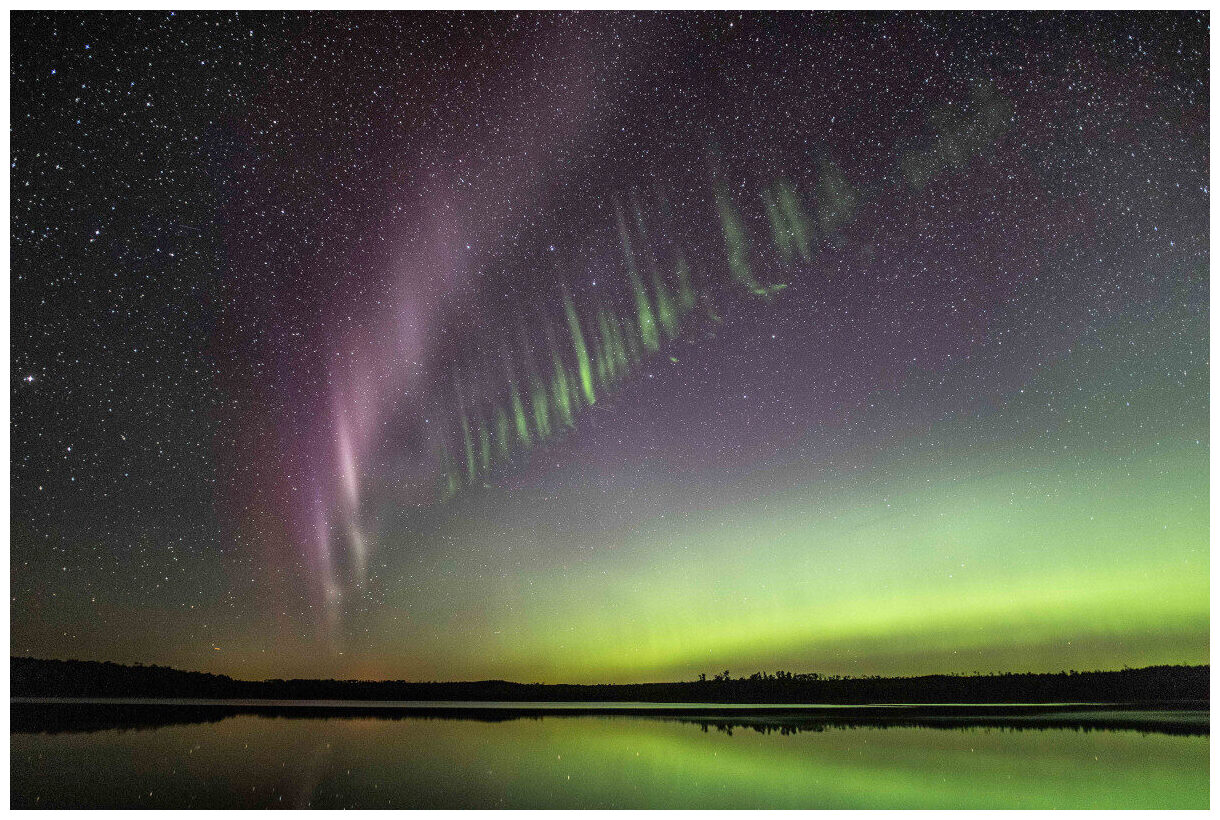
© Copyright Neil Zeller, used with permissionTaken July 17, 2018, at Little Kenosee Lake, Saskatchewan, Canada, this photo shows the tiny green streaks below STEVE. Neil Zeller, photographer and co-author on the paper, commented “STEVE was bright and powerful for a full hour that night.”
"Often in physics, we build our understanding then test the extreme cases or test the cases in a different environment," Elizabeth MacDonald, a space scientist at NASA's Goddard Space Flight Center in Greenbelt, Maryland, explains. "STEVE is different than the usual aurora, but it is made of light and it is driven by the auroral system. In finding these tiny little streaks, we may be learning something fundamentally new in how green auroral light can be produced."
These "tiny little streaks" are extraordinarily small point-like features within the green picket fence of STEVE. In a new paper for AGU Advances, researchers share their latest findings on these points. They suggest the streaks could be moving points of light - elongated in the images due to blur from the cameras. The tip of the streak in one image will line up with the end of the tail in the next image, contributing to this speculation from the scientists. However, there are still a lot of questions to be answered - determining whether the green light is a point or indeed a line, is one extra clue to help scientists figure out what causes green light.
"I'm not entirely sure about anything with respect to this phenomenon just yet," Joshua Semeter, a professor at Boston University and first author on the paper, said. "You have other sequences where it looks like there is a tube-shaped structure that persists from image to image and doesn't seem to conform to a moving point source, so we're not really sure about that yet."






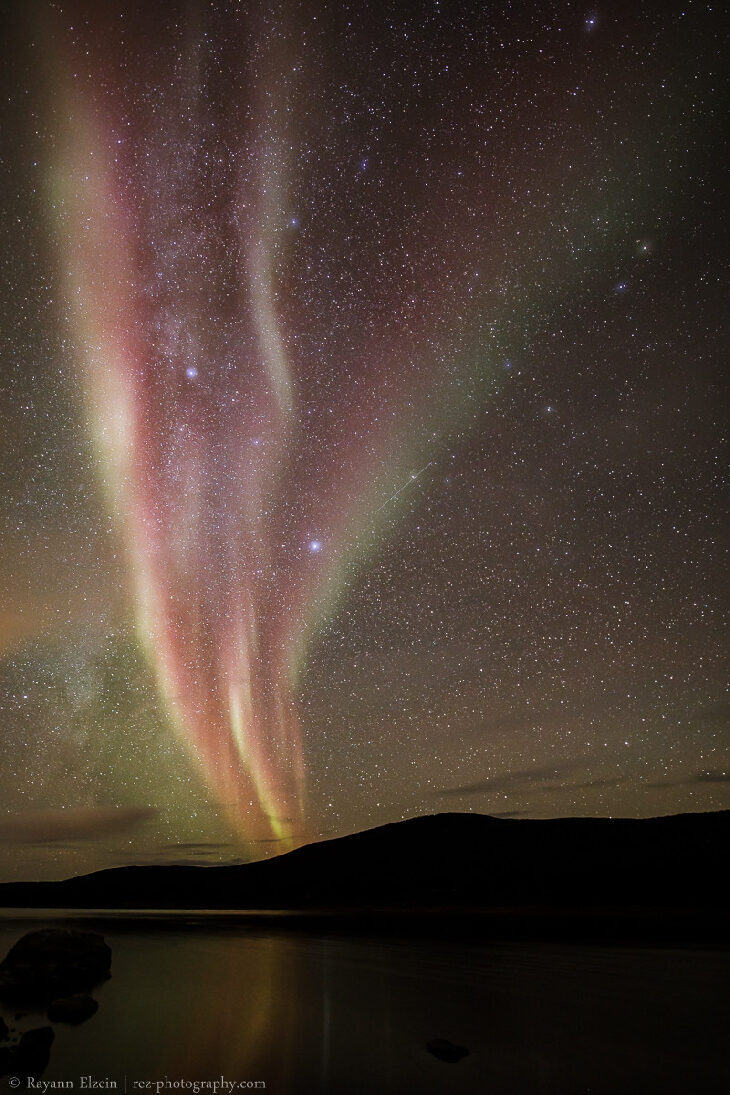
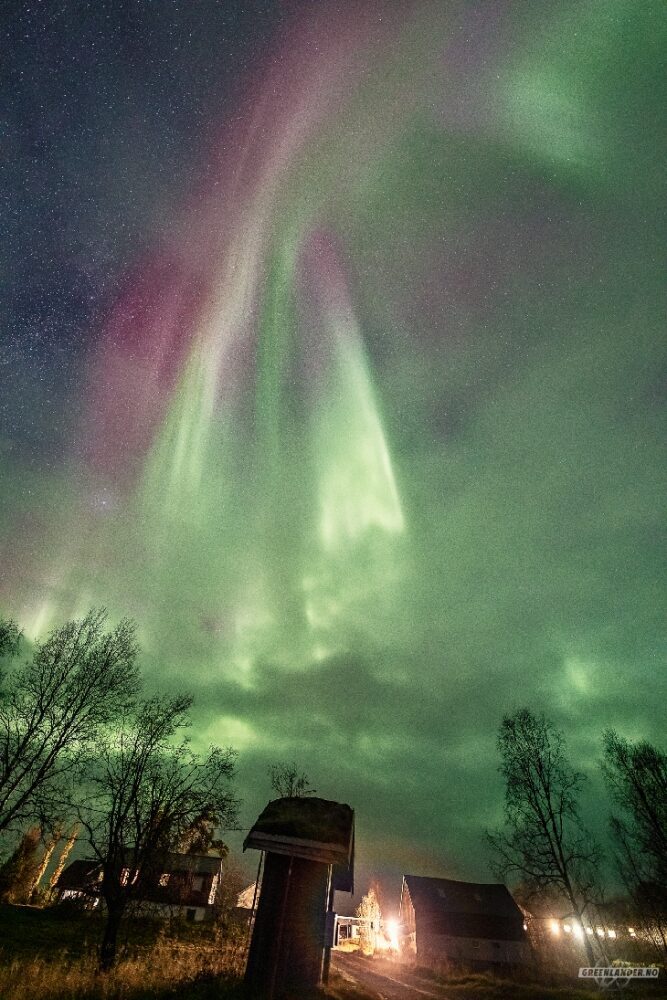



Comment: Rare red auroras captured over Utsjoki, Finland