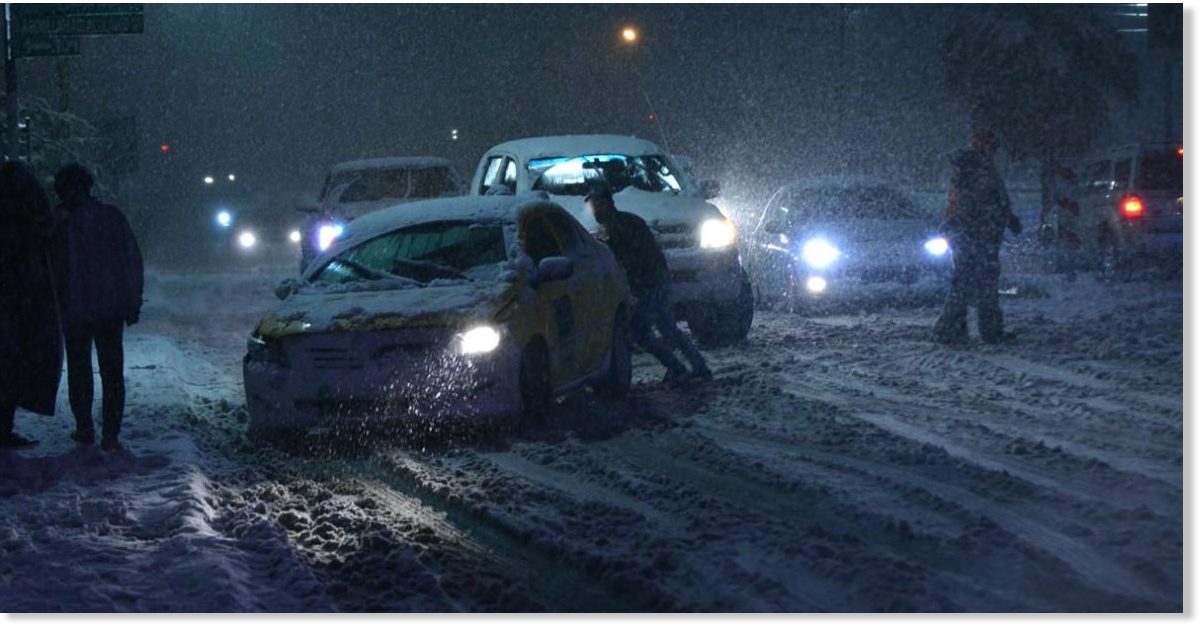
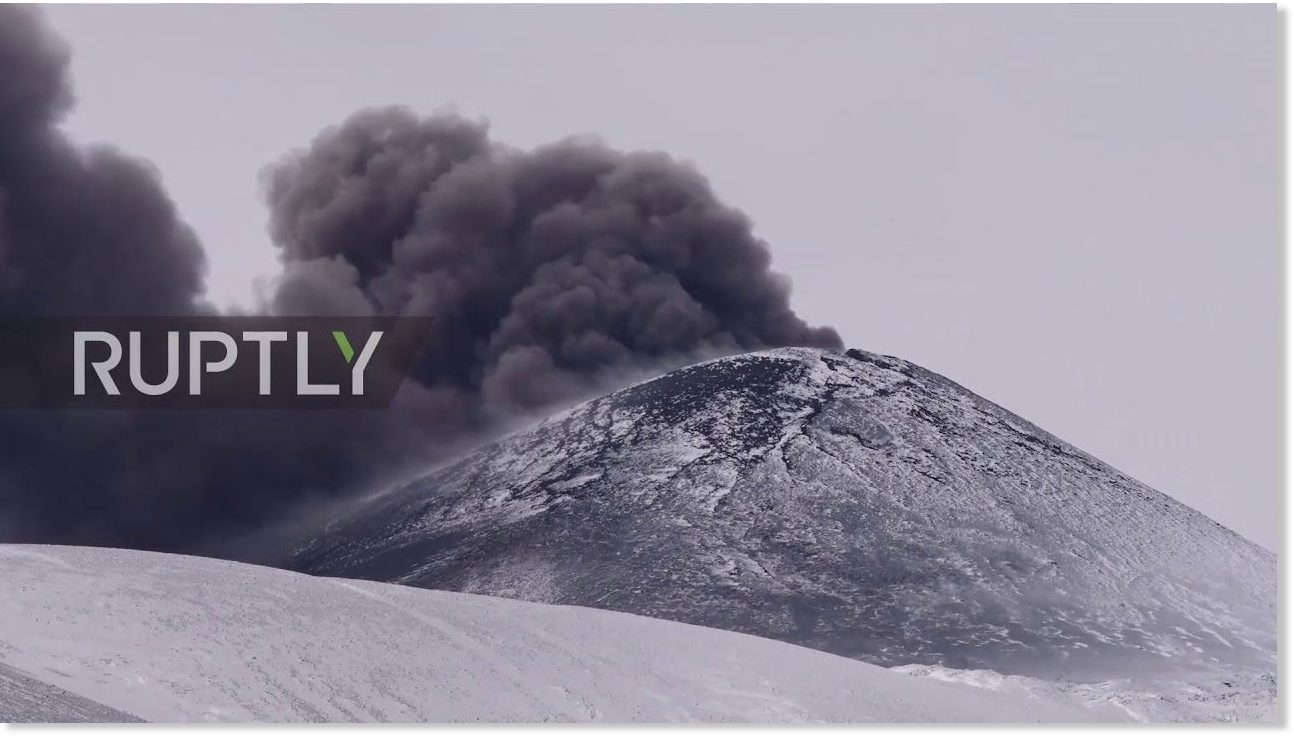
Unusual fog, thunderstorms, blizzard and lightning in Moscow and parts of Russia, the front is heading to Kazakhstan. More mixed up jet streams with electrical storms over Malta as Etna on Sicily erupts and a second major snow storm blankets Jordan and Lebanon.
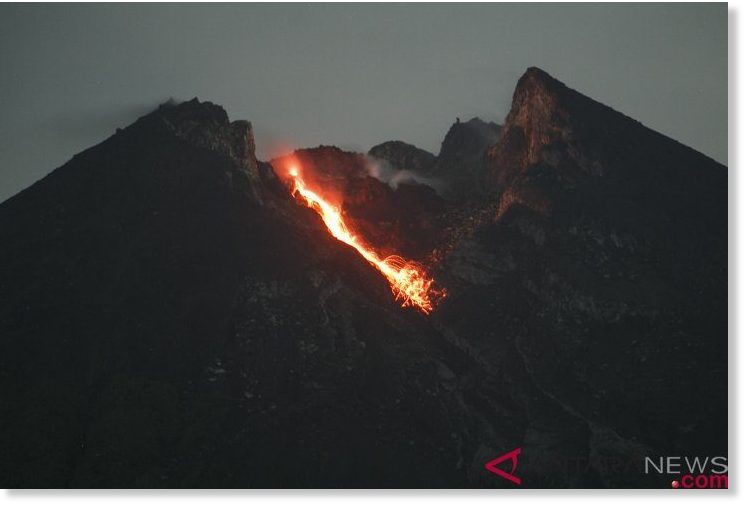
Mount Merapi, which straddles the provinces of Central Java and Yogyakarta, spewed incandescent lava nine times on Saturday, the Center for Technological Research and Development for Geological Disasters (BPPTKG) in Yogyakarta stated.
On its official twitter account, the BPPTKG recorded nine lava falls between 00.00 and 6 a.m. local time on that day.
The distance that the lava slid could not be observed, as haze shrouded the volcano. According to seismic data, the duration of the lava falls was 14 to 36 seconds.
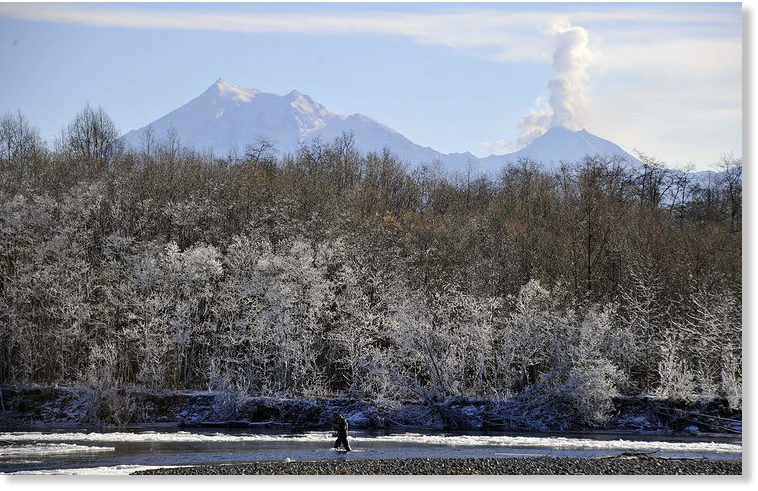
Volcanologists have registered increased activity at the Shiveluch volcano since the start of December
Volcanologists have registered an eruption of the Shiveluch volcano in Russia's Far East, the Kamchatka Volcanic Eruption Response Team (KVERT) told TASS on Thursday.
"The eruption of the Shiveluch volcano has started. Lava is coming down the slopes," KVERT said.
Volcanologists have registered increased activity at the Shiveluch volcano since the start of December. Over the last weeks, the volcano has been shooting colums of ash into the air almost every day. Scientists do not rule out that this may mean that a powerful eruption is about to happen.
The volcano is 3,283 m high. It last erupted in 2010.
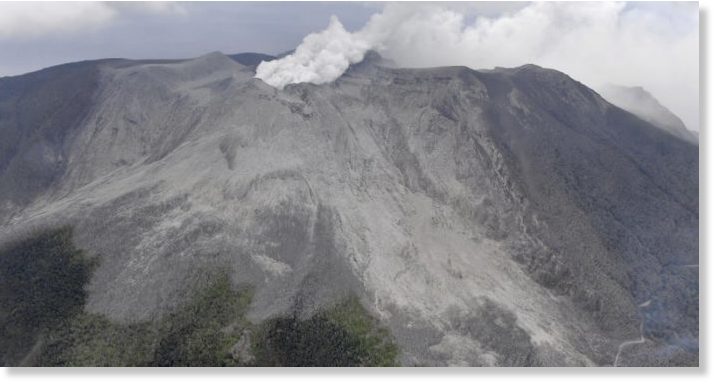
A smoke column rises from Shindake volcano after its eruption in Kuchinoerabu island, southern Japan, Thursday, Jan. 17, 2019.
A volcano erupted on a remote island in southern Japan on Thursday, the meteorological agency said, but the warning level was kept below the scale requiring evacuation.
The Japan Meteorological Agency said the volcano on Kuchinoerabujima island, roughly 1,000 km (620 miles) southwest of Tokyo, erupted at 9:20 a.m. (0020 GMT). Live images showed thick black smoke billowing out of the mountain.
The eruption had released pyroclastic flows, or flows of super-heated ash and gas, Kyodo News said, but the flows had not reached residential areas.
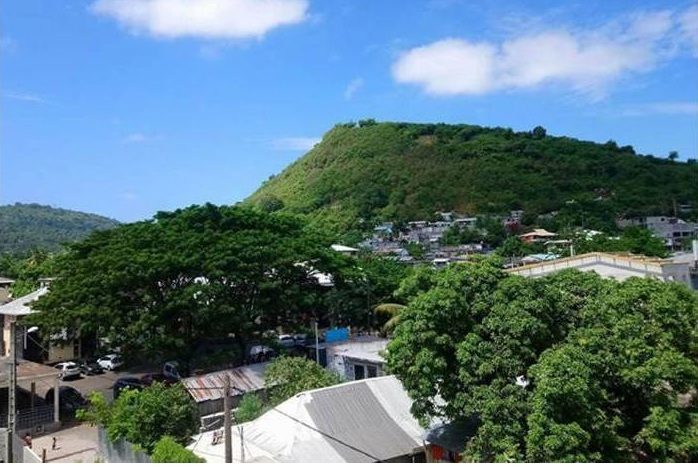
A large number of dead fish have been discovered by fishermen around the French Indian Ocean island of Mayotte, which has recently had an abnormal earthquake swarm, consisting of more than 1,440 tremors with a magnitude of 3.5 on the Richter scale since May 10 last year.
As well as visual observations of dead fish, including dolphins and manta rays, there have been reports of a strong "burnt" smell, which was "not bearable" that which covered "an area of several kilometers," according to a representative of fishermen as reported by 20minutes.fr.
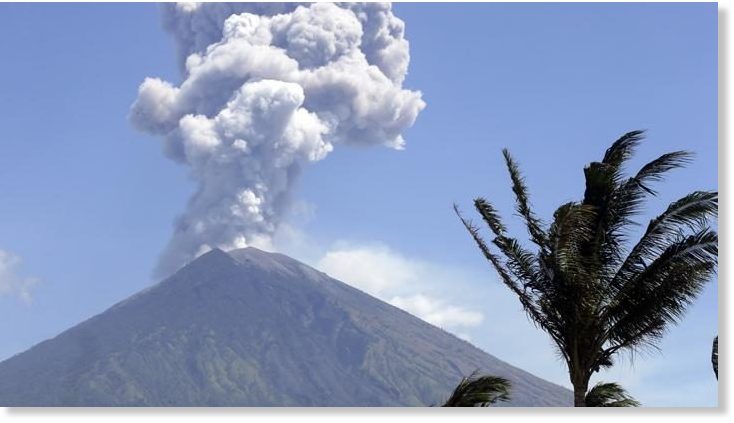
Mount Agung in Bali erupted on Thursday evening, January 10, at 17:55. The seismograph recorded eruptions with a maximum amplitude of 22 millimeters. The eruptions lasted for 4 minutes and 26 seconds.
Centre of Volcanology and Geological Hazard Mitigation (PVMBG) official said that the eruption last night was the second after December 30, 2018. Those were the first after five months of no eruption activities during the series earthquakes that hit Lombok, which began in July last year.
"Mount Agung has returned to its eruption phase before the Lombok Earthquake," Devy K Syahbana, the PVMBG's head of Eastern Region Volcano Mitigation Subdivision, said on Thursday.
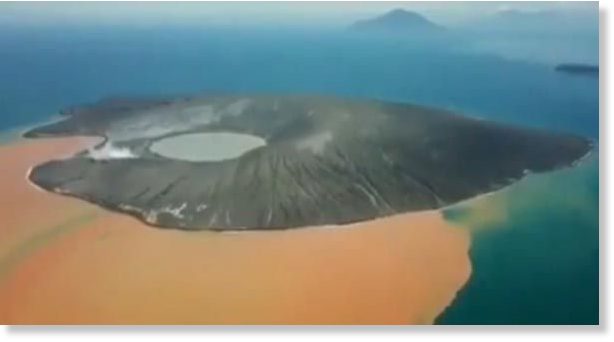
James Reynold visited the island recently and published the following video of the completely reshaped island of Anak Krakatau:
- The crater area has closed to become a lake which showed steaming (no explosions have been recorded since yesterday, as the activity has continued to calm down, perhaps only temporarily).
- The forest on the island is completely destroyed by ash fall and surges, but still visible.
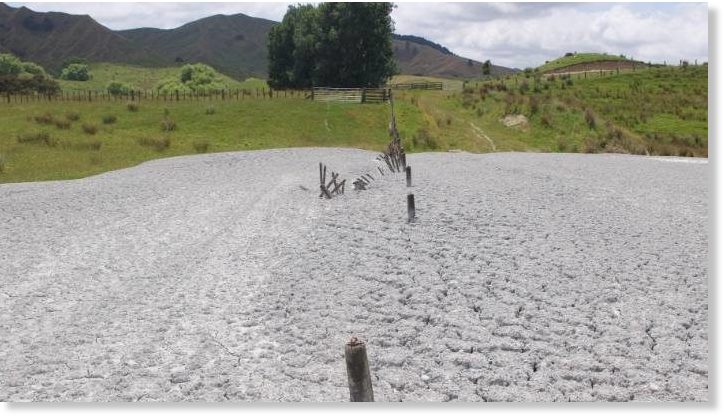
A mud volcano that erupted on a fenceline between two Gisborne farms is continuing to spew mud a month after it appeared.
A mud volcano is an eruption of mud, cold water and gases. This one, in the Waimata Valley, began on December 15.
Gisborne District Council scientist Murry Cave said the main eruption lasted five hours and spewed thousands of tonnes of mud over some 1.3 hectares, destroying a fenceline and partially burying trees.
"We've been monitoring the area for the last year or so because the area uplifted in the Te Araroa earthquake [in September 2016] and there were a lot of cracks," he said.
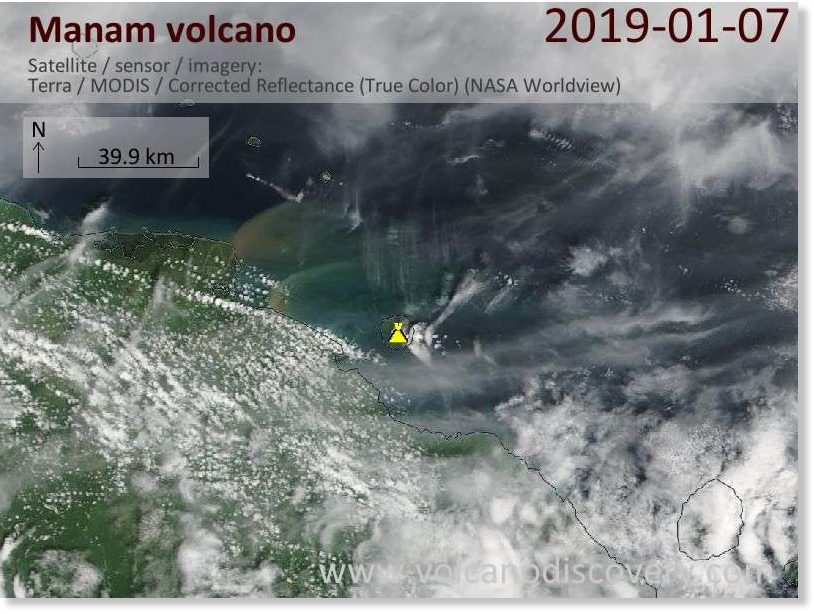
One of Papua New Guinea's most active volcanoes has erupted, authorities said Tuesday, pummelling villages on a remote island with volcanic rock before subsiding.
Manam island is a volcanic cone that towers out of the sea north of the Papua New Guinea mainland and has a history of eruptions, with major activity in November 2004 forcing the evacuation of some 9,000 people.
The volcano has erupted a number of times since then and spewed lava and ash last month.
A series of tremors around Manam triggered a warning system on Monday and the volcano began erupting shortly after, the Rabaul Volcanological Observatory said.