Extreme Temperatures
S


Snowflake

Late snowstorm hits California mountains

Lake Arrowhead
Lake Arrowhead
An unusual spring storm delivered a blast of winter weather to many parts of the Southland late Saturday and early Sunday morning, including snow to higher elevation areas.

A steady rain fell overnight Saturday from downtown Los Angeles all the way to the Grapevine, which winds through the San Gabriel and Tehachapi mountains. Temperatures in the Grapevine flirted with freezing and conditions were slick along Interstate 5. However, the freeway remained open and there were no major accidents.

Meanwhile, several inches of snow fell in the San Bernardino Mountain area of Lake Arrowhead. Caltrans was requiring chains for drivers on State Route 18, from Heaps Peak Dump to Big Bear Dam.


Snowflake Cold

Vineyards in France suffer at least €1 billion in damage after Spring freeze; the biggest disaster in a quarter century say vintners

Frost damage to French vineyards
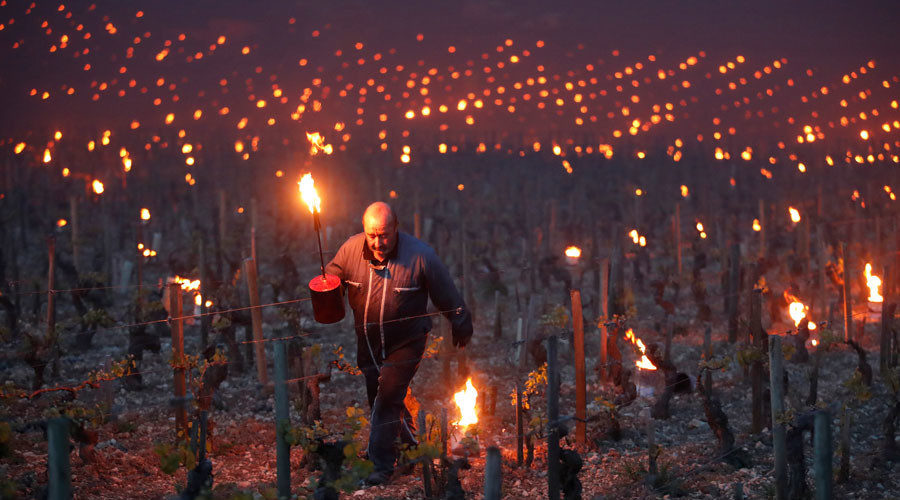
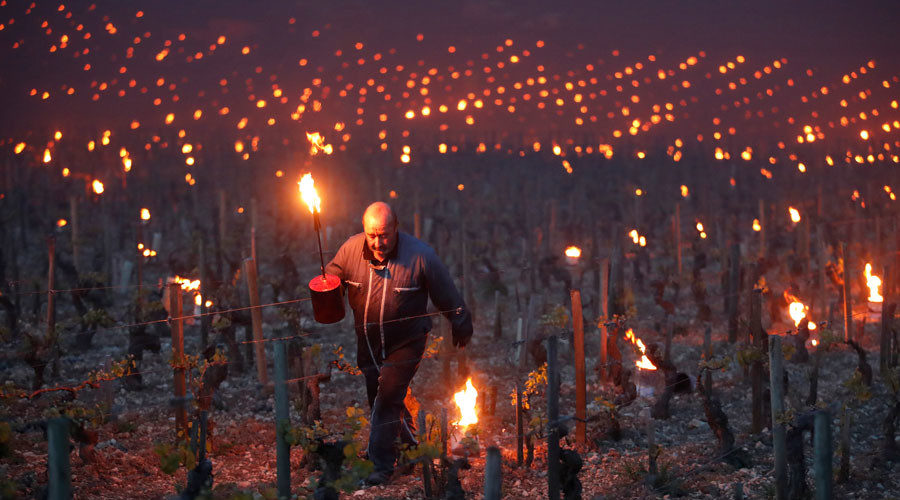
© Christian Hartmann / Reuters Workers and wine growers light heaters early in the morning, to protect vineyards from frost damage outside Chablis, France
Spring frost has ravaged production in some of France's most famous winemaking regions, including Champagne, Bordeaux, and Burgundy, causing at least €1 billion in damage in what vintners call the biggest disaster in a quarter century.

Temperatures plunged below freezing in late April, hurting shoots already well-developed because of earlier mild weather.

Winegrowers have used candles, heaters and even the down-draft from helicopters to try to save crops.

"It's a frost like we haven't seen since 1991," Paul-Francois Vranken, chief executive officer of Vranken-Pommery Monopole told Bloomberg, adding that winemakers "are worried."

April's frost damage spread across Europe's wine-producing regions, but France was worst affected.

According to the Bordeaux wine federation FGVB, frost affected as much as 60 percent of the Bordeaux wine-growing areas and will cut the volume of the 2017 vintage by as much as 40 percent. Some Bordeaux chateaus say they lost almost everything.

Comment: Other crop losses across the world due to cold & Mini Ice Age climate intensification


Snowflake Cold

Toronto headed for one of the most prolonged cold periods in over 40 years

Snowfall Forecast
© The Weather Network
The month of May begins on an unseasonable note for southern Ontario, with an extended stretch of below-seasonal temperatures in the region's forecast.

Much of the south of the province is also in line for a prolonged rainfall event, with parts of the southwest expected to see rainfall totals surpass 100 mm in some areas.

But that system will be accompanied by a cold snap. And by "cold snap," we not only mean single-digit daytime highs, there's also a fair chance many people in southern Ontario are likely to see a few snowflakes in their forecast by Sunday.

"The cold snap, which is expected to last five days, will be one of the most significant spans of cold weather Toronto has seen in May," The Weather Network meteorologist Tyler Hamilton says.

"The record for the most single-digit days in a row in May is five, and that was back in May of 1974," Hamilton adds. "Currently, we're forecast to get five days of single digits, making it one of the most prolonged cold periods in history."

Snowflake Cold

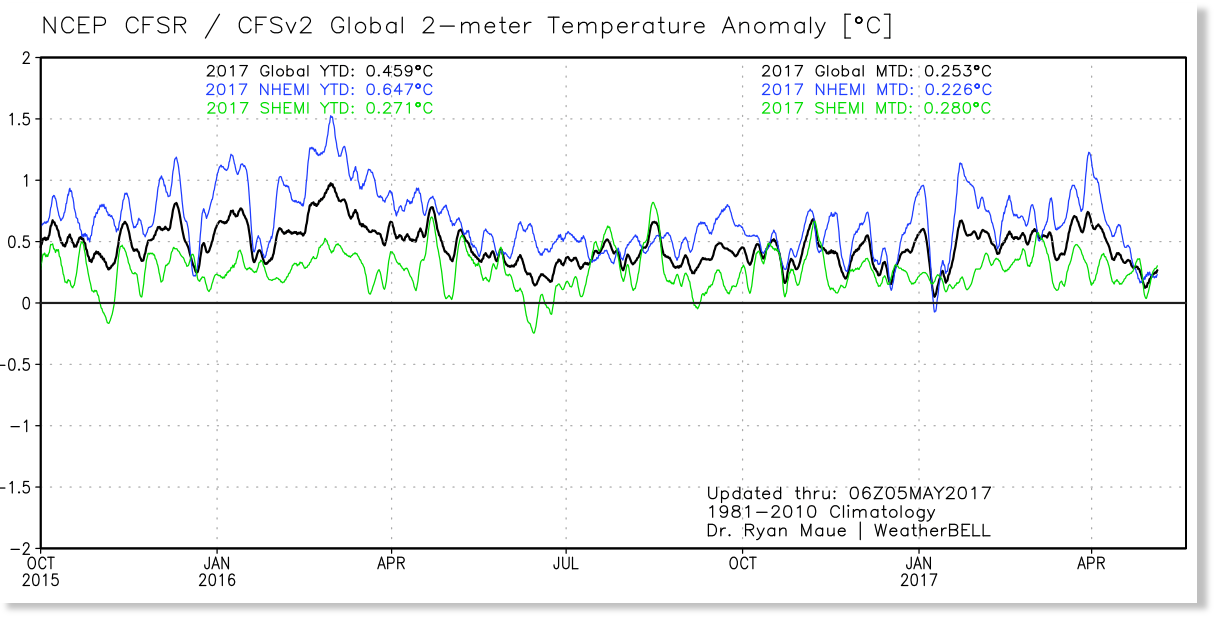
2017 cooler globally 0.44C than in 2016: Mini Ice Age 2015-2035

chart
April temperatures for 2017 are out and the definitively show 2017 global temperatures are 0.44C cooler than 2016. What happened to the projections of warming to infinity year upon year getting warmer?

Global 2 Meter shows the same.


Sources

Cow

Beef prices soar from Mini Ice Age wheat losses in America

Cow iN STALL
Beef prices gain most on record in a single session, this follows on record gain on wheat two days ago as a late season mini ice age blizzard destroyed a large portion of wheat across the USA. The assessment of damage of wheat called the "Kansas Wheat Tour" is now including Oklahoma as wiped out crop areas as well. The observers and agronomists plus government officials are bogged down by drifting snow and still area unable to even get to 100 sq miles of fields yet.


Sources

Snowflake Cold

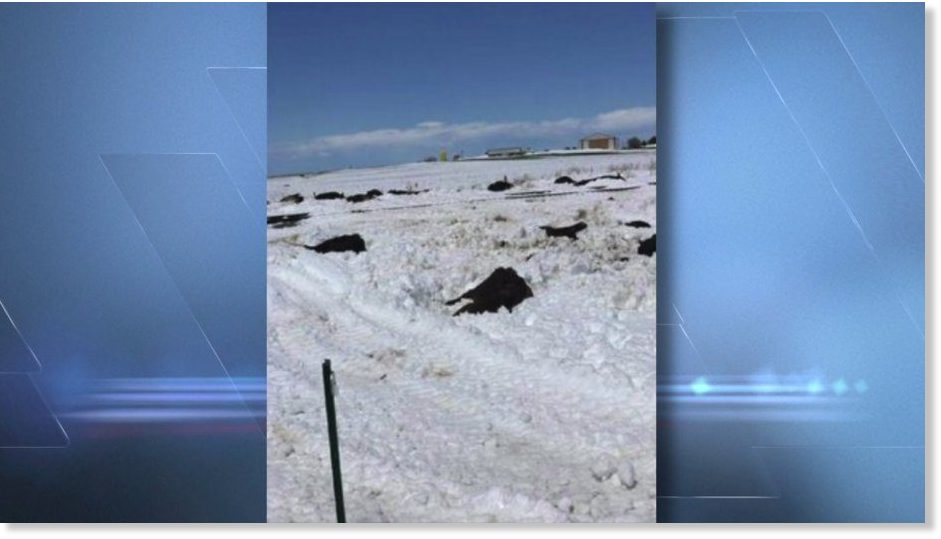
Thousands of cattle killed by spring snow storm in Colorado

  A storm that hit southeastern Colorado killed many cattle.
© Gary MelcherA storm that hit southeastern Colorado killed many cattle.
KUSA - The storm system that brought snow to the metro area over the weekend devastated parts of southeastern Colorado.

Farmers and ranchers in Baca and Prowers counties have lost cattle and countless crops due to the spring snow. The Colorado Farm bureau estimates the cattle deaths are into the thousands.

"Everybody is still out just trying to take care of what is alive," said farmer Gary Melcher. "They haven't had a chance to really analyze what the true loss is yet."

Even though the storm has passed ranchers are still trying to find animals that are still alive. Many of them were lost after fences collapsed under the weight of snow. Some of them are stuck, barely able to move through all that snow.

Snowflake Cold

Other crop losses across the world due to cold & Mini Ice Age climate intensification

Frost  damage
Frost damage
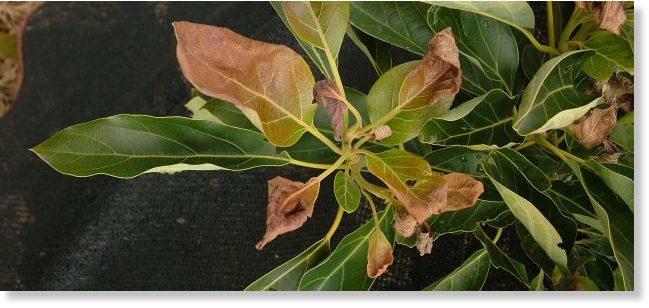
With the massive losses of at least 32% of US Winter wheat over the first week of May 2017, there are other agriculture losses mounting in regional areas, that when seen combined will add to the overall larger picture. Doubling avocado prices, lemon shortages, massive fruit losses across Europe, vineyards up to 50% loss. The mini ice age crop losses are beginning.


Sources

Comment: U.S. loses 30% of its wheat crop, first Mini Ice Age grain crop damage, global prices up


Better Earth

Some coral reefs are adapting to 'climate change' just fine

sea turtle on coral reef
WCS coral expert finds that some reefs were less sensitive to warming water over time

A new WCS study reveals evidence that some corals are adapting to warming ocean waters - potentially good news in the face of recent reports of global coral die offs due to extreme warm temperatures in 2016. The study appears in the latest issue of Marine Ecology Progress Series.

The study looked at responses to extreme temperature exposures in the same reefs over time, and found less coral bleaching in 11 of the 21 coral species studied. WCS Senior Conservation Zoologist Tim McClanahan, who has been studying coral responses to climate change since the extreme temperatures of the1998 El Nino, authored the study.

The study took place in two marine national parks of Kenya. Looking at two similarly severe warming events in 1998 and 2016, McClanahan found that the number of pale and bleached coral colonies declined from 73 to 27 percent, and 96 to 60 percent in the two parks with different background temperatures. Most of this change was due to about half of the most common species that did not bleach strongly in 2016. One rare species was, however, more sensitive than in 1998.

Ice Cube

U.S. loses 30% of its wheat crop, first Mini Ice Age grain crop damage, global prices up

Wheat field in western Kansas almost completely covered by snow during the morning of April 29, 2017.
© Justin GilpinWheat field in western Kansas almost completely covered by snow during the morning of April 29, 2017.
The final piece of the puzzle to confirm the Mini Ice Age crop losses have begun and we are indeed transiting into this society changing event was today May 02, as the US lost 20 million acres of wheat due to cold, wind and snow damage. It's now a balancing act of small producers to make up for large producer losses.

The emotions you are feeling is a combination of a step up in the Schumann Resonance of our Earth and the electrical intensification from our Sun during the last solar storm with blue and white auroras.

Other countries lost wheat production as well, but some gained, although the US and Russia are the two main global producers. Losses from this point will mount along with global food price increases.

The Mini Ice Age has begun today!


Sources

Ice Cube

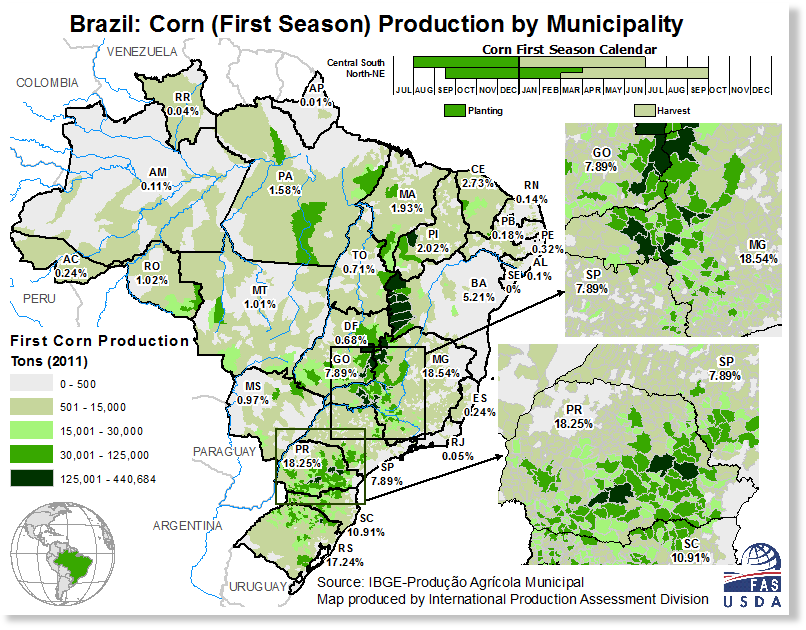
Brazil - Record Cold Threatens Safrinha Corn

brazil corn
Record cold temperatures for the end of April. Farmers worry the next blast could be even colder. Safrinha corn needs to be frost free until at least early June to avoid potential damage.

28 April - According to the Brazilian National Institute of Meteorologia, temperatures in the higher elevations of the state of Santa Catarina fell to -1.1°C (30°F) on Thursday morning.

Temperatures all across southern Brazil are expected to set record lows below 10°C (50°F) for the next several nights in all of three state capitals including Curitiba in Parana, Florianopolis in Santa Catarina, and Porto Alegre in Rio Grande do Sul. The low temperatures Friday night in the state of Parana could drop to -5°C (23°F) in higher elevations with the possibility of frosts across the state until Sunday night.