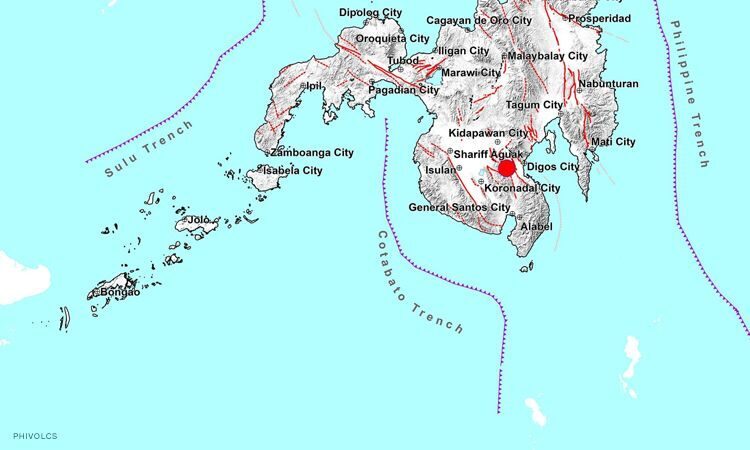
A magnitude 6.3 earthquake struck at Magsaysay, Davao del Sur past noon on Sunday noon, state seismologists reported, noting aftershocks were expected.
In an earthquake bulletin, the Philippine Institute of Volcanology and Seismology, or Phivolcs, said the tremor struck 6 kilometers southeast of Magsaysay at 12:22 p.m.
It had a depth of 15 kilometers and was tectonic in origin, indicating it was caused by a movement in the Earth's crust.
Intensity 5, rated by Phivolcs as "strong," was felt in Kidapawan City, Arakan, Carmen, Kabacan, Makilala and M'Lang, North Cotabato; City of Koronadal and Banga, South Cotabato; Matalam, Cotabato; Bansalan, Hagonoy, Magsaysay and Sta. Cruz, Davao del Sur.
Intensity 4 or "moderately strong" was recorded in Davao City; Banisilan and Midsayap, North Cotabato; Don Carlos, Bukidnon; Polomok, Sto. Nino and Norala, South Cotabato South Cotabato; Alabel, Kiamba and Malapatan, Saranggani; Palimbang and Tacurong, Sultan Kudarat.
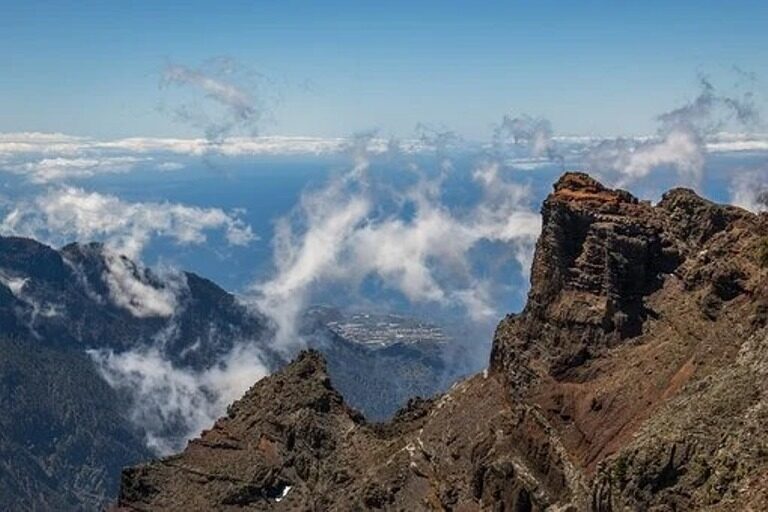
140 EARTHQUAKES have been detected on the Island of La Palma under the Cumbre Vieja volcano.
The seismic swarms are being monitored by the Canary Islands Volcanological Institute (Involcan), that is operated by The Canary Islands Seismic Network. They have detected a new swarm of quakes below La Palma's Cumbre Vieja volcano.
According to Involcan both visitors to La Palma and local residents are not in any danger and should not be worried about the seismic swarm, as the depth of the earthquakes combined with the small magnitudes is not currently any cause for concern. What has been requested though is that the population keep aware of their environment and ensure they are fully aware of what to do if the volcanic activity starts to change.
Comment: According to a paper published in 2001, geological evidence suggests that a future eruption at Cumbre Vieja volcano could cause a catastrophic failure of its west flank and produce a 10-25m tsunami that would inundate the coast of Florida:
Cumbre Vieja Volcano -- Potential collapse and tsunami at La Palma, Canary Islands
Abstract.
Geological evidence suggests that during a future eruption, Cumbre Vieja Volcano on the Island of La Palma may experience a catastrophic failure of its west flank, drop-ping 150 to 500 km3 of rock into the sea. Using a geologically reasonable estimate of landslide motion, we model tsunami waves produced by such a collapse. Waves generated by the run-out of a 500 km3 (150 km3) slide block at 100 m/s could transit the entire Atlantic Basin and arrive on the coasts of the Americas with 10-25 m (3-8 m) height.
[...]
Figure 4. Evolution of the La Palma landslide tsunami from 2 minutes (a, upper left) to 9 hours (i, lower right). Red and blue con-tours cover elevated and depressed regions of the ocean respectively and the yellow dots and numbers sample the wave height,positive or negative, in meters. Note the strong influence of dispersion in spreading out an original impulse into a long series of waves of decreasing wavelength. See also that the peak amplitudes generally do not coincide with the first wave. Even after cross-ing the Atlantic, a lateral collapse of Cumbre Vieja volcano could impose a great sequence of waves of 10-25 m height on the shores of the Americas.
Authors:
Steven N. Ward Institute of Geophysics and Planetary Physics, University of California, Santa Cruz California, USA
Simon DayBenfield Greig Hazard Research Centre, Department of Geological Sciences, University College, London, UK
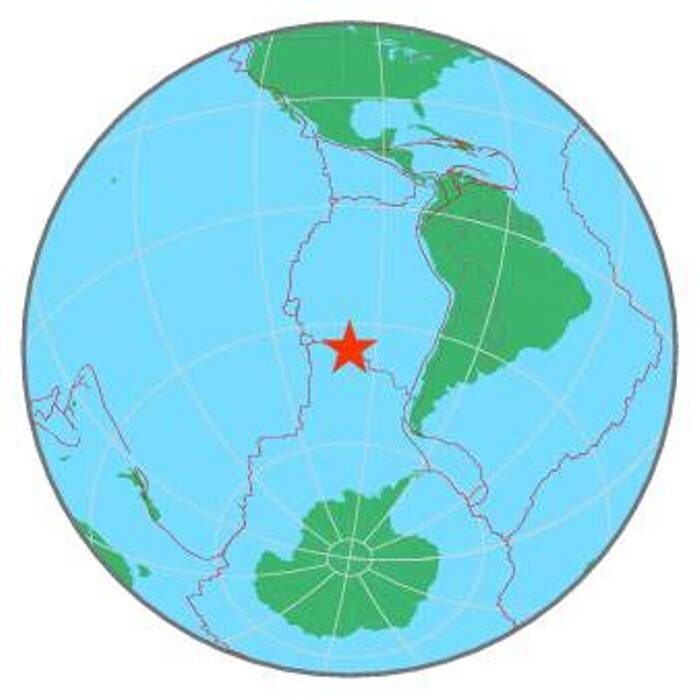
A tsunami was not expected after a 6.6 magnitude earthquake struck in sea southeast of Easter Island, Chile, the U.S. Tsunami Warning Center said.
The quake struck at a depth of 10 kilometers (6.21 miles)with its epicenter about 1,483 km southeast of Hanga Roa, Easter Island, according to the U.S. Geological Survey.
(Reporting by Shubham Kalia in Bengaluru; Editing by Himani Sarkar)
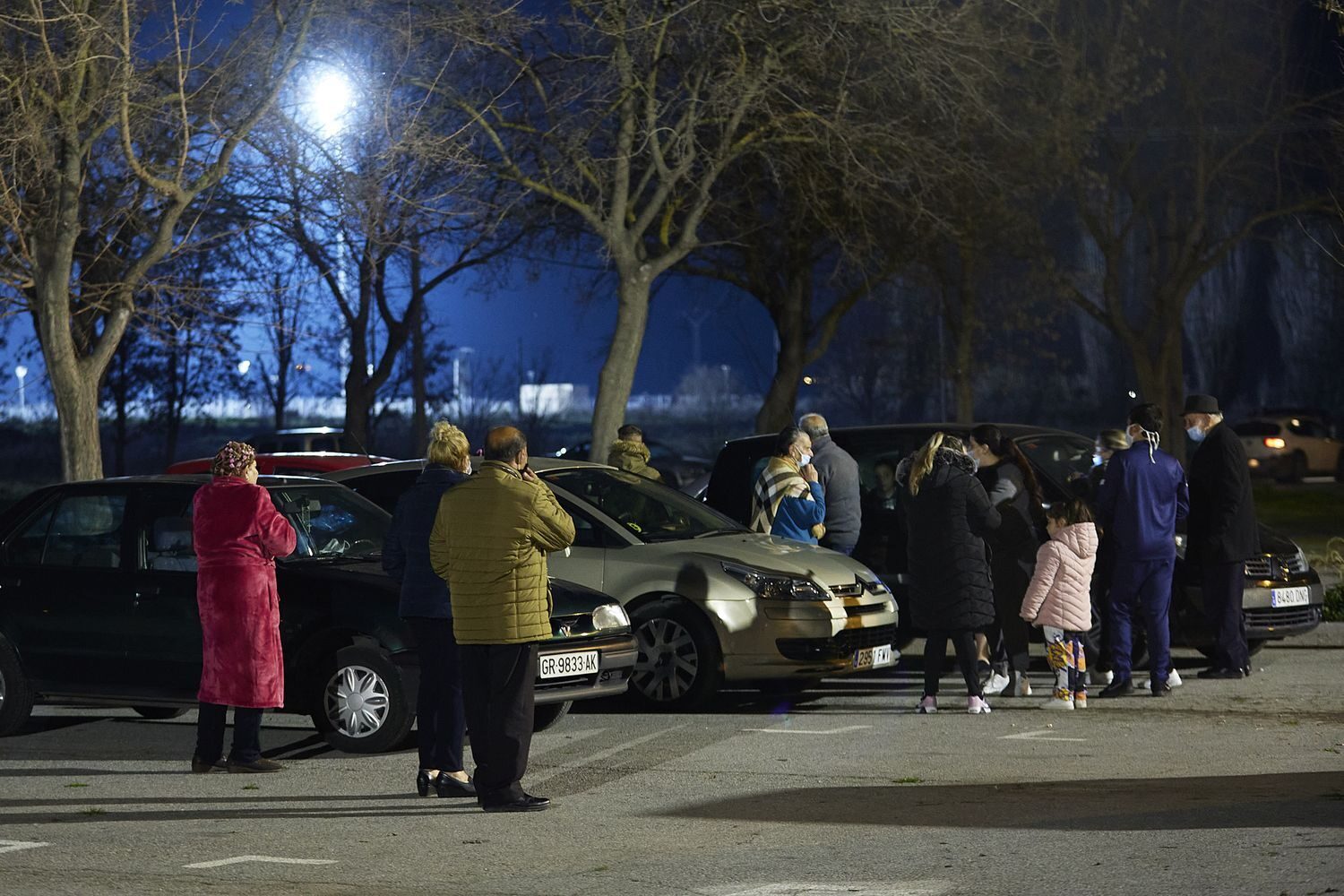
The tremors have caused widespread alarm among local communities, with some families opting to sleep in their cars in open spaces due to fears of staying in their homes
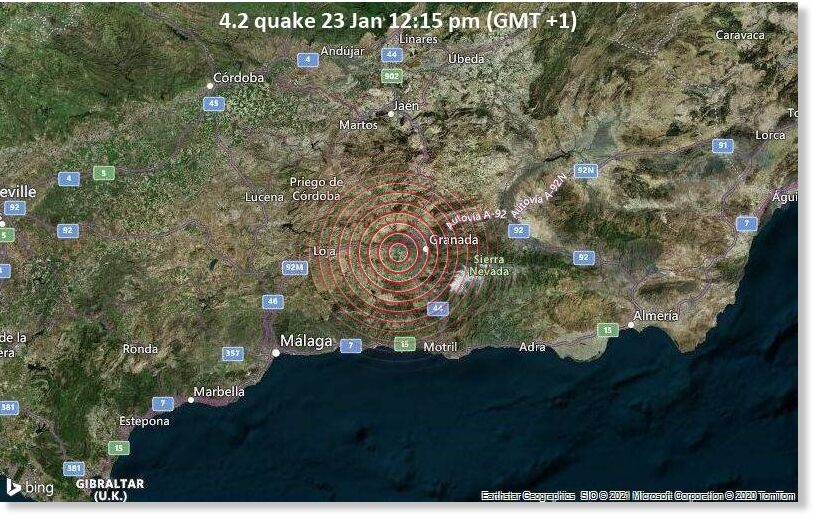
Granada province, in southern Spain, was hit on Thursday by 49 earthquakes, according to the National Geographic Institute (IGN). The largest of these, with a magnitude of 4.3 on the Richter scale, struck at 7.49pm at a depth of three kilometers. The city of Granada and its metropolitan area had already been shaken by 42 tremors of varying magnitudes before the latest ones were felt.
Local police in the municipality of Santa Fe, the epicenter of the 4.3-magnitude quake, said that one building had suffered minor damage, but did not pose any risk. Officers did, however, warn citizens to take care when passing by certain areas of the city center, which are home to a large number of old buildings.
Comment: Seismic and geologic activity of all kinds appears to be on the rise:
The Department of Science and Technology (DOST) in Central Luzon has intensified its monitoring of Mt. Pinatubo following a series of earthquakes that was detected in the area.
Julius Ceasar Sicat, DOST Region 3 director, told Bulacan Ronda Balita that they are closely monitoring the volcano with ongoing upgrades to the Pinatubo Volcano Network (PVN) and upcoming geochemical surveys of the Pinatubo crater lake and the condition of the volcano.
In an advisory, DOST-Philippine Institute of Volcanology and Seismology (Phivolcs) showed that since January this year, the PVN and the Philippine Seismic Network (PSN) have detected a total of 826 imperceptible earthquakes east-northeast of Mt. Pinatubo in the Mabalacat, Pampanga area.
They said that although there is no threat yet from the recent earthquake activities, the communities and local government units (LGUs) near the volcano were alerted against future earthquakes and volcanic hazards.
Mount Pinatubo erupted 29 years ago and killed hundreds of people. The volcano discharged millions of tons of sulfur dioxide into the atmosphere.
New Zealand is located in a seismically active zone known as the Ring of Fire and regularly suffers from powerful earthquakes.
A powerful 5.8-magnitude earthquake jolted the Auckland Islands, an archipelago 465 kilometres south of the South Island at 05:47:53 UTC, United States Geological Survey said on Sunday.
The seismic activity was registered at a depth of 10 kilometres by the USGS. The European-Mediterranean Seismological Centre, however, reports that the epicentre of the quake was determined to be at a 2 kilometre-depth.
No data of any injuries or damage have been reported so far.
The country is situated in a collision zone between the Indo-Australian and Pacific tectonic plates, and earthquakes occur frequently. The region is part of the Pacific Ocean basin's "Ring of Fire", famous for earthquakes and volcanic eruptions.
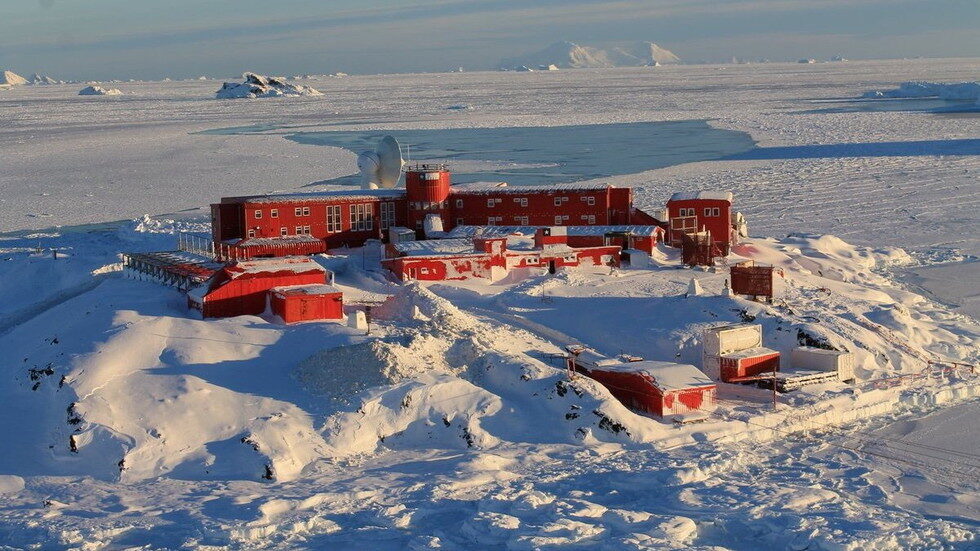
A 7.0-magnitude earthquake and several aftershocks have rattled Chile, triggering panic as authorities issued a nationwide tsunami alert while only seeking to evacuate the country's largest research station in Antarctica.
The strongest of over half a dozen jolts struck South Shetland Islands 216 kilometers northeast of Chile's O'Higgins scientific base at 8:36pm, while another 5.8 quake shook the Chile-Argentina border region close to the capital, Santiago around 30 minutes later.
While the warning was only meant for the coastal regions of Antarctica, people all across Chile received messages urging them to abandon coastal areas due to a tsunami threat, triggering much confusion.
Disaster Compilations YouTube Sat, 23 Jan 2021 19:03 UTC
(Translated from Spanish): An earthquake of intensity 4.4 on the Richter scale shook the city of Granada and its metropolitan area at 12:15 pm on Saturday. The earthquake has caused a slight injury and many damages in homes, supermarkets, schools and some heritage elements in the city of Santa Fe, 12 kilometers from the capital, where the earthquake has had its epicenter. According to the National Geographic Institute (IGN), the earthquake occurred five kilometers deep.
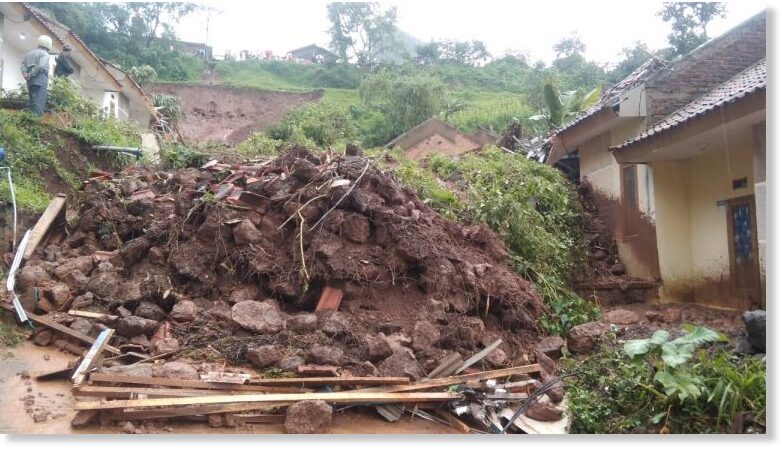
Authorities in Indonesia say the country has seen 185 disasters since the start of the year, including earthquakes, tornadoes, landslides and floods.
According to the National Disaster Management Agency, BNPB, hydrometeorological disasters dominate the list, with 127 flood events and 30 landslides recorded in several regions of the country during the period 01 to 21 January 2021.
At least 166 people have died in the disasters, including 91 in earthquakes, 41 in landslides and 34 as a result of floods.
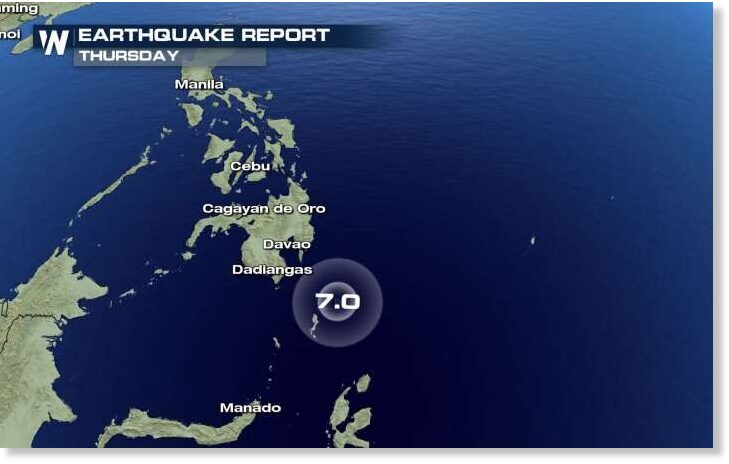
A powerful earthquake shook parts of the southern Philippines on Thursday night, but authorities said it was too deep to cause major damage and no tsunami warning was issued.
The quake measured magnitude 7.0 and was located 95.8 kilometers (60 miles) below the sea and about 210 kilometers (130 miles) southeast of Pondaguitan in Davao Occidental province, the U.S. Geological Survey said.
In Davao city, President Rodrigo Duterte's hometown, some residents ran out of their houses as the ground shook and power cables and business signs swayed, but there were no reports of damage or injuries. Duterte was in the presidential palace complex in Manila.
Comment: According to a paper published in 2001, geological evidence suggests that a future eruption at Cumbre Vieja volcano could cause a catastrophic failure of its west flank and produce a 10-25m tsunami that would inundate the coast of Florida: See also: Landslide induced mega-tsunami 'could happen at anytime' at Alaska's Barry Glacier