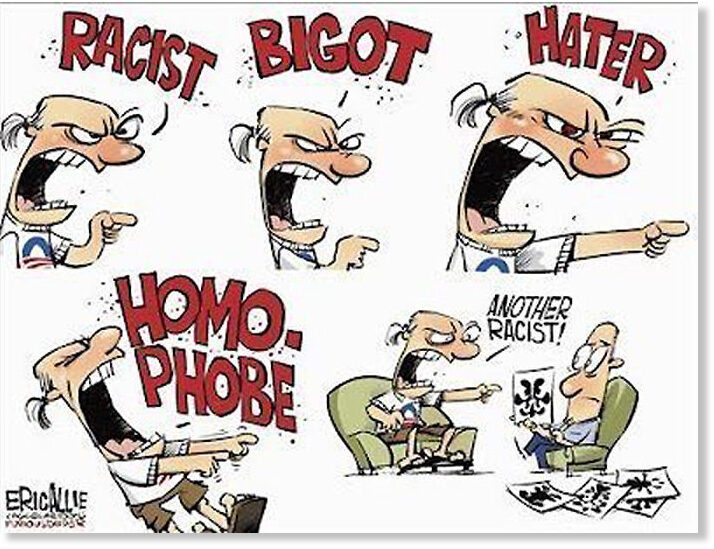
© Ericallie
The list is long and keeps getting longer, as if we had entered an age of the race for victim-hood. Most of those minorities consider themselves as 'Social justice warriors' or SJWs. I'll try to explain how SJWs ended up imposing their vision of the world on the majority and where this raging proselytism displayed by SJWs comes from.
Many terms have been used to describe the dystopian world in which we find ourselves: materialist, scientist, atheist, individualistic, rationalist, consumerist. They all are valid descriptions, although they only address one of the facets of our global society.
Recently some thinkers attempted to give a more extensive assessment of our society and described it as nihilistic, relativist, post-modern. What those three terms have in common is that they make the claim that there can be no objective truth, no objective meaning and no objective moral values.
But when you observe the vehement proselytism displayed by 'acting' minorities, it seems that they strongly believe they hold truth and they are very willing to fight for it. How can this be in a nihilistic/relativist/postmodern society, where there is no truth, no future and no goal?
Along with tracking the fundamental causes and origins of the fervor and proselytism displayed by 'dominant' minorities, I'll try to describe the current dynamics and show that they go way beyond 'nihilism'. That's why I use the term 'post-nihilism' to account for the society that emerges after the transitory 'nihilistic' phase.