SOTT Focus:


Cloud Lightning

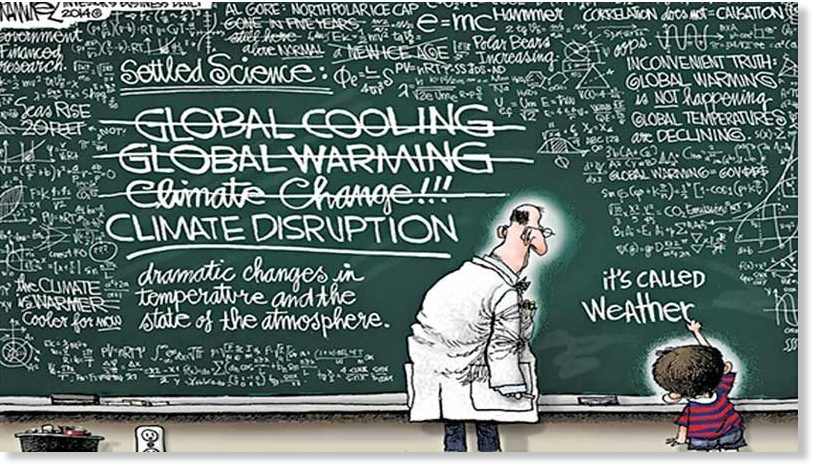
SOTT Focus: The Guardian Officially Goes Full Climate Alarmist Language

Climate change terms
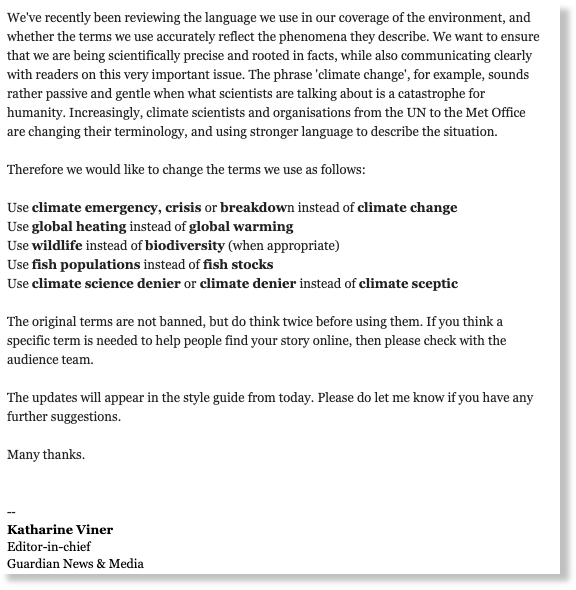
The Guardian's editor has just issued this new guidance to all staff on language to use when writing about climate change and the environment...and it is full-on alarmism. No holding back punches now, because it's a crisis, so let's start writing like one! Josh helps us understand the real message.

Guardian new language on climate change

SOTT Logo Radio

SOTT Focus: Objective:Health #15 - The Dangers of 5G & WiFi - With Scott Ogrin of Scottie's Tech.Info

O:H header
On this episode of Objective: Health, Elliot Overton and Doug DiPasquale are joined by Scott Ogrin of Scottie's Tech.Info for a discussion of the health implications of 5G wireless technology.

While wireless technology is progressing at a break-neck pace, with newer, better, faster innovations seemingly appearing every year, little attention is paid in the mainstream as to the possible negative repercussions.

It seems that technological progress is treated as of ultimate importance, with almost no attention paid to the health consequences. While many scientists (backed up by over 28,000 scientific studies) are sounding the alarm on the negative health effects of wireless communication, its infrastructure and devices; they are ignored by the regulatory bodies, industry and governments who continue to push things forward - beholden to the almighty dollar.

With promises of a 5G digital utopia just around the corner, is anyone listening to these very real concerns? Are we on the verge of a health apocalypse? Is 5G really that bad? Can anything be done on an individual level to mitigate the damage?

Join us as we talk to Scott Ogrin of Scottie's Tech.Info, who has done a deep dive on the research and helps us answer some of these questions and more.


Running Time: 01:21:29

Download: MP3 - 74.2 MB


SOTT Logo Radio

SOTT Focus: MindMatters: Forgotten Ideals: Christianity and the Foundation of Western Civilization

stark christianity
© SOTT.net
Everyone is by now well aware, whether through personal experience or vicariously via the news, of the toxic legacy of Christian fundamentalism. Whether it's authoritarian dogma or the many scandals that have plagued the Catholic church, many so-called 'Christians' have given plenty of ammo to their accusers. Meanwhile individuals are largely left to fend for themselves in a society that was founded on Christianity but that is overwhelmingly nihilistic and materialistic, denying its own history in the process.

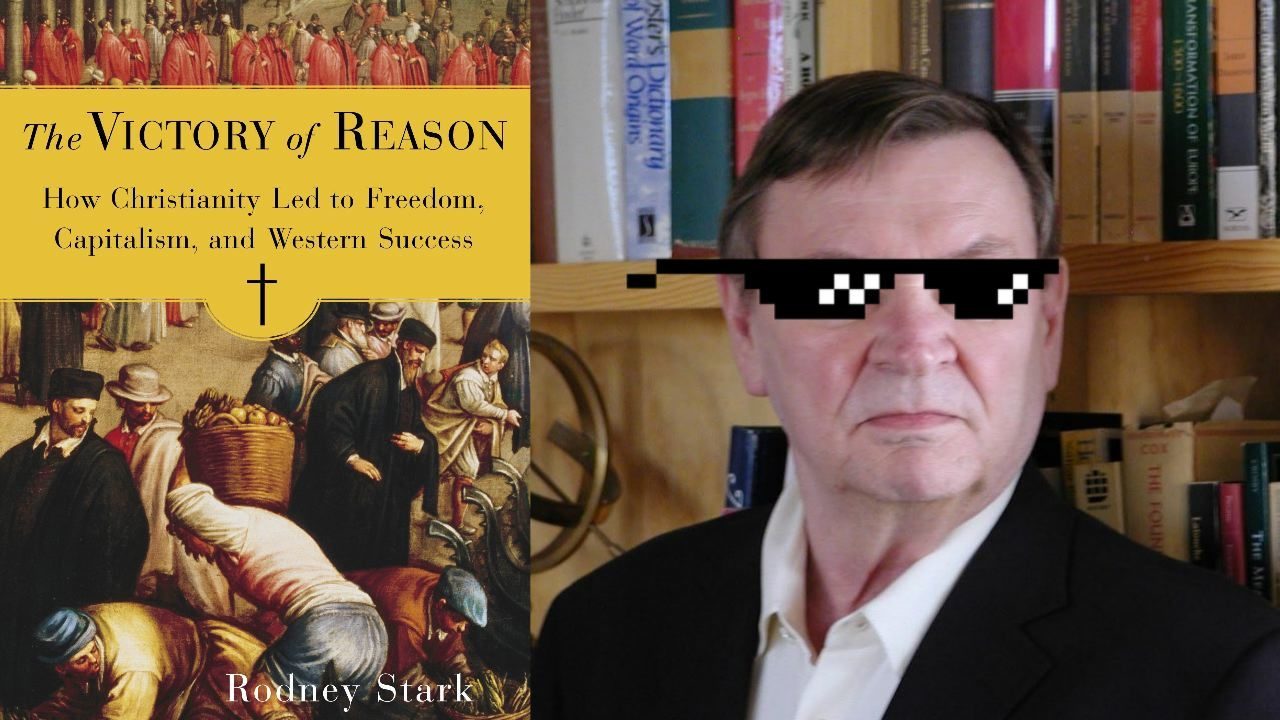
So today, on MindMatters, we discuss those aspects of the Christian belief system that may well be worth keeping and that have definitively shaped our world. Using sociologist of religion Rodney Stark's book Victory of Reason: How Christianity Led to Freedom, Capitalism, and Western Success, we discuss how Christian beliefs formed the moral matrix of the Western mind from the collapse of Rome onwards. As Stark argues, centuries of belief in free will and individual responsibility in an intelligently designed universe provided the primary impetus for the West to abolish slavery, institutionalize science, use capitalism to improve the lot of the common man, and even pursue the freedom to repudiate Christianity itself.

If he's correct, then losing sight of what these Christian beliefs once stood for (and no they're not just 'fairy tales and dogmatic superstitions') we lose sight of the higher motivation that led ordinary people to found these great enterprises - arguably the few positive aspects of Western society left. So, while today it is fashionable to deny that consciousness exists, and that beliefs can have any impact on reality, today we will be entertaining a different hypothesis - that what we believe matters, and that, in order to understand our history, we should understand the good inherent within Christianity and not just the bad.


Running Time: 01:07:09

Download: MP3 - 61.5 MB


USA

SOTT Focus: US Foreign Policy Has Become One Giant Relentless Program of Psy-Ops

white house
© AP Photo / J. Scott Applewhite
To say the US conducts "foreign policy" is patently a misnomer. US policy is nothing short of low-intensity warfare against the whole planet. Its "foreign policy" is nothing more than a continuous program of psychological operations.

An important element of this colossal corruption of politics is America's so-called news media which plays a crucial role in concealing and propagating the psy-ops.

Just look at US conduct over the past year with regard to geopolitical rivals, foes and even supposed allies. American behaviour is that of a hegemon and tyrant that brooks no dissent. Ultimatums, economic sanctions, threats of punishments, threats of annihilation, actual military intimidation. These are all forms of aggression or low-intensity warfare. In the case of Iran or Venezuela, the warfare is approaching the brink of all-out violence.

To think this is a development peculiar to the Trump presidency is a grave mistake. US foreign policy was always prone to aggression and warfare, certainly since the Second World War. Ever since the GW Bush administration in the early 2000s, the US has degenerated into a permanent state of aggression, often involving waging simultaneous wars. Now under Trump, US belligerence is manifest in every aspect of policy. It has become all-consuming.

Galaxy

SOTT Focus: As Above, So Below?

comet mcnaught
© Stéphane GuisardComet McNaught over Chile, January 2007
Here is an old idea: our world is part of a living universe, with a mind of its own, a place that is not only a playground for indulging desires, but also a school for learning from the suffering generated by the struggle of existence. This idea lay at the heart of the ancient philosophy of Stoicism, established in Athens in the early 3rd century BC. In Comets And The Horns Of Moses, Laura Knight-Jadczyk summarized the Stoics' basic philosophy thus:
"The world is rationally organised, and so explicable and understandable. The pattern is complete throughout. Within the organisation, different elements and parts are dynamic and governing, others are passive in function. The world is purposefully providential; so there is also a design as well as a pattern, and the good end is discoverable by the rational understanding of this. The divine element is completely and only immanent. As the system is an organic whole, the understanding of any part contributes to the understanding of the whole, and vice versa. Even the operation of any part is relevant to the operation of the whole. The operational law of cause and effect runs right through the behavior of phenomena and of living creatures. The understanding and explanation of its operation lies within, and only within, itself."
When I read this, I was reminded of fractal patterns, a very common mathematical structure. Here is a selection of those patterns as they occur in nature:
Fractals
"Fractals" in Nature
The Search For Intelligent Life

Modern science's sober view of the universe pooh-poohs the notion of a 'divine element'. It's just an object of study - vast and mysterious, certainly, but ultimately just like any other object. If you expect to be taken seriously in 'the scientific community', you keep your amazement low key when you discover how brilliantly the Universe's machinery is engineered. We are expected to believe that the highest forms of order - of which our civilization with all its technological marvels is just one small part - simply originate out of nothing: there is neither a plan involved, nor purpose, nor intelligence, they say. Just... BOOM!

How can that be?

Blue Planet

SOTT Focus: SOTT Earth Changes Summary - April 2019: Extreme Weather, Planetary Upheaval, Meteor Fireballs

snow spring
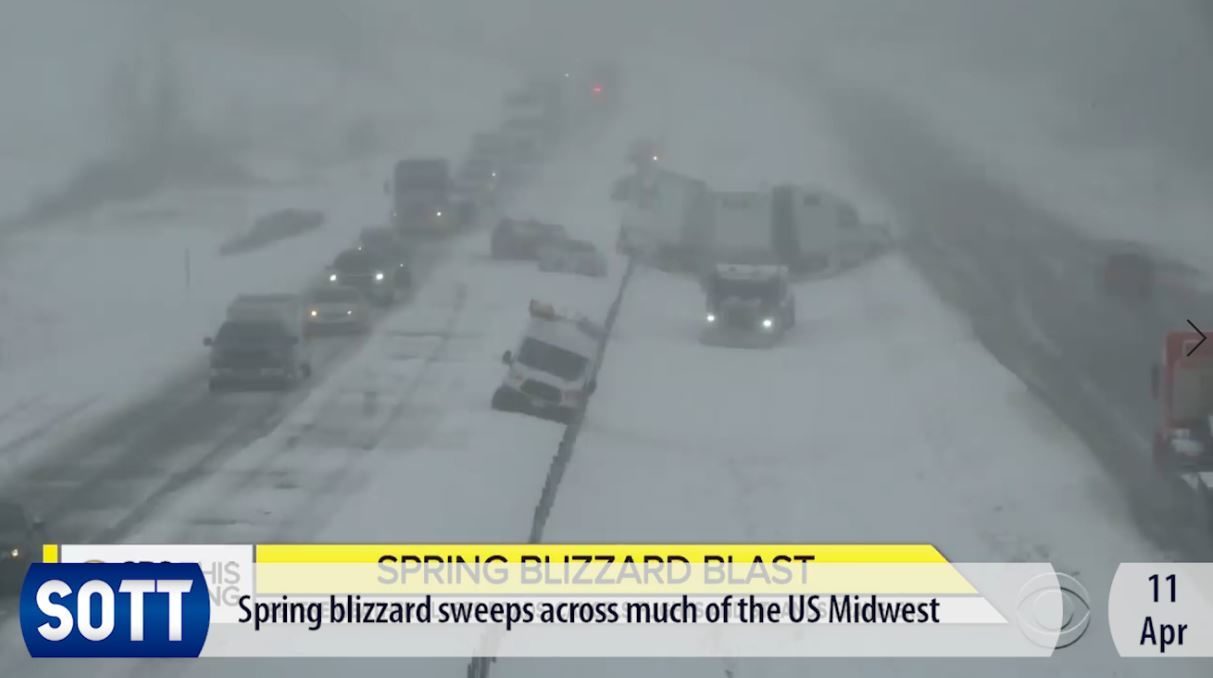
While the World Meteorological Organization keeps pushing the global warming swindle, claiming that 2018 was the warmest year on record, and the MET office claiming that April 22 was the hottest Easter Monday ever, reality hits hard with record cold temperatures and snowfall around the world... well into spring.

As the solar minimum intensifies, temperatures plummet. Unusually cold April temperatures affected more than 100 million people just in the US as the planting season took a serious hit around the world. The result is that farmers are going bankrupt in the US while in North Korea and China food production is suffering massive loses.

Spain, Portugal, Italy and Germany were also hit by unseasonable snowfalls, meanwhile French vineyards froze, compromising this year's wine production. Africa was also hit by unusually low temperatures with Algeria and Morocco covered in snow this month. In the Southern Hemisphere, Western Australia had the coldest April day ever due to a huge antarctic front. The cold also interfered with wheat production in the country, with harvests hitting an 11 year low.

Record rain and floods in the Middle East not only promoted desert blooms at a very odd time of the year, but also wreaked havoc on the human population with thousands displaced in Iran and Afghanistan.

Two mayor earthquakes hit this April, a 6.3 M in the Philippines that left eight people dead, and a 6.1 M in Taiwan that left 17 people injured.

Windstorms have also been intensifying in unusual places as the jet streams continues its chaotic meandering, both China and Pakistan suffered the consequences this month.

All that, and more, in this month's SOTT Earth Changes Summary...


SOTT Logo Radio

SOTT Focus: Objective:Health #14 - Booze You Lose - The Myth of Moderation

O:H header alcohol
The relationship between alcohol and humans has been around for millennia. Yet it seems we're still not entirely sure about our love-hate relationship. The news headlines don't help - one day a 'study' is saying moderate alcohol consumption will prevent any number of illnesses, the next another 'study' says even a drop will eventually kill you. And what the heck does 'moderate consumption' mean? How much is too much and how do we know if we're over-indulging?

Join us on this episode of Objective:Health as we discuss all things boozy; looking past the exaggerated alcohol industry sponsored claims, getting down to the reality of drinking and some interesting methods of treatment for alcoholism.

And stay tuned for Zoya's Pet Health Segment, as she shares some tips on car rides for anxious doggies!

For other health-related news and more, you can find us on:
♥Twitter: https://twitter.com/objecthealth
♥Facebook: https://www.facebook.com/objecthealth/


Running Time: 01:05:21

Download: MP3 - 59.6 MB


SOTT Logo Radio

SOTT Focus: MindMatters: How Psychopaths Infect and Destroy Hierarchies of Competence

pathocracy
© SOTT.net
Can a government of, by and for psychopaths exist when the vast majority of individuals governed by such a group can be said to be relatively normal? Psychologist Andrew Lobaczewski believed that it could, outlined the factors that allow for its functioning, and coined a term for such a social structure: a pathocracy. On this week's show we will be delving deeper into the workings of pathological groupings - groupings that wield enormous amounts of power both overtly, and covertly, and over populations both large and small.

Hindsight is 20/20 when we look back at the acts of the 20th century's most notorious and dangerous political movements. But what did those systems anticipate about certain trends we see today? What, if anything, about the psychological health of an individual - or a whole society - can be strengthened to ensure that an oppressive and inhuman power structure doesn't take the reins completely? And if a bonafide pathocracy has assumed control of a population, how can the mere act of seeing it for what it is assist us in dealing with it?


Running Time: 00:58:56

Download: MP3 - 54 MB


Frog

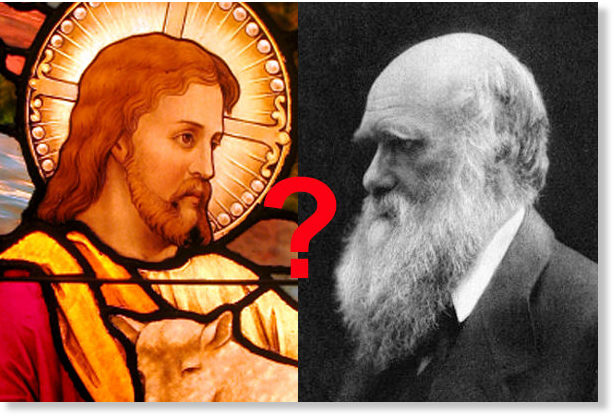
SOTT Focus: Darwinism, Creationism... How About Neither?

darwinism intelligent design
Is Creationism true? Or is Darwinism true? And why would it have to be one or the other? It seems it hasn't occurred to many people that both might be wrong. Since both of them, despite what they might claim, are more about ideology than science, it shouldn't really be too surprising that science doesn't really support either, at least not in the form they're presented.

Most people who believe in Creationism do so because they were raised Christians, and they believe in the Bible (a bit too literally at that). On the other hand, there seem to be three main reasons why people believe in Darwinism: they've been taught it at school, they only have a vague sense of the underlying science (or the lack thereof, as we'll see), and/or they're convinced Creationism is nonsense and believe their only other option is Darwinism. There are, however, some serious problems with all three of these justifications.

First, the way Darwinism is taught in schools is extremely deceptive and would require an article of its own, but I will outline what's wrong with Darwinism in general and with the way it is presented to us.

Second, the vague knowledge of the science and facts relevant to evolution that most people have actually prevents them from seeing the countless problems of Darwinism. The notion that organisms evolved step by step is easy to swallow when you have no clear idea what exactly these steps would have to be and how exactly the mechanism of evolution is supposed to work. Without a clear sense of what the cell looks like, what it contains, how complex it is, how it works, and what DNA does, you're only left with the talking points that affirm that it all really does work and that science has proved it (and that only ignorant people question it.) You rarely get to hear how flimsy this science actually is, how elusive the proofs are, and how many scientists disagree with the mainstream narrative. Anti-Darwinian ideas are often literally banned from schools, usually on the false premise that they're not scientific. True scientific reasoning is sorely lacking in Darwinism itself however.

Third, Darwinism and Creationism aren't our only choices. This is not an election where you have to choose between two candidates. Just like with a choice between two presidential candidates, if you allow yourself to be convinced that those are your only options, you've already lost. The assumptions that anyone who isn't a Darwinist must be a Creationist and that if you're not a Creationist, you have to be a Darwinist, are false.

There's Creationism, there's Darwinism, and then there's the truth. This rarely noticed third option is what I want to focus on in this article. And to find the truth, we must identify the lies. I won't talk about Creationism, because it's based on a fictional book and it's about trying to fit facts into the book's narrative. Besides, no amount of proof will move Creationists from their beliefs. My point is to show to people who passively believe Darwinism is true but have never done any serious research to confirm or deny this, that Darwinism has massive flaws and identifying them doesn't have to lead us towards Creationism.

My basis for the argument against Darwinism is science, especially scientific discoveries from the last few decades. Darwinism is stuck in the first half of the 20th century. There's no need to invoke God to show that Darwinian evolution doesn't work as described. Science does the job. Believing in the ability of Darwinism to explain evolution is not about how much you know but about how much you're willing to ignore.

It should also be noted that, in general, we're talking about things for which there is often insufficient clear evidence, and much of the evidence we have is subject to interpretation. Different people have different interpretations of the same facts, largely influenced by their particular world views and beliefs. Some things we know for sure, but many things are much less clear. In any theory of evolution we are by definition dealing with events and processes that occurred long ago, and we can study some of them only from scattered pieces of evidence that don't include the complete context required to understand them fully. In many cases, we must simply acknowledge that we don't know and that our differing beliefs are based on theories and speculations.

I will divide this article into three main parts: what exactly the Darwinian process of evolution is and how it's supposed to work, why it doesn't and can't do what it claims to do, and what that means for us.

Comment: This article is the first in a series. For part 2, go here:

Evolution's Struggle with Complexity and New Genes


Eye 1

SOTT Focus: Met Gala Grotesquery: A Sign of a Decadent Civilization

Met gala header
Just because "it's like that on purpose" doesn't mean that the look-at-me hideousness on display at the Met Gala is above criticism - in fact it arouses an almost visceral rejection.


Comment: Or at least it should among normal human beings.


I don't want to think of myself as too narrow-minded to understand the intent behind what is essentially a corporate-sponsored experimental fancy dress party for celebrities. In fact, I would venture that I myself have worn much riskier choices relative to the normal people around me (and I don't have fawning assistants and fashion editors to validate my every sartorial idiocy).

Met gala idiots
But, seriously: Jared Leto in a crystal-harness gown holding his own head, corseted actor Ezra Miller with seven eyes on his face, performer Billy Porter carried in on a palanquin by six bare-chested buff men in lame trousers.

Billy Porter at the Met Gala
Yes, I know that the theme was camp, the justification for all the over-the-top gaudiness.