SOTT Focus:


SOTT Logo Radio

SOTT Focus: Objective:Health: #22 - ‌Poisoned Agriculture, Poisoned World

O:H header
The 'Green Revolution' marked a turning point in the progress of our civilization. While it was, and still is, hailed as a triumph of technology, utilizing chemistry to revive over-farmed soils and increase crop yields worldwide, it took us down a path that has lead us to where we are now. There are 34,000 pesticides currently registered for use in the US by the EPA and modern agriculture has become completely reliant on their use.

This increasing reliance on technology, and the movement away from nature, has cost us dearly. Our soils have been poisoned, our air is toxic and the entire planetary ecosystem suffers from mass death and destruction, while our foods become increasingly depleted of nutrition. It's an entirely unsustainable practice, yet with the introduction of GMOs, there is no sign of it letting up. We're on a runaway train that is heading for an inevitable crash.

But not all hope is lost. Recent movements towards sustainable and regenerative agriculture, that work within the rhythms of nature to benefit both the environment and ourselves, are gaining momentum. Many groups are achieving impressive results with farming methods that build rather than destroy.

Will the Big Ag monocroppers continue their path of destruction toward inevitable planetary collapse, or will the growing movement be able to convince the world we need to change? Join us on this episode of Objective:Health for a lively discussion on the future of agriculture and our planet.


Running Time: 01:06:06

Download: MP3 — 60.1 MB


SOTT Logo Radio

SOTT Focus: MindMatters: "Everybody Knows That!" - Mass Beliefs and the Ideas That Shape Them

everybody knows that
If you're human, then chances are you believe something that "everybody knows" to be true. And if you're a thinking human, then chances are you know that such beliefs can turn out to be not so true after all. Everybody knew saturated fat is bad for you, after all. But now they don't and the opposite is true. Fancy that! Whether it's beliefs, emotions, or behaviors, social contagion is a real thing, and it's the shared nature of these phenomena that hold communities together in one relatively cohesive whole. Good, bad, or ugly, we all have to deal with trends, fads, memes, and world views.

But every mass belief has to start somewhere. How do we account for the source of new ideas? If two or more people come up with the same new idea at the same time, with no knowledge of each other, how do we account for that? Coincidence? Or something more? On a more general level, where do ideas even come from? What is creativity? How to trends propagate? And what is it that gives them their stubborn power to resist change?

Tune in today to MindMatters, where we tackle the age-old conflict between stability and change, repetition and novelty, order and chaos - and the mass beliefs that hold them all together.


Running Time: 00:55:34

Download: MP3 — 50.9 MB


SOTT Logo Media

SOTT Focus: SOTT Earth Changes Summary - June 2019: Extreme Weather, Planetary Upheaval, Meteor Fireballs

earth changes summary june 2019
All over the world last month massive and sudden deluges swept away land, homes and people. Although it's the start of 'summer' in the Northern hemisphere, the Lake Baikal region in Siberia saw its worst flooding in living memory, flooding occurred in the deserts of Yemen, Libya, New Mexico and Mongolia, while cities from southern Mexico to southern Italy were hit with massive quantities of hail.

The manifestation of back-to-back extremes, in both space and time, is the defining characteristic of this 'age of transition' we have entered. The first half of June brought wet and wild with weather to Europe, with violent storms inundating the region with rain, cold and hail... but in the second half of the month an extreme heatwave struck, causing all-time record high temperatures in France and raging wildfires in Spain.

Strong earthquakes in China, Japan and Indonesia were accompanied by major volcanic eruptions along the Ring of Fire. The massive quantities of ash and dust they pump into the atmosphere, likely significant factors driving climate change, along with the 'meteor smoke' from trails of meteor fireballs, were 'reflected' last month by the major outbreak of 'night-shining' clouds at unprecedentedly low latitudes.

All that, and more, in this month's SOTT Earth Changes Summary...


USA

SOTT Focus: American Aggression? Never!

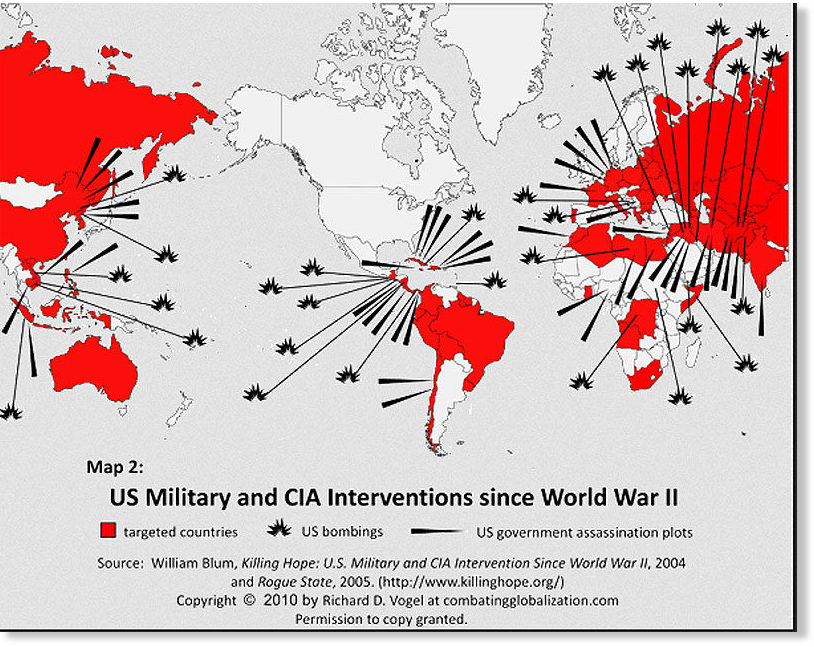
US military interventions
Headlined "U.S. Seeks Other Ways to Stop Iran Shy of War," the article was tucked away on page A9 of a recent New York Times. Still, it caught my attention. Here's the first paragraph:
"American intelligence and military officers are working on additional clandestine plans to counter Iranian aggression in the Persian Gulf, pushed by the White House to develop new options that could help deter Tehran without escalating tensions into a full-out conventional war, according to current and former officials."
Note that "Iranian aggression." The rest of the piece, fairly typical of the tone of American media coverage of the ongoing Iran crisis, included sentences like this: "The C.I.A. has longstanding secret plans for responding to Iranian provocations." I'm sure I've read such things hundreds of times without ever really stopping to think much about them, but this time I did. And what struck me was this: rare is the moment in such mainstream news reports when Americans are the "provocative" ones (though the Iranians immediately accused the U.S. military of just that, a provocation, when it came to the U.S. drone its Revolutionary Guard recently shot down either over Iranian air space or the Strait of Hormuz). When it comes to Washington's never-ending war on terror, I think I can say with reasonable confidence that, in the past, the present, and the future, the one phrase you're not likely to find in such media coverage will be "American aggression."

USA

SOTT Focus: A Genealogy of American Russophobia

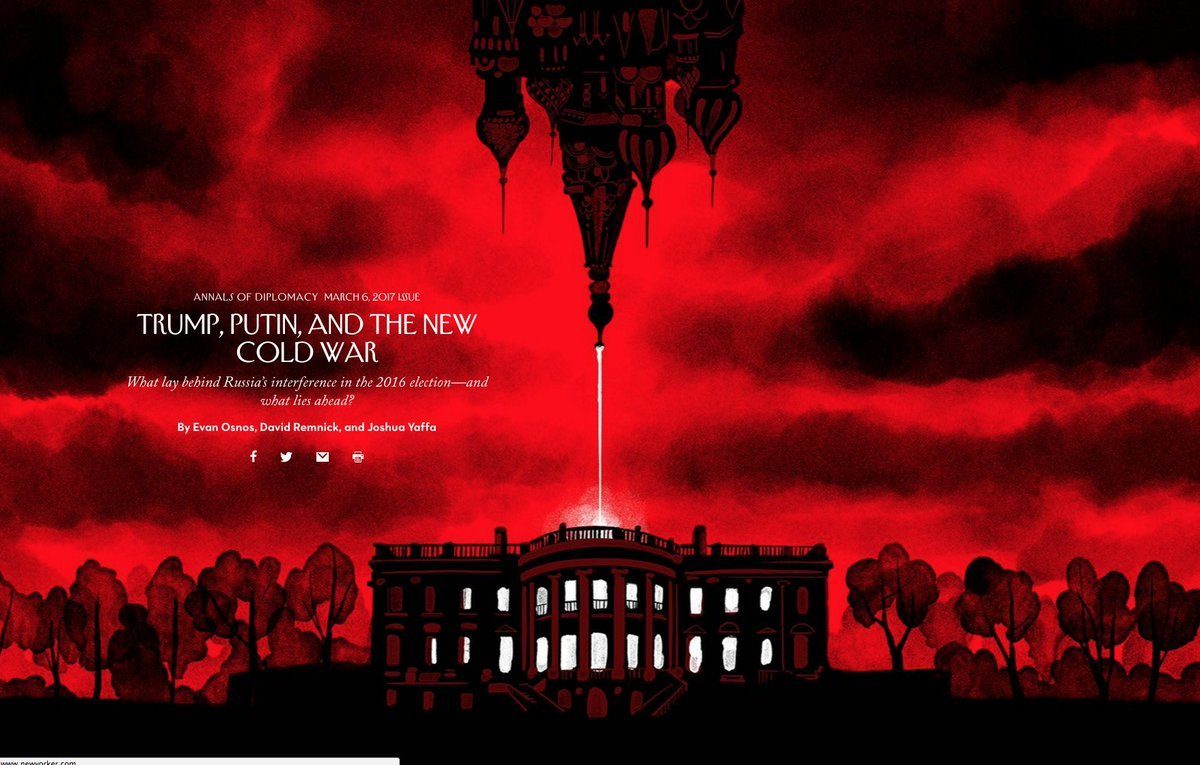
independence day scene white hosue kremlin
An actual New Yorker illustration, 2017
Russophobia emerged quite late in the United States compared to other European powers. The so-called "Testament of Peter the Great," a spurious text that spelled out a blueprint for Russian imperial domination, undergirded Russophobia in France and Britain throughout the 19th century. Its contents were so potent Napoleon I ordered the French press to pen articles showing that "Europe is in the process of becoming booty for Russia." The "Testament" enjoyed repeated resurrection in every European war with Russia until World War I.

Though the U.S. magazine Niles' National Register published the "Testament" in 1843, the claims of Russia's imperialist impulses fell flat. The Register even stressed that U.S.-Russian relations "have been and will long necessarily be of the most amicable nature." Nor was there an American version of Britain's preeminent Russophobe David Urquhart, who, in the words of one contemporary, was "successful in his design to diffuse a feeling of terror and a spirit of hatred toward Russia in the public mind." Indeed, the trope of Russia as a giant octopus threatening to ensnare Europe had little currency in the United States until the Cold War.

The wave of Russophobia around Donald Trump is mostly a product of a profound shift in American discourse about Russia in the 20th century. In fact, to reduce Russia's place in the American imagination to merely the absence or presence of Russophobia is itself an act of injurious reductionism. Historically, Russia has had a much more ambiguous and contradictory place in the American mind. Historically, Americans relate to Russia with indifference and amicability, as an object of fascination and mystery, and even as an analogous and kindred nation.

At the same time, Russia has served as a symbol of ignobility, a prototype of despotism, a barometer of backwardness and even evil itself. Where Russia stood on this spectrum had less to do with Russia as it did the United States. For Russia, as David Foglesong has argued, served as a "dark double" or "imaginary twin." In American eyes, Russia has appeared as a distortion of the American self, reflected through a carnival mirror. It's a distorted, disfigured, inchoate, even horrifying image, but still an enigmatic source for American self-juxtaposition and psychological displacement.

USA

SOTT Focus: Jingoistic Military Fetishization is as American as Bald Eagle McNuggets

tanks washington
"Putin's America," tweeted Anand Giridharadas, a pundit who was genetically engineered in a Monsanto laboratory to appeal to NPR listeners on every possible level.

Giridharadas used these words yesterday to caption a short video clip of two tanks being carted through the streets of DC in preparation for their appearance in a parade for Independence Day, a holiday in which Americans gather to eat hot dogs and drink Mountain Dew in celebration of the anniversary of their lateral transfer from monarchy to corporatist oligarchy.

The military hardware parade is taking place at the behest of President Bolton's social media assistant Donald Trump, and critics have been vocally decrying it as alien and un-American. Pundits like Giridharadas and Steve Silberman have been saying it's something Russia would do. The Independent said it's a spectacle you'd see in "authoritarian regimes such as North Korea, Iran and China." Adam Best and Charles Pierce both likened it to something that would be done in a "banana republic", an interesting choice of phrase for a gratuitous display of American military bravado given that term's blood-soaked origins in US corporate colonialism.

Sherlock

SOTT Focus: Latin America's recurring tragedy: Why Bolívar has more in common with Guaido than Chavez

In Latin Americans' collective consciousness, the figure of Simón Bolívar is seen as a symbol of resistance and the fight for peoples' liberation from the yoke of bloody and thieving monarchies. The very name by which he is known, The Liberator, reinforces the belief that Bolívar was simply responding heroically to a deep-seated need that consumed an entire continent.

Juan guaido venezuela bolivar
© Agence France-PresseJuan Guaidó, the head of Venezuela's opposition, tried and failed to oust Nicolás Maduro in April, 2019.
Within this context, Hugo Chavez used Bolívar as an archetype for his revolution, called for this reason the Bolívarian revolution, which would bring to Venezuela (and the entire region, if Chavez had been successful) the "socialism of the 21st century." Sadly, the reason why Chavez Frias' effort was destined to fail is the same reason why choosing Bolívar as the exemplary figure was a terrible mistake.

SOTT Logo Radio

SOTT Focus: Objective:Health #21 - Iatrogenesis - Death by Modern Medicine

O:H header
Iatrogenesis, from the Greek; Iatros, meaning doctor, and Genesis, meaning origin. The word means anything that comes from the result of working with a physician, but is usually used in terms of noxious, unintended, and undesired effects of medical therapies. Whether physician error, negative effects of drugs, therapies or procedures, iatrogenesis has been declared to be the number three killer of people in the United States; the number five killer worldwide.

Given such incredible numbers, questions inevitably arise. How can a system of healing be responsible for such huge numbers of fatalities and serious injuries? Is this simply the 'cost of doing business,' or is there something seriously wrong with modern medicine?

Oliver Wendell Holmes, an American physician and a medical reformer of the 19th century, said, "I firmly believe that if the whole materia medica, as used now could be sunk to the bottom of the sea, it would be all the better for mankind and all the worse for the fishes." It seems we've made little progress since Holmes' time.

Join us on this episode of Objective:Health as we discuss the topic of iatrogenesis; when attempts at healing cause harm.


For other health-related news and more, you can find us on:
♥Twitter: https://twitter.com/objecthealth
♥Facebook: https://www.facebook.com/objecthealth/

Running Time: 00:56:06

Download: MP3 - 51.1 MB


SOTT Logo Radio

SOTT Focus: MindMatters: The Nature of Reality: Mindless Matter, or Universal Consciousness?

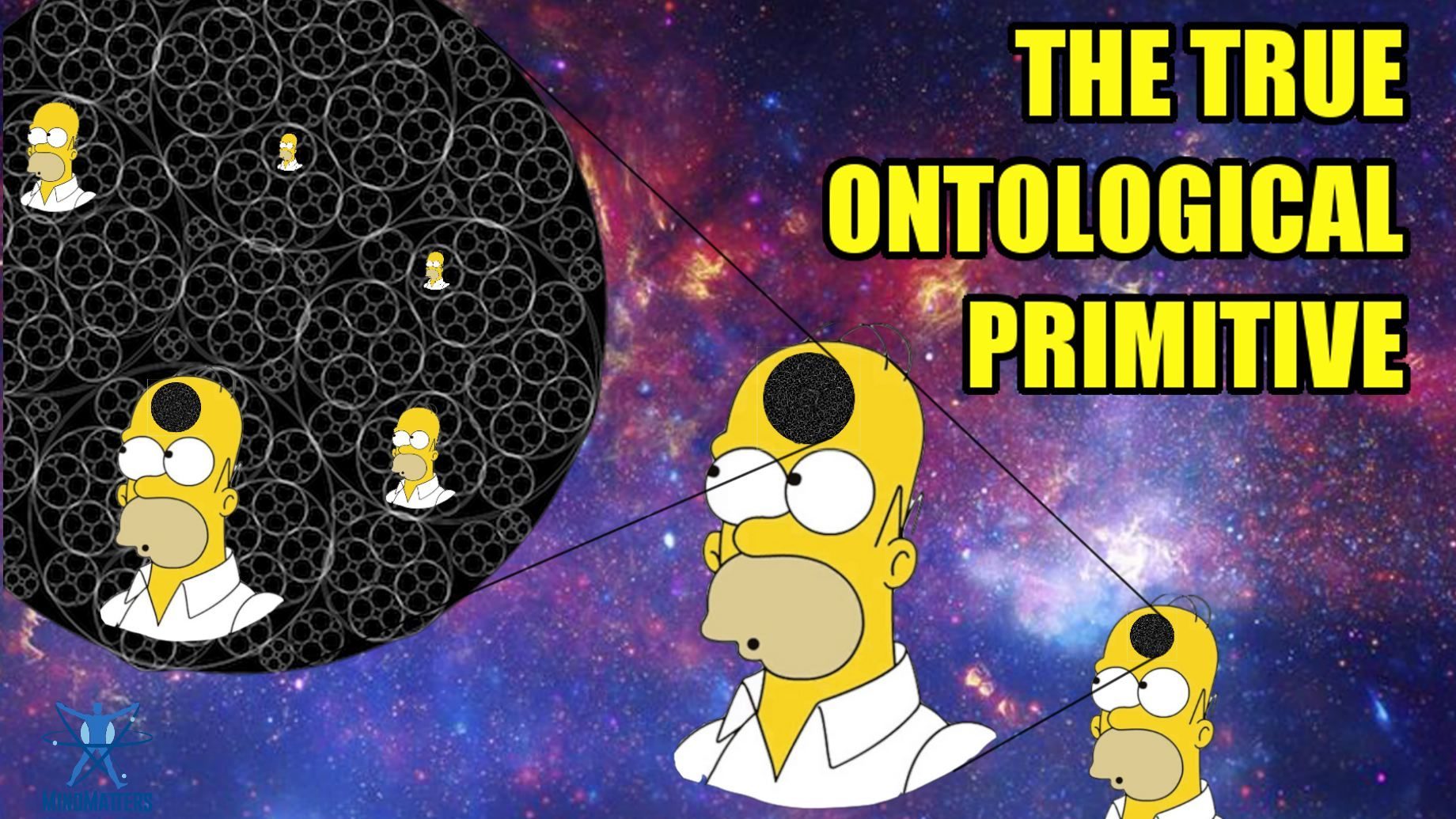
homer
© SOTT
What is the nature of reality, and why does it matter? Whether we know it or not, we all have a worldview - a set of very core beliefs and assumptions about the way the world works and our place within it. Sometimes those assumptions work, sometimes they don't, but as long as they are left unexamined, we can't say we've come any closer to actually understanding who we are and what we're doing. That's the great gift that philosophy can give us: a roadmap for meaning.

That doesn't mean it's easy, of course. The number of options on the table is daunting. Is materialism true? Are we just chunks of meat, devoid of any degree of freedom to choose? Are we disembodied minds dreaming up our own existence? Is consciousness fundamental, or an epiphenomenon of a more fundamental, senseless matter? The fact is, our beliefs will influence how we live our lives, whether we know it or not. So why not take a closer look at those beliefs?

Today on MindMatters, we do just that, taking a look at some of the offerings on the philosophical table - including the idealism presented by Bernardo Kastrup in his book, The Idea of the World. As Socrates said, the unexamined life is not worth living. Well, according to the dominant philosophical worldview today - physicalism - the world is still not worth living. So join us as we try to find an alternative that makes life great again - in which meaning and consciousness have a real role to play, and set the stage for the strange and mysterious adventure we call reality.


Running Time: 01:28:21

Download: MP3 — 80.9 MB


Yoda

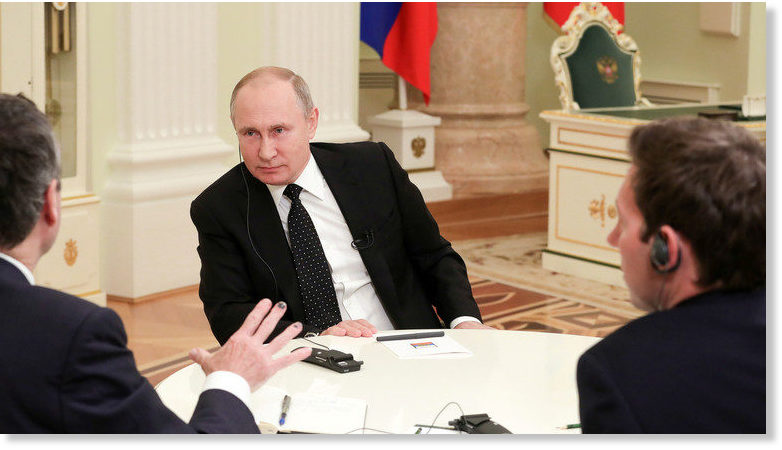
SOTT Focus: Putin Interview with FT: 'Liberal Idea' Failed the West, Elites Forgot About People

putin
© Sputnik/Mikhail Klimentyev/Kremlin via REUTERS
Vladimir Putin has trumpeted the growth of national populist movements in Europe and America, crowing that liberalism is spent as an ideological force.

In an FT interview in the Kremlin on the eve of the G20 summit in Osaka, Japan, the Russian president said "the liberal idea" had "outlived its purpose" as the public turned against immigration, open borders and multiculturalism. Mr Putin's evisceration of liberalism - the dominant western ideology since the end of the second world war in 1945 - chimes with anti-establishment leaders from US president Donald Trump to Hungary's Viktor Orban, Matteo Salvini in Italy, and the Brexit insurgency in the UK.

"[Liberals] cannot simply dictate anything to anyone just like they have been attempting to do over the recent decades," he said. Mr Putin branded Chancellor Angela Merkel's decision to admit more than 1m refugees to Germany, mainly from war-ravaged Syria, as a "cardinal mistake".

Comment: You can read the full transcript of the interview on the Kremlin's website.