Health & WellnessS


Health

Gene expression reveals annual differences in human immunity and physiology

Cold
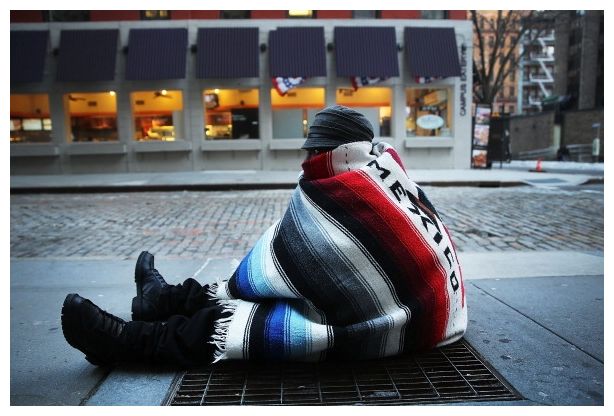
© Spencer Platt/Getty Images News
Do you ever wonder why stiff joints are more common on winter or why it's more difficult to lose weight during this season? While you can blame the latter on the holidays, science says it's all because of your genes.

A large research conducted by Professor John Todd of Cambridge University and his team discovered that some of the immunity genes tend to be more active in certain seasons such as the winter. There are also times when they tend to be "off."

The basis of the study was a chance discovery. A PhD student under him learned that white blood cells, the type of blood cell that is responsible for fighting infection and building immunity, tend to have more active immunity genes once the season gets a lot colder.

From this, they analyzed more than 20,000 different types of genes from over 15,000 people around the world who provided samples of their tissues and blood. The diversified sample is presumably because of the varying season patterns.

Upon their analyses, the team discovered that those who lived in a region where seasons tend to be more consistent such as Iceland, the degree of changes in their genes is pretty low. However, in countries that experience significant seasonal changes such as the UK, immune genes become more active when it's winter. In areas where seasons are limited, such as in Asia where they have only dry and wet season, there's more gene activity once the rainy season came along. Overall, at least 25% of the studied genes showed response to the changing seasons.

Researchers have no clear explanation why this happens except that it may be related to evolution or the genes simply react to environmental cues like light or temperature. Nevertheless, it's possible that the body increases the body's immunity as a way of preparing it from the possible diseases that can occur within a season.

The increased immunity may also be the reason why inflammatory diseases such as arthritis are more common during winter. As the immune system is increased, there's a good chance it can go into a hyperdrive, attacking instead of protecting the body.

The study is available in Nature Communications.

Syringe

World Health Organization plans to market vaccines like Coca-Cola

Image
© naturalnews.com
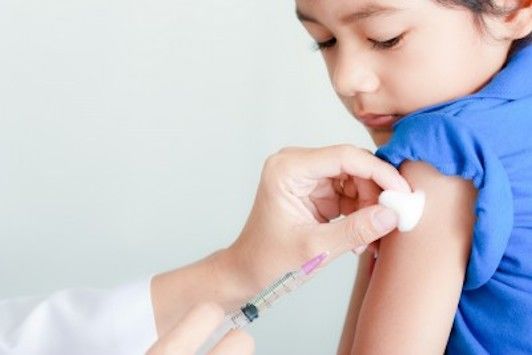
To overcome worldwide resistance to vaccines, the UN's World Health Organization (WHO) enlisted the marketing advice of the International Food and Beverage Alliance, whose 11 members comprise the world's most successful marketers, among them The Coca Cola Company, Pepsico and McDonalds. WHO liked what it heard and, in a major report released last fall, decided to accept the food and beverage industry's recommendations: forget facts, sell vaccines the way Coca-Cola is sold, on the basis of emotion.

Comment: Read more: Monsanto herbicide faces global fallout after World Health Organization labels it a probable carcinogen


Health

New human virus discovered in old blood samples

Virus
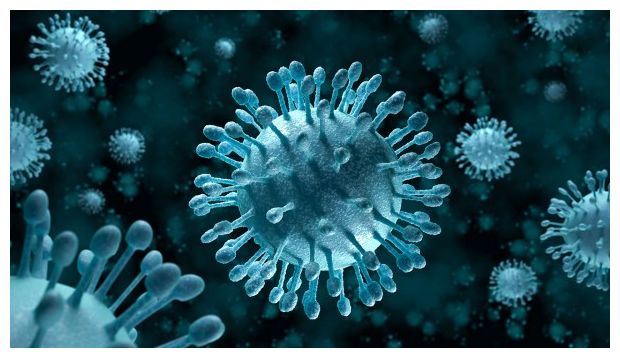
© David Marchal/Science SourceHuman hepegivirus 1 has parts of both hepatitis C virus (above) and human pegivirus.
Don't panic. That's the emphatic message coming from researchers who have discovered a new virus in human blood. Though it's unclear how common the pathogen is, there's no evidence that it has caused anyone harm, and half of those infected appear to have cleared it.

The newfound virus's genetic sequence shows that it has similarities to hepatitis C, which can cause serious liver damage, and to the harmless—and even helpful—human pegivirus (formerly dubbed hepatitis G). Amit Kapoor, a virologist at Columbia University led the team that identified the new virus—and which has named it human hepegivirus 1, or HHpgV-1—notes that many people understand that humans coexist with myriad bacteria that are not dangerous, but they don't realize the same holds true for some viruses.

The team made the discovery thanks to new, sophisticated techniques for sequencing fragments of RNA and DNA. As part of a search for novel human viruses, the group scoured blood samples from a cohort of 46 people that were collected before and after they received a blood transfusion between 1974 and 1980. Today, stricter policies determine who can donate blood and the blood itself is screened more rigorously. "I thought if I want to know whatever is circulating and unknown these are the best samples," Kapoor says.

Using what's known as "deep sequencing" techniques, Kapoor's team fished for nucleic acid sequences (the building blocks of DNA) of known viruses, and found two people who posttransfusion had what looked like a novel flavivirus, the family that includes hepatitis C and human pegivirus. Based on later blood samples that were analyzed, both of these people subsequently cleared the virus, the team reports online today in mBio. Kapoor and his colleagues then looked at 70 more people from that cohort but did not find the HHpgV-1 sequence again.

An analysis of a different batch of stored blood samples, from 106 people who had received many blood products because they had hemophilia, found two more people who harbored HHpgV-1 sequences. These people had persistent infections, one of which lasted at least 5.4 years, but no evidence of a related disease.

Bulb

Once again! Annual report reveals: No deaths from any nutritional supplements

Image
The warnings of dire consequences seem to be everywhere. Whether on the back of nutritional supplement packages or in the disapproving look of your own family physician, the implication is always there: nutritional supplements can ruin your health, even cause your death.

Fortunately, all those red flags are unnecessary. For all the hand-wringing, predictions of catastrophe and strong-worded reservations, a recent study of all poisonings shows there has not been a single death traced to the use of nutritional supplements.
Meanwhile, prescription drugs - those properly prescribed - account for 128,000 deaths and 2.74 million serious adverse reactions each year.

Comment:


Syringe

Aluminum toxicity: Why it should not be put into vaccines

Image
Chemicals that are commonly used in the production of vaccines, according to the CDC, are done so to improve the effectiveness of the vaccine. Adjuvants like aluminum (one of the most common) are a component of vaccines that potentates the immune response to an antigen. The adjuvant is basically used to invoke the desired immune response.

Aluminum has been added to vaccines for approximately 90 years, and since then, a lot of controversy, especially in recent years, has emerged regarding their safety and effectiveness.

This controversy comes as a result of a number of recent studies (some of which are presented in this article) outlining clear concerns over the use of aluminum in this manner, as well as the fact that over the past few years, billions of dollars have been paid to families with vaccine injured children.

Comment: More on the evils of Aluminum:


Info

Apple cider vinegar remedies

Image
© lifeevents.org
Like many natural beauty, household and wellness fixes, apple cider vinegar has a long history and dedicated groupies who stand by its powers to help with everything from rust and flies to weight loss and warts.

And also like other natural remedies, the science on some of those claims is mixed, purely anecdotal or non-existent. A first-time user might want to consider all of that before embarking on an apple cider vinegar journey, beyond salad dressings and other food preparations.

"Some studies have shown a possible blood sugar lowering benefit due to a mild effect on gastric emptying, but it's certainly no diabetes or blood-sugar cure," said Jaclyn London, a registered dietitian at Good Housekeeping Institute, referring to some common claims. "It's certainly no weight-loss cure."

Comment: Additional articles on the numerous benefits of ACV:


Syringe

Researchers discover diabetes medication could release sugar in the bloodstream

diabetes
© Desconocido
Nearly all medications have some sort of side effects, some more unpleasant and dangerous than others. They may occur because a treatment affects the body in ways that weren't previously anticipated, or simply because not every patient is identical.

This means there is a continual need for us to evaluate and study the medications we use. We discovered previously unidentified effects associated with a commonly prescribed diabetic medication. We found evidence that, in some cases, the treatment could actually promote the release of sugars into the blood - the opposite of what it's designed to do. While our results, published in the Journal of Biological Chemistry, are very preliminary, they do point to a need for further investigations into how these medications work.

Diabetes affects around 347m people worldwide, a number that is growing in part due to rising levels of obesity. Type 2 or "adult-onset" diabetes occurs when cells in the body fail to respond to insulin, the chemical signal that regulates sugar and fat metabolism. This results in high sugar levels in the blood, which if untreated can damage blood vessels and nerves, leading to heart disease, strokes, kidney damage and loss of sight.

Comment: There have been studies linking GLP-1 drugs with pancreatitis, pancreatic cancer and thyroid cancer. As with any drug, there are often side effects that the pharmaceutical industry deftly conceals. Fortunately, there are less dangerous ways to help manage diabetes:


Arrow Up

First official GMO free region in New Zealand: Hastings District

Image
Rules in the newly released Hastings District Plan prohibit both releases and field trials of GM crops and animals.
Hastings District Council has secured a major economic opportunity for local food producers by making the district the first official GMO Free food producing zone in New Zealand.

"This is a great day for Hawke's Bay," said John Bostock from Pure Hawke's Bay.
"Today, Hastings joins a growing number of innovative, high-value food producing regions around the world that have protected their GM Free status to meet consumer demand. We congratulate the Council for its leadership in securing that position for Hastings."

Comment: Monsanto's worst fear may be coming true! The pressure to remove GMO's is growing:


Black Magic

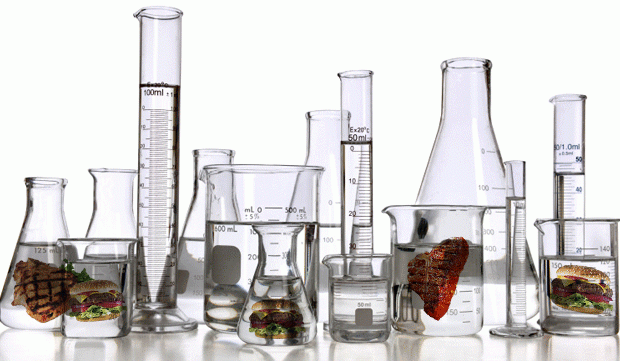
Mad Science: Move over test-tube burger, there's a lab-grown chicken breast in the works

Image
The research is still in its infancy, but an Israeli scientist hopes to bring this animal-free meat to the masses.

Amit Gefen is midway through an experiment that could end in a recipe for the world's first lab-grown chicken breast. If things go according to plan, no chickens will be harmed in the process.

Comment: 'test-tube meat could also be associated with genetically engineered or "GMO" foods, and prompt questions about long-term safety' - Geez ya think?

What has the world come to?? Scientists are creating Genetically-Modified "Glow" chickens and 'schmeat' thinking this mad science is going to save the planet?!


Cheeseburger

Russian govt completely bans GMOs in food production

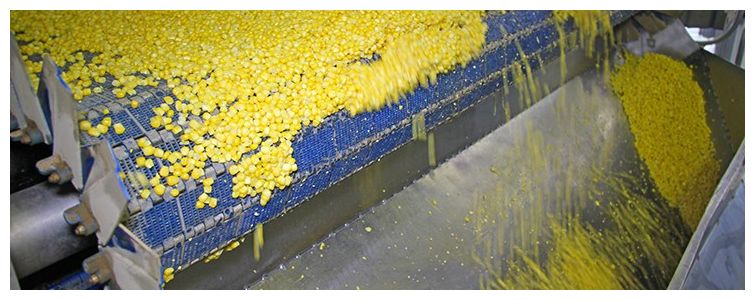
Corn food processing plant
© Natural SocietyCorn food processing plant.
Russia has just announced a game-changing move in the fight against Monsanto's GMOs, completely banning the use of genetically modified ingredients in any and all food production.

In other words, Russia just blazed way past the issue of GMO labeling and shut down the use of any and all GMOs that would have otherwise entered the food supply through the creation of packaged foods (and the cultivation of GMO crops).
"As far as genetically-modified organisms are concerned, we have made decision not to use any GMO in food productions," Deputy PM Arkady Dvorkovich revealed during an international conference on biotechnology.
This is a bold move by the Russian government, and it sits in unison with the newly-ignited global debate on GMOs and the presence of Monsanto in the food supply. It also follows the highly-debated ruling by the World Health Organization that Monsanto's glyphosate-based Roundup is a 'probable carcinogen.'

But I also want to put it into perspective for you. If this announcement were to be made in the United States, for example, it would mean a total transformation of the food manufacturing industry. But in Russia, the integration of GMOs is not close to the same level as in the U.S.