Health & WellnessS


Attention

Junk science: Researchers attempt to debunk the paleo diet by studying mice

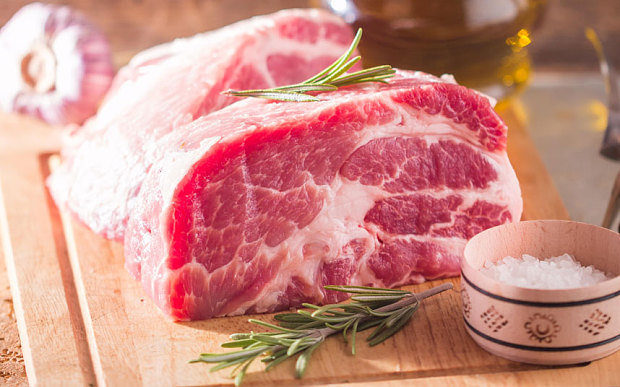
pork
Lovely, marbled meat.
The paleo diet could lead to rapid weight gain and increased susceptibility to diabetes, a new study has found, but the findings were attacked as "comic" by devotees of the caveman-style diet.

Warning the public to avoid "putting faith in so-called fad diets", researchers at Melbourne University said the low-carbohydrate, high-fat diet had been tested on mice for just eight weeks and found to cause weight gains of 15 per cent and health complications.

"We are told to eat zero carbs and lots of fat on the paleo diet," said associate professor Sof Andrikopoulos.

"Our model tried to mimic that, but we didn't see any improvements in weight or symptoms. In fact, they got worse. The bottom line is it's not good to eat too much fat.

Comment: Sorry, guys. We're not falling for it. The benefits of the paleo diet are just too compelling to ignore.

For additional information on how to refute anti paleo arguments read the following articles:

The paleo diet explained
Have you heard about the Paleo diet?
Paleo Diet: Smart Eating or Latest Fad?
The Paleo Diet and Politics
A Real Paleo Diet - Grassfed Meat, Fat, and Organ Meats
The Paleo Diet: Should You Eat Like a "Caveman"?
Paleo Diet Works: High Fat Diet reverses the Overloaded,Under-fuelled Condition - A case study
New fad diet? 1960s research papers on benefits of eating Paleo rediscovered


Clipboard

Survey examines Americans' use of homeopathic medicines

homeopathy
© japantimes.co.jp
While few report using homeopathy, many of those who do find it helpful in addressing common health problems

A new survey finds that homeopathic medicines are primarily used by a small segment of the U.S. population for common, self-limited conditions such as the common cold or back pain. The report published in the American Journal of Public Health also finds that homeopathy users, particularly those who also report visiting homeopathic practitioners, find the use of these products helpful and that they tend to use a greater variety of complementary and integrative medicine (CIM) modalities than do users of supplements and other CIMs. This is the first detailed report on the use of homeopathy in this country.

Comment: Homeopathy has withstood the test of time
Since its inception over 200 years ago, homeopathy has been the target of almost constant antipathy from the prevailing school of orthodox medicine. Given so much organized resistance from the mainstream, one would think that if homeopathy were much ado about nothing it would not have endured. It would have withered on the vine a long time ago. And yet it has persisted. No, it thrives—all across the globe—for a number of very good reasons.

When a German physician named Samuel Hahnemann discovered that a miniscule dose of a medicinal substance designed to mimic the symptom pattern of a sick person could paradoxically provoke a healing response in that same person, a medical revolution was set in motion...

In its heyday in the latter half of the nineteenth century, there were more than 100 homeopathic hospitals in the United States, 22 homeopathic medical schools, 700 homeopathic physicians in New York State, and thousands more across the country. Homeopathy in the U.S. experienced a decline in the early 1900s, largely due to increased regulatory pressure from orthodox medicine. The same lack of vision regarding the future of health care is not necessarily true of other countries. Today, there are well over 200,000 homeopathic practitioners in India alone. Is it possible that so many doctors and patients could be wrong about a medical therapy that they rely upon for their own personal health and well-being? I think not.


Megaphone

FDA attacks brain health supplements for the benefit of big pharma

Brain scan
In October we told you about a potential new blockbuster drug for Alzheimer's from drug giant Eli Lilly. Solanezumab is in the third and final phase of FDA drug trials, and if approved, could bring in at least $7.6 billion in sales by 2024 and probably much more. Other drug companies also have "big" Alzheimer's drugs in the works.

Now the FDA has sent warning letters to five supplement companies targeting the supplement picamilon, which may help with Alzheimer's, anxiety, and general brain health. It is a combination of natural ingredients niacin (vitamin B3) and GABA, a substance our body makes from the amino acid glutamine. This particular combination crosses the blood - brain barrier more effectively than GABA alone. The FDA, however, claims that picamilon does not meet the statutory definition of a dietary supplement because it is neither a vitamin, nor (in its combined form) a completely organic substance, nor a minor component of foods. The agency says that although picamilon can be synthesized from niacin, it is a different chemical entity, and is therefore "adulterated."

Arrow Up

Cilantro: A phytonutrient-dense herb

cilantro
Coriander (Coriandrum sativum), commonly known as Cilantro or Dhania, is a powerful herb with many health benefits. This plant is rich in micronutrients and nutritional elements.

Various compounds in cilantro give it its distinct scent, which plays a large role in how foods taste. In addition to pleasant aromatic factors (described by some as fresh, grassy, and citrusy), there are aldehyde chemicals, the same as found in soap. People who hate cilantro may detect the unpleasant soapy compounds more than the pleasant ones, or perhaps only the soapy ones. Research in identical twins suggests there may be a genetic basis for this.

Comment: Read more about how cilantro helps reduce the accumulation of heavy metals in the body: Cilantro and Chlorella can remove 80% of heavy metals from the body within 42 days
Cilantro is best used in conjunction with chlorella because it, "mobilizes more toxins then it can carry out of the body, it may flood the connective tissue (where the nerves reside) with metals, that were previously stored in safer hiding places." This can cause retoxification if another binding agent isn't used to help rid the body of the heavy metals that are 'found' in their hiding places throughout the body.

People who have eaten large salads daily full of cilantro have experienced this effect - moodiness, terrible acne, joint pain and more. While they were mobilizing heavy metals, they weren't all excreted from the body fast enough,which meant they were detoxing and toxifying themselves the same time!
Simply by adding chlorella - an intestinal absorbing agent, the retoxificaiton of the system is prohibited. Clinical studies completed recently proved that heavy metal chelation [using cilantro and chlorella] can naturally remove an average of 87% of lead, 91% of mercury, and 74% of aluminum from the body within 42 days.


Headphones

Dr. Peter Osborne: Why you should go grain-free

grains
The gluten-free frenzy is still with us, but might other grains be creating health issues as well?

Dr. Peter Osborne, founder of the Gluten Free Society, believes that absolutely is the case and that all grains, even those thought to be healthy alternatives to gluten, present the potential for various health issues.

For example, rice is touted as a gluten-free grain that's supposedly very healthy. But, it contains properties that cause inflammation of the colon, as well as high levels of arsenic and cadmium, which can lead to weight gain and blood sugar problems, as well as autoimmune disorders and pain.

Comment: More helpful information by Dr. Osborne: Modern grain sucks and here's why


Bad Guys

Gates Foundation will use college students as guinea pigs to test GM bananas

gmo banana
On behalf of the Gates Foundation, researchers at Iowa State University will be paying students to eat genetically modified bananas.

According to The Des Moines Register, these genetically modified bananas were developed by scientists at the Queensland University of Technology in Australia. The bananas have allegedly been developed to help produce Vitamin A and has been targeted towards people living in African countries.

Biotech companies and the creators of GMO's always say that their products are going to save the world, but they usually fall short of their expectations and come along with a nasty list of side effects and unintended consequences.

Wendy White, one of the lead researchers promoting this study, wrote in an earlier statement that these bananas can help children with vitamin deficiencies.

"In Uganda and other African countries, vitamin A deficiency is a major contributor to deaths in childhood from infectious diseases. Wouldn't it be great if these bananas could prevent preschool kids from dying from diarrhea, malaria or measles?" White said.

Of course, that would be great, but there is no guarantee that these bananas will actually have the desired effect.

Comment: The Gates Foundation and their researchers are treating the world as one giant laboratory for their GM experiments, and are clearly not remotely concerned about safety or the aftereffects of their experiments on these children.


Attention

Gulf war syndrome: United States veterans suffering from multiple debilitating symptoms

gulf war syndrome
© motherboard.vice.com
After their service in the Gulf War conflict from 1990-1991, hundreds of thousands of our country's veterans began suffering from multiple and diverse debilitating symptoms including neurological and respiratory disorders, chronic fatigue syndrome, psychological problems, skin conditions and gastrointestinal issues.

This cluster of symptoms came to be known as Gulf War syndrome. Independent investigations, including those conducted by many of the Gulf War veterans themselves, showed multiple causes behind Gulf War syndrome, including experimental vaccines and medications; exposure to depleted uranium (DU); toxicity from biological and chemical weapons, oil fires, and other environmental contaminants.

Smoking

Facebook has similar effect on your brain as Cocaine, According to Brain scan study

facebook
© Pixabay
A new brain scan study has come up the surprising result that our brains are affected by Facebook in a way similar to the effect of highly addictive drugs, such as cocaine. The study, conducted by Professor Ofir Turel of California State University, Fullerton, who has been working for several years on the possible negative effects of technology on our lives, monitored the brains of twenty people as they viewed images relating to the social media giant.

"It became apparent to me that some people use Facebook and other social media excessively, and to the point at which it actually hurts their school or work performance, social lives, etc.; but they cannot seem to quit," Turel told Sputnik News.

Lemon

The not so sweet truth about sucralose

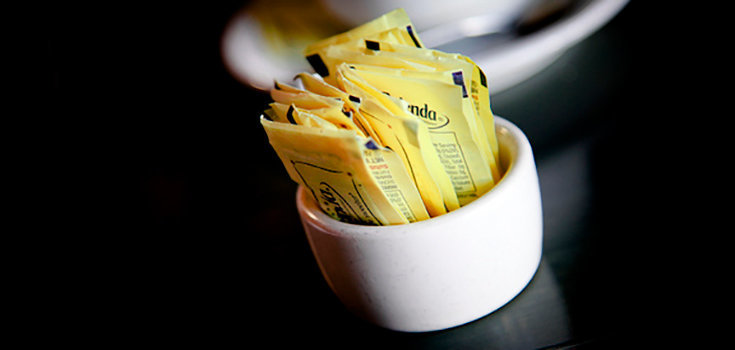
splenda, sucralose
Findings of a study on the link between sucralose and cancer that caused uproar when they were presented at a cancer conference in 2013 have finally been published.

The food industry dismissed the results of the study when they were presented in London, but they are now available for the world to see in the peer-reviewed International Journal of Occupational and Environmental Health.

In response to the study, the consumer group The Center for Science in the Public Interest (CSPI) is recommended that people avoid consuming sucralose, more popularly known as Splenda.

The study found that:
"sucralose administered in feed to Swiss mice at dose levels of 0, 500, 2,000, 8,000, and 16,000 parts-per notation (ppm) from prenatal life until natural death induces a significant dose-related increased incidence of malignant tumors in male mice."

Comment:
Everyone knows artificial sweeteners aren't good for you, so why are people still eating them?

Splenda is a "chlorocarbon, in the same family as deadly pesticides like DDT, insecticides, biocides, disinfectants like Chlorox Bleach, and WWI poison gas like dichlorourea.

According to Dr. James Bowden:

"Any chlorocarbons not directly excreted from the body intact can cause immense damage to the processes of human metabolism and, eventually, our internal organs. The liver is a detoxification organ which deals with ingested poisons. Chlorocarbons damage the hepatocytes, the liver's metabolic cells, and destroy them. In test animals Splenda [sucralose] produced swollen livers, as do all chlorocarbon poisons, and also calcified the kidneys of test animals in toxicity studies."


Magnify

Probiotics: Good bacteria for your brain?

probiotics
Every functional medicine psychiatrist has case stories of the 'probiotic cure' - of a patient with debilitating symptoms, often obsessive compulsive range, whose symptoms remitted completely with dietary change and probiotic supplementation. Is this voodoo or is it based on a growing understanding of the role of the microbiome in mental health and behavior?

For two decades now, pioneering researchers have been substantiating inflammatory models of mental illnesses such as depression, bipolar disorder, and schizophrenia. Research has focused on markers that indicate immune distress in an important subset of patients, many of whom are labeled "treatment resistant." Through this body of literature, we have identified that depression can be induced, in animals and in humans through inflammatory agents, that it is correlated with blood levels of inflammatory markers, in a linear way (more markers = worse depression), and that symptoms can be reversed through pharmaceutical anti-inflammatories.

Comment: More fascinating information that the microorganisms in your gut can influence your brain: