Health & WellnessS


Brain

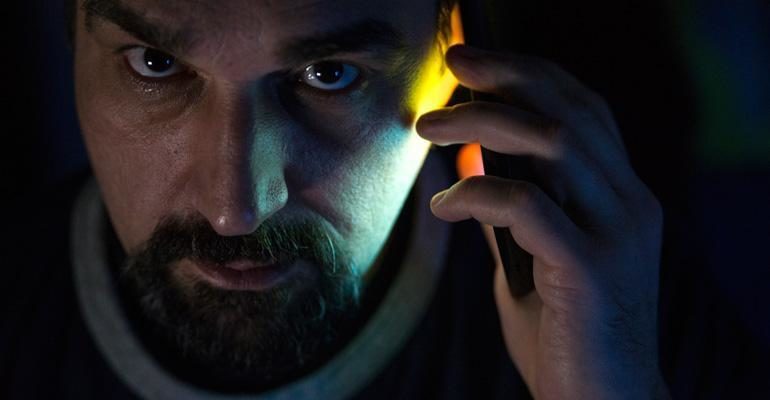
Deadly glioblastoma tumor rates rise in Europe and the US -- are cell phones to blame?

cell phone man
Deadly brain tumour rates on the increase in the UK, US, Denmark, Netherlands and Sweden, is it attributable to mobile phones?

A simple question posed by the telecommunications industries and its regulators is oft quoted "if exposure to mobile phone frequencies causes cancer, why are cancer rates falling?" Within the past year or so, this question is slowly being answered and its implications are deeply worrying. Whilst the total number of cancers are falling in some countries, certain 'rare' types of brain tumours are rising and these tumours are associated with studies looking at the usage of mobile phones.

Much of the data and information contained in this article can be found at http://www.microwavenews.com(1). It is an excellent source of the latest scientific, medical and epidemiological studies on mobile phone use and its carcinogenic effects on our biology.

Rates of glioblastoma multiforme (IV), an aggressive and deadly form of brain tumour, are increasing in the UK, US, Netherlands, Sweden, and Denmark. This is ominous because as in smoking and cancer induction, a certain time span is required before cancer sets in the body and is recognised as such by medical and scientific bodies. No one is really sure on the latency period between exposure to microwave radiation emitted from cell phone and WIFI router antennas and the induction of carcinogenic processes within the body.


Comment: Cell Phone Scare: What Do We Really Know About the Health Risks?


Display

What screen time does to a child's brain & sensory processing ability

screens
It's a scene we're sure you've witnessed again and again:
A family is sitting in a restaurant having dinner. The four year old is clearly fed up with sitting, and starts to complain, jump on her seat or run around. But a few moments later, she's quietly in her seat again, enabling her parents and older siblings to enjoy a peaceful meal and conversation for the next 30 minutes.
What happened?

Her father handed her his iPhone.

It's a scene we see repeated in doctors' waiting rooms, supermarkets, public transportation... and while we entirely understand it, it also saddens us.

So many caring, well-meaning parents are unaware of the developmental damage caused to their children by exposure to screen time and screen media.

Screens.

Televisions. Computer monitors. Tablets. Smartphones. Dumb phones. Children's toy computers. Kindles. The Apple watch.

If it gives off electromagnetic radiation in the visual spectrum, it's a screen.

Comment: The Health & Wellness Show: Digital 'pharmakeia': Glow kids, screen addiction, gaming and the hijacking of children's brains


Arrow Down

Statins, statistics and statinistics

damn lies statistics
Current medical knowledge is to a large extent based on results from scientific studies. Traditionally, these results are published in peer-reviewed medical journals.

Before being accepted, a scientific paper has to go through critical assessment by expert reviewers who will assess the paper's suitability for publication. The peer review process is intended to guarantee standards of quality and provide credibility. The highest ranked medical journals only accept a small fraction of papers submitted to them for publication.

Clinical medicine relies on the scientific literature. For a clinical cardiologist like myself, this is a key issue. The procedures I decide to perform, and the therapy I recommend is, and should be, based on scientific evidence. For the clinician, evidence based medicine is the holy grail.

But what if scientific studies are flawed? What if evidence based medicine relies on erroneous data? Then, obviously, clinical medicine is broken.

Unfortunately, the scientific community is not free from dishonesty and greed. Scientific fraud is hard to deal with.

Comment: More food for thought: Corruption of science: Mass production of redundant, misleading, and conflicted systematic reviews and meta-analyses


Pills

Gynecologist gives 10 reasons women should ditch the pill

Dr. Sara Gottfried
Millions of women are prescribed birth control pills every day to prevent pregnancy or to control a hormonal imbalance, but Dr. Sara Gottfried, a practicing gynecologist, is convinced women have been sold a pack of lies when it comes to these top-selling pharmaceutical drugs. Here's why.

First, you should know that this article is about supporting women completely in having full choice of when to conceive or not to conceive. However, it is also about informing them (and the men who love them) what happens to their bodies and minds when they take birth control pills year after year.

As Elizabeth Siegel, another medical expert reveals in her study, marketing decisions rather than scientific innovations, have guided the development and positioning of contraceptive products in recent years. What's even more disturbing is that though there are hundreds of birth control brand names to choose from, there are only a handful of actual formulations, all based on science that is more than 50 years old (and dare I say, based on the tired, patriarchal notion of female sexuality).

Considering that there are forces which would like to sterilize the entire population, this topic deserves a little extra inspection. Compulsory sterilization is no joke. It's been happening for several decades now. The recent realization of Kenyan doctors that a UN tetanus vaccine was a "mass sterilization exercise," and other telling attempts reiterate this truth.

Comment: See also:


Beaker

Millions of Americans who eat canned foods are still being exposed to the toxic chemical bisphenol A

Canned food
Safer Chemicals, Healthy Families has co-released a new report that found toxic BPA in nearly 40% of food cans tested from the nation's largest grocery stores and dollar store chains.

The report, "Kicking the Can? Major retailers still selling canned food with BPA," authored by our coalition partners the Center for Environmental Health (CEH), shows that millions of Americans who eat canned foods are still being exposed to the toxic chemical bisphenol A (BPA).

The report details testing on more than 250 canned foods, finding that 38% of cans tested contain BPA, a chemical that is known to cause birth defects and has been linked to breast cancer, prostate cancer, diabetes, obesity, heart disease and other serious health problems.

Comment: Information about the numerous health issues associated with this pervasive toxic chemical has been coming out for years and yet Big Food continues to produce and sell these products to uninformed consumers! The following articles are several years old but the information is still very relevant:
"When BPA is taken through the food, the active form may remain in the body for a longer period of time than when it is provided through a single treatment, which does not reflect the continuous exposure that occurs in animal and human populations," Rosenfeld said. "We need to study this further to determine where the ingested BPA becomes concentrated and subsequently released back into the bloodstream to be distributed throughout the body."

She also considered that the consequences of this could be even more dire:
We know that the active form of BPA binds to our steroid receptors, meaning it can affect estrogen, thyroid and testosterone function. It might also cause genetic mutations. Thus, this chemical can hinder our ability to reproduce and possibly cause behavioral abnormalities that we are just beginning to understand.


Brain

Chronic sleep deprivation can cause the brain to start 'eating' itself

brain
© AlamyIs your brain getting enough rest?
A lack of sleep can cause parts of the brain's synapses to be 'eaten' by other brain cells, according to a new study by researchers at the Marche Polytechnic University in Italy.

Astrocytes are a cell in the brain that clean out worn-out cells and debris. Scientists studying the brains of mice found these cells were more active when the animals had been deprived of sleep, breaking down more of the brain's connections.

"We show for the first time that portions of synapses are literally eaten by astrocytes because of sleep loss," research leader Michele Bellesi told New Scientist.

However, that's not necessarily a bad thing, as most of the synapses affected were larger and more mature: "They are like old pieces of furniture, and so probably need more attention and cleaning," said Bellesi.

A more worrying finding was that 'microglial' brain cells, which seek out damaged cells and debris, were also more active in brain experiencing chronic sleep deprivation.

Whistle

Dr. Peter Gøtzsche exposes Big Pharma as organized crime

Dr. Gotzsche
The drug industry buys the professors first, then chiefs of department, then the other chief physicians and so on. They don't buy junior doctors. - Dr. Peter Gøtzsche
Big Pharma drugs kill around 200,000 Americans every year - half of them die while doing what their doctors told them. Sadly, the side effects and medical errors combine to cause the 3rd leading cause of death in America.

Peter C. Gøtzsche, MD is a Danish medical researcher and the author of Deadly Medicines and Organized Crime: How Big Pharma has Corrupted Healthcare.

Comment: Also read "Deadly Medicines and Organized Crime", interview with Dr. Peter Gotzsche


2 + 2 = 4

Is school literally driving kids crazy?

children
May can be a particularly dangerous month for schoolchildren. According to 13 years of recent data collected on mental health emergency room visits at Connecticut Children's Mental Health Center in Hartford, May typically has the most.

Under Pressure

Boston College psychology professor, Peter Gray, looked more closely at this data and found that children's mental health is directly related to school attendance. Dr. Gray found that children's psychiatric ER visits drop precipitously in the summer and rise again once school begins. The May spike likely coincides with end-of-school academic and social pressures.

Dr. Gray concludes: "The available evidence suggests quite strongly that school is bad for children's mental health. Of course, it's bad for their physical health, too; nature did not design children to be cooped up all day at a micromanaged, sedentary job."

Comment: Read more about the dark side of schooling and why children are literally being driven crazy!


Propaganda

No common sense allowed: The idiocy of medical public relations

doctor
Warning: don't use common sense in judging medical pronouncements. You'll lapse from The Holy Order of Mystical Research.

Medical public-relations people keep a steady stream of stories flowing to the press, day after day.

Aside from filling space, their main function is to assure the public that "advances are always being made" and "good things are right around the corner." It's much better, for example, than, "Well, this month we didn't discover a single important datum. Here's hoping for better luck in June."

A brief examination of medical-story headlines reveals that these stories are lacking in a little thing called reality; or they announce something so obvious it hardly merits mention, much less a full-blown study to establish what any person with a few working brain cells already knows.

Here are a few such headlines from a popular medical site (medicalnewstoday). They represent a mere few days' worth of vital...baloney:

Bacon n Eggs

The important health benefits of family meal time

Family meal
Finding time to eat meals together as a family is a simple way to improve your family bond and, beyond that, reap significant benefits to your health and quality of life. Contrary to popular belief, many American families do make the time for family meals. A Gallup Poll revealed that 53 percent of adults with children younger than 18 years say they eat dinner together at home six or seven nights a week. This averages out to 5.1 dinners together as a family per week.1

If your schedule or lifestyle currently does not allow for family meal times (remember that the benefits are gleaned by eating together at any time of day, even breakfast or lunch), tweaking your activities, work schedule and meal planning to do so will pay off in spades.

Why Eat Together as a Family?

Writing in the Archives of Iranian Medicine, researchers described family dinner as a "proxy of family connectedness," one that may influence mental health.2 In fact, children who ate dinner together five or more times a week were less likely to suffer from mental disorders as well as obesity.

"Such simple recommendations for consuming family dinner for families may be feasible, sustainable and effective for health promotion and disease prevention," they wrote. Indeed, it's not the first time such significant effects have been linked to dining together.3

Comment: Eat together: Have a healthier family