OF THE
TIMES
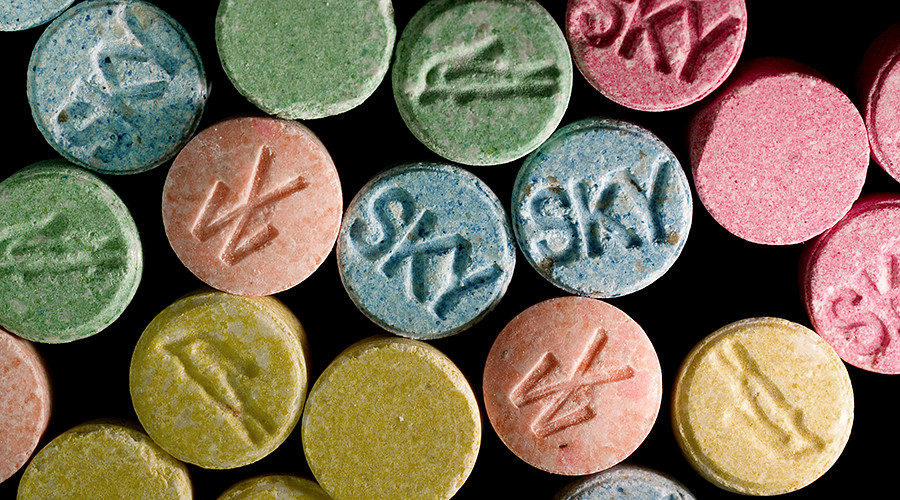
"After 100 years of modern psychiatry our treatments are really poor," lead researcher, Ben Sessa, of Imperial College London, said in his explanation of the study at the Breaking Convention conference in London this week. "The chances of relapse for these [heavy-drinking] patients are really high - 90 percent at three years. No one has ever given MDMA to treat alcoholism before."Prior to the study, which received ethical approval in recent weeks, the patients, who on average consume an equivalent of five bottles of wine a day, will be sent to detox, and receive two drug-free therapy sessions. Then, they will be given a high dose of ecstasy, and undergo an all-day counseling session, which will comprise meditation and one-to-one talks with a therapist.
"It's using drugs to enhance the relationship between the therapist and the patient, and it allows us to dig down and get to the heart of the problems that drive long-term mental illness," said Sessa, who said that the treatment isn't "all about the drugs."
Vrain: We know very little about the residual amounts of glyphosate in food crops for human and animal consumption. Most other pesticides and herbicides are closely monitored by government agencies in Canada and the United States, but for some reason glyphosate residues have not been monitored closely. What we do know is that the legal levels allowed by the Environmental Protection Agency and Health Canada have increased significantly in the past few years — presumably to accommodate the new reality. The allowable levels are now well above parts per million (ppm). Every single crop has allowable levels: sugar at 10 ppm, soybean and canola at 20 ppm, cereals at 30 ppm, nongrass animal feed at 400 ppm. Residue levels that were once considered extreme are now seen as normal.
A large number of published scientific studies — mostly done outside the United States — show that as little as 1 ppm of glyphosate will kill almost all bacteria — particularly beneficial bacteria — in the gut of animals; that endocrine disruption starts at 0.5 ppm; and that even just a few ppm can cause oxidative stress, chronic inflammation, DNA damage, and many other disruptions in mammalian organ cells and tissues. Last year, the World Health Organization asked an international team of 17 senior toxicologists from 11 countries to review the status of several agricultural chemicals, including glyphosate. Their verdict regarding glyphosate's toxicity was that the scientific literature contains enough convincing evidence to classify it as a probable carcinogen.
Comment: Rest in peace Nicholas.
DTaP vaccine: What's really in it?